OVOLT: Two E-Mobility Companies Coming Together Under One Roof
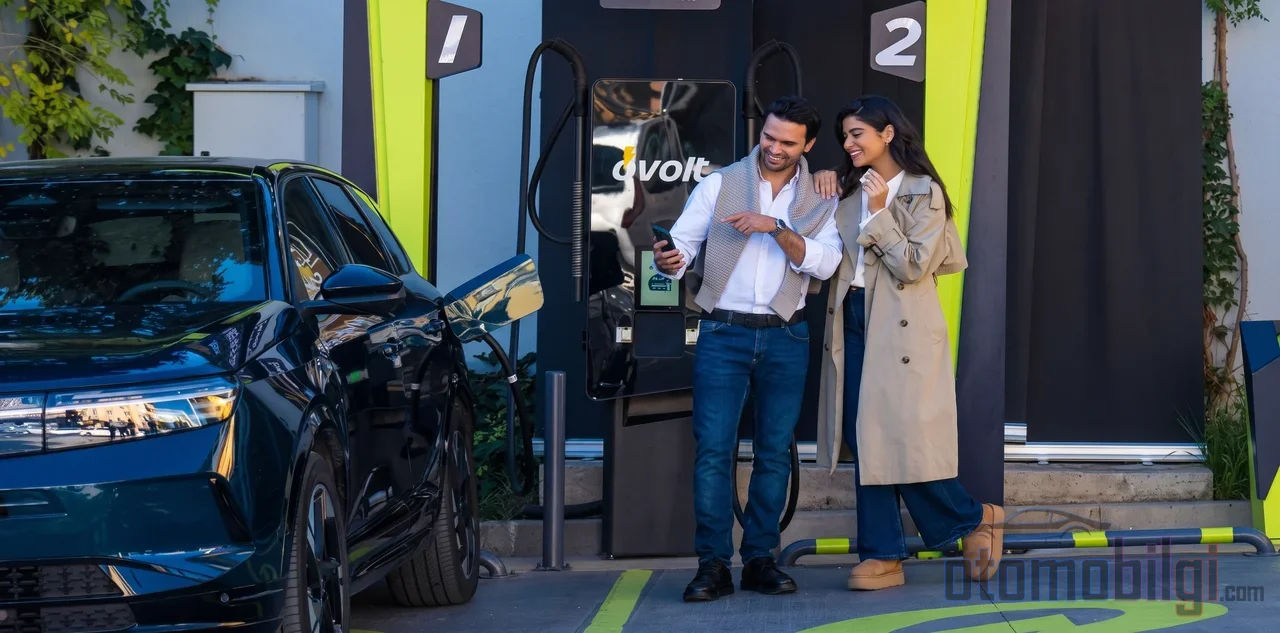
Turkiye's long-awaited consolidation move in the electric vehicle charging ecosystem has taken shape: Sharz.net has merged under the Ovolt umbrella and will now continue its operations under a single brand. The news was announced yesterday, on November 16, 2026. Although the merger may seem like a mere corporate arrangement, behind it lies a new strategy by operators seeking economies of scale in a rapidly growing market. So how will this merger affect users, and what kind of shift will it cause in the balance of competition?
What Does the Sharz.net and Ovolt Merger Mean?
Sharz.net, one of the two established operators running electric vehicle charging stations in Turkiye, has been integrated into the Ovolt network along with all of its charging points. The company's operations will now be carried out under the Ovolt brand. This is not a simple shared-use agreement; it is a structural change in which two networks merge under a single corporate identity and a single app.
In fact, there is a backstory to this merger. In May 2025, Estasyon, Ovolt and Sharz.net joined forces for a shared charging network service; at that time, the trio's network had reached 339 stations and 650 sockets in 49 cities. Back then, users could continue using the three brands' apps in parallel. Now the only remaining brand is Ovolt; we see the user experience approach evolving into a single app over time. Heading the company is Ovolt & Sharz.net General Manager Hakan Koca.
Key Highlights
- Sharz.net has joined the Ovolt brand with all of its charging points; operations continue under a single roof.
- The new network has reached 707 sockets in 53 provinces: 276 AC, 431 DC.
- 170 DC sockets deliver 150 kW and above of power; the network's total defined power is 32.61 MW.
- All stations are YEK-G certified and hold green charging status based on renewable energy.
- The goal is for the service to spread to all 81 provinces.
How Big Is the New Charging Network and Where Is It Concentrated?
As of November 2026, the combined network has a total of 707 charging sockets in 53 provinces. Of these, 276 are AC and 431 are DC sockets. There is a striking detail on the DC side: 170 of the fast-charging sockets deliver 150 kW and above of power. The total defined power of the sockets in the network stands at 32.61 MW. Compared to the Turkiye average, this paints a profile of a mid-scale but DC-weighted network suitable for long-distance use.
The geographic distribution, as expected, follows tourism and population density:
- Istanbul: 211 sockets
- Antalya: 60 sockets
- Mugla: 44 sockets
- Bursa: 44 sockets
- Ankara: 34 sockets
The target announced by the company's management is to reach all 81 provinces. In Koca's words, while 53 provinces are served today, the aim is to offer electric vehicle users a reliable and accessible charging experience in every corner of the country.
What Does YEK-G Certified Green Charging Status Mean?
All stations of the combined network hold green charging station status according to EPDK criteria. This status is based on YEK-G certificates verifying that all the electricity used is generated from renewable sources. So the claim here is not only about the number of sockets, but also that the source of the charging is clean. For corporate fleet customers who are sensitive to their carbon footprint, this distinction is increasingly becoming a reason to choose.
What Will Change in the User Experience?
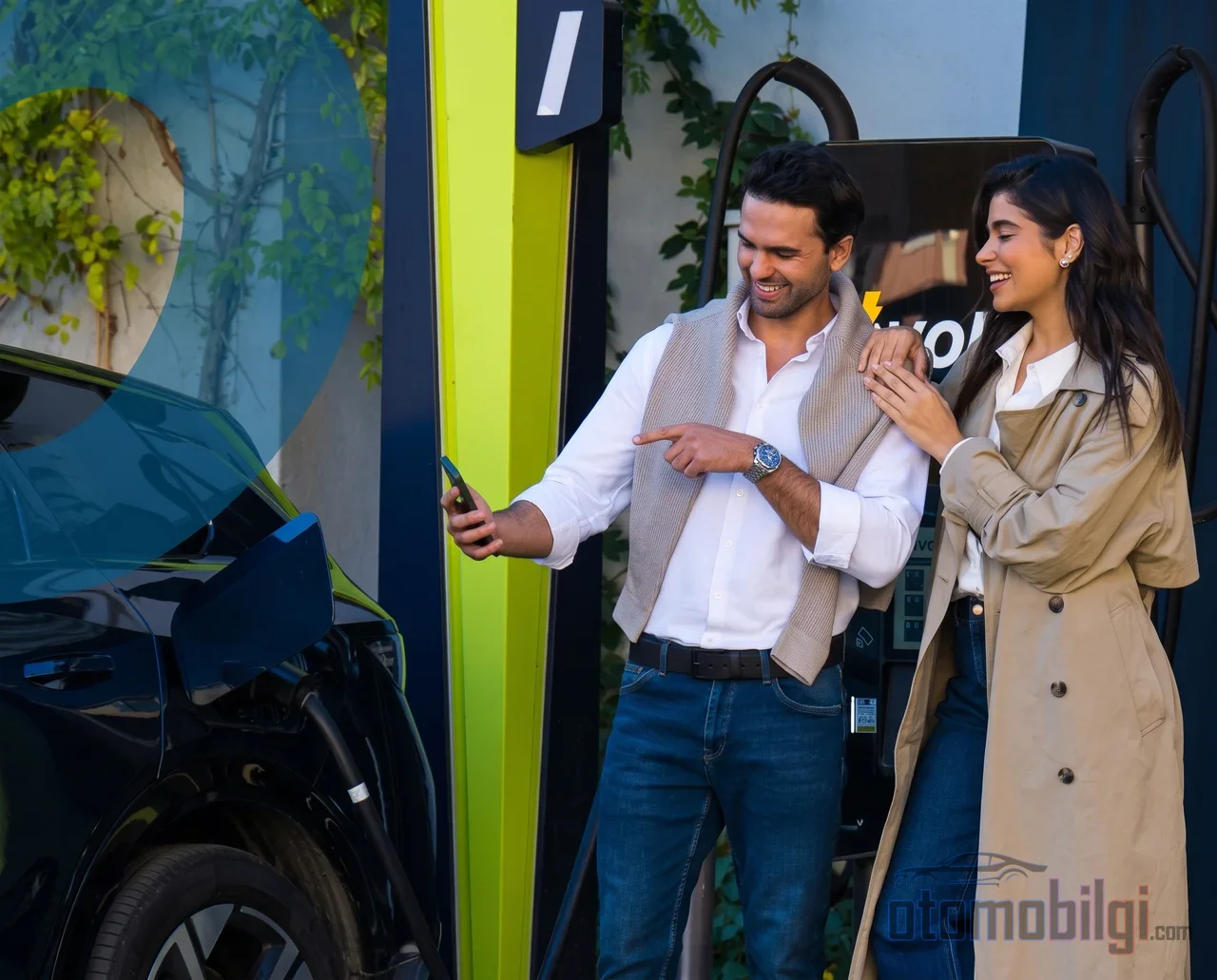
The most tangible face of the change is the app. Sharz.net users will now carry out charging operations through the Ovolt mobile app. Through the app, station locations and features can be viewed, charging can be started and payment can be made; the app is available on the App Store and Google Play. In practice, this means a single digital gateway instead of two separate accounts and two separate payment flows.
And Ovolt has put an incentive on the table to make this transition appealing: first-time app members will be gifted 50 TL of VoltPuan between October 15 and December 31, 2026.
The real issue on the user side is this: Owning an electric vehicle in Turkiye has long required carrying multiple charging apps on one's phone. Since 2024, Ovolt's management has argued that this situation is not sustainable and advocated a single-roof approach. Indeed, the two companies had previously introduced Turkiye's first kiosk-model charging stations in November 2024: an enclosed structure with seating areas, hot beverage and snack vending machines, planned to be rolled out at Opet stations and key locations. This merger is the corporate final step of the single-app vision advocated since that day. So it seems that the company merger is, in fact, the implementation of an already-drawn roadmap for the experience to be offered to users.
Market Context: Consolidation as Turkiye's Charging Infrastructure Grows
This merger is not happening in a vacuum. According to EPDK data, the number of charging sockets in Turkiye increased by 39.9 percent in one year, reaching 48,971. Of the 3.15 million charging transactions recorded in September 2026, roughly three quarters took place at DC sockets. Growth is rapid and demand is shifting toward fast charging; for operators that remain small in scale, standing alone is becoming increasingly difficult.
Looking at the competitive landscape, the picture is clear: According to EPDK socket data, Trugo is in a leading position in charging network operation with a 27.3 percent market share. In March 2026 electricity consumption shares, Trugo stood at 17.11 percent, ZES at 14.90 percent and Esarj at 8.11 percent. The difference here stems from the metric: socket count share and electricity consumption share do not measure the same thing, so the two sets of figures should not be used interchangeably. As of September 2026, Trugo and ZES together hold 47 percent of the market. In this picture, OVOLT is positioned behind the leading duo, yet as a significant mid-scale player.
The Turn of the Sector's Ownership Changes
The OVOLT merger is not the only example of the consolidation wave in the sector. All shares of ZES, i.e. Zorlu's charging network, are being transferred to the Kuwait Investment Authority-affiliated partnership Wren House Infrastructure LP for 147,619,178 dollars. Domestic capital is shifting from charging operation toward global infrastructure funds. This picture shows that the charging network is now priced as an infrastructure investment in its own right, not as an automotive side business.
Competition Authority Oversight
Concerns about monopolization in the sector are also being monitored at the official level. The Competition Authority closed its preliminary inquiry into charging exclusivity on the Northern Marmara Motorway with commitments. The result is striking: While there were 6 brands and 90 sockets on this route in June 2024, as of October 2026 the figure reached 16 different brands and 750 charging sockets. As network mergers grow, protecting competition in a market where the regulator is keeping a watchful eye remains a separate item on the agenda.
What Does the OVOLT Merger Bring to Users and the Market?
The question and answer have become clear: Sharz.net joining the Ovolt umbrella creates a single charging network in Turkiye with 707 sockets across 53 provinces, DC-weighted and certified for renewable energy; while users can now handle all transactions from a single mobile app, the company is consolidating its position in the market with a goal of expanding to all 81 provinces.
From the user's perspective, the gain is visible: one app, one payment flow, an expanding fast-charging network. From the market's perspective, however, the gain is more open to interpretation: OVOLT is gaining scale as a mid-sized alternative to the dominant Trugo-ZES duo. Given the combined weight of the leading duo, an increase in the number of such mergers seems only natural for healthy competition.
In the long run, efficiency will be as decisive as the number of sockets. Company management had previously stated that it foresaw 1.5 million electric vehicles in Turkiye by 2030 and the resulting need for more than 150,000 sockets, and that with the Sharz Club formation they had brought 21 different platforms and 1,857 sockets under one roof. Today's market of 48,971 sockets is still at the beginning of the road compared to this target; so it would come as no surprise if both investment and merger news follow one another in the coming period.
Conclusion: Not the First but the Last Step of the Consolidation Era
In the past, charging operators in Turkiye survived by increasing the number of apps on users' phones as they multiplied; now the flow is reversed - networks are merging and while the number of brands decreases, the user experience is simplifying. The Sharz.net-Ovolt merger is the most recent example of this transformation. 707 sockets, 32.61 MW of installed capacity and 53 provinces; these are today's numbers. How quickly the 81-province target is reached depends on whether the pace of DC-weighted investment continues. We will keep following this market.
Sources
- Sharz.net and Ovolt combine their strengths - Haberturk
- Sharz.net and Ovolt Combine Their Strengths: A New Era Begins
- The Sector's Two Major E-Mobility Companies Merge Under the OVOLT Umbrella
- Estasyon, Ovolt and Sharz.net Join Forces at Charging Stations
- A Fresh Breath for the E-Mobility Ecosystem from Ovolt and Sharz.net
- Türkiye's largest charging network ZES changes hands - Motor1
- Trugo, Türkiye's charging network leader: 27.3 percent market share per EPDK data
- ChargeIQ Electric Vehicle Newsletter - March 2026
- Competition Authority: We paved the way for different charging brands to serve on the North Marmara Motorway
- Number of Charging Stations in Türkiye [September 2026]