EPDK Warning to Electric Vehicle Owners About Invoices

Before the institution's decision dated October 30, 2026 reached the table, a figure was put on the stage: the low-tariff electricity limit for residential subscribers is being reduced from an annual 4,000 kilowatt-hours to 3,000 kilowatt-hours as of January 1, 2027. At first glance, this looks like an energy regulation; but for everyone who charges a vehicle at home, there is another dimension to the matter. A subscriber who exceeds the annual 3,000 kilowatt-hours moves to a pricing scheme called the dynamic tariff, tied to electricity costs, and their bill starts to vary with consumption. Let me say this as someone who has been following this sector for thirty years: the electricity bill used to be a calculation left until the end of the month; now, tracking how much energy that box in the garage draws has become as much of a daily habit as checking the price per liter at the gas station.
What exactly does EMRA's bill warning contain?
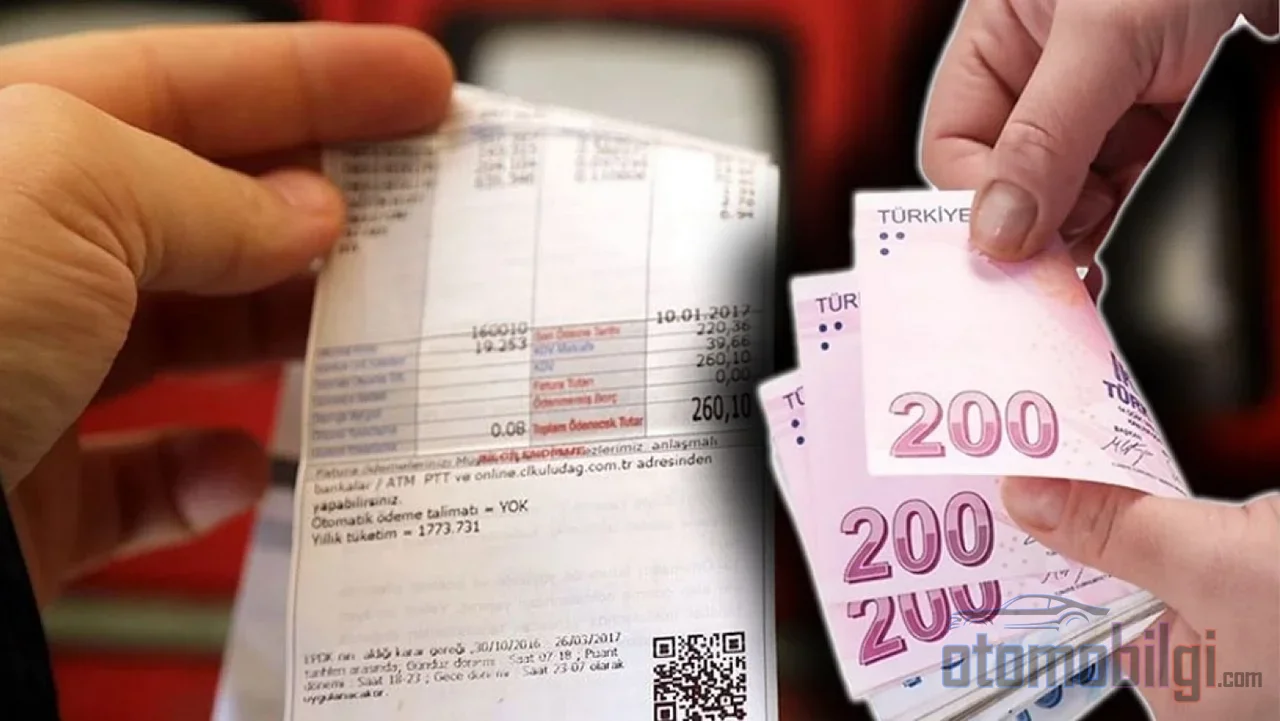
At the center of the regulation is the Last Resort Supply Tariff, abbreviated as LRST. This tariff allows eligible consumers to buy electricity from the designated supply company in their region without making a bilateral agreement with a supplier. The national tariff is applied to users whose annual consumption stays below the determined limit; those exceeding the limit are considered high-consumption last resort consumers and move to the dynamic tariff tied to electricity costs.
The new calculation method is also important. The active energy charge is now calculated based on the market clearing price plus a coefficient added to the YEKDEM cost average; for residences this coefficient is 5%, for other consumers 9.38%. There is no change in distribution charges or taxes. So the source of the increase is directly the unit price of electricity consumed; the higher the bill, the clearer where to look for it.
The trajectory of the limit has tightened in stages. While the limit for residential subscribers was 5,000 kWh/year in 2025, it was reduced to 4,000 kWh/year as of January 1, 2026, and with EMRA's decision dated October 30, 2026, to 3,000 kWh/year as of January 1, 2027. The institution had estimated that this final step would affect approximately 6% of residential subscribers; for the limit reduced to 4,000 kilowatt-hours, the estimated impact was around 6% of all subscribers. With the 2027 decision, however, the picture is broader: of the 44.2 million residential subscribers, approximately 6.5 million, that is 14.7% of the total, will fall into the new high-consumption group.
Highlights
- The residential limit as of 2027 is 3,000 kWh/year; an average of 250 kWh per month, corresponding to a bill of approximately 820 TL.
- The 2027 decision affects approximately 6.5 million subscribers, 14.7% of the total.
- Home charging kilowatt-hours are still in the 3.2-4.8 TL band; public AC stations are around 8-11 TL, DC fast charging around 11-16 TL.
- Subscribers exceeding the limit are subject to a phased transition depending on the date of exceedance; if consumption falls below the limit, a return to the national tariff is possible the following year.
Why does this decision directly concern electric vehicle owners?
Before closing the page, let's clarify the essence of the matter: a residential subscriber charging their vehicle at home moves to the dynamic tariff if they exceed 3,000 kilowatt-hours per year, and the cost advantage of home charging partially erodes. Moreover, the switch does not happen immediately; for a subscriber exceeding the limit for the first time in the 2026 calendar year, a new tariff is applied gradually depending on the date of the excess. For a subscriber exceeding in October, the new tariff takes effect from January 1, 2027; for one exceeding in December, from March 1, 2027; and for one exceeding in June, from September 1, 2027. A 2026 example conveyed in the authority's information note also illustrates this logic: a residential subscriber who ended the previous year below the limit exceeded 4,000 kilowatt-hours on June 2, 2026, and switched to the new tariff in the following months depending on the excess date.
The fact that home charging makes exceeding the limit easier is simply a matter of arithmetic. When regular home charging is added to an average home's basic monthly consumption of 250–300 kilowatt-hours, exceeding 3,000 kilowatt-hours is not that difficult. As of August 2026, the number of electric vehicles in Turkiye is 476,934; average energy per charge is 27.63 kWh. A significant portion of these vehicles are charged at home at night, and each one adds a separate item to the household bill. Therefore, the authority's warning is not someone calling on the phone to remind you; it is a reality embedded in the limit decision and tariffs, one that shows itself on the bill.
How big is the difference between home charging and charging at a station?
Looking at 2026 price ranges, home charging is still the cheapest option. On the residential tariff, the kilowatt-hour price is around 3.2 TL in the lower tier and about 4.8 TL in the higher tier, depending on the tier; in the night period it is approximately 3.26 TL. In contrast, public AC stations operate in the 8–11 TL/kWh band; as of August 2026, the commonly seen range is 9.90–11 TL. DC fast charging is even higher: the 11–16 TL/kWh range, with example tariffs such as 12.99 TL for standard DC and 16.49 TL for high-power charging on some networks.
| Charging method | Approximate price (TL/kWh) | Rough cost for a 60 kWh battery |
|---|---|---|
| Home charging, tier 1 tier | ~3.2 | ~190–200 TL |
| Home charging, tier 2 tier | ~4.8 | ~290 TL |
| Home charging, night tariff | ~3.26 | ~195 TL |
| Public AC station | 8–11 | ~480–660 TL |
| DC fast charging | 11–16 | ~660–960 TL |
This table also explains the purpose of the regulation. For users below the limit, home charging offers a cost between one-third and one-half of the station price. When the limit is exceeded, the unit price rises; the advantage does not disappear but erodes noticeably. Filling a 58 kilowatt-hour battery at home in the lower tier costs around 58 TL, while the same job approaches 86 TL in the higher tier; at an AC station it climbs even higher. This equation, which once required no calculation, is now a sum every subscriber must set up according to their own consumption profile.
How should charging habits be planned?
Tracking annual consumption is the first task
The first thing to do is simple but often neglected: monitor your subscription's 12-month consumption and know how close you are getting to the 3,000-kilowatt-hour threshold. An average of 250 kilowatt-hours per month corresponds to a bill level of roughly 820 TL. Whether a household charging a vehicle at home stays under this threshold depends on the car's kilometer needs and where charging takes place; long daily distances make home charging inevitable, while short distances are suitable for combining it with station charging.
Timing reduces the cost
On the three-time-zone tariff, the night window, between 22:00 and 06:00, is the cheapest period. Daytime, between 06:00 and 17:00, settles at the standard price. Shifting charging to this window while the vehicle is parked overnight both lowers the amount paid per kilowatt-hour and means using the right time from the grid's perspective. Since smart charging systems can automate this timing, they are counted among the practical ways to reduce the impact of the regulation. Another option is a bilateral agreement: signing a contract with a private supplier is one of the options available to a user forced to move to the dynamic tariff.
Going back is possible
Entering the tariff once does not close the door. A user whose consumption falls back under the limit can return to the national tariff the following year. This turns planning from a one-time decision into a continuous monitoring task; after a year that strains the limit, the charging routine can be changed and a deferring strategy followed.
The bigger picture: tariff decisions are changing at the same time as the charging market
Reading this picture solely through the residential tariff would be incomplete. With the change that entered into force in March 2026 in the Charging Services Regulation, a dynamic pricing era began at charging stations; the head of the institution also announced that it would officially begin. Tiered pricing based on power is ending for AC and DC units, moving to a single-tariff period. For fast charging units of 50 kilowatts and above, card and contactless payment became mandatory as of July 1, 2026, and no additional fee may be charged to the user; as of the same date, credit card integration also became a requirement for all DC units on highways and state roads.
Another permission introduced in September 2026 also affects the growth of the infrastructure: integrated electricity storage facilities were allowed to be installed at charging stations with a discharge power higher than the contracted power; an automatic power control and energy cutoff system requirement was introduced for grid safety. This is a regulation that facilitates the spread of high-power charging to more locations. On the market side, as of the end of June 2026, 45,097 charging points are counted, and electricity consumption in charging services hit a record; in August, the total number of points reached 47,908, and the number of transactions that month reached 3,527,070. With the transition to flexible pricing, user costs are expected to fall; meaning the publicly visible side of pricing pressure may soften over time, while the tightening on the household side coincides within the same period.
Exemptions and criticisms: reading the decision in a balanced way
The regulation does not affect every subscriber in the same way. The limit for the agricultural activities group was not changed; the 15,000 kilowatt-hour limit was preserved for the industrial, public and private services, and lighting groups. Mosques, places of worship and cemevis, associations, families of martyrs, veterans and disabled veterans, village drinking water supplies, AFAD temporary shelter centers, and consumers dependent on life-support devices powered by electricity such as dialysis and respiratory machines were excluded from the scope. In other words, the weight of the tightening is deliberately placed on high-consumption residences.
The institution's positioning is also in this direction: the regulation is defined as the more realistic pricing of the subsidy for high consumers. In contrast, electric vehicle owners, especially those who charge at home, emphasize that this creates a concrete cost burden for them; after the residential limit was reduced to 4,000 kilowatt-hours, reaction posts on social media and efforts to restructure home charging arrangements were observed. Both readings are partly correct; the debate revolves less around which side is right and more around the question of to what extent and to whom cheap energy will be subsidized.
Conclusion: the bill is now part of the charging plan
Electric vehicle ownership used to be the sum of two separate worlds: you bought the car, and electricity was a quiet fortress in the background of your home. With the new regulation, these two worlds met in a single bill. Home charging is still the cheapest per kilowatt-hour; with the night tariff, this advantage is preserved. However, the unit cost rises for households exceeding the annual 3,000 kilowatt-hour limit, and part of the advantage evaporates. The practical result is simple: monitor your annual consumption, pull charging into the night window and as low a tier as possible, keep station charging as an on-the-road necessity, and if you are going to push the limit, seriously consider a bilateral agreement with a private supplier. The institution's warning is not a prediction; the tariff schedule is set, the transition dates are set. Managing the bill is now the driver's job.
Sources
- Charging Service Market Monthly Statistics - July 2026 - EPDK
- New era in electricity bills: EPDK announced its new decision (30.10.2026)
- New regulation from EPDK for electric vehicles - Uzmanpara/Milliyet (25.09.2026)
- Will Home EV Charging Costs Increase? EPDK SKTT Regulation - Beefull
- EV Charging at Home: Electricity Bill and the 4,000 kWh SKTT Limit - Tesisat.org
- Comprehensive Regulation from EPDK for the Electric Vehicle Charging Market - Legal500
- Transition to flexible pricing in electric vehicle charging services - AA
- Electric Vehicle Charging Fees 2026 - Chargemate
- 2026 Electric Vehicle Charging Cost: At Home and at the Station - Araclo
- Notice Regarding Last Resource Supply Tariff Limit Change – Enerjisa