Where Is the Electric Vehicle Charging Network Most Concentrated in Türkiye?
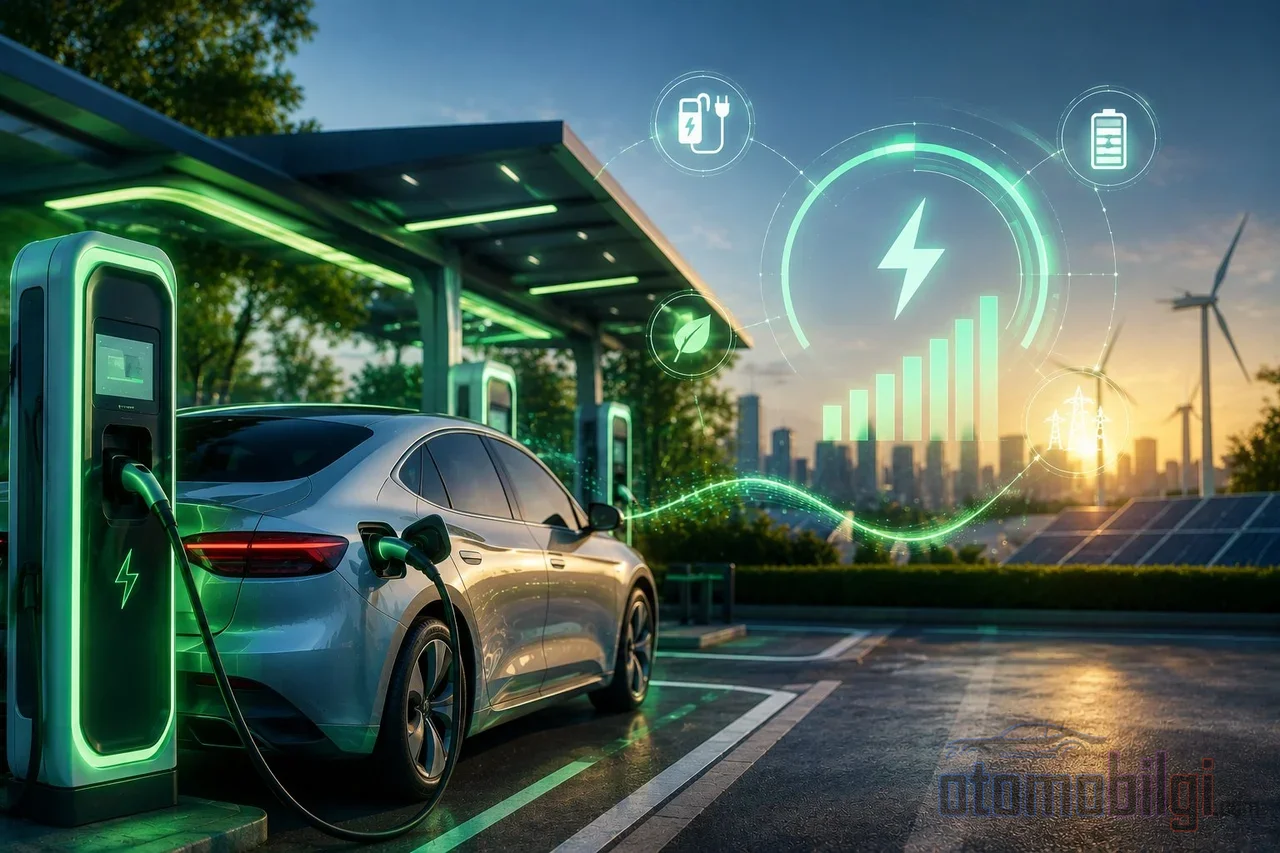
Looking at the photo of Turkiye's electric vehicle charging infrastructure based on the total number of sockets is, at least by now, an incomplete view. As of November 2026, the country has 48,971 charging sockets and approximately 491,500 electric vehicles; on paper, that works out to 10 sockets per 100 vehicles, and this ratio does not look bad at all. However, this average falls apart when broken down by province. In Istanbul, 176 thousand electric vehicles are shared among 4,489 stations; in Izmir, the number of stations per 100 vehicles is only slightly above 2. So the question is no longer "how many sockets are there in Turkiye?" but "how many are there in your city?"
Charging Station Distribution by Province, November 2026
The EPDK's November 2026 data shows that the center of gravity of the picture is concentrated in large cities, but the absolute numbers and the per-vehicle density tell two separate stories. The top five provinces rank as follows:
| Province | Charging Station | Electric Vehicle | Stations per 100 Vehicles |
|---|---|---|---|
| Istanbul | 4,489 | 176,532 | 2.54 |
| Ankara | 2,158 | 68,372 | 3.16 |
| Antalya | 963 | 25,246 | 3.81 |
| Izmir | 777 | 38,381 | 2.02 |
| Bursa | 723 | 23,801 | 3.04 |
The most striking row in this table is Istanbul: on its own, it has more than twice as many stations as second-ranked Ankara. But the same row also contains an electric vehicle fleet of 176 thousand, and this is where the metropolis's real problem begins. Looking at the countrywide socket distribution, 27,664 AC and 21,307 DC fast-charging sockets mean a total of 3,875 MW of installed capacity.
Highlights
- 491,492 electric vehicles and 48,971 charging sockets across Turkiye (November 2026)
- Istanbul leads with 4,489 stations; in per-vehicle ratio, however, Izmir and Gaziantep lag behind
- Stations per 100 vehicles: 1.79 in Gaziantep, 65.00 in Hakkari
- In 42 provinces of Turkiye, the number of stations did not change at all in the past month
Why Is the Queue Risk High in Metropolises?
The ranking of vehicle density by province tells exactly the opposite story of the total numbers table. At the bottom of the list in stations per 100 electric vehicles are Gaziantep (1.79), Izmir (2.02), Istanbul (2.54), Hatay (2.99) and Bursa (3.04). Ankara with 3.16, Eskisehir with 3.23 and Konya with 3.48 drag down to as far as tenth place on the list. Kocaeli and Adana are also within the same band.
The reason for this picture is simple: electric vehicle ownership is growing faster than infrastructure investment. While the number of vehicles increased by approximately 52.8 percent over the past year, station investments are not progressing at the same pace in every province. In Istanbul, it is possible to find a charging point every 2-3 kilometers; but this density does not yet relieve the rapidly growing electric fleet within the city's more than 4.2 million automobiles.
Monthly change is not one-directional everywhere either
The fastest station growth in the October-November period occurred in Osmaniye (13.33 percent), Yozgat (11.11 percent) and Siirt (8.33 percent). In contrast, the number of stations did not change at all in 42 provinces; Eskisehir declined by 7.50 percent and Konya by 3.74 percent. The infrastructure is not growing uniformly - some provinces are leaping ahead, some are standing still, and some are falling behind. This movement is the real data that gives substance to the phrase "the network is growing."
East and Southeast: Few Vehicles, High Ratios
The list of the top ten provinces in stations-per-vehicle ratio is surprising at first glance: Hakkari leads at 65.00, followed by Mus at 26.97, Bitlis at 25.00, Sirnak at 21.28, and Agri at 19.28. Ardahan has 8 stations, Hakkari 13, and Igdir 10 - the absolute numbers are small, but since the number of electric vehicles is even smaller, the ratio appears relatively inflated.
The high ratio in these provinces should not be read as a sign of wealth. What is being described here is simply the arithmetic of a small number of units matching an even smaller number of vehicles. The real question is how close we are getting to the goal of having at least 2-3 high-speed charging units active in every provincial center along the main highway corridors; As of April 2026, it is reported that fast charging stations are located in all 81 provinces and roughly every 70-100 kilometers on major highways.
How Does the Gap Between Metropolises and Anatolia Reflect on Long-Distance Travel?
Urban congestion and long-distance adequacy are separate issues, but they draw from the same picture. The total number of points, which stood at 39,694 in January 2026, reached 48,971 within the year; Installed power, which was 2,990 MW in January, exceeded 3,875 MW as of November. Approximately 3.15 million charging transactions took place in September, and 82.44 percent of consumption came from DC points - meaning the network's real load accumulates in fast charging units.
Usage intensity is high in Bursa, Kocaeli, and Antalya; Balikesir, Bolu, Konya, and Kayseri are also in the top ten. In April, Istanbul topped electricity consumption with 9,972 MWh, followed by Ankara and Izmir with 4,410 MWh. These provinces are the centers of gravity for both the fleet and traffic; naturally, charging demand also concentrates there. Along the Antalya-Mugla line, DC stations are seen to multiply during the tourism season, which shows that managing seasonal fluctuations in demand is a separate nightmare for operators.
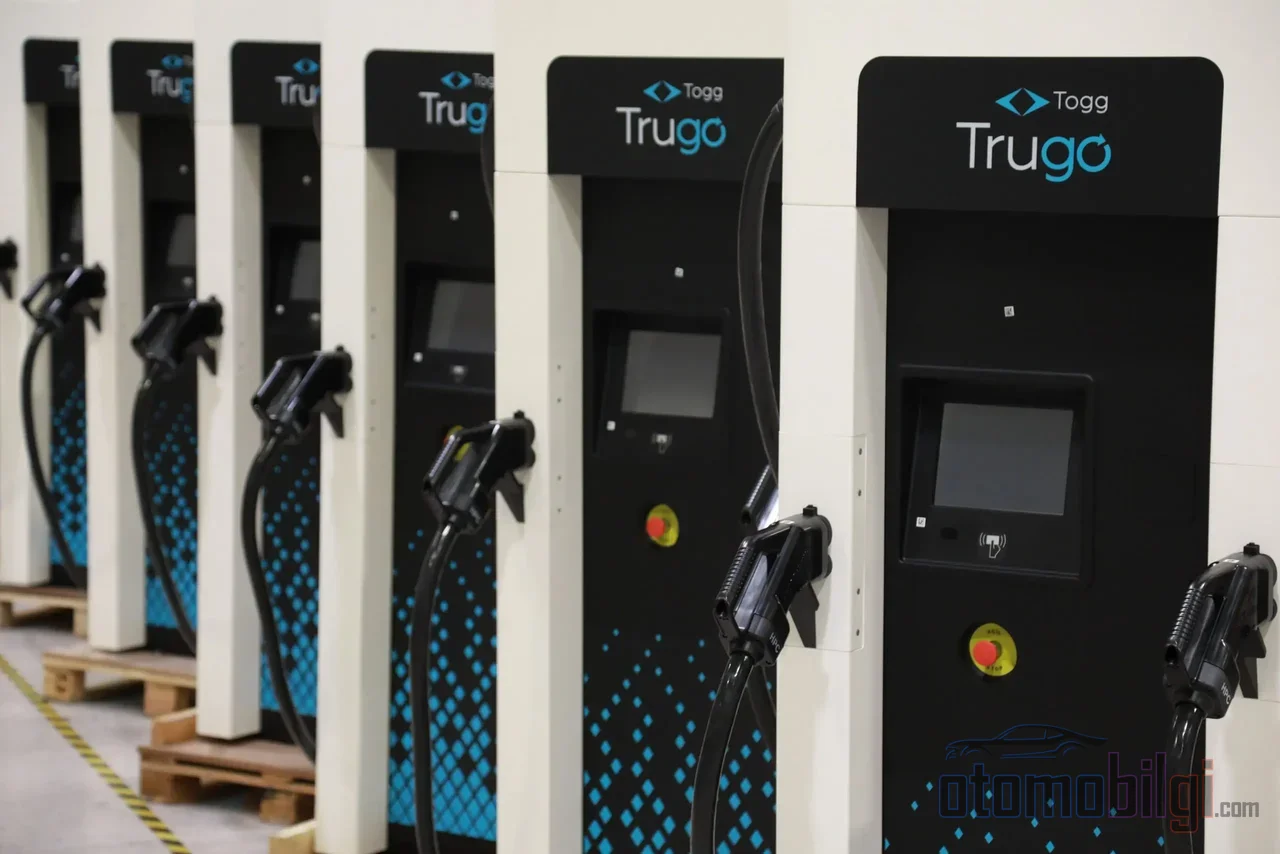
On the market side, 185 brands are providing charging services; Togg's Trugo network is widespread with fast charging units above 180 kW in all 81 provinces, while ZES, Esarj, WAT Mobilite, and En Yakit also form the backbone of the network. Since April 2026, it has been mandatory for stations to share their location, pricing, and accessibility information in the Datex-II standard - seeing all networks on a single map, once a dream a few years ago, is now a requirement of the standard.
A Point to Note When Reading the Numbers
One warning is warranted: until May 2026, province-based ratios were calculated using estimates derived from the distribution of electric vehicles across provinces; the registration database is now the basis. For this reason, the old-period ratios cannot be compared one-to-one with today's picture. Also, the number of sockets and the number of stations are different units: 48,971 sockets are distributed across more than 13,000 public stations. A single station can host multiple sockets.
In short: Where Does Your City Stand?
The summary of the summary is this: Turkiye's charging network is growing healthy numerically, but the growth is not distributed evenly geographically. While Istanbul and Ankara hold more than a third of all stations, due to their own large fleets they drop to the bottom of the list in the per-vehicle ratio; Izmir and Gaziantep are the provinces with the highest congestion risk, while Antalya has the most balanced ratio among major cities (3.81). In eastern provinces, the absolute number is small, but so is the vehicle fleet; the real issue there is uninterrupted long-distance coverage. The path a reader should follow when looking at their own city is clear: first look at the number of stations, then at the number of stations per 100 vehicles, and then at the change over the last month. Together, the three give a true picture of that province's infrastructure.
Sources
- Number of electric vehicle charging stations by city
- Number of Charging Stations in Türkiye [September 2026]
- EPDK January 2026 Electric Vehicle and Charging Market Data
- ChargeIQ Electric Vehicle Bulletin - March 2026
- Charging Stations Map
- List of All Electric Vehicle Charging Companies in Türkiye
- Number of charging sockets exceeded 44 thousand in May