TRZ Fleet Begins Renting Passenger Cars with Electric Vehicles
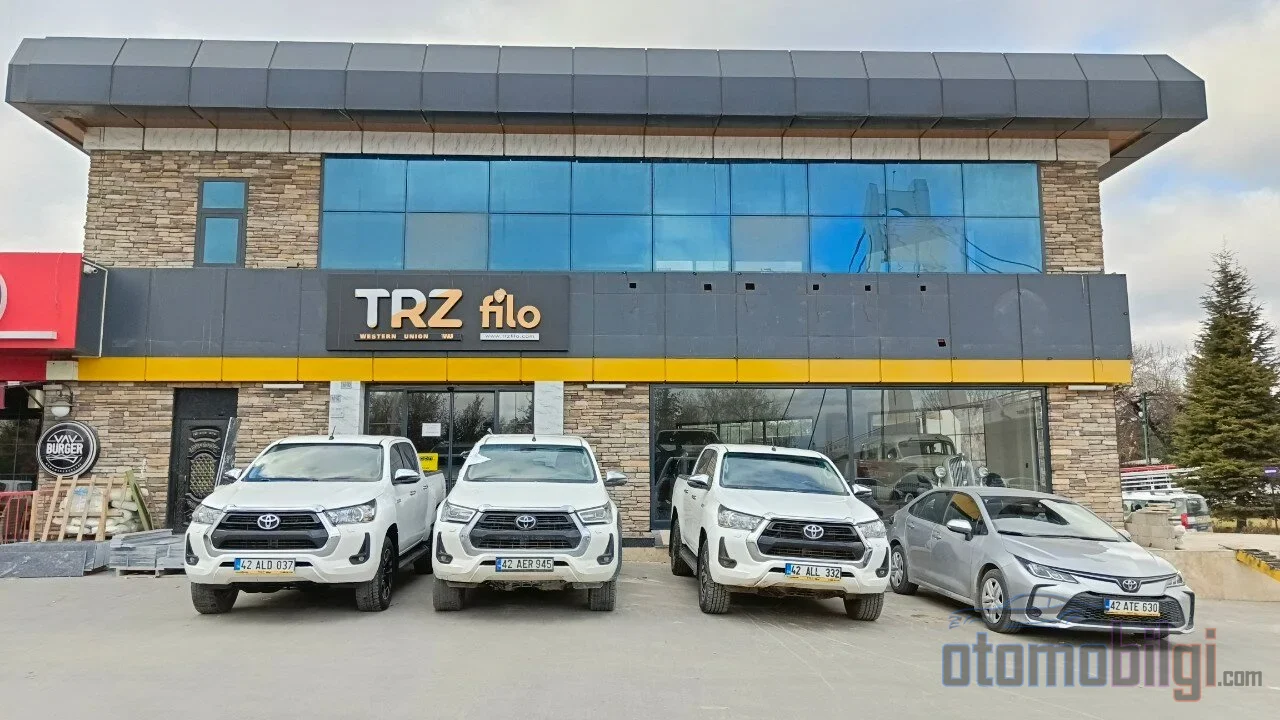
TRZ Fleet, one of Turkiye's well-known commercial fleet rental companies, is expanding beyond its familiar territory: The company announced that it has entered a purchasing process for approximately 500 passenger vehicles and will begin renting passenger vehicles, primarily to companies and institutions in Konya, as of the new year. This move by a player known since 2008 for its fleet of 800 commercial vehicles and its relationships with major industrial organizations is one of the most concrete examples of the operational rental sector shifting toward new growth areas.
The most striking question is this: Why is a fleet company rooted in commercial vehicles now turning to the passenger segment, and right in the middle of the market's electrification debates? The answer lies both in the company's own scale and in the overall picture of the industry.
Who Is TRZ Fleet, Where Does It Come From?
TRZ Fleet is a fleet rental company headquartered in Konya that has been operating in the long-term vehicle rental sector since 2008. The company's core business is commercial vehicle fleets: Today it provides services with 800 commercial vehicles. Its reference list is predominantly composed of: Major organizations such as Akkuyu Nuclear, Cengiz Holding, Sabanci Holding, Turk Telekom and Botas, where it serves as a solution partner for their vehicle rental needs. The company's board of directors is chaired by Ozer Terzioglu.
Looking at the company's own description, the picture is somewhat broader: TRZ Fleet states that it offers operational rental across a wide range from passenger cars to off-road vehicles, from pickups to construction machinery, that it has a service network covering all regions of Turkiye, and that it can provide long-term rental with terms such as 24, 36 and 48 months. So the passenger segment is not entirely unfamiliar territory for the company; the real innovation is making a systematic investment in this area beyond what has been done to date.
Highlights
- TRZ Fleet has entered a purchasing process for approximately 500 passenger vehicles
- The rental service will begin for companies and institutions in Konya as of the new year
- The company's existing strength: 800 commercial vehicles, industry experience since 2008
- The fully electric share of the operational rental fleet is only 3.8%
- In Turkiye, only 10% of vehicles used for commercial purposes are utilized through rental
What Does the Passenger Vehicle Expansion Mean?
A purchase of approximately 500 vehicles means a significant expansion at TRZ Fleet's scale: Adding a passenger vehicle fleet in one go on top of the existing 800-vehicle commercial fleet will substantially grow the company's total fleet. The service is planned to start with companies and institutions in Konya as of the new year; the initial expansion in the regional market where the company is well established will likely spread from there.
The timing of this step is no coincidence. The automotive fleet world is being reshaped by electrification, connected vehicle technologies and digitalization; but the pace of transformation is determined by vehicle costs, financing conditions, charging infrastructure and user needs. A commercial fleet company entering the passenger car segment is actually positioning itself in the new pool of demand created by this transformation.
At this point, an honest distinction needs to be made: There is not yet any verified detail disclosed by the company regarding the share of electric vehicles in TRZ Filo's passenger fleet, its brand, or its models. The industry's shift toward electric is a general fact; but the composition of this expansion will become clear over time.
The Current State of the Rental Industry
To properly evaluate TRZ Filo's move, it is essential to look at the size of the industry. As of the third quarter of 2026, the total fleet, including operational and daily rental, reached approximately 411,800 vehicles. The industry's vehicle investment in the first nine months of 2026 was approximately 253 billion TL; of which 90.3 billion TL was made by operational leasing and 162.7 billion TL by daily rental. The total of OTV, VAT, and MTV it paid is at a level of approximately 128 billion TL.
The operational leasing fleet grew by 1.4 percent annually with 238,500 vehicles, surpassing the end-of-2025 level. The daily rental fleet showed an increase of approximately 11 percent annually with 173,300 vehicles. The industry has approximately 28,200 operational leasing customers.
Fuel Distribution in the Fleet Park
The fuel type distribution of the operational leasing park clearly shows at what stage the transformation is:
| Fuel Type | Share |
|---|---|
| Gasoline | 65.9% |
| Diesel | 19.9% |
| Mild hybrid | 9.7% |
| Fully electric | 3.8% |
| Plug-in hybrid | 0.7% |
The table speaks for itself: The electric transformation in rental fleets is still mostly in the crawling stage. Gasoline's leadership with a two-thirds share and diesel's presence of around 20 percent show that fleets are still cautious about switching to electric. Among the factors that make electric vehicle leasing attractive are the 25 percent MTV advantage, fuel savings, and the fact that leasing reduces high initial investment and second-hand value risk; but charging infrastructure and range concerns continue to slow down decisions.
Why Passenger Car Rental Now?
Although the weight in fleets is still on the internal combustion side, market dynamics are opening up room for new players. In Turkiye, only about 10% of vehicles used for commercial purposes are used through rental methods; in Europe, this rate is at levels of 50-60 percent. This gap is the clearest indicator of the long-term growth potential of operational leasing and the fundamental economic rationale behind regional powers like TRZ Filo turning to the passenger segment.
The segment distribution also tells where demand is concentrated: In the operational leasing park, segment C has a 47.5 percent share, segment B 30.9 percent, and segment D 9.8 percent. By body type, sedan leads with 36.7 percent, followed by SUV with 28.2 percent and hatchback with 27.2 percent. On the brand side, Renault leads with 20.1 percent; followed by Fiat with 12 percent, Volkswagen with 10.9 percent, and Skoda with 9.3 percent. A new entrant's purchasing decisions will inevitably be shaped around these centers of gravity.
The contract structure is not changing either: 59.4 percent of contracts have terms of 30-42 months. TRZ Filo's 24, 36 and 48-month options fit squarely within this tradition. The value proposition of long-term rental has not changed in ten years: Not tying up capital in vehicle purchases, and transferring costs like maintenance, repair, insurance, taxes and periodic inspection to the renting company. In the past, this model was the comfort of large corporations; now SMEs are acting on the same logic.
Where This Step Stands in Fleet Leasing in Turkiye
TRZ Filo's expansion can be read both as a single company's growth decision and as a sign of the industry's shifting direction. Industry representatives emphasize that car usage is evolving from ownership toward the usage economy, and that leasing has become one of the most important corporate purchasing channels in the automotive sector. On the electric vehicle rental side, it is known that specialized models are increasing for both individual users and corporate fleets, and that fleet sales and financing programs are also being activated for the domestic car. The market is entering a period of increasing mobility.
A Konya-based company joining this trend with a 500-vehicle passenger car investment shows that regional rental companies are now seeing services that used to be the domain of Istanbul-based major players. Corporate customers also prefer the operational simplicity of meeting both commercial and passenger car needs from a single supplier; TRZ Filo's strong corporate references create a natural sales channel for this expansion.
In summary: A company that has stood in the industry for 18 years with 800 commercial vehicles opening up to a new field with an investment of 500 passenger cars is a sign that Turkiye's operational rental market is both deepening and diversifying. In a market where the electric share of fleets is still 3.8 percent, which fuel type such investments will take shape with will be one of the most eagerly awaited questions of the coming period.