Second-Hand Depreciation Warning for Electric Vehicles

A new picture is settling in the used electric car trading market: industry representatives announced that the second-hand sales prices of electric vehicles have dropped to an average of 20 percent below the zero-kilometer list price. This may look like an ordinary price adjustment in lira terms; it is not. Electric car sales in Turkiye reached approximately 192 thousand units in 2025, holding a 17.5-18 percent share of the market. Such a volume was bound to bring a value question on the used side two or three years later. That question is now being asked, and the answer is sharper than anyone expected.
The interesting thing is, the picture is not a one-way collapse. Electric vehicles are getting cheaper on paper in the used market, but their sales speed is better than gasoline cars in some markets. There are three structural reasons behind the loss of value: uncertainty about battery health, rapid technology turnover, and price competition on the new-car side. Without separating these three, neither buyer nor seller can make the right decision.
What Does the 20 Percent Difference Mean?
The figure is intimidating at first glance, but it should not be read without context. In the Turkish market, high taxes and supply restrictions created a structure that already prevented used prices from falling easily; car prices operated in this mold for decades. Electric vehicles break out of this mold because what determines their prices is not the traditional balances, but the chemical life of the battery and the pace of software obsolescence.
Another important detail: the 20 percent average varies significantly by model, remaining warranty, and battery condition. Between two vehicles of the same age, the one with a measured battery health and an active warranty changes hands at a noticeably higher price than the one without measurement and an expired warranty, no matter how good it looks. The fact that there is not yet reliable model-based value retention data in Turkiye also makes things harder: the market is still writing its own rulebook.
Highlights
- Used electric car prices are running an average of 20.3 percent below zero-kilometer list prices.
- According to fleet data, the average annual capacity loss in batteries is about 2.3 percent.
- In vehicles using predominantly DC fast charging, average battery health after 8 years is 76 percent; in those prioritizing low-power charging, 88 percent.
- The share of electric vehicles in total car sales rose to 18.5 percent in the first half of 2026.
- Many brands offer battery warranties of around 8 years / 160,000 km; in some models it goes up to 192,000 km.
Why Is Battery Health So Decisive?
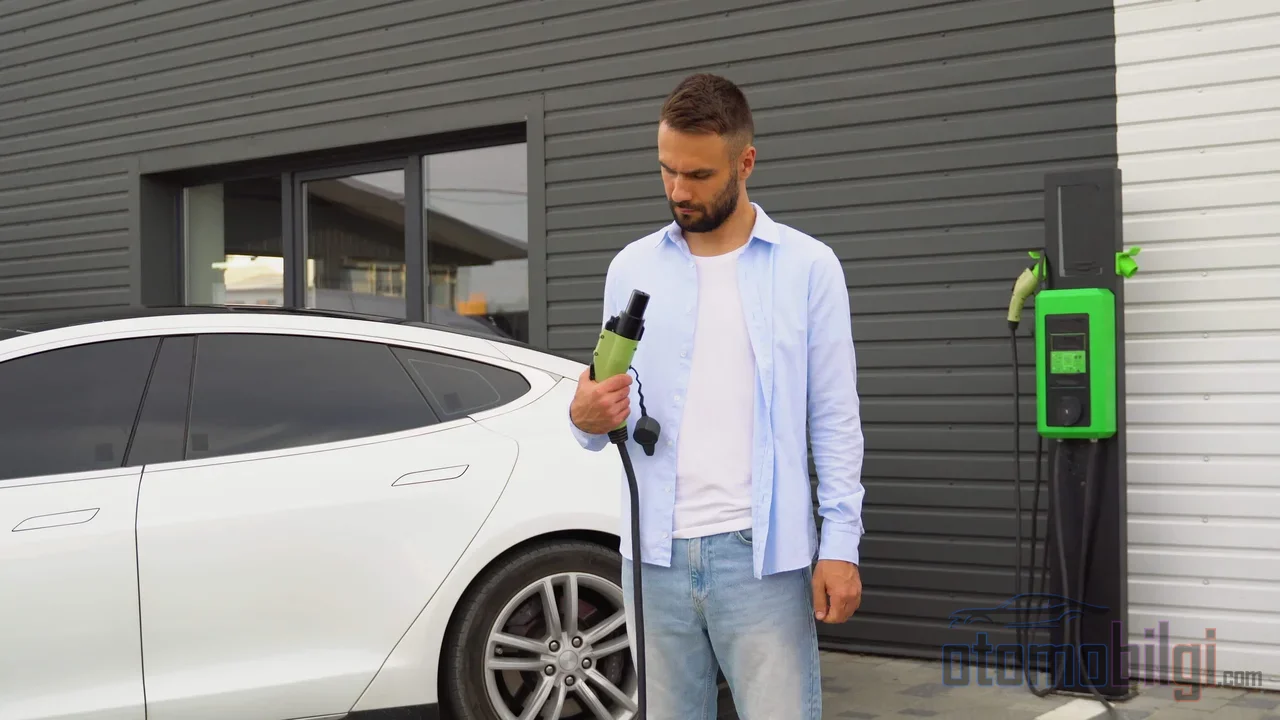
You used to look at a car's: engine sound, transmission shudder, bodywork and paint. In an electric vehicle, the picture is different. At the center of the vehicle's value sits a battery pack that cannot be assessed externally in any way, and since the pack is in the vehicle's floor, impacts from below are not visible from outside. The question in the buyer's mind is a single one: what condition is the battery in?
Fleet data shows this concern is not as big as thought. An analysis covering more than 22,000 vehicles found an average annual capacity loss of about 2.3 percent. What is more striking is the difference in charging habits: in vehicles charged predominantly with DC fast charging, average battery health was 76 percent after eight years, while in those prioritizing lower-power charging it was 88 percent. Another fleet dataset shows that the most pronounced capacity loss occurs in the first 30,000 km, after which the curve flattens out.
In other words, mileage on its own tells you nothing. A 120,000 km vehicle charged at home with AC can carry a healthier battery than a 60,000 km vehicle fed exclusively on DC fast charging. That is why the figure written in the listing should not be the basis; the SoH (battery health status) and cell balance data read with a diagnostic device should be; measuring it requires an EV-specific inspection.
Warranty Protection
The battery warranty is the sturdiest crutch in this equation. Many brands offer warranties of around 8 years / 160,000 km; on some models this extends up to 192,000 km. Within eight years, a battery can typically lose capacity down to the 70 percent threshold before it is considered defective. In practice, this means: the battery of a 2023 model vehicle bought in 2026 can remain under the manufacturer's guarantee until 2031 with the transferred warranty. For a buyer afraid of value loss, this is an item that completely changes the calculation.
Technology Obsolescence: The Invisible Engine of Depreciation
There is a second problem independent of the battery: as hardware, electric cars age much faster than gasoline and diesel ones. While many models around 2018-2019 offered 200-300 km of range, today's new models in the same segment reach 400-600 km. An internal combustion engine had matured mechanically over decades; in an electric vehicle, each new generation leaves the previous one behind not just slightly, but categorically.
The third pressure comes from the new-car side. Growing model variety and fierce competition are creating downward pressure on new-car prices, especially in the C SUV segment; discounts and campaigns are directly reflected in the used-car market. In a market where new cars are getting cheaper, the used price of a vehicle bought yesterday is bound to erode. The depreciation curve confirms this: it drops steeply in the first two or three years, then levels off.
The Contradiction Within the Market: Getting Cheaper But Selling Fast
Everything so far may look gloomy; but the market data does not tell a one-way story. In Turkiye, the market share of electric cars rose to 18.5 percent in the first half of 2026, yet unit sales declined by 5.3 percent in the same period. In other words, electrics are growing their share while the market shrinks. International comparison also shows that used electrics sell in an average of 41.9 days versus 54.8 days for gasoline cars - that is, well-maintained electrics are not sitting on the shelves but changing hands faster.
And there is this: The price increase shown in lira terms in Turkiye does not mean gaining real value in a high inflation environment. Second-hand prices that cannot keep up with cumulative inflation have melted away, even if nominally labeled. Electric vehicles have a harder time passing this test than conventional vehicles.
What Should Buyers Pay Attention To?
Industry recommendations are clear. Vehicles three to four years old, past the steepest part of the depreciation curve and with batteries still under warranty, are the most efficient point for most buyers: significantly cheaper than new, with battery protection still in place.
- Have the battery health measured: not the listed figure, but SoH and cell balance data read with a diagnostic device.
- Ask about the charging history; whether the vehicle was charged at home or on the road is decisive, and some vehicles show the total DC charging ratio in the menu.
- Since the battery sits in the floor, an underbody inspection and paint/bodywork measurement are essential.
- Check the software and hardware rights; in some brands, driving support packages may be tied to the account rather than the vehicle.
- If possible, do a DC charging test; the peak charging power accepted by a warmed battery is an aging indicator independent of capacity.
- Clarify the remaining battery warranty period and mileage.
The summary of the summary is this: an electric vehicle with measured battery health, ongoing warranty and a clean damage record is a good buy at these prices; buying without measurement is not a cure but a risk.
How Should the Seller Position Themselves?
The sales side has work to do too. Putting a vehicle up for sale with an inspection report including measured SoH recovers the cost of the report in negotiations. Service history and the original charging cable-adapter set must be fully documented; timing is as important as the vehicle itself. Selling before a facelifted version of the same model is announced or a price cut on the new side is announced brings significantly better prices. The remaining battery warranty and mileage should be clearly stated in the listing.
Value-preserving features are also known: long battery warranty, documented health status, home AC charging history, full service record, equipment such as heat pump and high DC charging power, and a brand-model choice with a wide service network and demand.
Should You Buy a Used Electric Vehicle? Clear Answer
The direct answer to the question: electric vehicles in the second-hand market, with an average annual battery loss of 2.3 percent and usually an 8-year / 160,000 km warranty, offer one of the best-priced purchases in this market if bought with measured battery health and ongoing warranty; in a vehicle without measurement and with expired warranty, the risk is greater than the discounted price. Yes, as new prices fall, the appeal of older models diminishes; but the same decline makes well-maintained and documented vehicles more attractive to buyers than before.
The Turkiye market is going through this transition: share is increasing, unit numbers are fluctuating, price differences are opening up, and reliable value retention data on a model basis has not yet formed. In such periods, the winner is the side that understands this new engine unlike anyone else and acts on measurements. Battery chemistry is writing the new rules of the negotiation table; learning those rules before sitting at the table is now the job of both the buyer and the seller.
Sources
- Big drop in used electric car prices - Cumhuriyet
- Value Loss in Electric Vehicles: Why Are Used Prices Falling? - E-Garaj
- Do Electric Cars Lose Value on the Used Market? - Webtekno
- Battery Condition in Electric Vehicles Also Determines the Used Price - Businessweek Türkiye
- Electric Vehicle Market 2026 First Half - Araclo
- Used electric vehicle value loss - Elektrikli Türkiye
- Buying a Used Electric Car 2026 - Araba Karşılaştırma