The number of charging sockets on Türkiye's highways is rapidly increasing
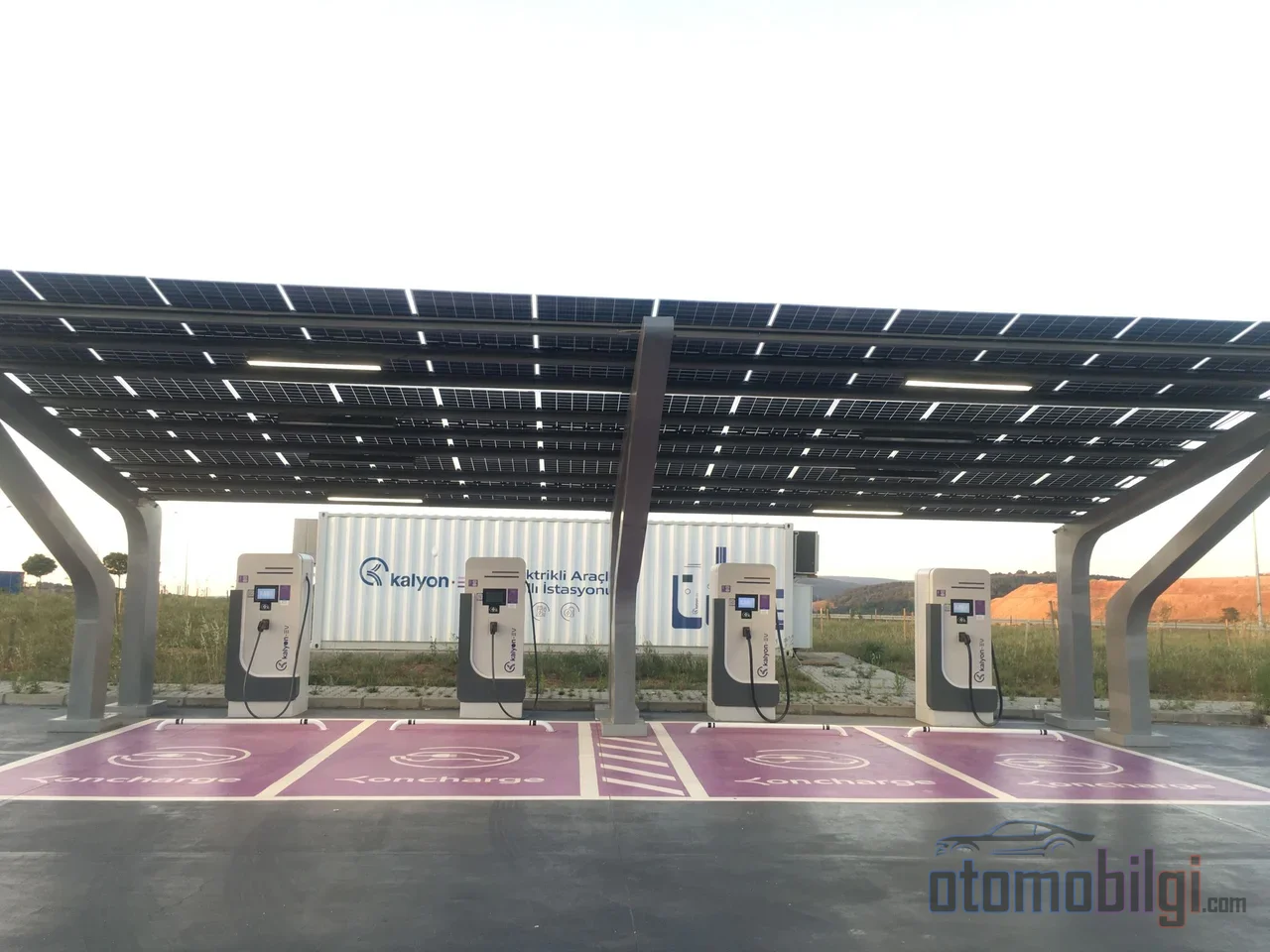
A decade ago, anyone in Turkiye who dared to set out from Istanbul to Ankara in an electric vehicle would have planned their route entirely around the locations of charging stations; the planning would have taken longer than the journey itself. Today there are more than 48 charging points along the E80 corridor on the same route, with an average distance between points in the 50-80 km band. While highway charging infrastructure long lagged behind urban networks, which were once considered as essential as big cities' drinking water, it has now become the fastest-thickening part of the picture. So where has this expansion concentrated, and how much has it actually eased long-distance electric vehicle use?
Where does the highway charging network stand today?
EPDK's September 2026 Charging Service Market statistics are the most solid official data point available. Accordingly, the number of electric vehicles in Turkiye has reached 491,492, while the number of commercial charging sockets has reached 48,971. Of the sockets, 27,664 are AC and 21,307 are DC; total installed capacity stands at around 3,875 MW. All of these figures include the urban network as well, but the growth in highway corridors forms the most visible face of this total.
The picture on the station side is also quite meaningful for the driver: 13,017 charging stations are in operation nationwide, and 7,606 of them offer DC fast charging. The number of stations offering 150 kW and above is 3,571. This last figure is precisely what is critical for long journeys; because DC units operating in the 30-400 kW range, which bring the battery to 80 percent in 30-40 minutes, form the backbone of highway use.
Highlights
- As of September 2026, Turkiye has 48,971 commercial charging sockets and 491,492 electric vehicles.
- DC sockets grew by 42% in one year, overtaking AC (38.4%).
- On the Istanbul-Ankara (E80) corridor there are more than 48 charging points, with an average spacing of 50-80 km.
- Fast charging point frequency on main highways has dropped to the 50-100 km band.
- 82.4% of consumption takes place at DC stations.
Which corridors have been reinforced?
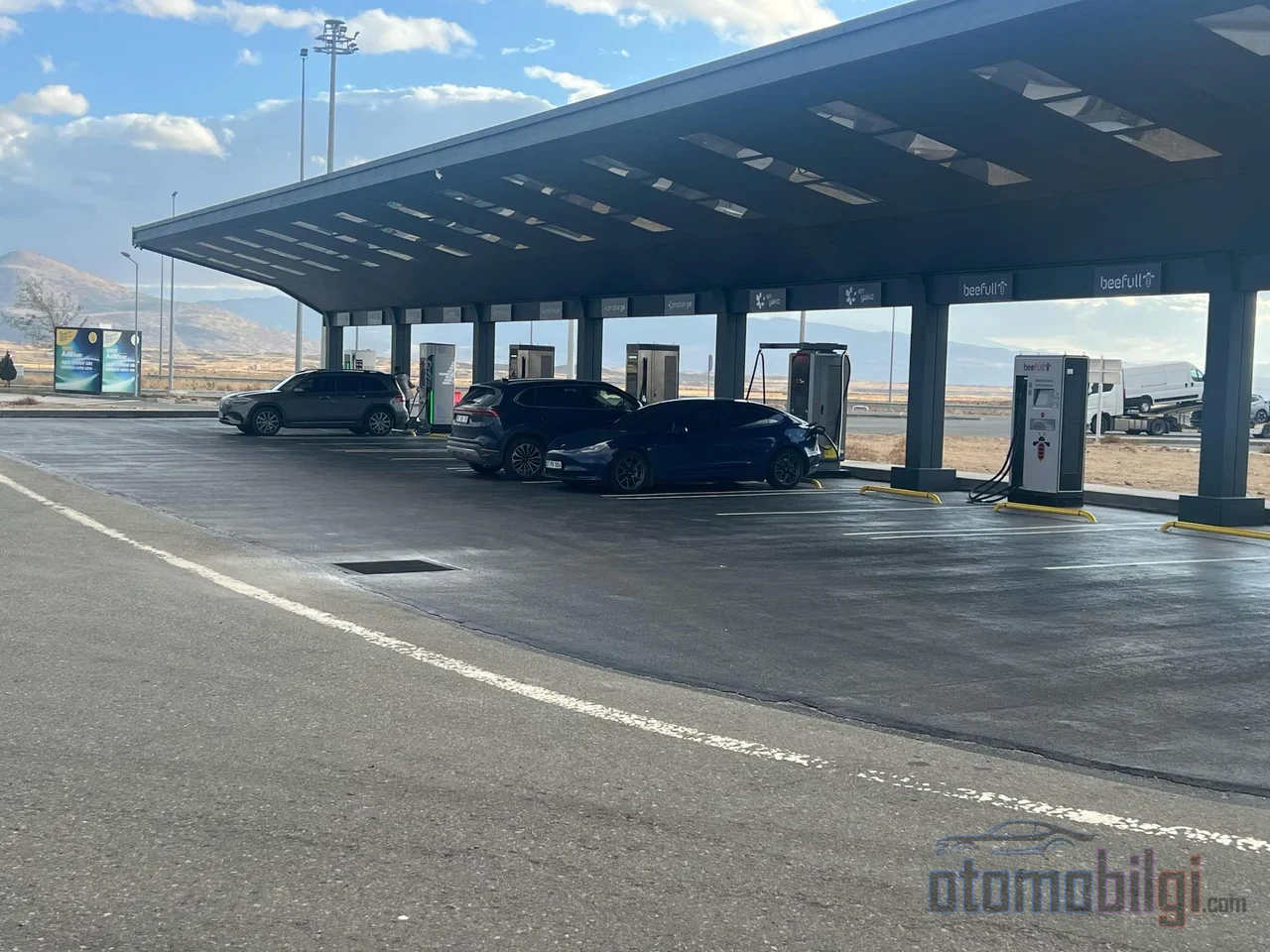
The Istanbul-Ankara line on the E80, with more than 48 charging points along its 450-kilometer route, is the country's most densely equipped corridor. On main arteries such as the TEM and Northern Marmara highways, a high-speed charging point every 50-70 kilometers has now become standard. Looking across the country, charging service is provided in all 81 provinces, and a fast charging station on main highways meets the driver almost every 70-100 kilometers.
The Istanbul-Izmir Motorway (O-5) is also one of the carrier axes of long-distance travel westward. Fast charging points are becoming widespread at rest facilities along this corridor; Zes's ultra-fast charging station is in service at the Oksijen O14 facility. At the ICA rest facilities on the Northern Ring Motorway, free charging service has begun to be offered; it is clear that such a step was taken to accustom people to highway charging culture.
Operators' road strategy
The operator table starts with Zes in terms of socket count: As of September 2026, there are 5,553 sockets (2,861 AC, 2,692 DC). It is followed by Trugo with 4,200 sockets; notably, 3,375 of Trugo's sockets are DC, meaning it has weighted its network directly toward fast charging. Trugo, as Togg's charging network brand, serves all 81 provinces and opened its first station in Bolu, right at the midpoint of the Istanbul-Ankara axis. The rollout plan also reflects highway logic: units are planned at 25 km intervals on high-traffic routes and 50 km in less busy areas. Voltrun (2,719), Wat (2,416), Esarj (2,072) and Zeplin (1,735) are the other major players in the picture.
The complement to the city-focused network: Why should the highway side be read separately?
For a long time, urban density defined Turkiye's charging picture; Istanbul alone accounted for 26.89 percent of total consumption in September with 22,383 MWh, followed by Ankara with a 13.28 percent share and Izmir with 6.12 percent. However, this urban weight is only half of the picture. The usage data delivers the real message: In September 2026, 82.44% of consumption took place at DC stations, while AC's share remained at 17.56 percent. Yet the majority of sockets are still AC. This gap clearly shows the critical importance of DC fast charging in long-distance and highway use; AC charging done at home or in a parking lot forms the invisible part of the data within cities.
In the same month, 3,152,733 charging transactions were made; with an average of 26.41 kWh of energy per transaction and an average duration of 1.13 hours. Consumption, which hit a record of 97,469 MWh in August, stood at 83,253 MWh in September. A significant portion of this activity passes through intercity corridors, i.e. via the highway network.
At what pace is expansion happening?
The annual comparison shows how quickly the network, including highways, is thickening. In September 2025, there were 321,710 electric vehicles and 35,002 sockets; in one year, the number of vehicles grew by 169,782, or 52.8 percent, and the number of sockets by 13,969, or 39.9 percent. The 42 percent increase in DC sockets is ahead of AC's 38.4 percent; this is the clearest indication that investment is shifting toward fast charging, and therefore toward the roadside.
The monthly trend of 2026 points in the same direction: While the number of sockets was 38,808 in January, it reached 45,097 in June, 47,908 in August, and 48,971 in September. A significant portion of the sockets added to the network in the first half of the year were high-power units required by long journeys.
What does this mean for long-distance electric vehicle use?
The short answer is this: Long journeys by electric vehicle on Turkiye's main highway corridors are no longer a planning problem, but the risk of waiting during peak periods is still on the table. Point intervals of 50-100 kilometers provide a comfortable buffer with today's electric vehicles whose ranges exceed 400 km; on the Istanbul-Izmir or Istanbul-Ankara routes, the driver can now choose the station according to the route, rather than the route according to the station.
On the other hand, the overall picture calls for a cautious reading. That works out to roughly 10 vehicles per socket, and although installed power per vehicle rose from 7.68 kW in January to 7.89 kW in September, it is still below the 8.05 kW of a year earlier. The vehicle fleet is growing faster than the sockets. Moreover, you cannot conclude from the national socket total that every region has sufficient infrastructure; availability depends on location, power, occupancy, and vehicle compatibility. On the return legs of holidays and long weekends, queues on corridors like the O-5 are still a real possibility.
On the regulatory side, too, steps have been taken to make road use easier. With the regulation EPDK put into effect in February 2026, operators moved to a single price for AC and DC units; with the new rules that came into force on July 1, 2026, the boundaries around pricing, access, and transparency became clearer, and steps were taken to address the station-occupancy problem. In the long run, however, the need is enormous: According to industry calculations, Turkiye's electric vehicle charging infrastructure needs an investment of $1.2 billion, and by some estimates around 150,000 charging devices.
Conclusion: The road side is now the network's leading edge
In the past, the charging network lived in the city, and the highway driver managed on their own. Now the balance is reversing: The growth rate of DC sockets outpacing AC, ultra-fast stations settling into rest stops, and point-to-point gaps shrinking to 50-100 km have turned the highway network into the leading edge of the entire system. Today's picture of 48,971 sockets is still enough to carry a fleet of 491,000 vehicles; the real test is whether that ratio can be preserved as the fleet grows. The outcome of that test will be read by looking at the charging investments of the next year or two.
Sources
- Number of electric vehicles exceeds 491 thousand: Trugo leads in consumption
- Electric Vehicle and Charging Market in Türkiye: First Half 2026 Data
- Electric Vehicle Charging Station Map 2026
- Number of electric vehicle charging stations, November 2026
- 2026 Türkiye Electric Vehicle Charging Network Analysis
- Türkiye's Electric Road: Where Do We Stand on Charging Stations
- Free charging stations for electric vehicles
- 472 Thousand Vehicles, 46 Thousand Sockets: Is the Infrastructure Keeping Up?
- A $1.2 billion investment is calculated to be needed in electric vehicle charging infrastructure