Borusan Has Fully Acquired Electric Vehicle Charging Network 5
Share This Page
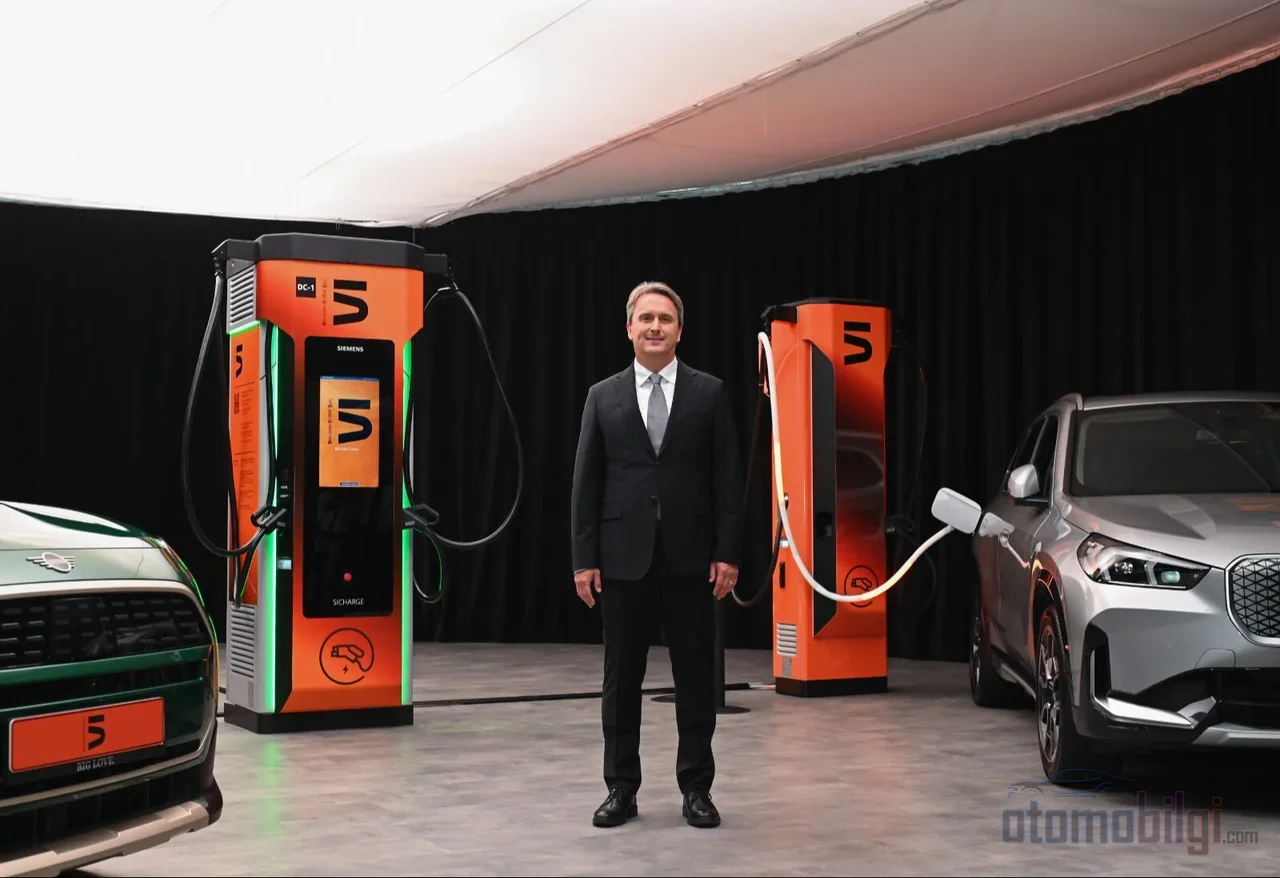
Borusan Group has taken over 100 percent of the shares of the electric vehicle charging network 5, incorporating the charging operation and investment processes directly into its own structure. The brand, established within the Borusan EnBW Enerji partnership, will now be managed from a single hand with the group's automotive experience while keeping its name and operations. The network currently has over 550 active charging points, and the 2030 target is 3,000 points and an investment of approximately 10 billion TL.
Highlights
- The 5 charging network has fully joined Borusan Group with the 100 percent share transfer.
- The network currently reaches over 550 active charging points across Türkiye, and over 100 thousand customers.
- The target: 3,000 charging points by 2030 and an investment of approximately 10 billion TL .
- The Borusan-EnBW partnership in the field of renewable energy continues as it has for 17 years.
- 5 promises charging with electricity supplied 100 percent from renewable sources through YEK-G certificates.
Why did Borusan take over the 5 charging network entirely?
The answer to the question is clearly written in the rationale for the transfer: 5 is a business that directly touches the consumer. The person standing at the charging station is largely the same person as Borusan's automotive-side customer. The group intends for this consumer-oriented structure to grow as part of an end-to-end managed integrated mobility structure, from vehicle supply to charging infrastructure. Rather than growing within a partnership structure, bringing the operation into the group's own ecosystem can be considered a natural consequence of this management approach.
When establishing the 5 brand, our goal was to lead Türkiye's e-mobility transformation with an easy, safe, reliable, fast and sustainable infrastructure. By its consumer-oriented nature, we are strengthening our charging network business by managing it directly with Borusan's 82 years of corporate strength and experience in the automotive sector.
Another detail in Günaydın's statement is also noteworthy: the partnership with EnBW in the field of renewable energy continues as it has for 17 years. So this is not a separation or a dissolution of the partnership; it is the two partners clarifying the division of labor. Borusan EnBW Enerji is withdrawing from electric vehicle charging but is continuing renewable energy investments at the same pace, especially 413 MW of installed capacity in wind power plants with storage.
Where does the network stand today?
5 was built to a remarkable scale considering its short life. When the brand was introduced in mid-2025, 351 charging points were being mentioned, and the goal of exceeding 500 points by year-end had been set. That goal seems to have been met: as of the transfer announcement, the network has over 550 active charging points and over 100 thousand customers across Türkiye. The company is said to rank among the leaders in efficiency; since surviving with low utilization in the charging network business is difficult, this should not be read as an empty claim.
From the very beginning of the brand, the heavy lifting was on the high-power side, meaning DC charging. This preference also fits the Türkiye market well: DC units are approaching a 30 percent share of total sockets in the country, whereas the European average hovers in the 10-15 percent band. The expectation of electric vehicle owners getting energy within minutes on the highway favors players who have built their weight on DC.
2030 target: 3,000 points and 10 billion TL
With the takeover, the investment plan also passed directly to Borusan's table, but the plan itself did not change: in 2030, to reach 3,000 charging points and, in line with this, to put into action investments amounting to approximately 10 billion TL This target has been the figure mentioned since the first announcement day; in other words, the takeover is not a bend in the strategy, but the same route driven with a firmer steering wheel.
A note for those who remember the old days: when Borusan Holding first entered this business with its German partner EnBW, it was discussed with an announcement of a 5 billion lira investment. Today's 10 billion TL framework and 3,000-point target are also a measure of how fast the market has grown in two years. EnBW's leading position in Germany's charging network market and 9 years of field experience were the backbone of 5's founding; this know-how remains part of the business after the takeover.
How does the takeover affect users?
The first question of readers who use electric vehicles is usually practical: what changes for me? According to the announced framework, the answer is that not much will change. The charging network operations will continue under the 5 brand as they already are; there is no indication that the app or brand identity will change. No change in charging prices was announced with the takeover. The brand's policy of supplying electricity from 100 percent renewable plants with its YEK-G certificates is also expected to continue; this practice is unrelated to the takeover, it is the brand's line from the very beginning.
The indirect effect can be read positively. Borusan Automotive Group's ChargeIQ app provides single-point access to all charging stations; the charging network being more tightly integrated into the group's automotive ecosystem could mean a better vehicle-charging experience. On the other hand, in the long term, the collection of pricing and investment decisions on a single company's table is a question worth asking whether competitive dynamism will diminish.
Is it time for consolidation in the Türkiye charging market?
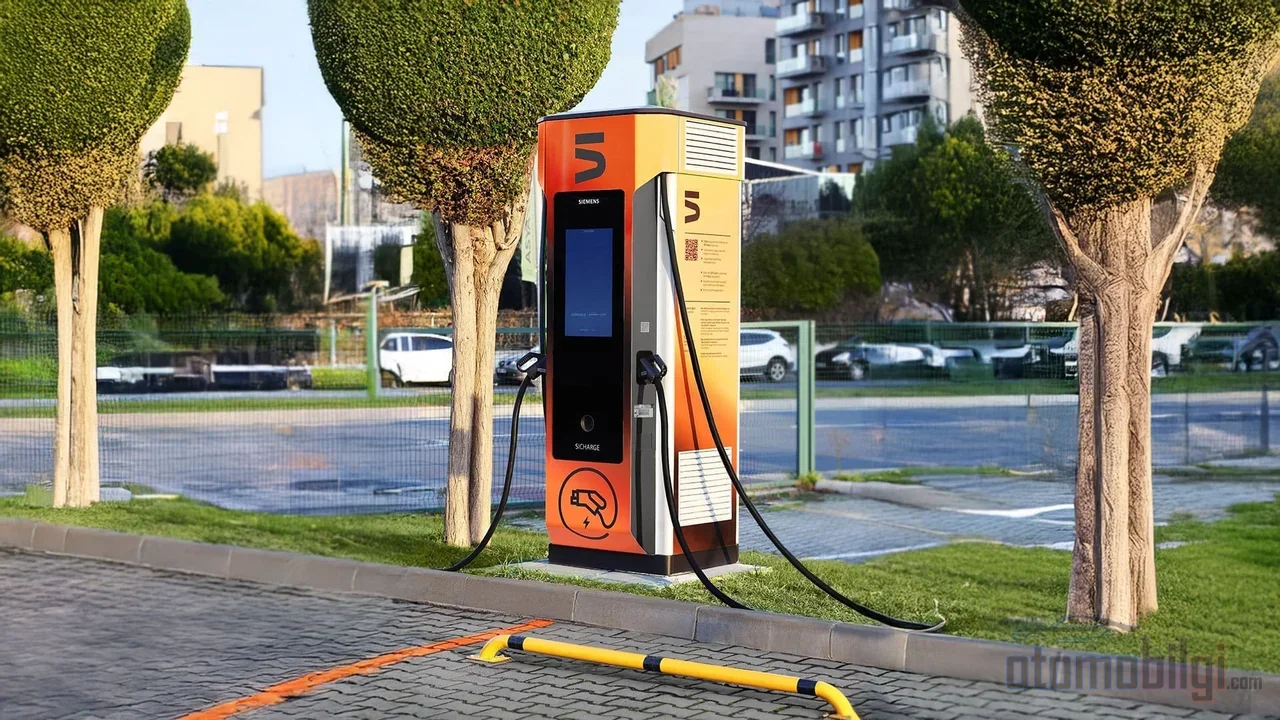
The full takeover of 5 is not news to be read on its own; it is a sign of the era the market is going through. As of the end of 2023 in Türkiye, the number of charging station license holders had exceeded 150. One hundred fifty separate players cannot operate efficiently in a market with more than 46 thousand commercial sockets; it was a picture where some handshakes were expected somewhere in the field. In terms of electricity consumption, the market is led by Trugo with 17.11 percent, followed by ZES with 14.90 percent and Eşarj with 8.11 percent shares - meaning the rest of the summit is quite fragmented.
The market is growing too. As of the first half of 2026, the number of electric vehicles in Türkiye has exceeded 450 thousand, and the number of commercial charging sockets has surpassed 45 thousand; with an August 2026 outlook, the socket count 47,908, and monthly consumption 97.47 GWh has risen to that level. The ratio of public sockets per vehicle is still around 1 socket for every 10 vehicles; in other words, demand is running ahead of the infrastructure. But the other side of the coin is profitability. PwC Strategy&'s analysis highlights the current profitability challenges even though the market attracts the interest of newcomers. Where the requirement of scale and the pressure of profitability intersect, consolidation moves emerge; the transfer of 5 is precisely a product of this picture.
How does the transfer work on the regulatory side?
Charging network operation is not a free-for-all without rules. According to the Charging Service Regulation, when a charging network operator transfers a station on its network to another operator, the transferring and receiving parties are required to notify the grid operator. Although the practice of the process differs since this transfer is an intra-group restructuring, the registration and notification chain of the stations must be carried over intact. The ISO 27001 certification requirement on the agenda also shows that the data safety aspect of station management can no longer be neglected.
The general framework of the legislation continues to take shape: for a charging network license, at least 150 charging sockets (at least 5 percent DC; 50 percent on KGM roads) and charging points in at least 10 districts are required. With a regulation adopted in March 2026, mobile charging stations also entered the legislation. The principle that service must be provided without discrimination to users of equal standing at public stations is binding on all players, independent of 5's growth targets.
Wouldn't this deal have worked without EnBW?
No. As a reminder, Borusan EnBW Enerji's portfolio includes 14 plants, with a total 937 MW of installed capacity, all based on renewable sources: wind, solar, and hydroelectric; annual production of over 2.7 TWh covers the electricity of approximately 1 million households. The company's core business is energy production; the charging network was the last mile where this production met the consumer. Leaving the consumer-facing side of the charging business to Borusan's automotive experience and the production side to the partnership's accumulated energy expertise seems like a fair sharing of the competencies both businesses require. Time will show how the 17-year partnership will work with this new formula; but on paper, the logic is consistent.
Conclusion: The charging network is now part of the automotive business
For someone who has been following this industry for thirty years, the real news is not so much the transfer itself as what it tells us. In the past, car companies would sell the car and leave the rest to others; today, groups like Borusan want to manage the entire chain, from vehicle supply to charging infrastructure, under one roof. The full transfer of 5 is a typical example of this transformation. For the user, there is no visible change in the short term; in the long term, however, the promise of a network of 3,000 points by 2030 will be the real test of the transfer.
Sources
- Easy, safe, reliable, fast and sustainable charging experience with "5" - Borusan EnBW Press Room
- Borusan Group will continue its investments by taking over the entirety of the electric vehicle charging network 5
- Borusan EnBW targets an investment of 10 billion liras by 2030 to expand its charging network - AA
- Borusan EnBW introduced its new brand Şarj 5 - TEHAD
- About Us - 5 Şarj
- An Application from Borusan Otomotiv Uniting All Charging Stations in a Single Point: ChargeIQ
- Electric Vehicle and Charging Market in Türkiye: First Half of 2026 Data - BigStation
- Current profitability challenges in Türkiye's electric vehicle charging market - PwC Strategy&
- Will a consolidation process emerge in Türkiye's charging network market? - TEHAD
- Türkiye's Electrification Transformation Report Card - FixCharge
- Amendment to the Charging Service Regulation - Official Gazette
- Türkiye Electric Vehicle and Charging Network Development Report - Evcify
- Mobile Charging Station and Minimum Charging Network - Halil Bakırcı
- Borusan Holding Invests 5 Billion Liras in a High-Speed Charging Network - Dolubatarya