The Refreshed Hyundai IONIQ 6 Has Hit the Road in Türkiye
Share This Page
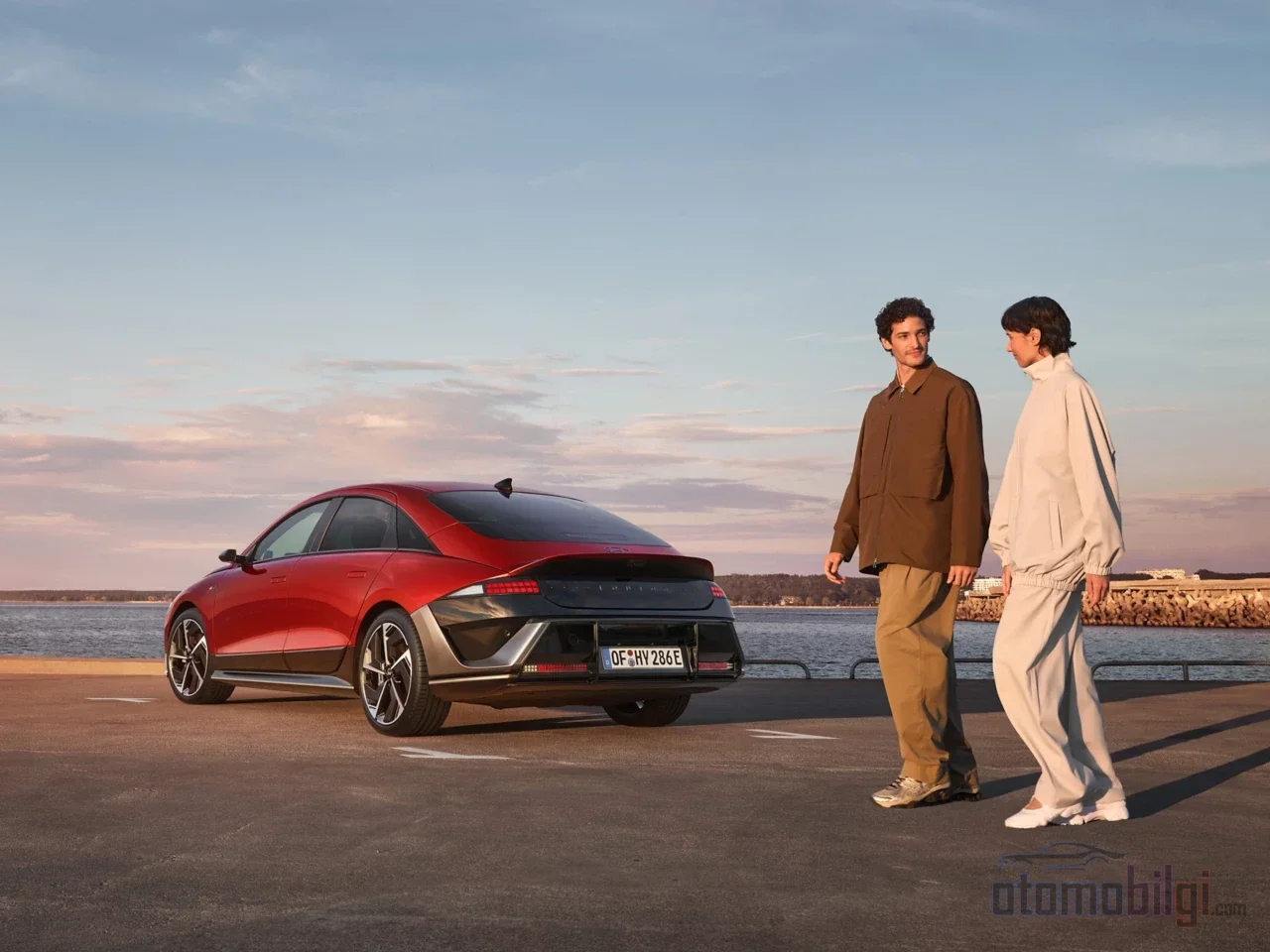
The refreshed Hyundai IONIQ 6 was launched for sale in Türkiye in August 2026 with two trim levels - Advance and Progressive. The electric sedan's launch prices range from 2,482,000 TL to 3,725,000 TL; the WLTP range of the 84 kWh version was announced as 680 kilometers.
Highlights
- Launch prices: Advance 2,482,000 TL, Progressive 3,725,000 TL
- WLTP range: 680 km (84 kWh 2WD), 521 km (63 kWh)
- 800V E-GMP architecture; in DC fast charging from 10% to 80% in approximately 18 minutes
- Maximum price with the October 2026 campaign: 3,246,000 TL (Advance 125 kW)
As someone who has spent over thirty years in this business, I can comfortably say this: a facelift often carries brochure value, and the rest stays the same as before. With the refreshed IONIQ 6, things have been worked on a bit more deeply. The battery options have been split into a two-pronged structure, motor outputs have been raised, and - a shortcoming the Turkish buyer has long complained about - connected services are finally coming into play. That said, the price tag has repositioned itself in the two months between the launch and the October campaign. Let's go through all of these one by one.
How much does the refreshed IONIQ 6 cost in Türkiye and with which trims is it sold?
The facelifted IONIQ 6 has gone on sale in Türkiye with two trim levels, Advance and Progressive . The Advance comes with a 63 kWh battery and a 125 kW (170 hp) motor, while the Progressive arrives with an 84 kWh battery and a 160 kW (218 hp) motor. Launch prices were 2,482,000 TL for the Advance and 3,725,000 TL for the Progressive.
But this is where the picture gets interesting. During the official campaign period in October, the maximum campaign sales price of the IONIQ 6 Advance 125 kW 4X2 was announced as 3,246,000 TL . Current listings on car aggregator sites also show that prices start from 3,225,000 TL. So within two months, pricing in this segment drew a line running noticeably well above the launch labels. For some buyers this may cause disappointment; for others, it is a game that rewards waiting for the campaign period. The days of buying a car at the sticker price without campaigns - as everyone knows - are long gone.
| Trim | Battery | Motor | Launch price |
|---|---|---|---|
| Advance | 63 kWh (NMC) | 125 kW / 170 hp | 2,482,000 TL |
| Progressive | 84 kWh (NMC) | 160 kW / 218 hp | 3,725,000 TL |
How valuable is the Progressive's difference?
The Progressive trim's standout feature is its premium equipment items, such as heated and ventilated leather seats that can go fully flat with a single button. While the difference of over 1.2 million TL seems too large to be explained by seat comfort alone, it comes bundled with a bigger battery, higher power, and longer range. The 84 kWh package promises 680 km of range on the WLTP cycle, while the 63 kWh Advance stays in a lower tier with 521 km . Both batteries use NMC technology.
When it comes to range, one point needs to be honestly stated. Owners of the previous generation reported real-world range noticeably below the WLTP figures, especially in winter conditions and on the highway - around 200-260 km in winter, and 250-300 km on the highway. These observations belong to the old model; time will tell what picture the battery management draws in the new one. In buying an electric vehicle, it has always been a healthy approach to read the WLTP figure as the catalog's promise and real consumption as the user's experience.
The technical side: 800V architecture and fast charging
The IONIQ 6 is built on Hyundai's 800V E-GMP architecture. The practical upshot of this architecture is this: in DC fast charging, the battery goes from 10% to 80% in roughly 18 minutes . With the facelift, motor outputs were also raised; the 125 kW (170 hp) and 160 kW (218 hp) versions are above the previous generation's figures.
- 0.21 Cd drag coefficient - one of the most aerodynamic bodies in the segment
- V2L, i.e. power transfer from vehicle to outside
- OTA updates and Digital Key 2
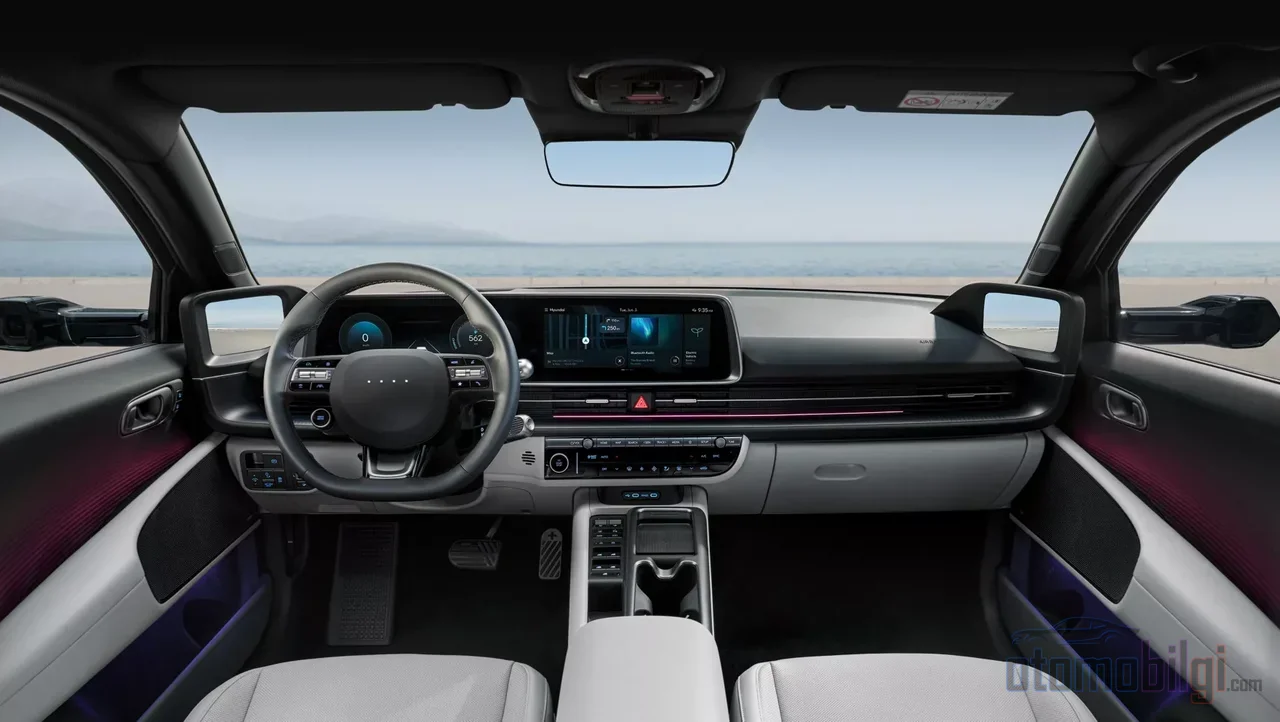
- Cloud-based navigation, wireless CarPlay and Android Auto support
- Dual 12.3-inch screen layout
Compared with the IONIQ 5, which carries the same architecture and battery capacities, what the IONIQ 6 does becomes clearer: the 84 kWh IONIQ 6 leaves the WLTP range of the IONIQ 5 carrying the same battery fully 110 km behind - 680 km versus 570 km. The sedan body's contribution to aerodynamics writes itself directly into the spec table here. Aerodynamics used to be a decorative paragraph in brochure corners; in the electric era it translates directly into range, and range into the purchase decision.
Bluelink finally goes live in Türkiye
One of the most tangible gains for the renewed model in the Turkish market is the activation of Bluelink connected services for the first time. The elimination of this shortcoming that previous-generation owners complained about - remote lock, pre-heating and location functions working - is of course welcome. Still, credit must be given where due: while rival brands standardized connected services years ago, Hyundai's late arrival in the Turkish market is a data point showing that the maturing of the brand's electric strategy is progressing slowly.
Electric production in Izmit: the second manufacturer in Türkiye
Another important dimension of the launch is on the production side. Series production of the renewed IONIQ 6 began as of August 14, 2026 at Hyundai's Izmit plant. Hyundai Assan's name was changed to Hyundai Motor Türkiye, and according to the brand's statement, with local electric production, the brand's number of electric models in Türkiye rises to 7. With this step, Hyundai took its place as the second automotive manufacturer producing electric vehicles in Türkiye, after Togg.
It is striking that the production volume has not been announced. Looking at it from a multi-year perspective, this much can be said: if local production has started at the factory, a conservative normalization in pricing can be expected sooner or later; the cost advantage of local production compared to an import-based model may, in time, reshape non-campaign price tags as well. This is not a prediction, but a plain reading of a pattern we have been observing for years.
Market context: where are the electric segments heading?
The electric market in Türkiye is carrying genuine momentum in terms of volume. In August 2026, 11,878 fully electric cars were sold, which corresponded to 19.30% of the total market. In January, 11,158 units and an 18.28% share had been recorded, and in February, 11,842 units with an approximately 17% share. In the first half of 2026, electric sales reached 81,331 units; the registered electric vehicle fleet exceeded 377 thousand. In September, the best-selling electric model was Togg with 4,237 units.
But beneath the volume story lies a structural divergence. Current market data shows that sales of electric vehicles under 160 kW grew by 7.3% to reach a 16.8% share, while sales of vehicles over 160 kW 65.3% shrank to a 2% share. In other words, the high-power electric segment is shrinking, while the efficiency-focused lower segment is growing. The IONIQ 6 Progressive's 160 kW motor places the car precisely in that shrinking segment. The Advance's 125 kW version, on the other hand, sits on the growing side. This picture is an example showing that the price-performance balance is drawn not by the brand, but by the market itself. The direct rivals of the IONIQ 6 in the electric sedan segment are the Tesla Model 3, BMW i4 and BYD Seal; all are under similar pricing pressure as well.
Financing in the shadow of campaigns
The IONIQ 6 campaign page includes a note referring to BDDK restrictions on auto loans; the brand's other campaigns are also structured around financing - for example, 12-month terms and 0.99% interest options, and 100% financing from Hyundai Leasing with terms of up to 60 months. In a market where a significant portion of new car purchases are structured through financing, announcing the campaign price as a ceiling actually says more about the market today than the price tag does.
Conclusion: looking with a realistic eye
The renewed IONIQ 6 is an electric sedan produced in Türkiye that makes concrete progress on the technical side and, with its range promise, has reached a assertive position in its segment. The range goes up to 680 km, charging speeds make an impact, and connected services finally work. Alongside these, one must also take into account how the price tag has moved within two months and that the high-power segment is shrinking. For the buyer, the practical approach is to follow the campaign periods and read the gap between WLTP and real-world range according to one's own usage scenario. To win in this market, you need to trust neither the brochure, nor hearsay, nor the sticker price - only your own kilometers.
Sources
- New IONIQ 6 | Highlights | Hyundai Motor Türkiye
- IONIQ 6 | Special Offer of the Month | Hyundai Türkiye
- 2026 Hyundai IONIQ 6 in Türkiye: Here is the price and features
- Hyundai has launched the renewed IONIQ 6 for sale in Türkiye
- ODMD Press Release, September 2, 2026
- Hyundai to produce electric vehicles in İzmit
- Hyundai's decision for Türkiye - starting in 2026
- IONIQ 6 or IONIQ 5?
- Hyundai IONIQ 6 Price (2026)
- Best-Selling Electric Vehicles 2026