Volkswagen Is Preparing a Battery Recall for Its Electric Models
Share This Page
Volkswagen is preparing a new recall process due to manufacturing defects detected in the battery cells of some electric models. The company recommends that the battery in potentially risky vehicles be temporarily charged to a maximum of 80 percent; some vehicles will also be called in for a battery inspection. This step, taken against overheating and, in the worst-case scenario, fire risk, is a development closely followed by ID series owners in Türkiye as well.
Highlights
- The problem stems from manufacturing-related defects in the battery cells; the company points to a fault at the supplier.
- Affected vehicles will have an 80% charge limit applied; the limit will be lifted for those where inspection reveals no issues.
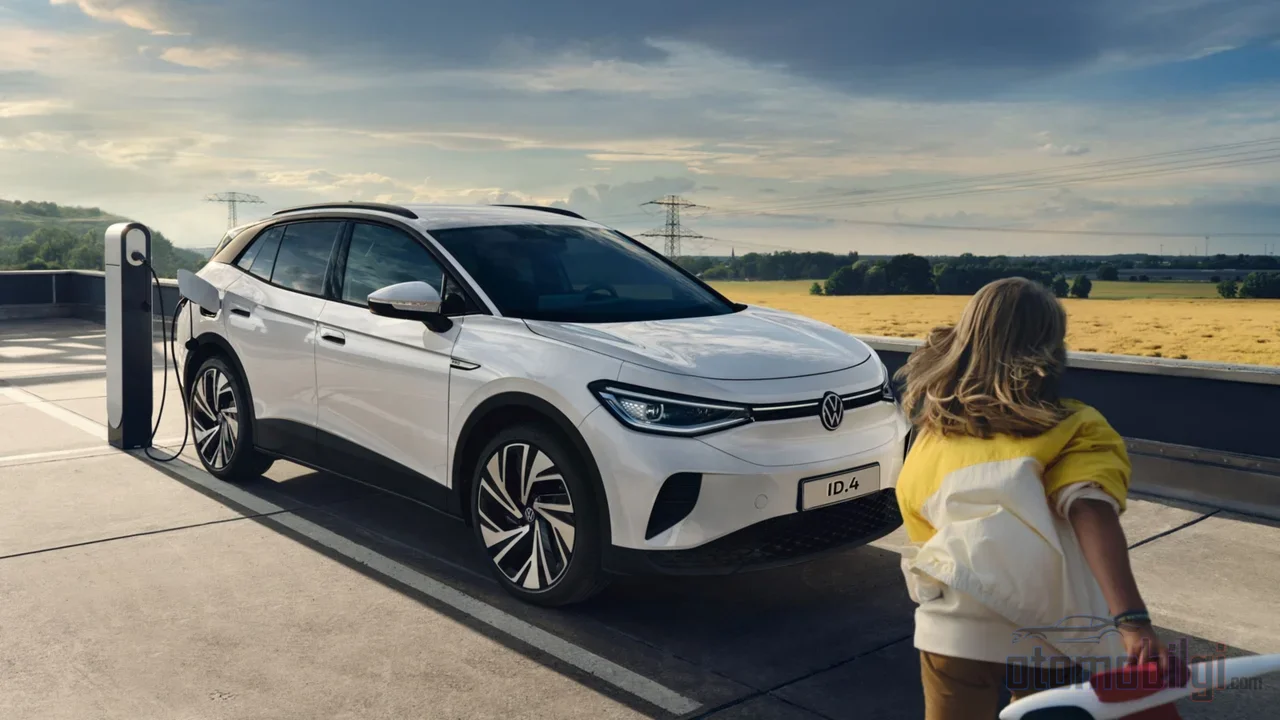
- In the US, approximately 22,000 ID.4s are affected; recall campaigns there are already underway.
- Notification letters are planned to be sent on November 27, 2026.
What Exactly Is the Problem, and Which Models Are Affected?
According to Volkswagen's statement, the defect in question is based on manufacturing-related flaws in the battery cells and, in the worst case, could lead to overheating or even fire. The company attributes the cause of the defective cells to production errors at supplier firms. It is stated that the problem has not spread across the entire brand but is limited to a specific production period. In other words, what we are talking about here is not a structural weakness affecting the entire ID series, but a targeted operation that means eliminating vehicles containing cells from the defective batch.
As for the scope, there is no clear picture yet. According to information in the German economic press, the problem covers the ID.3, ID.4, ID.7, ID. Buzz and Cupra Born models produced between 2023 and 2025; however, Volkswagen has not yet officially confirmed this model list. The only point confirmed by company spokespersons is that several thousand vehicles are affected and that the process is being planned in close coordination with public authorities.
One segment that has been reflected in official records comes from the US market: there, it is known that approximately 22,000 ID.4s are affected and that recall campaigns are already being conducted in the US and the United Kingdom. In Germany, the process is still at the planning stage; it has not yet been entered into the records of the federal motor transport authority, KBA. So it seems it will take a bit more time for the official process to begin for vehicle owners in Europe.
Meanwhile, to read the situation correctly, the context needs to be remembered. In September 2026, Volkswagen, due to a defective screw in the steering system, recalled approximately 2.86 million VW and Audi had recalled their vehicles. The battery recall came to light before the dust of this wave had even settled. As someone who has been following this industry for more than thirty years, I can say this: recalls used to be exceptional events that shook a brand's reputation; today, they have become almost a routine quality control tool in high-tech vehicles. With millions of parts and a multi-layered supply chain combined, expecting zero errors is no longer realistic.
What Is the 80 Percent Charging Limit For, and When Will It Be Lifted?
The measure recommended by Volkswagen is, as the name suggests, a temporary safety precaution. In potentially risky vehicles, the battery is requested to be charged at most up to 80 percent The logic is simple: the point where the cells operate under the most stress is the full-charge region. Keeping the charge just below this region significantly reduces the risk of triggering a possible thermal event. It is also among the recommended measures to avoid DC fast charging and, if possible, to park the vehicle in an open area after charging.
According to the information conveyed regarding how the limit will be implemented, the company plans to reduce the maximum charge level to 80 percent via a remote software update (OTA) to be sent to the affected vehicles. However, there is an important distinction here, and I believe it is worth underlining to avoid confusion: the limit is not designed as a permanent solution. In vehicles whose batteries are inspected and pass the check, the limit will be lifted. In other words, this is not a lifelong clamp to be applied to all affected vehicles as described in some sources; it is a measure that lasts until the inspection process is completed.
The technical solution itself does not always mean a battery replacement. When a faulty battery is detected, the high-voltage battery module does not necessarily have to be replaced; in some cases, a solution is possible with a software update. Affected vehicle owners are planned to be informed by letter, and November 27, 2026 has been marked as the date for sending these letters. Until that date, it is best for owners to calmly assess whether their vehicle falls within the scope of the faulty batch, rather than panicking.
What Does the Previous Recall in the U.S. Tell Us?
Today's development is actually a new chapter of an ongoing story, not a process starting from scratch. In January 2026, Volkswagen had launched recalls covering 2023-2025 model ID.4s with two separate filings submitted to authorities in the U.S. In the first one, the scope was narrow but the problem was serious: in 670 ID.4s of the 2023-2024 model years, a production-related alignment problem had been detected in the battery cell modules. The mispositioning of the electrodes could increase the fire risk; as precautions, an 80 percent charge limit, avoiding DC fast charging, and parking in an open area after charging were recommended, and it was announced that the faulty modules would be replaced free of charge.
The second filing covered a much wider scope: a full 43,881 ID.4. These vehicles did not have a software function that detected unusual behavior in the battery. The rationale was the risk of thermal runaway and associated fire; the plan consisted of a software update, battery health checks and, if necessary, module replacement. With these two notifications, it is calculated that Volkswagen has now, due to high-voltage battery fire risk in the US, issued a total of three separate recalls covering more than 45,000 ID.4 vehicles. Considering that the ID.4 is VW's best-selling electric model, and that it sold 163,400 units globally in 2025 together with the ID.5, it must be acknowledged that the scope, while not absolute, corresponds to a rate that cannot be underestimated at all.
This history is an important reference for reading today's Europe-focused process. Because we can see how the manufacturer previously behaved within the same class of problem: first a precautionary charging limit, then testing and inspection, followed by either a software fix or module replacement. The current process is also expected to follow a similar sequence.
How Does the Charging Limit Affect Range and Daily Use?
No concrete range calculation has been provided; however, it is not difficult to estimate with the available data. According to Volkswagen's own communication, electric vehicles can travel 300-500 km on a full charge under ideal conditions. The 80 percent limit roughly corresponds to four fifths of the full range. Automobile clubs' highway tests indicate that a range of approximately 400 km is still possible under suitable conditions. So the limit makes planning long journeys a somewhat more demanding task, but it does not effectively paralyze the electric vehicle in daily city use.
It is also worth adding this: Volkswagen Türkiye already recommends keeping the battery ideally between 20 and 80 percent. This is a standard recommendation widely accepted in the industry for extending the life of lithium-ion cells. So for an owner of a vehicle covered by the recall, the 80 percent limit is not that far removed from conventional usage habits. A significant portion of long-time electric vehicle owners already target this band, especially for daily charging. Where the limit will truly be felt is on long stretches between charging stations on the way back from vacation or on a long route; there, the plan may need to be updated by shifting a station.
What Is the Situation for ID Series Owners in Türkiye?
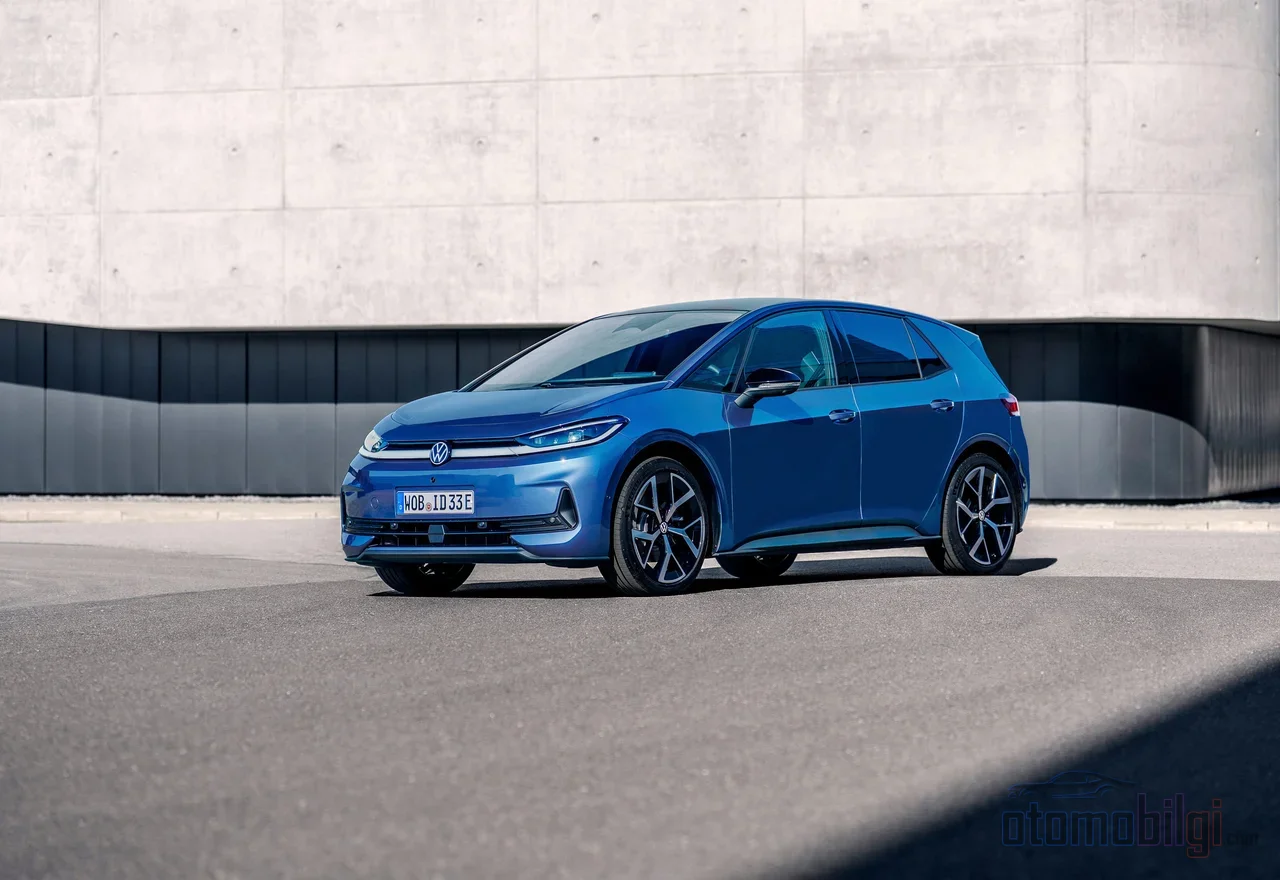
This is the question most on the minds of Volkswagen electric vehicle owners in Türkiye, and the honest answer for now is: there is no official statement. Volkswagen Türkiye has not yet published any special information for ID series owners. Given that the issue is limited to specific production periods, clarifying which production period the vehicles sent to the Turkish market belong to will be the first filter for the question of whether they are covered. This is an uncertainty that directly concerns a considerable user base, at a time when in the first three quarters of 2026 the share of fully electric vehicles in total deliveries rose to 20 percent and the brand holds the leading position in new electric registrations in Germany.
There is an official channel owners can follow: the voluntary recall page in Volkswagen Türkiye's after-sales services section remains the point where service actions are announced. It is worth remembering that this page also came up on social media in September 2026; in other words, the mechanism works, and time will tell whether the current battery action ends up there.
The noise on the social media front also needs to be addressed. Some shared videos circulate claims that electric car sales in Türkiye have been discontinued. I want to clearly state that this is not supported by any official statement and is unverified content. Spreading such information without verification from official channels does nothing but amplify the anxiety of already worried vehicle owners. Similarly, the calculations seen in secondary sources that the recall extends to 100 thousand electric vehicles are also not based on official confirmation; the statement verified by the company's spokespeople is at the level of a few thousand vehicles. Also, although there is a difference between the 2023-2025 and 2023-2026 ranges regarding the production year, the solid data in official records is the 2023-2025 model year.
For an ID owner in Türkiye, the practical roadmap is, as always, simple: for now, use the vehicle as usual, do not give credence to rumors until official plate-based information arrives, and keep an eye on the information letters planned to be sent after November 27, 2026. If a battery check call comes, make an appointment without delay; it is enough to know that even if a restriction is applied, it is a temporary measure that can be lifted depending on the inspection result.
Conclusion: A Preventive Step, Not a Crisis
This recall is not comfortable news for Volkswagen; as the second major wave following September's 2.86 million vehicle operation, it justifiably raises questions about quality processes. The decline in the Chinese market only adds to the trouble. Still, it would be an exaggeration to read the picture darker than it is: no incident caused by this problem has been reported so far, a preventive process is in place, and much of the fix can remain at the software level. For owners in Türkiye, what needs to be done is to wait for the official announcement and visit the service center in a coordinated manner if necessary. The rest, as has been the case in this industry for thirty years, is a matter of patience and follow-up.
Sources
- E-battery fire risk: VW is recalling thousands of vehicles again
- Volkswagen recalls 44,000 ID.4s due to fire risk
- Volkswagen is recalling 45,000 ID.4 units in America
- How to Preserve ID. Battery Life? Factors That Can Protect It
- What Is Electric Vehicle Range? How Many KM Does It Go?
- Voluntary Recall - Service Actions