Cheap Pads Become Expensive: Calculating Part Lifespan
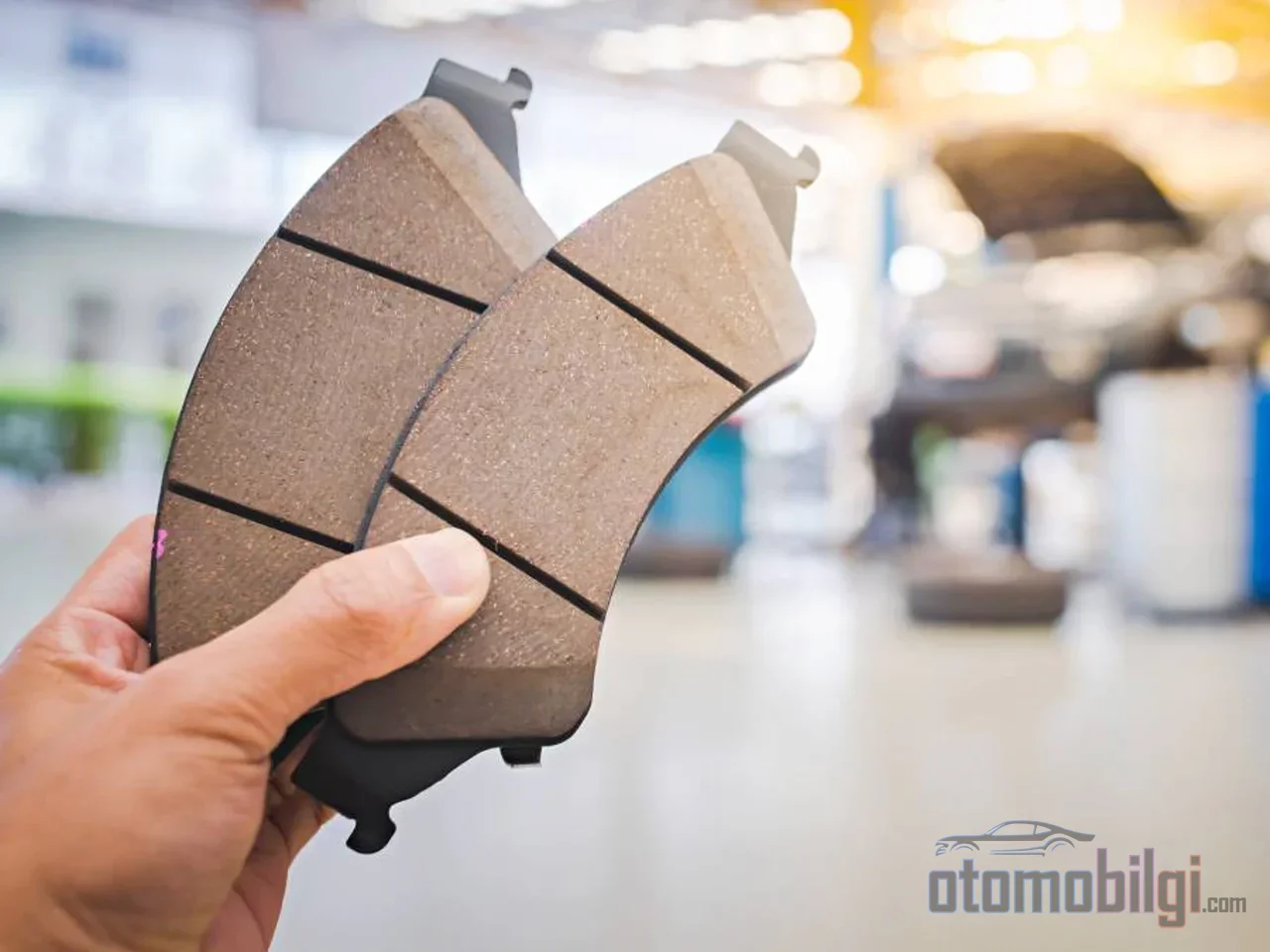
You are looking at two boxes on the brake pad shelf. One has triple the price on its label, the other is eye-catchingly cheap. Most drivers ask the wrong question at exactly this point: which one is cheaper? Yet the question someone with thirty years in this business would ask is different: how much does this part cost me per kilometer? Because the real price of a brake pad is not hidden in the label on the box, but in the kilometers it covers over its lifetime. If the cheap pad wears out at twenty thousand kilometers while the expensive one lasts thirty-five thousand, that label price is deceptive.
The purpose of this page is not to provide a current price list; prices go stale within months, logic does not. The goal is to teach the differences between spare part classes and the method for calculating the per-kilometer cost of each class. A driver who learns the method can apply it to their own vehicle and their own usage profile, and decide for themselves for which part saving money is sensible and for which the expensive part is a necessity.
Part Classes: The Real Difference Between Original, Equivalent, and Cheap Imports
In the past, things were simple: either you went to an authorized service and had the original part fitted, or you found an affordable equivalent at the bazaar. Today the range of choices has widened, and each class has its own distinct identity. An calculation made without knowing this identity remains incomplete.
OE and OES: Two Doors of the Factory Specification
OE, meaning original equipment part, refers to the part found on the vehicle as it leaves the factory and carrying the vehicle manufacturer's part number. OES refers to the part produced by the vehicle manufacturer's authorized supplier. In field practice, no difference in quality or fit is felt between these two; the difference is mostly in the packaging and the distribution channel. Some OEM companies sell the same part under their own brand as well; these products are considered equivalent to the original in terms of quality. So an OES part is not a second-class solution in the shadow of the original; it is goods from the same factory that came out of a different door.
An Equivalent Part Is Not Just Any Alternative
Here it is necessary to point at the point most blurred in the industry: not every alternative part is an equivalent part. Equivalent means compliance with specific standards and having been tested. Brake pad certifications such as ECE R90, along with ECE/E-mark, TSE, ISO, and IATF documents, form this framework. A certified premium aftermarket product cannot be put in the same basket as an untested cheap import. Aftermarket does not by itself mean poor quality; this industry spans a wide spectrum from certified premium products to underground production. The equivalent part recommendations of insurance companies should also be evaluated within this certification framework.
Refurbished and Used: Two Shores That Merely Look Cheap
There are two more items on the class map. Refurbished (remanufactured) parts are disassembled and tested at factory level and sold with a warranty; for items such as alternators, starter motors, injectors, and turbochargers, they are a reasonable choice in terms of cost-performance. In workshop conditions, the quality of revised rebuilt products varies depending on the person doing the work. A used part is original material removed from a scrap vehicle; its past life is unknown, and it has no warranty or only a very limited one. In the long-term calculation, each of these carries a different risk class.
Highlights
- An affordable equivalent part may initially look 30-60% cheaper, but original parts can last on average 25-40% longer.
- When calculated over the same mileage, a cheap brake pad can end up more expensive than a quality pad.
- For brake pads, the ECE R90 certification is a non-negotiable threshold.
- For airbags, seatbelt tensioners and collision sensors, you must not go outside original and OEM.
- The right question is not which part is the cheapest, but which option offers the best total cost of ownership.
How to Calculate Cost Per Kilometer
The core of the method is simple: divide the part's price by the part's lifespan. The result is the cost per kilometer, and it eliminates the sticker price deception in a single move. An example calculation from the industry illustrates this logic clearly: an equivalent brake pad set costs half the price of the original, but its lifespan is only 57% of the original's. When calculated over the same mileage, the cheap pad actually ends up more expensive. Moreover, this calculation only counts the part's price; labor, a repeat installation, and the invisible cost of the vehicle being off the road are not included.
The example figures are for illustrating the method; they are not today's price list. A concrete comparison looks like this:
| Part | Original price / lifespan | Equivalent price / lifespan | Result (35,000 km threshold) |
|---|---|---|---|
| Brake pad set | 1,800 TL / 35,000 km | 900 TL / 20,000 km | The equivalent is replaced twice and ends up more expensive |
| Air filter | 450 TL / 30,000 km | 180 TL / 15,000 km | The equivalent is replaced twice, the gap closes |
| Shock absorber | 3,200 TL / 80,000 km | 1,400 TL / 40,000 km | The equivalent is replaced twice, labor costs pile up |
The way to read the table is not to follow the columns, but to watch the last column. The shock absorber example is particularly instructive: an original part replaced every 80,000 kilometers means two installations instead of an equivalent replaced every 40,000 kilometers. Even when the part price catches up, the labor line remains exposed. This is also the truth of what brake pad manufacturers say in the industry's established phrase: a cheap pad that comes back costs more than a quality pad that does not.
Three Items That Reverse Short-Term Savings: Warranty, Certification, and Defective Part Risk
The cost-per-kilometer calculation is not limited to the part's own lifespan. There are three mechanisms, and each quietly reverses the visible savings of a cheap part.
The first is the risk of cascading damage. An affordable but low-quality water pump can lead to overheating and an engine-sized expense. A low-quality suspension part causes uneven tire wear and steering instability. A failure in items such as the timing belt kit, water pump, and bearings is not limited to itself and can spread into major engine damage. The criterion here is not the price of the part, but the second bill that the failure invites.
Second is warranty and consumer rights. As a rule, if the direct cause of the failure is not the aftermarket part installed, the warranty cannot be rejected merely because an aftermarket part was used. In practice, however, what protects the driver is the invoice, certificate, manufacturer documentation, and installation record. A driver who has a cheap undocumented part installed is crushed under the burden of proof even if they are right. The optional rights granted by consumer legislation for defective goods and services also work only with documentation. For vehicles under warranty, original parts are the recommended path, even if only to a limited extent.
Third is certification and conformity inspection. A TSE certificate shows that the product is manufactured reliably and in conformity with a certain standard; this conformity matters in parts that directly affect vehicle safety, such as brake pads and discs. For imported spare parts, TSE inspection at customs and the TAREKS process try to limit the market entry of uninspected products. For lighting products, the ECE/E-mark certificate makes the light pattern and non-glare criteria mandatory; a headlight without certification can cause problems at the periodic inspection. In short, the certificate is the identity of the part; no promise made about the lifespan of an unidentified part has any validity.
Where Cheap Makes Sense and Where Expensive Is a Must
This is the moment of the real decision, and there is no single answer; there is a clear hierarchy that varies by part group. A driver who knows this hierarchy protects both their wallet and their safety.
Safety-Critical Parts: No Negotiation
The brake system, airbag and seatbelt system, steering, and suspension are the core of this group. For brake pads, the ECE R90 certificate is a threshold; below that quality level, the risk of heat-related braking power loss known as fading, hot spot formation, and extended braking distances increases significantly. For the airbag module, belt tensioner, and crash sensor, one must not go beyond original and OEM; for these items, aftermarket or used parts create an unpredictable safety risk.
Electronics and Sensors: Compatibility Is Everything
For items such as ABS, mass air flow meter, oxygen, and pressure sensors, OE and OEM come first. An incompatible aftermarket sensor can increase fuel consumption, reduce traction, and constantly generate codes with a warning light. The money saved on the part is paid back through increased consumption and diagnostic costs.
Consumables and Aesthetic Parts: The Homeland of Quality Aftermarket
For consumable items such as filters, oil, and spark plugs, a quality certified aftermarket part is often a rational choice in terms of cost-performance. For body and trim parts with low safety risk, such as bumpers, mirror covers, and headlight frames, quality aftermarket products are also acceptable. The same logic applies to a refurbished alternator or injector. The only thing to pay attention to here is that the equivalent part carries equivalent status, meaning it is certified and tested. You should also know the clues that give away a counterfeit part: blurry printing, a weak hologram, an unverifiable serial number or QR code, an invoice that is not provided, and a part that is unexpectedly light are signs of reduced material quality.
Insurance and Equivalent Parts: Who Has the Right to Decide
In damage repair, the entitled party regarding which part will be installed is the vehicle owner. When the insurer suggests an equivalent part, the driver can request brand information and a certificate; coverage and price differences vary on a file-by-file basis. The damage surcharge known as the original part surcharge is an item that can be covered under comprehensive insurance. Even in a vehicle whose warranty has expired or a second-hand vehicle, the seller's liability for hidden manufacturing defects may continue. In other words, part selection is not only a technical but also a legal decision area, and it goes hand in hand with the right documentation.
Set Up Your Own Account: The Logic of a Lasting Decision
The summary of the summary is this: look at a part's cheapness not by its price tag, but by the value of the price divided over its lifespan; never make certification a matter of negotiation for safety-critical parts; choose long-lasting parts for items whose failure can escalate into major damage; do not avoid certified quality equivalents for consumable and aesthetic items. If your annual mileage is high, the per-kilometer advantage of a long-lasting part grows; in a rarely used vehicle, the balance can be set differently. These three classes and a single division operation are a longer-lasting guide than any price list. Prices will change tomorrow; the per-kilometer cost logic will not change.
Sources
- Original Spare Part or Equivalent Part? Real Cost Analysis
- What Is the Difference Between an Original Part and an Equivalent Part?
- Differences Between Original, Equivalent, and Aftermarket Parts
- Economy, premium, and OE-equivalent brake pads
- Differences Between Original and Equivalent Parts
- What Is the Equivalent Part Application and Its Conditions?
- Information on After-Sales Services - Ministry of Trade
- For Which Products Is a TSE Certificate Mandatory?