Does Fuel Quality Affect Consumption in a Hybrid Car?
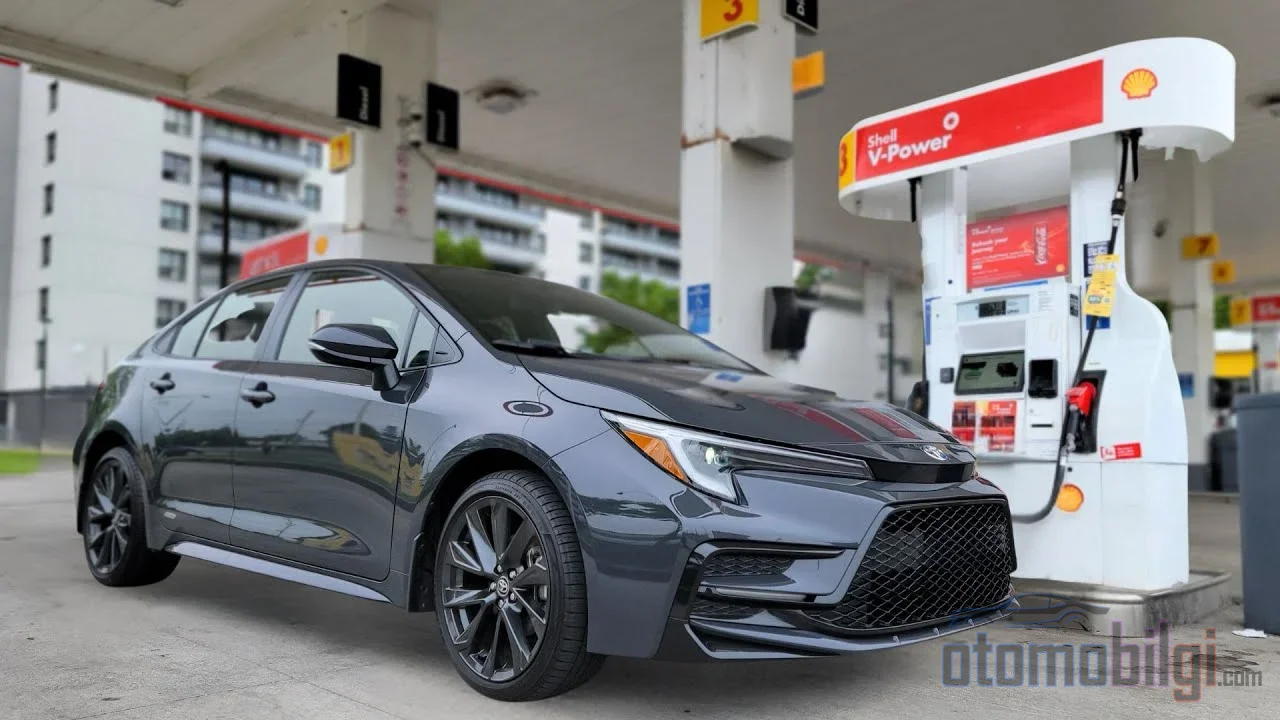
You're standing at the pump with the fuel cap open, and the pump offers two options: standard gasoline or a more expensive, higher-octane fuel. Your hybrid's rated fuel consumption is already impressive; but can higher-quality gasoline push that figure even lower, or is it just money wasted at the pump? The question looks simple, but the answer extends all the way to which thermodynamic cycle your car's engine runs on, the ethanol content of your fuel, and even how many months the fuel has been sitting in your tank.
This page looks at the fuel itself rather than the driving conditions that usually explain hybrid consumption: how much do octane level, ethanol blend, and in-tank fuel quality actually change real-world consumption? We tackle the answer with data and measurable figures.
Does octane level really make a difference in a hybrid engine?
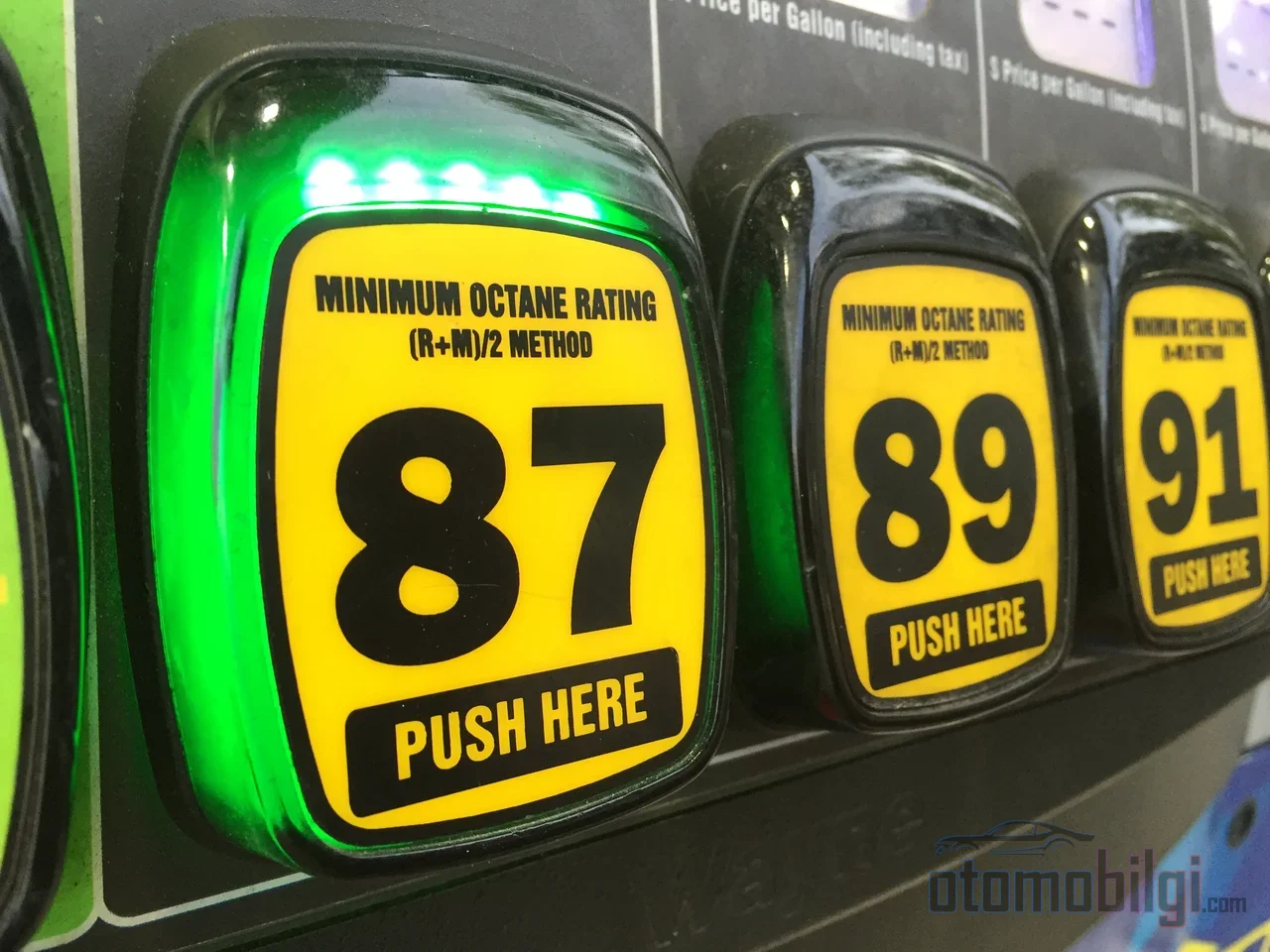
Octane number is not the fuel's energy value, it is knock resistance; that is, its resistance to unexpected self-ignition inside the cylinder. High-octane fuel can withstand higher pressure, which allows engineers to design engines with higher compression ratios. In hybrid systems this detail becomes critical, because most hybrids' gasoline engines run on the Atkinson cycle: the intake valve stays open longer, the effective compression ratio drops below the geometric compression ratio, and efficiency increases. In a port-injected Atkinson engine with a compression ratio of 13, the effective compression ratio at 1500 rpm is around 9.5.
This is where a debate begins. A peer-reviewed study reveals that the effect of octane specifications on fuel economy in hybrid vehicles is greater than in conventional vehicles; because low-sensitivity fuels pave the way for hybrid engines to run with higher geometric compression ratios and more advanced thermodynamic cycles. Manufacturer sources, on the other hand, are more cautious: Toyota's entire hybrid lineup is designed to run on 87 octane, and this level is considered the peak of efficiency for the vehicle. There is no finding that higher octane improves economy or power; the extra money paid does not pay off at the pump.
When the manual recommends premium fuel
There are exceptions too. The Ford Maverick Hybrid owner's manual recommends 91 octane or higher fuel for best performance - it does not require it, it recommends it. Owners of this model report values of around 49 mpg on the highway at 70 mph with premium fuel; some users note that premium fuel being sold ethanol-free in their region also factors into the equation. So if the manufacturer's manual says 87 octane, using premium fuel provides no measurable gain; if the manual says 91+, the difference can reach a measurable level, but you need to distinguish how much of that difference comes from octane and how much from the ethanol content.
There is also an interesting counterpoint to the Atkinson cycle: some user experiences suggest that this conversion gives better results on low octane, and that the slower flame propagation in high-octane fuel is more of a neutral feature than an advantage for the Atkinson engine. On the laboratory side, the University of Melbourne's test paints a more detailed picture: at a constant 91 RON, four different fuels with motor octane numbers (MON) ranging from 81 to 86 were tried in an Atkinson engine at normal and hot intake temperatures. The summary is: RON alone is not a sufficient indicator; the fuel's entire octane profile matters.
Highlights
- In hybrids designed for 87 octane, premium fuel does not improve economy or power.
- E10 reduces fuel economy by about 1% compared to E5.
- The Ford Maverick Hybrid manual recommends 91+ octane for performance.
- In plug-in hybrids, real-world consumption can measure about 3 times the stated figure.
- Ethanol-blended gasoline can begin to degrade within 30 days.
E10 or E5: how does the ethanol ratio affect consumption?
E5 gets 5% of its volume from ethanol and the rest from gasoline; in E10 the ethanol ratio rises to 10%. Ethanol has a lower energy content than gasoline, so the energy obtained per liter decreases and slightly more fuel is consumed for the same distance. The UK Department for Transport estimates that E10 reduces fuel economy by about 1% compared to E5; independent test evaluations point to a lower energy density that puts this difference at up to about 2%. The difference is small but persistent, and in countries with high fuel prices it turns into an annual cost - in a market where E5 super unleaded is 10-15 pence more expensive per liter, the equation can reverse.
Driver measurements describe a more pronounced difference than the official estimate. Prius and Yaris Hybrid owners report achieving better MPG figures with E5, with the cost difference largely offset by fuel economy; one Tucson user's calculation shows consumption of 45.8 mpg with E5, corresponding to a cost of 16.2 pence per mile. Since these data are at forum scale, it would be wrong to give an exact ratio; but the direction is consistent: in an engine calibrated for E5, E10 lowers consumption, and whether this loss is offset by the price difference needs to be calculated based on annual mileage.
The opposite direction is not empty either: ethanol's oxygen content and high latent heat of vaporization can deliver power and thermal efficiency gains in engines optimized for its ethanol ratio. It has been shown that a 15% ethanol/methanol blend at 80% engine load reduces brake-specific fuel consumption and raises thermal efficiency. So the key word is "optimize": if your hybrid engine was designed for E10, filling up with E5 should not be expected to work miracles; if it was designed for E5, the E10 loss is measurable but tolerable.
Why does the gap between catalog consumption and real-world consumption widen so much?
To assess the impact of fuel quality, the reference point first needs to be honest - and the news here is not good. An analysis published in early 2026 revealed that plug-in hybrids consume an average of 6 L/100 km in real-world driving despite the manufacturer's claim of 1-2 L/100 km: roughly three times the official figure. The gap between official and real-world values is also visible in the 2026 most efficient hybrid lists published by consumer organizations that run their own tests; it is emphasized that a hybrid family car sold in Australia has an official value of 5.8 L/100 km, while real-world values differ.
An independent road test claims that popular hybrids can consume up to 33% more fuel than advertised - although this quantitative claim could not be verified by a published primary measurement, the overall direction of the picture is consistent: hybrids usually achieve their catalog values in the 48-60 mpg band, and these values are captured in stop-and-go city traffic, under conditions where regenerative braking recovers energy. Highways and high speeds are the region where the hybrid's advantage narrows. Whether your consumption comes close to the catalog figure is largely determined by your usage profile; fuel quality is a variable that fine-tunes this picture.
Regenerative braking and the indirect effect of fuel quality
The backbone of a hybrid's consumption advantage is regenerative braking, and two different figures circulate about this mechanism's gain. While a Toyota-sourced statement says the system recovers about 22% of driving energy; a user measurement shows that roughly 6-9% of the initial kinetic energy is returned during braking. The difference stems from the definition of measurement: the 22% figure describes the total share across the entire driving cycle, while 6-9% describes the recovery of a single deceleration event. In academic measurement, average deceleration during regenerative braking increases by 10.9% compared to friction braking, and braking distance shortens by 5%.
The connection between this system and fuel quality is indirect but real: thanks to regenerative braking, the gasoline engine engages less and runs intermittently. In this usage profile, fuel quality - octane consistency, ethanol content, cleanliness - directly affects the efficiency of each short engine cycle. Moreover, if low-quality fuel causes the knock sensor to frequently retard the ignition timing, the efficiency advantage of the Atkinson cycle also erodes.
Does gasoline sitting in the tank go bad? Storage guide
Fuel quality is not only the pump's business, but also the tank's. The general rule is that gasoline can be stored for between 6 months and 1 year under clean and sealed conditions without significant degradation; a quality fuel stabilizer and proper storage can preserve it for up to 12 months. However, ethanol-blended gasoline gives in sooner: it is stated that it can begin to degrade within 30 days and that 90 days of storage can lead to fuel system damage. Among the factors that accelerate degradation, modern formulations with reduced sulfur and aromatic content are cited for accumulating water in the tank, and dirty containers for rapidly lowering fuel quality.
For hybrid users, the practical conclusion is clear: before setting off with a vehicle that has been parked for a long time, you need to consider the age of the fuel. Ethanol-blended gasoline that has sat in the tank of a rarely used hybrid for months can single-handedly erase the advantage of the highest-quality gasoline you bought from the pump.
Which gasoline should go into a hybrid: the clear answer
If your manual says 87 octane (approximately 95 RON on the European scale), high-octane premium fuel does not measurably improve your hybrid's consumption; it is smarter to invest the money not in the tank but in the right usage profile. If the manual recommends 91+ octane, trying premium fuel and measuring your own consumption is meaningful. On the ethanol side, the roughly 1% consumption loss introduced by E10 is real but small; the cost equation varies depending on the price difference of E5 premium and your annual mileage. And remember that the real determining factor is not the fuel but usage: the hybrid's advantage unfolds in stop-and-go traffic, where regenerative braking recovers energy. Clean, fresh fuel at the octane your manual requires - once you have provided this trio, the only remaining variable is the habits behind the wheel.
Sources
- The significance of octane numbers to hybrid electric vehicles - ScienceDirect (Zhou, 2023)
- Myths and Misconceptions about Hybrids
- Toyota Hybrid Resources
- The Future of Engine Knock and Fuel Octane Numbers - MDPI (Mittal, 2025)
- High-Octane Fuels: The Key to Efficiency? - MotorTrend
- Premium fuel and mpg in hybrid : r/FordMaverickTruck
- The Difference Between E5 and E10 Petrol - Michelin Connected Fleet
- Price rises - E10 vs E5 - Toyota Owners Club (Prius)
- Plug-in hybrids use three times more fuel - The Guardian (18 Feb 2026)
- Ethanol Benefits and Considerations - AFDC, U.S. DOE