Eco, EV and B Modes in a Hybrid Car
Share This Page
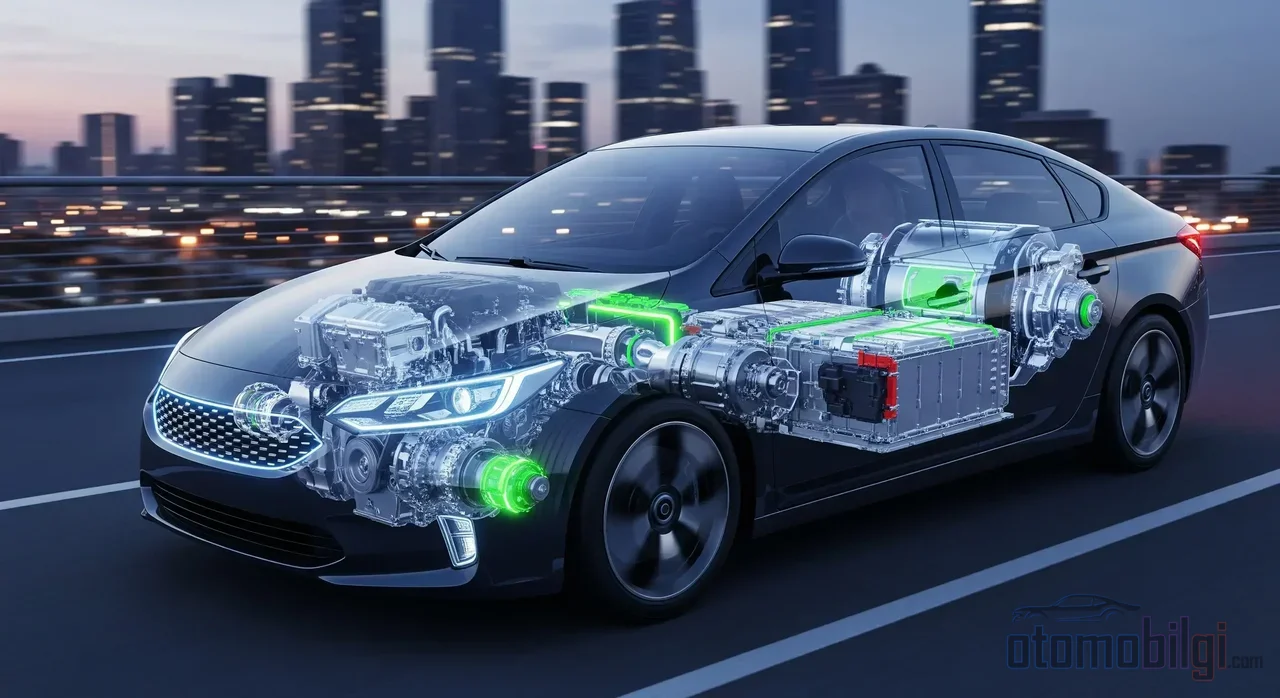
Eco, EV and B modes change consumption in hybrid cars; but not in the direction or by the amount most drivers expect. Measurements show that Eco mode produces a difference in the 0-2% band compared to Normal mode - practically negligible - that EV mode only works when there is battery charge and low speed available, and that B mode makes sense not on flat roads but only on steep downhill descents. The real source of savings is not the mode button, but the scenario in which the vehicle is used.
Key Takeaways
- Eco mode creates a measurable difference in the 0-2% range compared to Normal mode; at a constant highway speed the difference drops to zero.
- Sport mode produces a consumption penalty of roughly 2 mpg in measurements and disables the start/stop system.
- Full hybrids deliver 23-49% fuel savings on real roads compared to their gasoline equivalents.
- In city-weighted mixed use, the EV driving share rises to 50-65%, while on the highway this rate drops quickly.
- Regenerative braking can recover an estimated 5-9% of driving energy, and up to 22% in good conditions.
Does Eco mode really save fuel?
The short answer: in most cases, no. Eco mode does three clear things: soften the throttle response, reduce the power drawn by the climate control system, and limit the power the hybrid system can draw from the battery. These are efficiency measures on paper. But road tests reveal that these measures are not directly paid for in consumption.
The slowed throttle response leads the driver, who must keep up with traffic flow, to compensate for the same acceleration with deeper pedal inputs. The result: a mode trying to restrict the power drawn from the battery sees the driver demand the same power again through their own behavior. In a vehicle moving at constant speed, acceleration and gear selection are not in play anyway, so Eco has nothing to intervene with. That is why the measurable benefit of Eco mode does not appear in measurements, both in city stop-and-go traffic and at constant highway speed.
Owner tests paint the same picture. In comparisons made on the same route, the difference between Eco and Normal typically stays below 2%; in some cases Eco even delivers results a few tenths worse than Normal. Some hybrid owners attribute this to Eco restricting battery use: although the hybrid system shifts into EV mode earlier, because the power it draws from the battery is limited, it returns to the gasoline engine sooner. The other side argues that Eco shifts to the electric motor earlier and thereby maintains the balance. The common ground between the two camps is this: if there is a difference, it is small, within the 0-5% band, and the main factor is driver behavior.
A clear table for comparison:
| Mode | What it does | Measured consumption impact |
|---|---|---|
| Normal | Balances acceleration with efficiency, the default on every startup | Reference value |
| Eco | Softens throttle response, restricts climate control and battery power | 0-2% difference, zero at constant speed |
| EV | Forces operation on battery alone, up to the speed and battery limit | Low consumption in the city, range depletes quickly on the highway |
| B | Adds engine braking on top of regeneration, the car slows down sooner | Meaningful on steep descents, no added benefit on flat roads |
| Sport / Power | Sharpens throttle response | Approximately 2 mpg penalty, start/stop disabled |
Why does EV mode depend on battery charge level?

EV mode forces the hybrid system to run on the electric motor alone until a certain speed or battery limit is reached. The problem is that full hybrids have a small battery that cannot be charged externally; its charge level is determined entirely by regenerative braking and the surplus energy produced by the engine. Selecting EV mode does not create this energy; it only burns through what is available faster.
The consequences of this dependency are tangible. In stop-and-go city traffic, an environment where every press of the brake returns energy to the battery, EV mode can survive for a long time: in mixed city-urban-highway use, the EV driving share can fall in the 50-65% range, and journeys reaching an EV share of up to 70% are seen only in city traffic. When highway speeds are reached, the picture reverses; at speeds above 50 mph, the electric driving share becomes very low, because the power needed to sustain that speed drains the battery within minutes.
What happens when the battery runs out?
When you deplete the battery faster than necessary in EV mode, the hybrid system puts the gasoline engine into a charging cycle to refill the battery. This cycle can burn more fuel than would be spent in normal mode. In other words, part of the electric miles gained with EV mode is paid back in the charging phase that immediately follows. For net savings, the rule is simple: Use EV mode in low-speed, frequently braking environments where the battery can recharge on its own; forcing it on the highway only inflates the charging bill.
With plug-in hybrids (PHEV), the picture is even more striking, because the catalog figures assume a large EV share. Real-world data shows that in company cars, the 63% electric driving ratio assumed in the catalog cycle drops to around ~20% in practice. The same gap exists on the consumption side: While WLTP figures promise an average of 1.57 L/100km, in real use this figure rises to ~6 L/100km. About three times what was promised. The lesson applies to hybrid owners as well: electric miles are only free when there is energy in the battery and the right scenario.
Does B mode reduce consumption on the highway?
No, and the source of this common belief is an understandable logical error. B mode adds engine braking on top of regenerative braking: when you release the accelerator, the car slows down sooner, as if you had pressed the brake pedal. But doesn't regenerative braking already work in normal D mode? It does. At the moment of braking, the battery recovers energy in both modes. The only difference is that in B mode, this slowing is shifted to the moment the accelerator is released.
Driving constantly in B mode on flat roads or highways does not reduce consumption; quite the opposite, it creates unnecessary energy conversion. The hybrid battery cannot accept an unlimited amount of regenerative energy; when it reaches its upper charge limit, the extra deceleration force is balanced by engine revs, meaning the recovered energy turns into heat and fuel is burned again to accelerate once more. In low-speed decelerations (for example, dropping from 40 km/h to a stop at an intersection), B mode is seen to provide slightly more regeneration than normal D in the measurements; but this gain remains marginal compared to the energy loss caused by driving constantly in B on flat roads.
The manufacturers' official recommendation is along these lines as well: B mode is a tool designed only for steep downhill descents. On a long mountain road, in a scenario where constantly pressing the brake pedal would heat up the brakes and cause them to lose performance, B mode transfers engine braking to the electric motor, both preserving the brakes and turning the descent into battery charging. This is the scenario in which the vehicle is used most efficiently and most safely. On flat highways, staying in D mode is always the right answer.
Where does the real consumption difference come from: the mode button, or the scenario?
When all the mode buttons are looked at together, the picture becomes clear: Eco does nothing measurable, EV works in limited scenarios, and B is indispensable in one scenario. Yet the hybrid itself delivers 23-49% fuel savings compared to its gasoline equivalents in real-world driving. This enormous range comes not from the mode selection but from where the vehicle is used.
The mechanism lies in regenerative braking. During braking, the electric motor turns into a generator and sends kinetic energy back to the battery; this process can recover an estimated 5-9% of driving energy, and up to 22% under efficient conditions. The magnitude of this energy recovery depends on how often you brake. In stop-and-go city traffic, every intersection is a charging opportunity; on the highway, the gain is close to zero because you go hours without braking at all. That hybrids' city consumption is better than their highway consumption, the exact opposite of gasoline cars, is a direct result of this mechanism.
A practical mode strategy
- City stop-and-go: Stay in Normal mode, and use EV mode in low-speed sections if needed; the battery will feed itself through braking.
- Highway: Normal mode is sufficient; Eco has no measurable benefit, and EV mode drains the range rapidly.
- Steep downhill: B mode; it converts engine braking into regeneration, preserves the brakes, and recovers energy.
- Sport/Power: Apart from an approximately 2 mpg penalty and the loss of start/stop, it has no function in terms of consumption.
The gap between catalog consumption and real-world consumption is fed from the same vein. Hybrid systems are calibrated to the slow accelerations and frequent braking of test cycles; in real traffic, aggressive acceleration, a loaded vehicle, and cold weather reduce this efficiency. Still, full hybrids are the class that experiences the gap between catalog figures and reality noticeably less than PHEVs in real-world conditions.
Do modes harm the battery?
The answer to this frequently asked question is no. No matter how often you use EV mode, you will not wear out the battery; the hybrid system's battery management keeps charging and discharging within a narrow safety band and never allows deep discharge. EV and B mode do not operate in a way that affects the battery's lifespan. Choosing mode buttons according to road conditions rather than for consumption's sake benefits both the vehicle and your wallet.
Conclusion: Which mode should you choose and when?
Eco mode is a marketing layer; it does not go beyond the 0-2% band, and you do not need to change your driving habits by relying on it. EV mode is a short-term gain when there is energy in the battery and slow-moving traffic below; straining the battery simply means draining it and pushing it into a charge cycle. B mode is a genuine engineering solution on steep descents, its single and clear use case, reducing consumption and protecting the brakes. The hybrid's real savings comes from knowing how the hybrid advantage in the 23-49% band emerges across different driving profiles: it shines in stop-and-go traffic and normalizes on the highway. The mode button is an adjustment screw in this picture, not the main switch.
Sources
- Tested: Does Eco Mode Really Save Gas?
- Real-world usage of plug-in hybrid electric vehicles
- PHEVs Promised Efficiency, Drivers Are Burning Three Times More
- Fuel consumption and emissions performance under real driving
- Hybrid driving tips for best fuel economy
- Toyota Hybrid Drive Modes
- What Is Regenerative Braking and How Does It Work?
- What is Regenerative Braking in Hybrid Cars?
- Eco vs normal mode - test results
- ECO vs Normal Mode
- Better MPG: B Mode or Braking?
- EV mode is wasteful / less efficient on the highway (misconception)
- How to get more mpg out of your Toyota hybrid