Does Pulse and Glide Save Fuel in Hybrids?
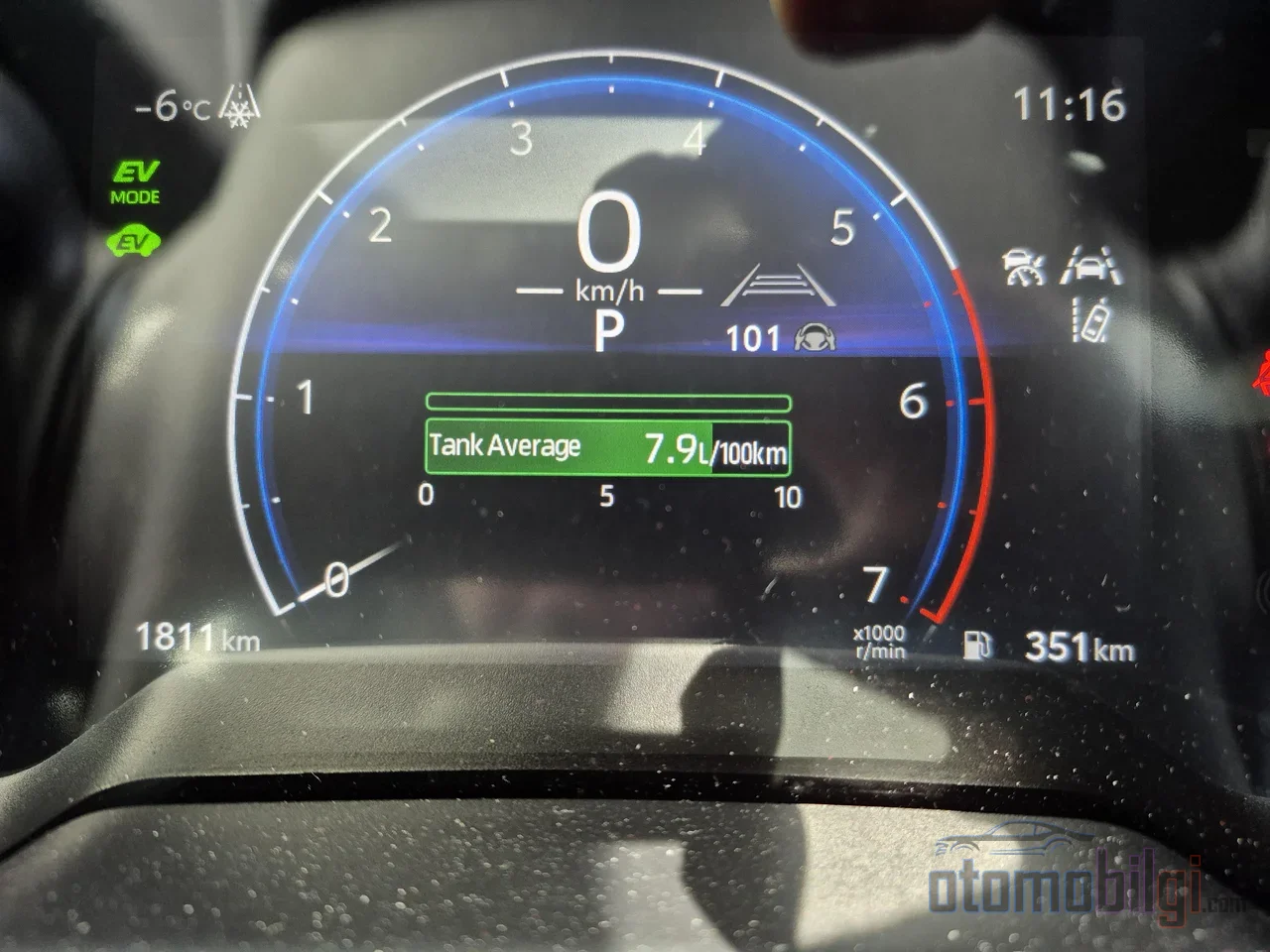
One of the most frequently repeated claims in club discussions among hybrid owners is this: if you press the accelerator firmly and then release it completely, establishing a cycle of accelerating and coasting, consumption drops noticeably. This technique is called pulse and glide, meaning accelerate and coast. The claim is not exclusive to forums either: simulation studies show savings at serious rates. But in the middle of those same studies stands a paradox; in hybrids, fuel cut-off is already active during the coasting phase, and regenerative braking is an energy-loss gate that can be compared to doing a one-handed job with two hands. So does this technique really deliver fuel gains in a hybrid, and if so, at what speed range and under what conditions?
On this page, we will examine one by one the technique's mechanism in the drivetrain, the numerical gain data, the scenarios where it does not work, and the effects of cold weather and battery charge level. The answer is more conditional than you might think.
How Does Pulse and Glide Work?
The logic of the technique rests on a thermodynamic reality: an internal combustion engine approaches its highest efficiency when operating under high load, that is, in the high-torque region. A vehicle traveling at constant speed, however, runs its engine in an inefficient, low-load region. Pulse and glide turns this imbalance to your advantage.
The cycle consists of two phases. In the first phase, the acceleration or pulse stage, you press the accelerator steadily and evenly to go above your target speed; the engine operates in its high-efficiency region and fills the vehicle with kinetic energy. In the second phase, the coasting or glide stage, you cut the throttle completely and let this energy be spent on overcoming rolling resistance and aerodynamic drag while you wait for your speed to drop naturally. When you reach the target band, the cycle begins again. On average, a higher overall efficiency is achieved compared to constant-speed driving.
Two Different Levels of Coasting: Engine Off and Engine Idling
The most efficient form of coasting occurs when the engine is completely off. In practice, two separate implementations are defined: in full pulse and glide, the engine shuts down during the coasting phase and the transmission is in neutral; in the mild version, the engine runs at idle and the transmission is kept in neutral, so that power is supplied for the brake and steering hydraulics and auxiliary systems. The full version delivers greater gains but is not applicable to every vehicle and every condition.
Here, a mechanism familiar from gasoline vehicles needs to be distinguished: most modern gasoline engines completely cut fuel when you lift off the throttle while in gear, that is, during over-run. However, in this case the engine is turned by the drivetrain and the vehicle slows down noticeably. In hybrids, on the other hand, the engine can shut down during coasting or the electric motor can take over; therefore, the same throttle lift results in less speed loss in a hybrid, and thus a longer coast.
Highlights
- Realistic simulations show fuel savings of up to 20% with pulse and glide.
- University of Michigan simulation finds improvements between 15-35% in the 35-108 km/h speed band.
- Cold weather weakens the technique's baseline: in hybrids, consumption rises by up to 23% in the cold.
- Standard Cruise Control cannot perform the pulse and glide cycle; the technique requires manual driving.
- Coasting in neutral drains the battery in a hybrid; there is no way to charge the battery in neutral.
The Difference of Coasting in a Hybrid: Regenerative Braking and Energy-Neutrality
In a conventional vehicle, releasing the accelerator has one meaning: engine braking engages and speed drops. In a hybrid, however, releasing the accelerator pedal can produce two different outcomes, and the difference between them determines the success of the technique.
The ideal coast should be energy-neutral: the vehicle neither accelerates nor decelerates meaningfully, and it neither draws power from nor charges the battery. This is exactly the point hybrid drivers look for by watching the power flow arrow on the instrument display; the moment neither the charging nor the power indicator appears on the screen, that is the glide state, the cleanest form of coasting. Releasing the pedal completely without touching it, on the other hand, is coasting, or free coasting.
The critical rule is this: if you are slowing down too much while coasting, you have engaged regenerative braking, and that is a loss. Although regenerative braking can recover roughly 50% of the vehicle's kinetic energy in every braking event, this recovery is a conversion; half of the energy is lost along the way. The energy chain that goes to the battery and comes back is always less efficient than never touching the energy at all. In hybrids, reaching the ideal coast requires using the pedal with feather-like sensitivity; some hybrid drivers prefer to take only the necessary charge with a very light brake after the pulse and cover the remaining distance in neutral flow.
Why Is Coasting in Neutral a Trap in Hybrids?
Shifting to neutral and coasting out of reflex from a gasoline vehicle backfires in a hybrid. While in neutral, even if the vehicle is moving, the traction battery is consumed and there is no way at all to charge the battery in neutral. In other words, coasting in neutral drains the battery on one hand while taking away the charging opportunity on the other. Also, coasting in neutral while the engine is off is explicitly illegal in many US states, especially downhill.
One more detail: some hybrids must keep the engine running while the vehicle is moving and the transmission is engaged. In these vehicles, the most efficient thing to do is to use the start-stop system's automatic shutdown as often as possible.
The Gains in Numbers: How Much Does the Technique Really Save?
The figures come from three layers: simulation studies, academic road tests, and long-term averages from driver communities. They all point in the same direction, but the magnitudes vary depending on conditions.
- In following and free-driving scenarios, pulse and glide delivers fuel savings of up to 20%; claims of two-to-three-fold improvement are only theoretically possible in rare cases at very low speeds, where the torque required for constant speed is at a minimum.
- The University of Michigan simulation study calculated savings of between 15-35% across a speed range of roughly 35-108 km/h.
- Pulse and glide based adaptive speed control developed for electric vehicles showed 28.3% lower energy costs; in hybrids, too, comfort issues can be reduced by making battery charge level oscillate instead of speed.
- On the real-world side, a Civic Hybrid owner covering 72,000 km in 15 months reported averages of 23-25 km/L with pulse and glide.
However, there is a hybrid-specific shortcut in this picture: simulations show that the pulse and glide gain is actually greater in conventional vehicles. Because in a hybrid, fuel cut-off is already active during coasting, and it is hard to keep regenerative braking from kicking in. Even without applying the technique, a hybrid already offers part of the coasting advantage straight from the factory. The real question is this: how much extra can a hybrid driver add on top of this ready-made advantage?
The aerodynamic calculation also explains how the coasting speed should be chosen. When speed increases by 10%, air resistance increases by roughly 21%; while the recoverable portion of a 10% drop in speed during coasting is only around 19%. In other words, coasting down too much speed pays back the advantage you gained while accelerating. The average excess energy is about 1%; you need to work in a wide and gentle band, not a narrow and high speed range.
When Does It Work, and When Does It Hurt?
Cruise Control and Highways
Urban stop-and-go, traffic lights and the need to match the traffic ahead break the pulse and glide cycle. by definition the system holds speed constant, which is the exact opposite of this technique. For this reason, the technique always requires manual driving. Still, there is an interesting finding on the research side: even at high speeds averaging 100 km/h, a pulse and glide based speed control strategy can deliver better results than constant speed. Real-world experiences point in a similar direction: in a comparative trial on hilly terrain, along a 23-kilometer route with 14 stops and heavy traffic, pulse and glide was found to be clearly superior to cruise control. The only caution is to stay smooth; harsh acceleration reduces efficiency under every condition.
Traffic Lights and Stop-and-Go
City stop-and-go, traffic lights, and the need to follow the traffic ahead break the pulse and glide cycle. When you cannot establish the cycle, there is no gain either; which is why a two-to-threefold improvement expectation is not realistic in the real world. The part of the technique that works in the city is planned coasting toward a red light and gentle acceleration; the full cycle is possible on routes with long distances between lights and flowing traffic.
Rolling Roads and Hills
Topography is the technique's best ally. Timing the pulse downhill and the glide uphill increases efficiency; acceleration done downhill is free, while coasting uphill is managed without straining the engine. On the other hand, on rolling roads with short hills, if the cycle is constantly interrupted, the gain evaporates just like in stop-and-go traffic.
Battery Charge Level and Cold Weather: Two Factors That Shake the Technique's Foundation
Pulse and glide is closely tied to battery charge level in hybrids, and two mechanical details are decisive here. First, for the lifespan of lithium-ion hybrid batteries, it is recommended to keep the charge level generally within the 30-80% band; the electric motor's peak efficiency is measured at around 88% and in the 70-90 km/h speed range. This means that when gliding is assisted by the electric motor, your speed band should coincide with the efficient zone. Second, in some hybrids the EV mode, usable up to about 40 km/h, offers driving on electricity alone with the engine off; while a hard pulse is a bad idea here, glide can still be beneficial.
Cold weather, on the other hand, directly undermines the technique's baseline. The measurements are clear: in road tests, efficiency of 23.1 km/L at 20°C drops to 20 km/L at 0°C on the same drive; this is a loss of approximately 13.4%. In urban driving, the temperature dropping from 24°C to 7°C increases consumption by 12-28%. A comprehensive test published in May 2026 also finds a 23% drop in fuel economy for hybrids in the cold, versus only a 12% drop at 35°C heat; forum data pushes the cold weather loss up to as much as 30-34%.
The mechanism is simple: cabin heating delays the engine reaching its operating temperature, and while the engine is cold the injection system injects more fuel until normal temperature is reached. Since the generator keeps working to warm the cabin and battery, glide phases shorten and the cycle is disrupted. In short, in winter, a vehicle with a summer average of 5.6 L/100 km consumes noticeably more in February; pulse and glide can compensate for this but cannot erase the loss entirely.
Conclusion: Is It Worth It, or Not?
The short, quotable answer is this: yes, pulse and glide genuinely saves fuel in a hybrid; when applied correctly on smooth roads and in the 35-108 km/h speed band, realistic gains are in the 15-35% range, but it is impractical with standard Cruise Control, in heavy stop-and-go traffic, and in cold weather.
In practice, the technique is an investment-return balance. Learning to read the power flow indicator on the dashboard display, using the accelerator pedal with a precision so it shows neither charge nor power, and timing pulse and glide according to the slopes bring measurable savings. In contrast, constantly shifting to neutral, accelerating hard, or dropping into regenerative braking while gliding gives back the technique's gains in one move. The hybrid already offers part of the gliding advantage from the factory; the driver's job is to collect the remaining share as much as conditions allow.
Sources
- Energy-efficient driving
- Pulse-and-Glide Operations for Hybrid Electric Vehicles in the Car-Following Scenario
- AAA Study: Temperature Impacts on EV and Hybrid Performance, Efficiency, and Costs
- Analysis of fuel economy reduction factors of hybrid electric vehicles
- Natural Resources Canada: Cold weather effects on fuel efficiency
- A Pulse-and-Glide-driven Adaptive Cruise Control System
- Driving technique: exploring Pulse and Glide
- Pulse and Glide vs Cruise Control - a study
- How to Slow-Gentle-Pulse-Glide Your Way to a 51 MPG Average Hybrid
- Endesa: Winter consumption - electric car vs hybrid vs petrol