How Do Wind and Aerodynamics Affect Hybrid Fuel Consumption?
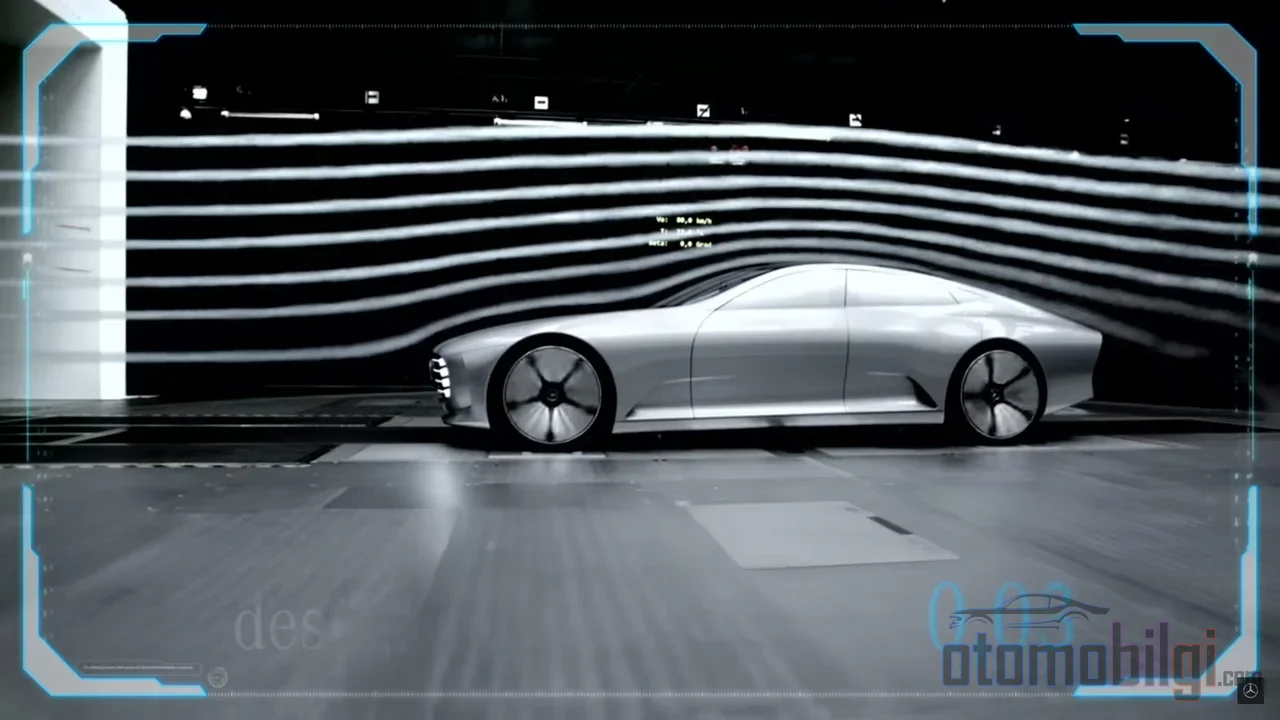
Most drivers underestimate the link between pressing the accelerator a little harder on the highway and paying an unexpected fuel bill in broad daylight. Why does a hybrid that works flawlessly in stop-and-go city traffic return harsher consumption figures on the open road, with the same driver and the same vehicle? The answer lies in classical physics: wind. In this article, we examine with measurable figures how aerodynamic drag crushes speed, why the hybrid system struggles early against this load, and how much accessories like a roof box cost in range.
How do wind and aerodynamics affect hybrid consumption?
Aerodynamic drag is the pushing force a vehicle encounters as it moves through the air, and its magnitude increases with the square of speed. If you double your speed, drag quadruples; and the engine power needed to overcome this drag grows even worse, proportional to the cube of speed. So driving at 130 km/h instead of 90 km/h is far more expensive than it appears: a 44% increase in speed means an increase of well over one hundred percent in air resistance.
In passenger vehicles, the share of this drag in the fuel bill varies with conditions. In the highway cycle, aerodynamic drag can account for more than about 50% of total energy consumption; in the city cycle, this figure stays at around 20%. Drag, which is small at low speeds, turns into the single item that dominates the vehicle's energy budget as speed rises.
Highlights
- Aerodynamic drag increases with the square of speed, and the power needed to overcome it increases with the cube of speed.
- A headwind or crosswind for every 16 km/h can reduce fuel efficiency by up to 13%.
- Even an empty roof box reduces highway economy by 2-8%; some roof baskets can push the loss to 25%.
- A hybrid's electric advantage is concentrated at low speeds; the gap narrows at sustained highway speeds.
Who carries the drag: how much does the vehicle's body shape matter?
Aerodynamic quality is measured by the aerodynamic drag coefficient, the Cd value. The most streamlined production cars hover in the 0.20-0.24 band; an average sedan is around 0.30-0.35, and an SUV around 0.35-0.45. For comparison, this suffices: a brick has a Cd value of approximately 1.05. A high-bodied hybrid SUV pays back, visibly and then some, the resistance its sedan cousin offers to the air.
So why does it matter where the drag comes from? Because that's where you will make improvements. The rear of the vehicle, the region where airflow separates from the body and forms vortices, is the largest source of drag. The vehicle's underbody and wheel wells also contribute to total drag, with a share of up to one sixth. So wheel gaps speak in consumption just as much as the roofline.
The real difference between 90 km/h and 130 km/h
To translate the quadratic and cubic growth of speed directly into fuel consumption, there is a set of variables that vary from vehicle to vehicle: the Cd value, frontal area, rolling resistance, mass, and the efficiency of the drivetrain. That is why giving a single universal rule is misleading; the same drag reduction is shown to cut consumption by 5% at 80 mph, while the effect drops to 3% at 60 mph and 1% at 50 mph. At city speeds, rolling resistance and mass are decisive, while at highway speeds it is the air that owns the table.
Yet the order of magnitude is clear: going from 90 km/h to 130 km/h more than doubles aerodynamic drag and increases the power the engine spends against that drag far more aggressively. The speeds of the test cycles that determine catalog consumption point to the same fact: the old NEDC cycle runs at an average of 33.6 km/h, while the WLTP that replaced it measures at an average of 46.5 km/h; in other words, aerodynamics' share is growing even in catalog values. Every 10 minutes gained on the highway speedometer has been paid for with the cost drawn from its tank.
Headwind, crosswind and their effect on range
Wind changes the relative flow speed regardless of the vehicle's speedometer reading. Headwind adds the opposing speeds together, growing aerodynamic drag quadratically. The measurable frame is this: for every average 16 km/h of head or crosswind, fuel efficiency can degrade by up to 13%. There are also user claims on social media that losses in headwinds reach 20-25%, but these are based more on individual observations than systematic measurement.
Crosswind works more insidiously. While the headwind component acting directly on the vehicle's frontal surface demands engine power, crossflow creates irregular separations around the body, producing a fluctuating loss instead of a constant, predictable load. This is why, on a long highway journey, noticeable differences in consumption arise depending on wind direction even at the same speed: the same route can return with a completely different fuel bill on the way back. The effect on range is simple math; as efficiency falls by 10-15%, range shortens by the same proportion.
Why can't a hybrid's electric motor compensate for this loss?
The hybrid's design philosophy is to leave the low speeds, where the gasoline engine is least efficient, to the electric motor. At start-off and in stop-and-go traffic, the electric motor takes over the job, while the gasoline engine engages at high speeds and hard acceleration. This division of labor works perfectly in the city; the hybrid's advantage is concentrated precisely where the electric motor fills the gap.
At sustained highway speeds, however, the picture changes. At high speed, the gasoline engine does most of the work, and the hybrid's efficiency advantage narrows noticeably. Manufacturers' own sources clearly state that a hybrid driven continuously at high speed under heavy load can consume as much fuel as a non-hybrid vehicle. The technical reason is simple: the electric motor's contribution is bounded by the limits of the battery and generator circuit. The power demanded at high speed is many times more than the battery can supply; the generator and gasoline engine take over the load, and the electric contribution remains marginal. On a windy day this picture gets even harsher, because aerodynamic load grows with the cube of speed while the hybrid's relatively small-capacity gasoline engine is strained earlier under high-resistance conditions. Regenerative braking creates an interesting second effect: by softening the effect of mass, it enlarges aerodynamics' share of total losses even further; in high-speed, multi-acceleration cycles this increase can reach 44%.
Real-world usage data also confirms this framework. There is a study in which, under real road conditions, hybrids' consumption was measured 44-100% higher than catalog values, and conventional vehicles' 30-82% higher; part of the difference comes from the way they are used, and part from catalog cycles not fully reflecting real highway speeds.
Roof box and roof basket: the silent consumption cost

The most easily measurable source of aerodynamic damage is anything mounted on the roof. The reason is geometric: the separation zone behind the vehicle was the largest source of drag; a roof box disrupts this flow and eliminates the clean body line.
| Accessory | Effect on highway consumption |
|---|---|
| Empty roof box | 2-8% increase |
| Simple roof basket | Approximately 5% increase |
| Roof basket (depending on configuration and load) | 0-25% increase |
| Basket + load combination (user observation) | Drop from 27-28 mpg to 21-22 mpg |
The scale of these losses is no exaggeration: it has been estimated that roof baskets cause the waste of approximately 100 million gallons of fuel per year nationwide. The picture is especially fragile for hybrid users, because while the electric contribution at highway speeds is already limited, the entire additional accessory-related drag falls on the gasoline engine's shoulders. Removing the box on days when you are not using it is the simplest and most measurable saving measure you can take.
What can a driver do to reduce drag?
Fighting the air is not a winnable war, but it is possible to manage the conditions. The practical short list is this:
- Keep highway speed within the 90-100 km/h band; remember the cubed cost of speed with every acceleration.
- Mount the roof box and basket only at the moment of need, and remove them after the journey.
- Travel with closed windows and a clean body line; keep externally mounted accessories to a minimum.
- On windy days, plan your range 10-15% more pessimistically for long highway stretches, and place fuel stops accordingly.
- Keep rolling resistance low with correct tire pressure; at speeds where aerodynamics dominates, every small gain counts.
The common denominator of these moves is drawing demand away from the region where the engine is inefficient. No one disputes the hybrid's advantage in the city; the point is not to force the system to play on open roads, away from its home field.
Conclusion: the hybrid's home field is the city, and speed is the price
The key to the issue can be summed up in one sentence: because aerodynamic drag grows with the square of speed, the hybrid's electric advantage at low speeds melts away and disappears on the open road; Headwinds and crosswinds speed up this erosion, and every 16 km/h of wind can cut efficiency by up to 13%. A hybrid is a game-changer in the city with its electric motor, but on the highway it is a car whose gasoline engine fights the wind alone. A driver who manages speed, roof load, and the route and the day's wind can keep their hybrid within a reasonable consumption band both in the city and on the open road.
Sources
- The Effect of Aerodynamic Drag on Fuel Economy | ARC
- Drag Reduction: The Pursuit of Better Fuel Economy – Illumin (USC)
- The Relationship Between Drag and Fuel Economy – Amateur Aerodynamics
- Why Are Hybrids More Efficient? – Geotab
- How Do Hybrid Cars Work? – Consumer Reports
- Understanding Hybrid Vehicle Fuel Economy – Mazda USA
- Pros and Cons of Buying a Hybrid – Edmunds
- Fuel consumption under real driving: hybrid vs conventional – ResearchGate
- Roof Racks Waste 100 Million Gallons of Gas – MotorTrend
- How strong winds decrease fuel economy – KFYR TV