Engine Oil Selection: Synthetic or Semi-Synthetic?
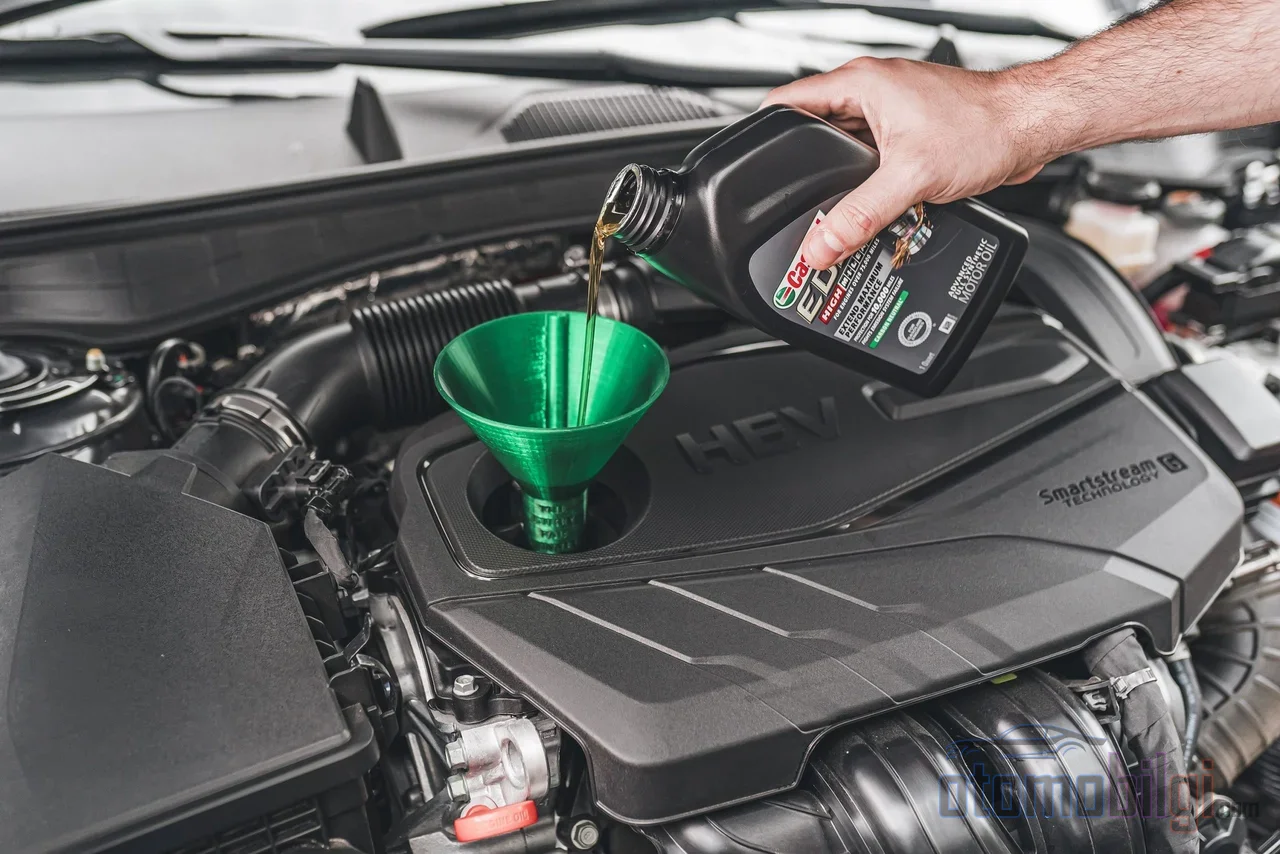
When you stand in front of the shelf at the service point and find yourself caught between two oil boxes, what you notice is not just the price difference: one says 5W-30, the other 10W-40; one is labeled "full synthetic", the other "semi-synthetic". These two pieces of information on the box directly determine your engine's long-term health and the total maintenance money that will come out of your pocket. So what does each number mean, and does synthetic oil really earn its price?
This page answers exactly that question: what viscosity ratings mean in everyday language, the cost-benefit balance of the three oil types, how the strategy changes in high-mileage vehicles, and why the manufacturer's written specification matters more than the brand on the box.
Viscosity Ratings: What Do 5W-30 and 10W-40 Actually Say?
The SAE viscosity code consists of two parts, and both describe a measurable physical property. The number before the letter W indicates the oil's fluidity at low temperature, i.e. in winter conditions; the smaller this number, the more easily the oil flows in the cold. The number after the W expresses the oil's thickness at normal operating temperature, i.e. inside a hot engine.
In practice, this means: 5W-30 flows faster than 10W-30 on a cold start and reaches the lubrication circuit sooner. 10W-40, on the other hand, offers a thicker oil film at operating temperature. Because 5W-30 flows more easily during cold-weather starts and throughout operation, it also contributes to fuel economy.
A common misconception needs to be corrected here: a larger second number does not mean the oil is "better". That number only tells which viscosity class the oil will behave in at high temperature. If a modern engine is designed for 0W-20 or 5W-30, putting 10W-40 in it does not provide protection; on the contrary, it makes the oil harder to pump and takes the engine outside its design parameters.
The Billed Consequences of the Wrong Viscosity
The effects of the wrong viscosity choice are not theoretical; they appear as concrete symptoms the driver can feel:
- If the oil is thicker than required, or old, contaminated oil is used, friction resistance increases and fuel consumption can rise by 2% to 5%.
- If the oil is thinner than required, especially in a high-mileage engine, the oil film does not form with sufficient thickness; contact between metal surfaces increases and part wear accelerates.
- If the engine noise has noticeably increased after an oil change, it is a practical sign that the viscosity used may not be the right class for the engine.
Because the molecular structure of mineral oils is heterogeneous, they flow more slowly than synthetics in engine lubrication circuits; this alone is a factor that pushes consumption up, even if the viscosity label is correct.
Highlights
- Full synthetic oil offers a change interval of 10,000-15,000+ km, while mineral oil is changed at 5,000-7,000 km.
- Wrong or stale viscosity can increase fuel consumption by 2-5%.
- There is no universal standard for the blend ratio of semi-synthetic oil.
- Higher viscosity grades such as 10W-40 are recommended for high-mileage engines.
- The API/ACEA specification on the box matters more than the brand name.
The Real Difference Between Synthetic, Semi-Synthetic and Mineral Oil
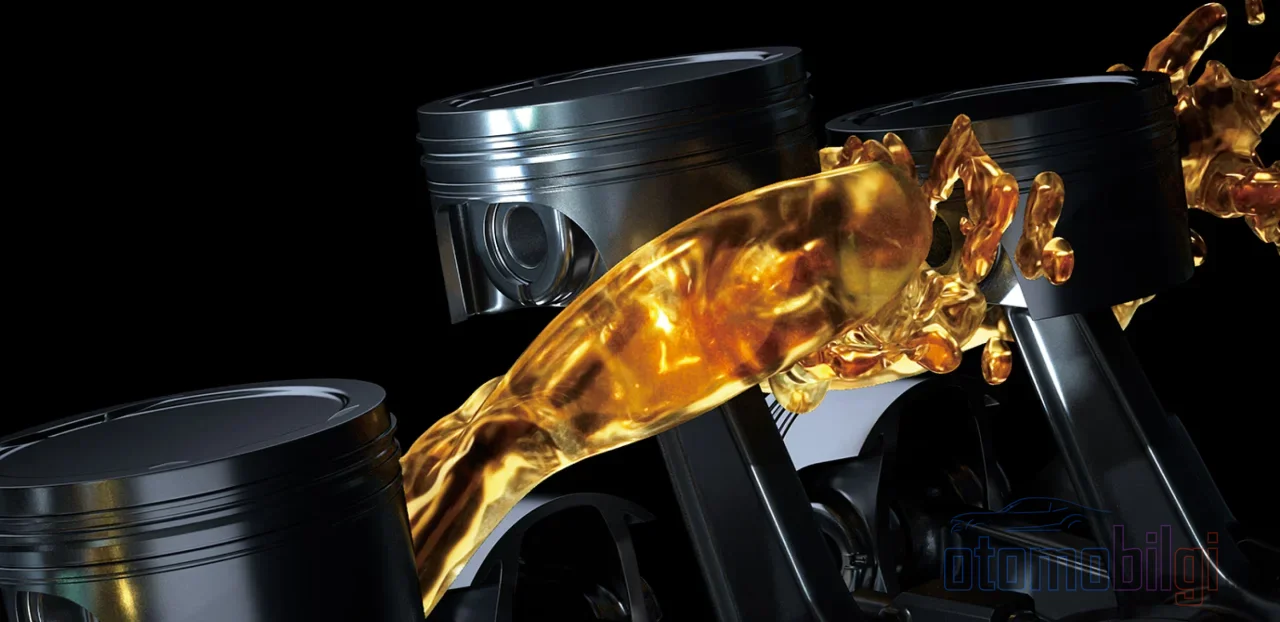
What fundamentally separates the three oil types is the source of the base oil. Mineral oil is obtained by refining crude oil and typically uses Group I/II base oils. Full synthetic oils are produced from Group III (advanced refined), Group IV (PAO) or Group V base oils; their molecular structure is more homogeneous and predictable. Semi-synthetic, as the name suggests, is a blend of the two - and here is a critical detail: the blend ratio varies by formulation and there is no universal industry standard.
From an engineering standpoint, the difference shows itself in three technical measures: viscosity index (how stable the viscosity remains against temperature change), oxidation resistance and shear stability. Synthetic oil is superior in all three; mineral oil oxidizes faster and loses its viscosity.
| Feature | Mineral | Semi-Synthetic | Full Synthetic |
|---|---|---|---|
| Change interval | 5,000-7,000 km | 7,000-10,000 km | 10,000-15,000+ km |
| Changes over 30,000 km | 4-6 times | 3-4 times | 2-3 times |
| Viscosity index | Medium | High | High |
| Cold flow | Slow | Good | Excellent |
| Price | Lowest | Medium | Highest |
Does Synthetic Oil Earn Its Price?
The list of advantages of synthetic oil is long: excellent flow at low temperatures, stable viscosity at high temperatures, less sludge, less part wear, optimized fuel consumption and extended engine life. Its disadvantage is single and clear: the price per liter is higher.
However, this is where total cost of ownership (TCO) comes into play. The price per liter alone does not represent the operational cost; change frequency, impact on fuel economy, wear rates and the vehicle's service downtime must be calculated together. A driver who changes synthetic oil every 15,000 km goes to the workshop two, even three times over the same mileage with mineral oil. The extended change interval; also reduces labor cost, vehicle downtime and waste oil disposal. In most scenarios, the price difference is offset this way.
Semi-synthetic is a balanced middle point in this equation: purer, more fluid and longer-lasting than mineral; noticeably cheaper than full synthetic but behind it in extreme conditions and long change intervals. It is a sensible choice for a low-mileage, tight-budget or older vehicle; in a turbocharged, direct-injection modern engine, full synthetic is the right answer.
Does the Strategy Change for a High-Mileage Vehicle?
Yes, and the reason is entirely mechanical. In high-mileage engines, the mechanical tolerances between internal components have grown. A very fluid oil may not form a sufficiently consistent oil film in these enlarged gaps. For this reason, when a modern engine running on 0W-20 or 5W-30 ages and accumulates mileage, switching to higher viscosity grades such as 10W-40 is recommended: a thicker oil compensates for wear, seals the clearances better, and maintains oil pressure.
That said, at high mileage a viscosity change should be evaluated carefully; because in a worn engine, the oil's operating conditions are already difficult due to contamination. If a vehicle that came from the factory with 0W-30 or 5W-30 is not losing oil, staying in the same grade is usually the safest route.
When Are High Mileage Oils a Sensible Choice?
Oils specially formulated for high-mileage vehicles contain additives that reduce leaks and components that strengthen sealing elements (seals). Their effectiveness in reducing oil consumption, leaks, and performance loss exceeds their price, especially in old vehicles intended for long-term use; a quieter-running engine is also a frequently reported result. Looking at it from the other side: if you plan to dispose of the vehicle within a year or two, a conventional oil provides sufficient protection for short-term ownership and is significantly cheaper.
Specification, Not Brand: API, ACEA and OEM Approval
The smallest but most important text on the shelf is the specification the oil meets. There are two main classification systems: API is a classification that sets general, minimum standards; ACEA contains more specific details and is stricter in many respects. ACEA codes consist of a letter and a number - for example C3 or E9 - and the letter indicates the oil's class. On the API side, today's most modern classes are backward compatible with previous standards.
What decides this matter is the vehicle itself. Modern engines with turbocharging, direct injection, and emission systems such as DPF/GPF generally require low-viscosity synthetic oils, specific ACEA/API specifications, and low-SAPS formulations to protect the catalyst. Using an oil that does not meet the specification stated by the vehicle manufacturer in the manual risks not only engine protection but also the manufacturer's warranty. If the specification you need is not written on an expensive bottle, that oil is not the right oil for your engine.
Does Mileage or Years Determine the Oil Change?
Both. For most vehicles using synthetic oil, manufacturers recommend a change every 10,000-15,000 km; however, no matter how little the vehicle is used, the oil must be renewed at least once a year. Oil life is not a universal figure: engine type, driving style, fuel quality, and weather conditions are decisive. Stop-and-go city traffic, towing, and extreme weather conditions shorten change intervals even for synthetic oil.
Situations You May Encounter
Should fully synthetic oil be put in an old car? As a rule, yes; synthetic oil can also be used in older vehicles. However, if the vehicle's owner's manual recommends mineral oil, a quality mineral oil also provides sufficient lubrication for these engines.
Can different oils be mixed? It is not recommended in normal use; different refining processes and additive packages can degrade each other's properties. In a roadside emergency, a top-up can be added temporarily, but if possible it should be topped up with an oil of similar character and replaced completely with the manufacturer's recommended oil as soon as possible.
What is the risk of counterfeit oil? Counterfeit oil and filters sold very cheaply on the market can cause irreversible engine damage. Oil should be sourced from authorized sales points; if the price per liter is noticeably below average, that is a red flag.
Short Answer: Which Oil Should You Choose?
The decision chain is built in three steps. First, open the owner's manual and note the viscosity grade and API/ACEA specification specified by the manufacturer - these two values are non-negotiable. Then weigh the vehicle's age and mileage against your budget: for a modern, turbocharged engine, fully synthetic is the right choice; an older vehicle or a tight budget is balanced with semi-synthetic, and a mineral oil can also be economical for a vehicle driven very few kilometers. In the final step, take your usage profile into account: city stop-and-go driving, towing, and harsh climate conditions shorten the change interval.
In short: the right oil is one whose label states your engine's specification and offers a change interval suited to your usage profile. Brand is a secondary preference once these three criteria are met; if they are not met, no brand name can make the wrong oil right.
Sources
- Mineral vs Semi-Synthetic vs Fully Synthetic Engine Oil
- Oil Viscosity Grades Explained
- What are the differences between synthetic oil and mineral oil?
- What is the Difference between Semi-Synthetic and Fully-Synthetic Oil?
- Mineral vs Synthetic vs Semi-synthetic oil
- The Right Engine Oil for High-Mileage Vehicles
- High Mileage Oil
- Why Your Fleet Should Consider 5W-30 Over 10W-40 Engine Oil