Injector Cleaning: Necessary or Just Marketing?
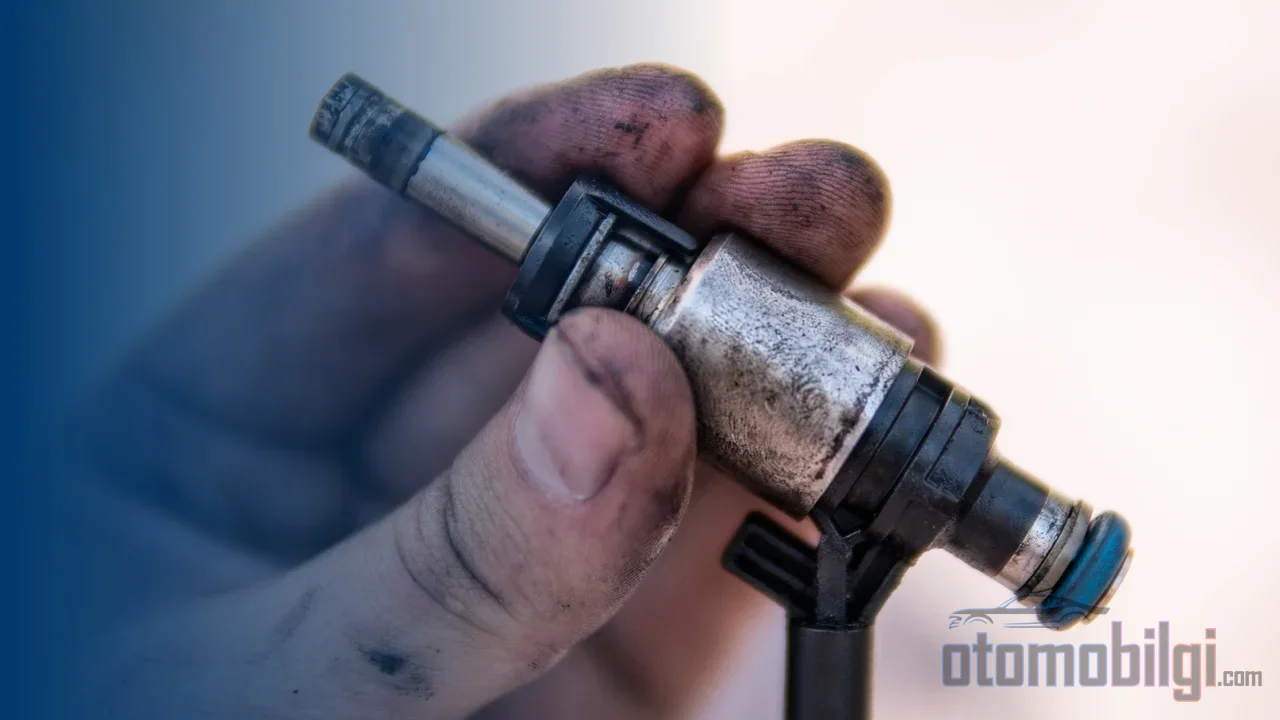
The service advisor puts a form in front of you: oil change, filters, spark plugs... and at the end of the list there are two more items: injector cleaning and throttle body cleaning. A serious amount gets added to the total bill, and deep down you ask yourself the same question: Was this really necessary, or was it a sales item cleverly tucked into the maintenance package? On this page we answer that question: which symptom genuinely points to the injectors or the throttle body, at which mileage the recommended cleaning smells like marketing, and what the difference is between chemical cleaning and removing the parts for ultrasonic cleaning.
First, let's clarify one thing: injector cleaning is not a made-up service. Injectors are precision components that open and close thousands of times per minute, operate under high pressure, and accumulate deposits over time. The problem is not with the service itself, but with the situations in which it is applied unnecessarily. Once you learn to tell the difference, you both avoid an unnecessary bill and choose the right method when it is genuinely needed.
Why Do Injectors Get Dirty and What Does That Mean?
An injector's job is simple: to spray a measured amount of fuel into the engine in a specific pattern. The main causes of deposit formation include fuel that evaporates on the injector tip after the ignition is switched off and leaves a sticky residue, combustion byproducts, low-detergent fuel, constant short-distance driving, and prolonged idling. When the spray pattern is disrupted, the air-fuel mixture loses its precision and engine performance drops. So the mechanism is real, and the fouling is real. But not every fouling complaint stems from the injectors; that is exactly where the real issue begins.
Distinguishing a Genuine Symptom from a Fake One
The classic symptoms of a dirty injector are: idle fluctuation and rough running, noticeable weakness in acceleration, increased fuel consumption, hesitation (misfire) in case of severe clogging and a check engine warning, failure of the exhaust emissions test, and worst of all, a smell of raw gasoline coming from the exhaust or the engine bay. That last one indicates that the injector is leaking or stuck open and requires urgent diagnosis.
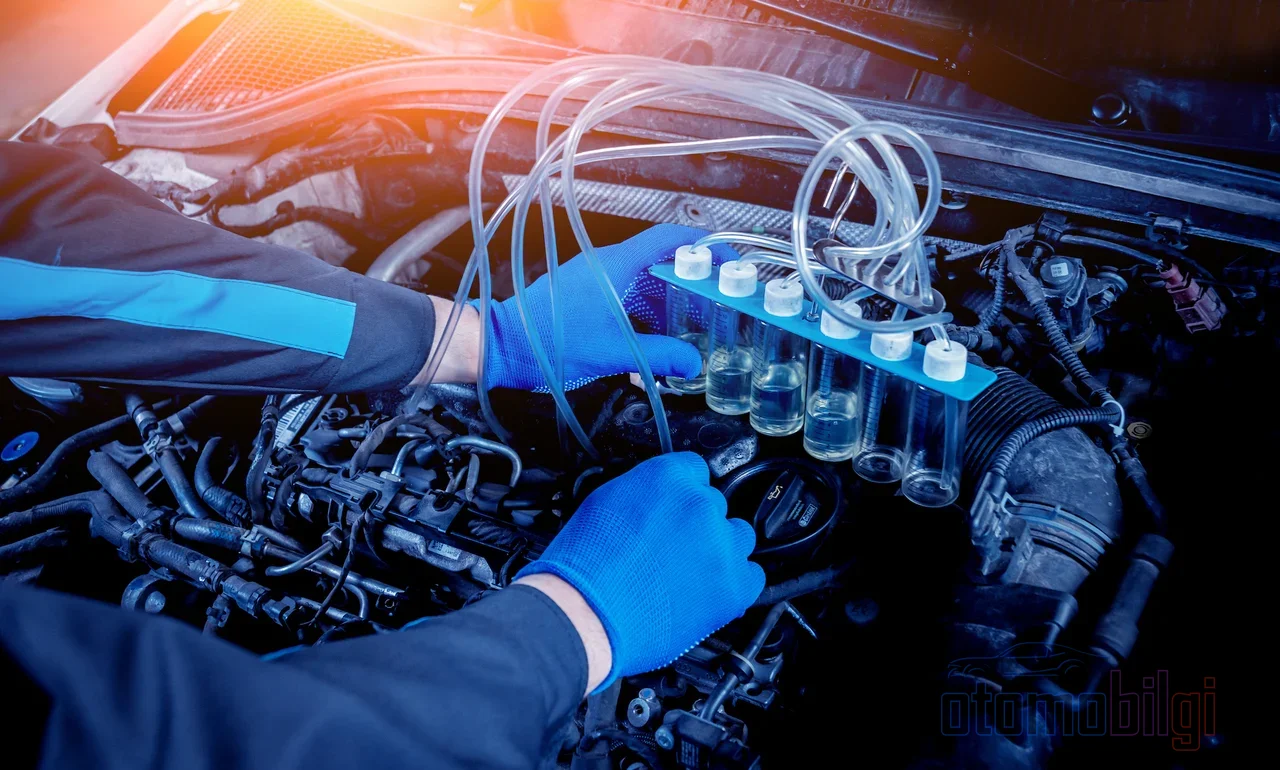
But the real engineering question here is this: when one of these symptoms appears, is the injector really the culprit? Most of the time, it is not. An idle problem can also stem from a vacuum leak, worn spark plugs, a faulty ignition coil, a dirty throttle body, or worn engine mounts. Weak acceleration may be the result of a clogged air filter, a weak fuel pump, a clogged catalytic converter, a transmission or spark plug problem. Increased consumption is just as often caused by low tire pressure, aggressive driving, a faulty oxygen sensor, or a seized brake. A symptom alone is not a diagnosis; diagnosis is made through measurement. If injector cleaning is recommended without fuel-trim readings via an OBD device, an injector balance test, and a cylinder contribution test, that recommendation is a guess, not a diagnosis.
Highlights
- In a vehicle with no symptoms, under 96,000 km, and driven with quality fuel, routine injector cleaning is unnecessary.
- Injector cleaning service is typically priced in the $80-200 range and is often offered as an add-on during oil changes.
- Ultrasonic cleaning is effective only when the injector is removed from the engine; performing it on the vehicle is not practical.
- After throttle body cleaning, some vehicles require an idle relearn procedure; high idle during the first few kilometers is normal.
At Which Mileage Is It Necessary, and at Which Is It Just Marketing?
As a rough rule, dealer resources recommend injector cleaning in the 96,000 to 144,000 km (60,000-90,000 miles) range; for vehicles that have exceeded this mileage and never had a cleaning, the procedure may be meaningful. However, it is important to pay attention to where these figures come from: dealers and additive manufacturers recommending periodic cleaning have an interest in selling products. Modern fuel technology and detergent additives in quality gasoline have largely eliminated the need for routine cleaning.
The decision criterion is not mileage, but condition. Cleaning may be meaningful: if a high-mileage vehicle has no service history and symptoms are present; if diagnostics confirm injector imbalance or a fuel trim problem; if the vehicle has been consistently run on low-detergent fuel; if a fuel delivery problem is suspected before an emissions test. Cleaning is probably unnecessary: if the vehicle is under 96,000 km, runs smoothly, is driven on quality fuel, and shows no symptoms. Also remember: if the problem is not caused by injector deposits, cleaning cannot fix it. You pay money, and the complaint remains the same.
The practical rejection criterion is simple: throttle body or injector cleaning recommended at every oil change on a low-mileage, trouble-free vehicle at 25,000-40,000 km is just an extra line item on the bill. If the service claims the throttle body is dirty, ask them to show you a concrete finding backed by measurement. If no problem can be shown, the procedure is unnecessary.
Throttle Body Cleaning: When Does It Help, When Does It Harm?
A dirty throttle body restricts airflow and the symptoms are familiar: rough idle, uneven engine operation, hesitation at light throttle, sluggish acceleration, declining fuel economy, and the check engine warning. With severe fouling, stalling at intersections and delayed throttle response can also occur. When deposits genuinely affect airflow, cleaning is the solution; it makes a difference even with light fouling. But it is not the cure for every idle fluctuation or throttle hesitation, and if there is an electronic fault, replacement is the only remedy.
High Idle After Cleaning: Is It Normal?
After throttle body cleaning, the idle adaptation is reset on some vehicles. The vehicle may start at 1500-2000 rpm on the first start, drop as it warms up, and return to its original value within anywhere from a few kilometers to a few days. This is not a fault; it is the control unit's relearning process for the cleaned throttle body. In some models this learning happens automatically; in others, an adaptation (relearn) setting must be made with a diagnostic device. Ask the shop that will do the work this question in advance: will a relearn be performed after cleaning?
Tank Additive, Machine Cleaning, or Removal and Ultrasonic?
The three methods address different problem levels and are steps toward each other, not alternatives.
| Method | What it does | When it makes sense | Its limit |
|---|---|---|---|
| Tank additive | A cleaner mixed into the fuel reduces light deposit buildup | Mild to moderate contamination, preventive maintenance | Its effect is limited; insufficient for heavy clogging |
| Machine chemical cleaning | Applies a pressurized solution to the injector set with the vehicle running | Moderate contamination, if confirmed by diagnosis | No guarantee of results since injectors are not removed |
| Removal + ultrasonic cleaning | Injectors are removed and cleaned in a heated ultrasonic chamber with a water-based solution | Severe contamination, confirmed deviation in the injector balance test | Does not fix a worn, dripping, or electrically faulty injector |
The principle of ultrasonic cleaning is the cavitation effect produced by high-frequency sound waves creating microscopic bubbles in a liquid and collapsing them. The critical point is this: this method is only effective when the injector is removed from the engine. Ultrasonic cleaning performed on the vehicle is impractical and ineffective. As for additives: when the right product, a specific problem, and sufficient concentration come together, they can provide a benefit; independent tests confirm that additives in quality gasoline reduce valve and injector deposits. But in a well-maintained vehicle run on quality fuel, regular additive use has no measurable benefit; despite looking good, even the best-selling products have been found unable to back up their claims in long-term independent tests. Separating manufacturer claims from verified evidence is a reflex that should become a habit in this category.
They have one more limitation: particularly in diesel injectors, ultrasonic cleaning may not restore performance in every case, and replacement with a new or quality remanufactured injector may be required. Some shops market this procedure as injector renewal, but cleaning and renewal are not the same thing.
What to Ask and What to Refuse at the Shop?
To eliminate unnecessary items on the maintenance bill, you should have three practical criteria at hand. First: are there symptoms? If there is no idle fluctuation, shaking, or increased consumption, refuse a cleaning recommendation on a low-mileage vehicle. Second: is there a diagnosis? Even if there are symptoms, the shop should not perform cleaning without demonstrating the injector's guilt with fuel trim readings or an injector balance test. Third: is the method correct? With light dirt, a tank additive or machine cleaning can make a difference; with verified heavy dirt, removal and ultrasonic cleaning is the most reliable route. A raw gasoline smell, on the other hand, is an unquestionable emergency sign; in that case, the priority is not cleaning but diagnosing the leaking injector.
Short Answer: Necessary or Just Marketing?
Injector and throttle body cleaning is a valuable maintenance procedure if there is a problem verified by measurement and it is done with the correct method. On a vehicle with no symptoms, low mileage, and quality fuel, cleaning that is routinely pushed on you is marketing. The decision rule is a single sentence: no cleaning item without a concrete symptom and a diagnostic verification goes on the bill. If you apply this criterion, you both avoid unnecessary expense and ensure that a procedure is only performed when cleaning is truly needed, so you get your money's worth.
Sources
- Do You Really Need Fuel Injector Cleaning
- Five signs you need your fuel injector flushed
- Do Fuel Injectors Need To Be Flushed?
- Throttle Body Cleaning: Symptoms, Relearns and Limits
- Why does my car dealer keep pushing a Throttle Body Cleaning
- Optimized Ultrasonic Injector Cleaning
- Diesel fuel injector ultrasonic cleaning: process, limitations, replacement
- Do Fuel Additives and Fuel Injector Cleaners Really Work?
- Fuel Injector Cleaners: Snake Oil or Mileage Booster?
- Throttle Body Contamination