Foton Tunland Enters the Pickup Market in the UK
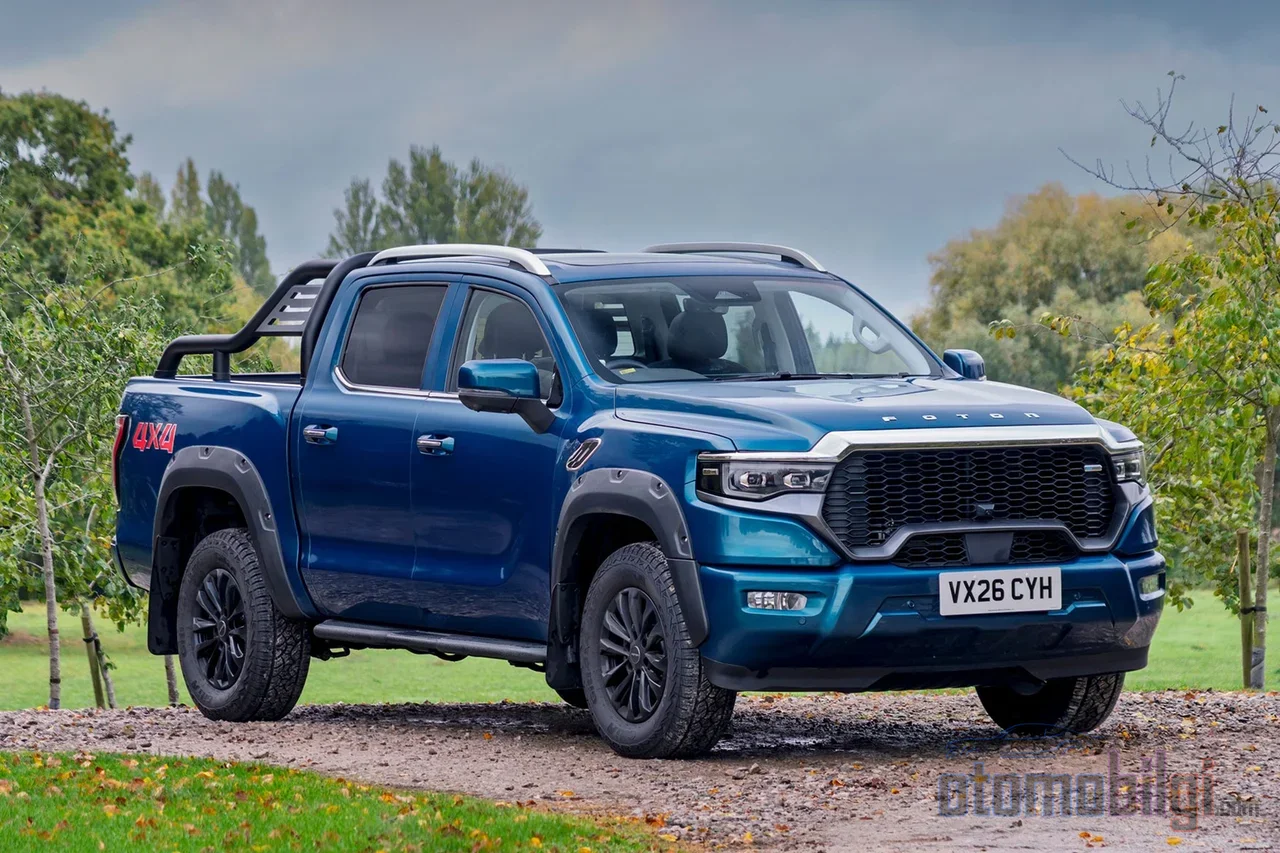
The UK pickup market has long been like a closed club: Ford, Toyota and Isuzu were at the table, a few Japanese and Korean guests could take a seat, and the rest were waiting at the door. Today a new name walked through that door. International Motors has officially confirmed that the Chinese Foton's Tunland double-cab pickup will hit British roads in early 2027. So why did this vehicle arrive at one of the toughest periods for the market, right at the bend where sales are falling?
What the announcement says: First deliveries in early 2027
IM, that is International Motors, announced today that it has set the Tunland's UK launch for the first months of 2027. This is not a decision that came out of nowhere: The distribution agreement with Foton was signed at the Commercial Vehicle Show in Birmingham in April 2026. Since then, the brand has been previewed in Britain with its electric truck line-up; the Cavan line-up was said to consist of three models: standard C1, C1 Plus and C1 Max.
The Tunland, meanwhile, will handle the pickup side of the business. IM's intention is to take Foton beyond electric light commercial vehicles and build a line-up that appeals to both fleet buyers and individual pickup customers. David Clark has been appointed to lead the brand's British operations; he is the one speaking on behalf of Foton UK. This appointment is significant in terms of the player's experience, because IM already holds the UK distribution rights for the Isuzu D-Max, Mitsubishi L200 and GWM Poer 300 - and in the past imported the Great Wall Steed for many years. So bringing a Chinese pickup to this market is not IM's first attempt.
Highlights
- The Tunland will go on sale in Britain in early 2027 through International Motors.
- Powertrain: 2.0-litre turbodiesel + 48V mild-hybrid, eight-speed automatic, four-wheel drive.
- The overseas version offers 163 hp and 450 Nm; 3.5-tonne towing capacity.
- Dimensions: approximately 5.62 m in length, 2.09 m in width - larger than most UK double-cabs.
- Pricing, equipment and dealer network details have not yet been announced.
What do the Foton Tunland's engine and equipment offer?
The Tunland bound for the UK market combines its 2.0-litre turbodiesel engine with a 48V mild-hybrid system; the drivetrain is connected to four-wheel drive through an eight-speed automatic transmission. Expectations on the mild-hybrid side need to be kept realistic: the system only provides assistance and recovers energy, offering no meaningful electric range. In other words, this is not a case of using the pickup like a plug-in hybrid.
On the performance side, the reference figures come from the version currently sold overseas: 163 hp of power and 450 Nm of torque. Towing capacity is 3.5 tonnes, while payload is stated as 995 kg. The vehicle's kerb weight is approximately 2.3 tonnes; even with the 3.5-tonne towing load and a payload of nearly a tonne added on, it stays below the seven-tonne limit of a standard licence - a figure every UK buyer who does this calculation keeps in the back of their mind.
Leaf springs replaced by multi-link: is it a workhorse or a car?
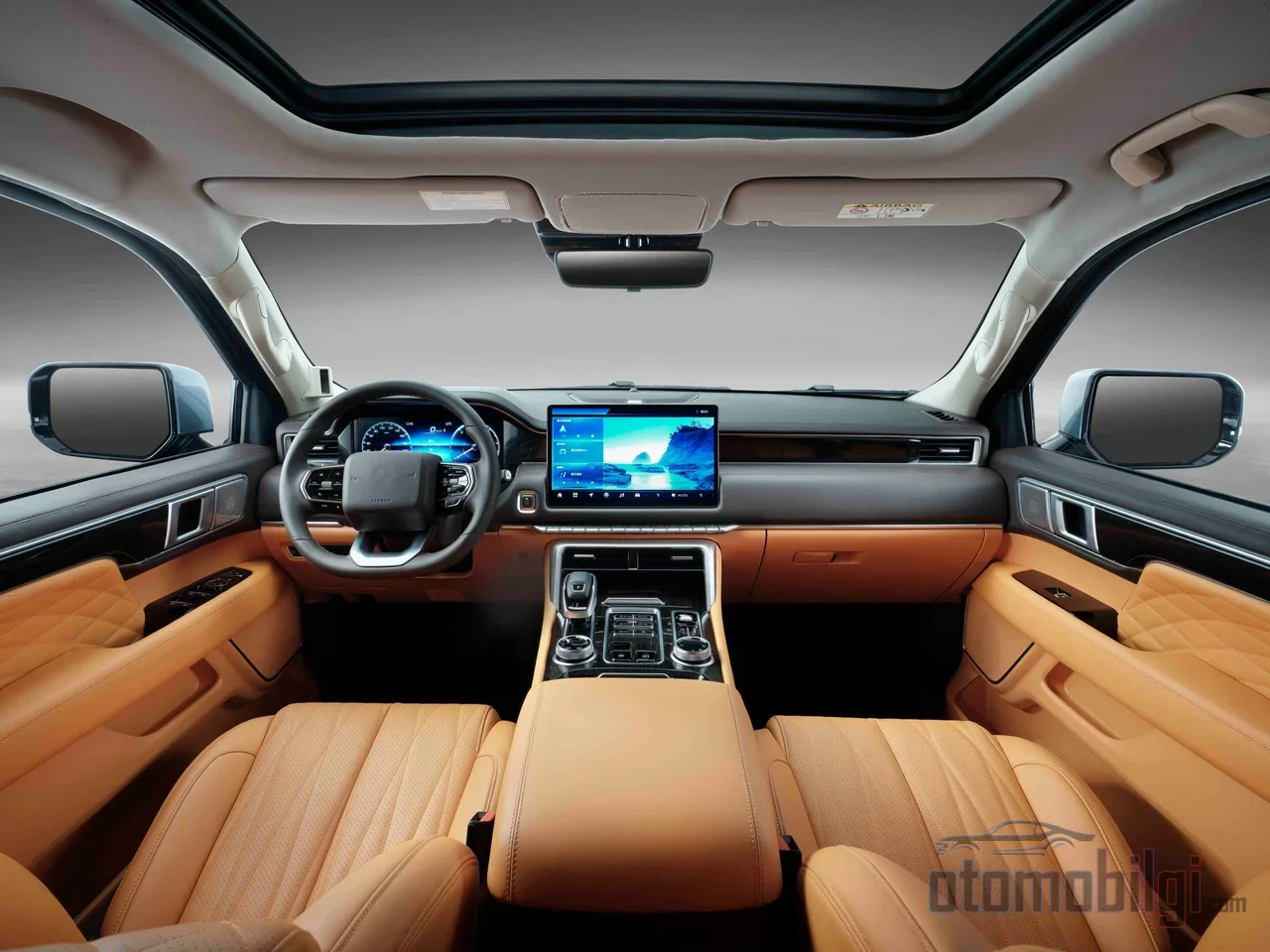
On the suspension side, a multi-link rear setup has been chosen instead of classic leaf springs; the aim is to increase comfort when the vehicle is unladen. This choice is the clearest hint as to who the vehicle is designed for. Inside, there is a five-seat double-cab layout, a central touchscreen, a digital instrument panel, automatic climate control, wireless phone charging, leather upholstery and an opening panoramic glass roof. The retention of physical controls is also a detail worth appreciating; quite a few users don't trust touchscreens in dust and mud. Driver assistance technologies are also present in the equipment.
In short, IM is positioning the Tunland as more than a traditional workhorse pickup - an offering that leans on comfort and technology. This is a deliberate departure from the more traditional work-focused line compared to the GWM Poer 300.
Dimensions: One of Britain's largest double cabs
The Tunland is approximately 5.62 meters long and 2.09 meters wide; these dimensions make it a larger vehicle than most double-cab pickups in Britain. The bed itself also paints an interesting picture: bed length is 1,577 mm - 61 mm shorter than the Ford Ranger's but 82 mm longer than the Isuzu D-Max's. The bed's widest point, at 1,650 mm, exceeds the Ranger's by 12 mm. So the bed is bigger than the bodywork suggests but smaller than the class leaders; practical for short-distance-heavy use, but comparisons should be made if bed size is the deciding factor.
| Specification | Value |
|---|---|
| Engine | 2.0 turbodiesel + 48V mild-hybrid |
| Transmission | 8-speed automatic, four-wheel drive |
| Power / torque (overseas version) | 163 hp / 450 Nm |
| Towing capacity | 3.5 tonnes |
| Payload capacity (NZ) | 995 kg |
| Length / width | 5.62 m / 2.09 m |
| Bed length | 1,577 mm |
| Launch | Early 2027, United Kingdom |
One note is necessary: The UK version's payload capacity, towing capacity, fuel consumption and emissions figures have not yet been announced. The values above are based on overseas versions, and UK specifications will be confirmed before launch. Also, the 995 kg payload capacity is exactly 5 kg below the one-tonne threshold required for commercial vehicle classification and VAT reclaim in Britain - this threshold is critical for fleet buyers, and the expectation is that the UK version will exceed it.
Rival scene: who will it fight against?
The scene the Tunland is arriving into is not empty. Ahead of it are the Mitsubishi L200's return to Britain, the new KGM Musso Rhino, the new-generation Toyota Hilux and the refreshed Isuzu D-Max. And at the head of the table still sits the Ford Ranger; moreover, BYD's plug-in hybrid Shark has also just entered the market as a rival to the Ranger's PHEV version. On the pricing side, there is no official figure yet; it is said to be announced when the time comes. As a reference, the Tunland's overseas equivalent models are sold in the 39,990 to 49,990 AUD band - a positioning corresponding to the lower-middle and middle range of the class.
IM's strategy also becomes clear at this point: with the work-focused GWM Poer 300 already in its lineup, it positions the Tunland at a more luxurious, better-equipped level. It used to be sold at a Chinese pickup price; now it is being sold on equipment and comfort. This distinction shows that what will determine the Tunland's commercial chances is not just the price tag.
Timing risk: entering a shrinking market
To be honest, the launch schedule falls into a risky window. With the changes introduced this April under the 2024 Budget, pickups are now taxed like cars for benefit-in-kind tax, and British pickup sales dropped sharply during the September 2026 plate-change period. A pickup that can carry nearly a tonne and benefit from the tax advantage can still try its luck in this equation - closing that 5 kg gap becomes critical here once again. But for a newly entering brand, taking share in a shrinking segment is no easy task.
A Chinese wave in the background: Who is Foton, and where does it come from?
Foton is a commercial vehicle manufacturer headquartered in Beijing, which turned 30 years old this year; its range extends from pickups to trucks and buses. Since its founding in 1996 with a single factory, it states that it has sold in more than 130 countries and sold more than 13 million vehicles. With its electric trucks and vans, it is already present in Italy, Germany and Malta. The Tunland family is not walking alone either: the EU WVTA certificate, one of Europe's strictest vehicle conformity approvals, has been obtained, and the Tunland V9 won the 2026 Greece Pickup of the Year award. Beyond the diesel mild-hybrid, a Tunland PHEV version was also introduced as a rival to the BYD Shark 6; the V9 PHEV was showcased in Hannover in September 2026.
Looking at the wider picture, the Tunland is part of a period in which more Chinese manufacturers are entering Europe at once than from Japan and Korea. This also fuels debates that Chinese vehicles should head to Europe through the UK's lower tariffs. In the pickup segment, however, Chinese entrants are still relatively new; it can be said that the Tunland is not the most experienced Chinese player in this field, but rather one of the first names to open up the pickup side of the wave.
Conclusion: to what extent will luck decide?
The Foton Tunland is entering the British pickup market with real equipment, a genuine international track record and an experienced distributor. The engine and technical package meets the class expectations, its dimensions are above its rivals, and the equipment level shows that the brand is positioning it more as a comfortable vehicle than a workhorse. In contrast, the British specifications, pricing and dealer network have not yet been announced; the market shrinking after the tax change also makes the job harder. The brand's fate rests on the prices to be announced before the launch and on how the one-tonne payload threshold is met. As someone who has watched this market for 30 years, I can say this: every new name entering a closed club doesn't come to lose - but walking through that door is not the same thing as finding a seat at the table.
Sources
- IM to launch Chinese Foton Tunland pick-up in the UK in early 2027
- Foton targets UK pick-up market with Tunland launch in early 2027
- New Foton Tunland pickup set for UK launch in 2027
- New Foton Tunland is a Chinese 'luxury' pick-up that's on the way to the UK
- Foton Tunland Pick-Up Truck to Spearhead Brand's UK Arrival
- International Motors to distribute Foton range of LCVs
- Foton Tunland 2027 Price & Specs
- 2027 Foton Tunland PHEV revealed as surprise BYD Shark 6 rival
- Don't Stop Me Now: Chinese Cars Are Having a Good Time in Europe