Ford Is Developing a Cheap Mid-Size Pickup for 2027
The most talked-about gap in Ford's product lineup in recent years was the pricing side of the mid-size pickup segment. The company's CEO Jim Farley officially confirmed on the third-quarter earnings call that this gap will be filled in 2027: a new pickup developed for international markets, priced below today's Ranger, is on the way. The vehicle's goal is not just a sales figure; at the center of the announcement is responding to the price pressure from Chinese manufacturers that are growing rapidly in global markets.
The most concrete figure coming from Ford's side is this: the aim is for the new model's base material cost to be 20 percent lower than the current Ranger's. Its name, production location, and engine options have not yet been announced. So the coming months point to a period in which this vehicle's identity will be revealed piece by piece.
Highlights
- The new pickup will be introduced in international markets in 2027
- Base material cost target is 20 percent lower than today's Ranger
- The model will be positioned below the Ranger; a separate project from the Maverick and the electric Fathom
- Target audience: Chinese manufacturers pricing aggressively in Latin America, Southeast Asia, South Africa, and Australia
- Sales to North America do not seem likely for now due to import tariffs
What will the new pickup be, and where will it sit within the Ranger lineup?
In Ford's international lineup, the Ranger is the mainstay of the mid-size segment. Sold in more than 180 markets today and produced at five plants in Thailand, South Africa, the US, and Argentina, the Ranger is the backbone of the company's global commercial vehicle strategy. The new model will slot right below this lineup, at a more accessible price point.
An important distinction: this project is not an international copy of the unibody Maverick, which is already sold in the US. It also has nothing to do with the electric Fathom, which will arrive in the US market in early 2027 starting at around $28,350. In Ford's own words, this vehicle was designed to do in international markets what the Maverick does in the US: bring new customers to the pickup family.
According to the framework Farley laid out, the strategy has two legs. One is to continue strengthening the company's strongest product families; the other is to open up growth paths at more affordable price points. The new pickup belongs to this second leg, arriving with a cost structure that can compete directly with Chinese rivals in terms of material cost.
Why did Chinese rivals push Ford to this decision?
The picture behind this decision is impossible to deny. In recent years, Chinese manufacturers have entered Latin American, Southeast Asian, South African, and Australian markets in force, and they are waging aggressive competition by pricing their mid-size pickups noticeably below the typical prices of established manufacturers.
The numbers confirm this. 61,000 pickups were sold in China in October; an increase of 22.1 percent year over year. Cumulative sales for the January-October period reached 583,000 units. Even more striking is the export side: only 47,000 units were exported in October alone, which equals 64 percent of total sales. Exports since the start of the year have exceeded 352,000 units. In September, exports accounted for as much as 70 percent of total sales; BYD sold only 4,000 pickups abroad in September alone, and this figure represents a 151 percent year-on-year increase.
The size of the global market also carries tactical importance. Pickup sales reached 5.67 million units in 2024 and are expected to rise above 6.3 million by 2030. Not losing a share of the growing pie requires answering the current disruptor pricing with its own game. This pressure is also reflected in Ford's figures: in global trend data, the Toyota Hilux declined 4.1 percent and the Ranger 7.6 percent, while the Maverick grew 10 percent. In every scenario where price is the deciding factor, the cheap side wins.
How will the cost target be met?
A 20 percent material cost target is not a figure to be underestimated in the automotive world. Such a drop cannot be achieved with ordinary optimization; it requires either a new and simple architecture, the adaptation of an existing platform, or a low-cost production base.
On the production side, Ford has a few options at hand. The company has regional production centers in Thailand, South Africa, and Argentina. China cannot be ruled out either: Ford is already leveraging the experience of the Jiangling Ford (JMC) joint venture for the Bronco Basecamp and the electric Transit City van, and exports these models to other markets.
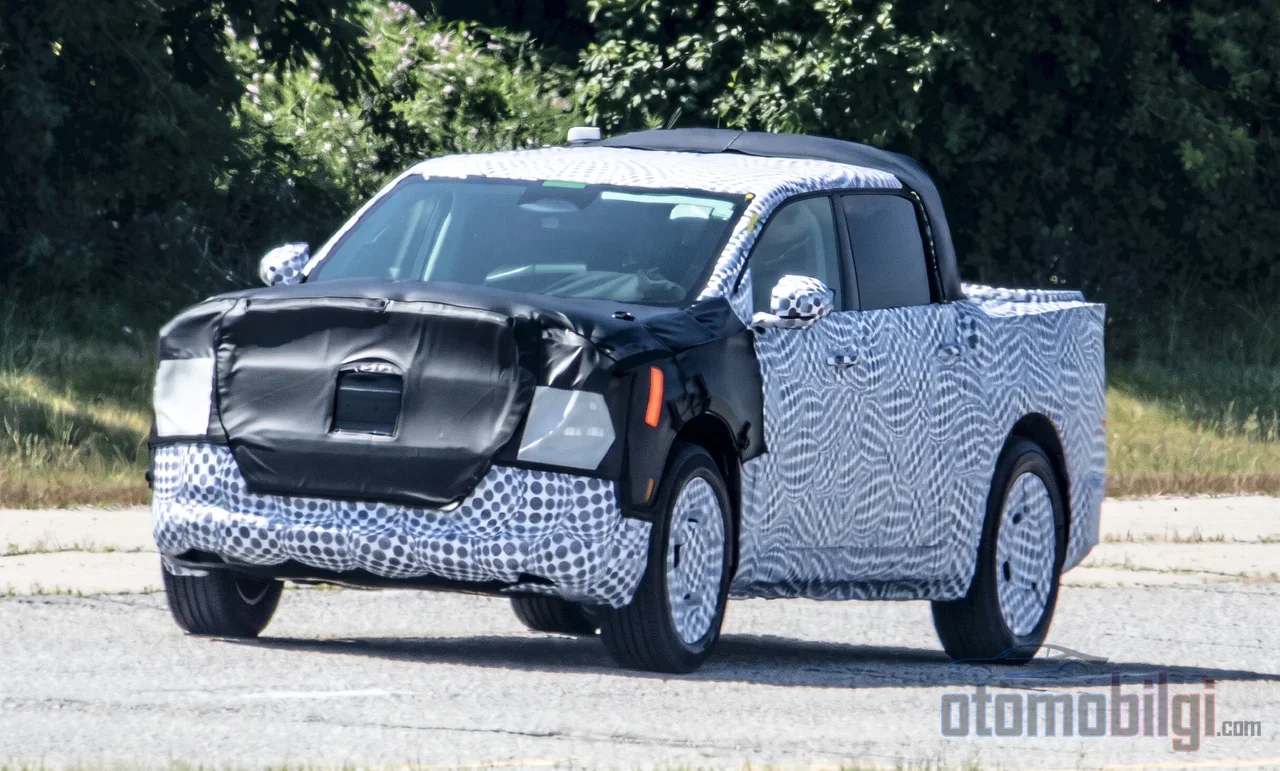
An assessment circulating in industry circles, yet to be confirmed, goes like this: one of the candidate platforms is the JMC Dadao, introduced in China in 2023 and sold in some markets under the Grand Avenue name. The ladder frame was developed with Ford's contribution, and the turbo gasoline and diesel engine options are Ford-sourced. If this scenario is correct, both the absence of spy photos and the short time remaining until 2027 become explainable. However, this is mere speculation; Ford has not yet confirmed any technical detail, including the production location.
Which questions remain unanswered?
- The model's name has not yet been announced.
- The production facility has not been confirmed; Thailand, South Africa, Argentina, and China are the options being discussed.
- The markets where it will first go on sale are unknown.
- Engine and powertrain options have not been announced; a plug-in hybrid version is not ruled out for the future, but this is not confirmed either.
- No price tag has been given; only the cost target has been shared.
It must also be honestly added that lower production costs do not automatically mean a lower price tag. However, it is a reasonable expectation that a manufacturer aiming to bring its cost structure down to Chinese rivals' price points will ultimately launch with a competitive price.
Will it come to the US market?
Ford is clearly developing this vehicle for markets outside the US. The possibility of sales in North America seems low for now due to import tariffs. The US lineup is already crowded enough: the Maverick, Ranger, F-150, and Super Duty are on sale. There is also talk, after decades, of a separate, affordable internal combustion pickup project for the US market; that would be developed independently of this international model.
The short answer: What does Ford's 2027 pickup plan mean?
In summary: In 2027, Ford will launch a midsize pickup that sits below the Ranger for international markets, with material costs 20 percent lower than the Ranger's. This vehicle aims to do globally what the Maverick does in the US, namely attract new customers to the pickup family and compete with Chinese manufacturers at the price points they dominate.
For someone who has been following this industry for thirty years, the picture is familiar: in the past, profitable models at the very top of the price ladder defined a segment; now the game is being played at the lower end. Ford's answer is not a new marketing story, but a product move woven directly from engineering and cost discipline. For consumers, the good news is this: 2027 will be a year in which midsize pickup prices are truly put to the test.
Let us say congratulations to the boorish folks in Turkiye who drive big vehicles despite having no need for them, purely out of an inferiority complex, and therefore go out and buy a pickup. An option is coming that they will be able to buy more cheaply and use to park on top of sidewalks.