Mercedes Is Trying to Catch Up with Chinese Rivals' Speed with PLM.AI

There is a scene that has repeated itself in the automotive industry for more than forty years: established manufacturers, when faced with a new threat, first cling to engineering discipline, and then admit they have to pick up the pace. Mercedes-Benz is at exactly that point right now. The company's Chief Technology Officer Jorg Burzer, who took office in December 2025, openly praises the development speed of Chinese carmakers, and in response is activating an artificial intelligence backbone called PLM.AI that radically digitizes the company's product development process. So can artificial intelligence really accelerate Stuttgart's strictest engineering traditions?
From Head of Production to Chief Technology Officer: Burzer's Mission
Jorg Burzer is a familiar face at Mercedes-Benz. Born in Nuremberg in 1970, the engineer joined Daimler-Chrysler in 1999 and has served as a member of the management board since 2021. In his last role he was responsible for production, quality and the supply chain; he oversaw a global production network of more than 30 locations. Succeeding Markus Schäfer, who retired on December 1, 2025, he took over responsibility for development and purchasing. Michael Schiebe also took over his production seat while at the helm of Mercedes-AMG.
This transition is not an ordinary management change. Burzer has a profile that combines the reality of the production line and the reality of the engineering desk in one person; it can be said that he is the best person to see the company's speed problem. Because Mercedes' problem is exactly there: Chinese rivals can take a car from concept to series production much faster than before.
Why Has the Development Speed of Chinese Manufacturers Become a Problem?
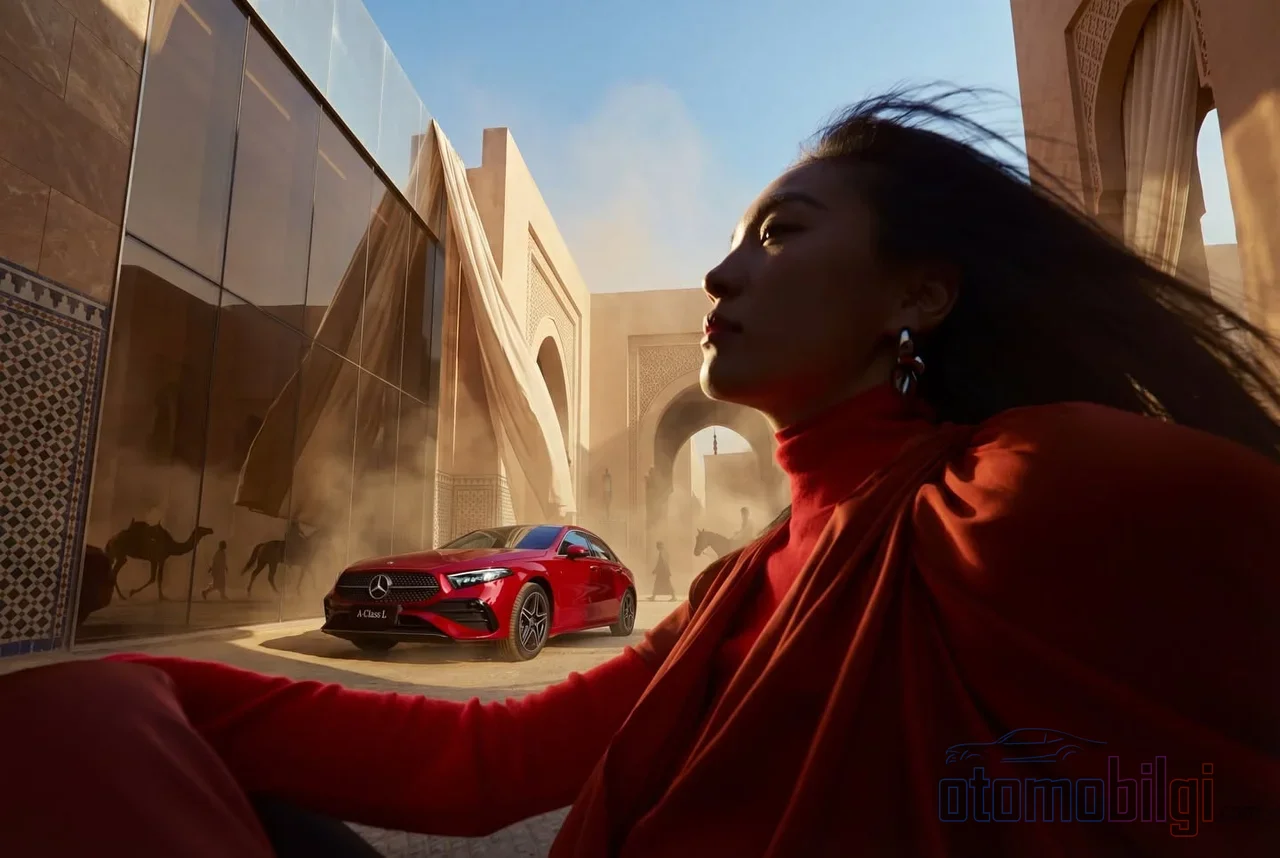
Burzer does not hesitate to praise the development speed and customer focus of Chinese carmakers; the word used to qualify this speed is "extraordinary". This is not empty talk. Industry analyses reveal that the success of Chinese manufacturers is largely based on production and development capabilities that have cut vehicle development time by more than half. The company's chief, Ola Källenius, also holds the view that this speed can be harnessed for the company to realize the potential of the luxury market; Mercedes is comprehensively reviewing its China strategy.
Meanwhile, the numbers are harsh. Mercedes-Benz sold 551,900 vehicles in China in 2025, a year-on-year decline of 19 percent; for comparison, BMW shrank by 12.5 percent in the same market while selling 625,527 vehicles. In the third quarter of 2026, Mercedes' China sales fell to 297,000 units; that means a decline of about 29 percent compared to the same period of the previous year. The pressure continues in the global picture as well: deliveries in the third quarter fell by 8 percent to 407,200 vehicles. The company lowered its 2026 vehicle margin outlook due to tough market conditions and cost pressure in China; in July, a sales decline of between 2 and 7.5 percent was forecast for the full year.
Highlights
- Mercedes' China sales fell to 551,900 vehicles in 2025, a decline of 19 percent
- PLM.AI target: up to 30 percent reduction in development time
- An increase of up to 50 percent efficiency is targeted in engineering processes
- In the long term, a 50 percent reduction in physical tests is anticipated
- EV sales increased by 52 percent in the third quarter of 2026
What Is PLM.AI, and What Will Mercedes' Digital Backbone Do?
PLM.AI takes its name from product lifecycle management (PLM) and is an AI-focused backbone that digitizes the entire productive development process. The idea behind the abbreviation is simple but broad in scope: to build an end-to-end intelligent knowledge base that connects vehicle development, purchasing, production, sales, and after-sales services within a consistent data environment. According to the software side that won the tender for the project, the investment is reported to be worth approximately 500 million euros.
Targets: Time, Efficiency, and Testing
The figures the company has announced are clear. A reduction of up to 30 percent in development time, equivalent to roughly 17 months, is targeted. An efficiency increase of up to 50 percent is anticipated in individual engineering processes. In the long term, a reduction of up to 50 percent in physical tests is aimed for; meaning simulation will largely take the place of the wind tunnel and test track.
Even the mere utterance of these figures is unusual for the industry. In the past, developing a Mercedes model was a marathon conducted patiently regardless of the stopwatch, with every stage demanding physical verification. Now the same process is tied to the speed of data and algorithms. The magnitude of the change lies here: vehicle engineering is gradually trying to approach the rhythm of software development.
What Are AI Agents Doing Today?
PLM.AI is not a future project; AI agents are doing concrete work today. Optimization of material costs, execution of certification and homologation processes, error detection and resolution, and software development are being supported. A similar transformation also took place on the purchasing side: the company carried agent-based AI to a global scale in purchasing processes in less than 12 months; the agents are automating source identification, demand validation, and bid evaluation. The collaboration with NVIDIA on Omniverse-based product lifecycle digitization is also part of this transformation.
Speed or Quality: The Real Dimension of the Tension
There is a real tension here, and Mercedes management does not deny it. While Chinese manufacturers have cut development times by more than half, Mercedes maintains its position built on safety, performance, and comfort, and continues to prioritize avoiding a price competition. Burzer's approach is to seek a balance between these two poles: speed will be gained, but engineering discipline will not be compromised.
The critical question for the industry is this: is the reduction in time being moved away from verification depth, or is the same depth being achieved with less time thanks to simulation and data infrastructure? Mercedes' claim is the latter. The goal of reducing physical tests is not the elimination of testing; digital twins and AI-supported verification need to produce results with reliability close to the real world. The proof of this claim will be tested by the new models that will appear on the roads in the coming years.
Dark Picture in the Sales Table, But There Are Bright Spots Too
The China-driven decline does not cover the entire picture. In the third quarter, Mercedes' electric vehicle sales increased by 52 percent. The wind is also turning in the US market: sales rose 6 percent in the third quarter to reach 75,300 units, with a 12 percent increase in the first nine months of the year. Recovery continues in Europe as well. In the second quarter, deliveries fell 8 percent to 417,800 units, while revenue declined 3.3 percent; so the picture is not the same in every market.
| Period | Scope | Deliveries | Change |
|---|---|---|---|
| 2025 | China | 551,900 | -19% |
| 2026 Q2 | Global | 417,800 | -8% |
| 2026 Q3 | China | 297,000 | -29% |
| 2026 Q3 | Global | 407,200 | -8% |
| 2026 Q3 | US | 75,300 | +6% |
The difference in tone between the doomsday scenarios circulating on social media and the corporate data is also noteworthy. The contraction in China is real and serious; but the same company can achieve double-digit growth in EVs and a solid plus in the US. The real issue is being able to preserve profitability during a period when China has weakened.
New Models: The First Test of the Digital Backbone
PLM.AI's promises take on meaning when combined with the product lineup. The 2026 CLA, the first all-new model built on the Mercedes-Benz Modular Architecture, stands as the first tangible output of this transformation. The electric CLA 250+ version offers 268 hp with an 85 kWh battery and a single rear-wheel-drive motor; a range claim of over 317 to 400 miles depending on the version, and a target of 186 miles of range with a 10-minute charge, have been announced. In the US market, the electric CLA starts at $47,250.
The innovations on Burzer's agenda are not limited to this. Also among the shared developments is the new S-Class work featuring the new MBUX rear-seat system integrated with MB.OS, dual screens, and video conferencing capability. There is also a connection to the new models' China strategy; the company regularly emphasizes the importance it places on the Chinese market.
Conclusion: Can Artificial Intelligence Be the Answer to Catching Up with China's Speed?
The short answer: this is Mercedes' strongest candidate, but the definitive answer will take a few years. PLM.AI is an AI-supported system that combines vehicle development, purchasing, and production processes on a single data backbone, targeting a development time reduction of up to 30 percent and a 50 percent efficiency increase in engineering. No German engineering marvel alone will be enough against the speed of Chinese manufacturers; speed itself is now a product of technology. This is exactly what Burzer is betting on. If the numbers prove correct, Mercedes will have brought its product development pace closer to that of its Chinese rivals without compromising on quality and safety standards. If it does, an insurmountable gap will have opened up in three years. There is no middle ground for Stuttgart; The new models, the first fruits of PLM.AI, will show the outcome of this bet on the roads.
Sources
- PLM.AI - Mercedes-Benz Group official page
- Mercedes-Benz Q3 2026 Interim Report
- Jörg Burzer - Mercedes-Benz Group Biography
- Mercedes-Benz appoints leaders for technology, supply chain - WardsAuto
- Mercedes Turns To AI To Catch Up With China - Motor1
- Mercedes-Benz Q3 car sales fall 8% - Reuters
- How China's new auto giants left GM, VW and Tesla in the dust - Reuters
- Mercedes-Benz accelerates global product development with PLM.AI - ComputerWeekly
- Mercedes-Benz U.S. sales rise 6% in Q3 - CBT News
- 2026 Mercedes-Benz CLA Sedan - MBUSA