VW and Xpeng's Joint Models Fall Short of Sales Targets
Share This Page
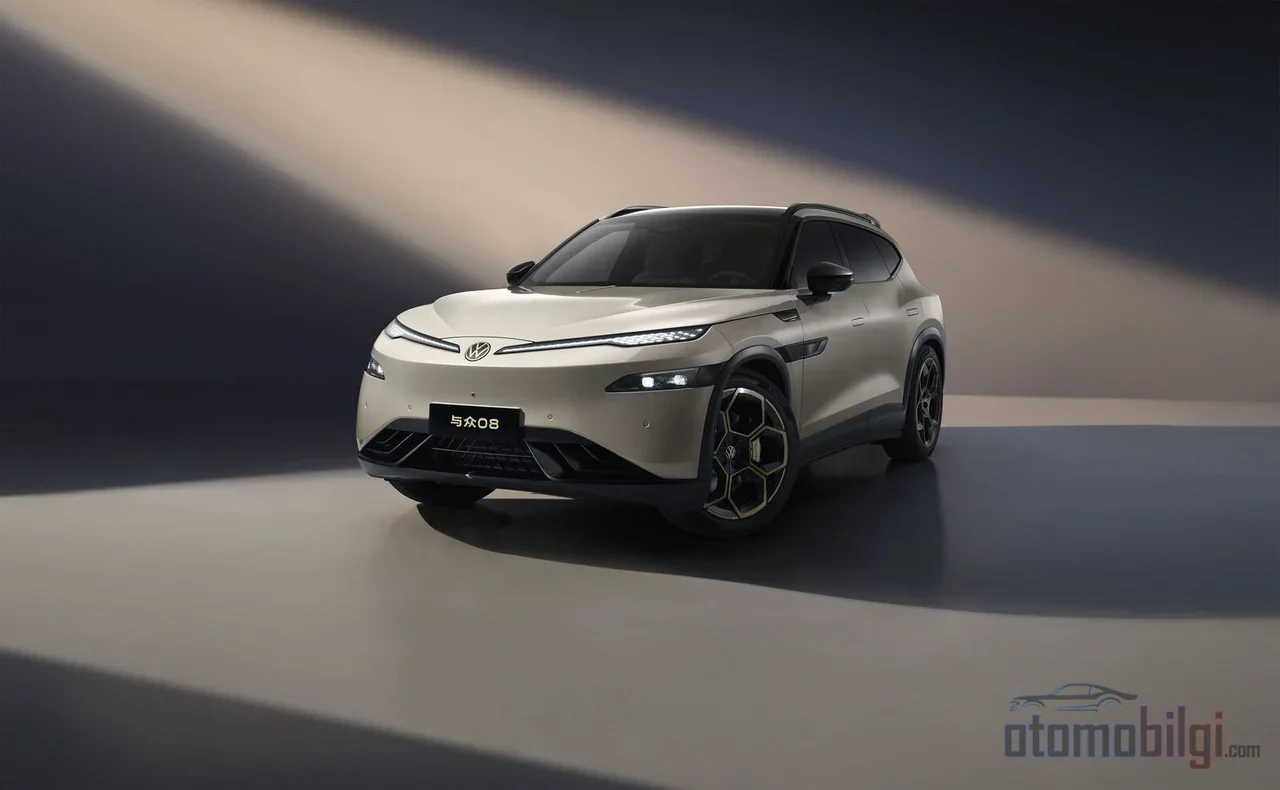
The first model jointly developed by Volkswagen and Xpeng, the ID. UNYX 08, sold an average of only 267 units per month between April and August 2026; the internal target was 3,622 units per month. In other words, the vehicle sold barely one-thirteenth of the target. This article examines the size of the sales shortfall, the history of the two-partner collaboration, and its place in VW's China strategy based on official production and delivery data.
Highlights
- The ID. UNYX 08 monthly target was 3,622 units; actual sales averaged only 267 units in April–August 2026.
- VW's 2026 sales forecast was cut from 32,600 vehicles to 12,300 - a drop of more than 60%.
- The partnership began in July 2023 with VW's $700 million investment in Xpeng.
- The second joint model, the ID. UNYX 09, opened for pre-sale in September 2026 with a starting price of 199,900 yuan.
- The CEA electronic architecture will be used in most VW vehicles produced in China through 2030.
Why are the VW–Xpeng joint models falling far short of their targets?
The short answer to the question is that the product fails to stand out in China's extremely fast-paced, price-focused electric vehicle market. The analysts' joint assessment can be summarized as follows: The Xpeng partnership brought Chinese EV technology to VW, but it did not give the German giant the organizational speed it was looking for. The design of the joint models also resembles too closely the language Chinese rivals have long been using in the market; rather than being the brand that suppresses others, it remains in the shadow of those doing the suppressing.
The figures clearly reveal the size of the shortfall. In the five months from April to August, average monthly sales of 267 fell far below the target of 3,622 vehicles per month. VW initially projected it would sell 32,600 UNYX 08 vehicles by the end of 2026; according to documents, that forecast was cut by more than 60% to 12,300 vehicles. As an insider, let us note that such a revision amounts to admitting you were wrong at the very start of the planning process - and doing so at corporate scale is no easy matter.
How was the partnership established, and which models does it cover today?
The two companies parted ways in July 2023; VW announced it would invest $700 million in the Chinese EV maker. The logic of the deal was simple: Volkswagen's lag in software and EV development speed in China would be closed through a well-chosen partner. This approach was presented at the time as one of the cornerstones of the "In China, for China" strategy pursued by Western manufacturers in China.
The first fruit was the ID. UNYX 08. The vehicle opened for applications in China in March 2026 with a pre-sale price of 239,900 yuan (about $34,760); its range exceeds 700 kilometers depending on the variant. The second joint model produced by Volkswagen Anhui, the sedan-bodied ID. UNYX 09, entered pre-sale in September 2026 with a starting price of 199,900 yuan (about 26,000 euros). The table of joint models currently looks like this:
| Model | Market entry | Price | Sales outlook |
|---|---|---|---|
| ID. UNYX 08 | April 2026 | 239,900 yuan (pre-sale) | Average of 267 units per month (April–August), target 3,622 |
| ID. UNYX 09 | September 2026 (pre-sale) | Starting from 199,900 yuan | Newly issued target: 4,900 units per month |
Reports of discounts of up to 17% on the UNYX 08 have also been circulating in recent days; such campaigns are classic moves to close the sales gap, but their impact on the brand's price positioning is a separate debate for the long term. It should be noted that this detail is not as solid as verified official sales data.
What do the target revisions tell us: pessimism or patience?
There are two readings of how the partnership is going. The first is a cautious view that sees the size of the sales gap and the cuts to targets as a sign of failure; within this framing, it is emphasized that VW's China strategy is under pressure overall. The second is a more patient perspective: the company stresses that production of the jointly developed CEA electronic architecture has started right on time and that the 2026 model offensive continues; it also still forecasts 64,000 sales for 2027.
The truth most likely lies between the two readings. Anyone who has followed this industry for years knows one thing: a weak first model does not mean the collaboration itself has failed; but when the gap between targets and reality widens this much, the partnership's value shifts from product sales to technology transfer. And exactly this shift is visible in the direction VW has announced - I will come to the details shortly.
Is the deal ending?
No. The parties have deepened their partnership: production of the jointly developed CEA (China Electronic Architecture) zonal electronic architecture began in January 2026; this architecture reduces the number of electronic control units by 30% and offers an AI-powered cockpit, advanced driver assistance systems and over-the-air (OTA) update support. The architecture is planned to be used in most VW vehicles produced in China by 2030. The two sides have also expanded their cooperation in the ultra-fast charging network field.
So the picture is not the end of the partnership, but the product side failing to catch the expected rhythm. However, this distinction has a limit: a sales target of 4,900 units per month has also been set for the second model, the UNYX 09, and given the fate of the first model, one must ask how realistic this target is.
VW's overall picture in China: old power, new balances
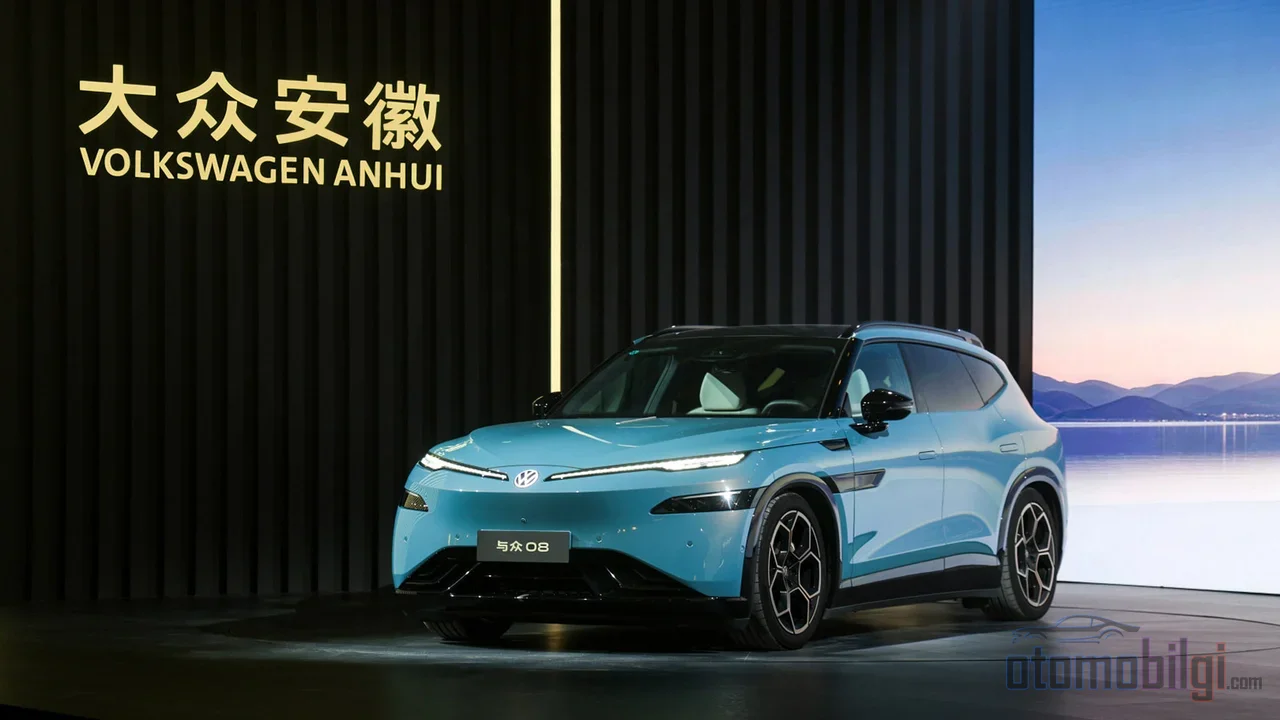
To understand the struggles of the joint models, one needs to look at VW's overall position in China. China once contributed almost half of Volkswagen Group's profits; today that figure is around 10%. In 2019, the company had aimed to deliver 1.5 million electric vehicles in China by 2025; the figure achieved was 115,500. The Chinese market used to be an abundance for VW; now an arena where war is fought over every single percentage point.
The picture is not entirely dark. In early 2026, VW briefly regained its position as the best-selling brand in China following the end of electric vehicle subsidies; BYD slipped to fourth place with a 7.1% share. In the January-February 2026 period, VW's market share stood at 13.9%, Geely's at 13.8%, and Toyota's joint ventures at around 7.8%. However, the core picture shows almost no improvement: VW's electric vehicle deliveries in China fell by 35.6%, while its overall China sales in April 2026 declined by 46.7% year on year to 77,995 units.
The company is responding with production speed and product abundance: the launch of 20 new or updated models is planned in China this year, and local production times have been cut in half compared to Germany. There is no doubt that something called "China speed" exists; quite the opposite, domestic brands in that segment are offering longer range, more up-to-date software, and more aggressive feature packages at lower prices.
Is the problem in the technology, or in the brand?
Here is the interesting part: Xpeng's own brand is selling just fine. The company delivered 41,256 vehicles in September 2026; NIO made 37,408 deliveries in the same month, and Xpeng's 2026 global target stands at 550,000-600,000 units. In a partnership where the same technology and engineering culture are shared, one side breaking records while the other cannot even reach a tenth of that implies the problem does not lie in Xpeng's technology. Two suspects remain: VW's brand positioning in China and its pricing strategy. A price tag of 239,900 yuan is no longer an unrivaled territory in the Chinese market; on the contrary, in that segment local brands are offering longer range, more up-to-date software, and more aggressive feature packages at lower prices.
Let us also add a historical note: VW had explored partnership possibilities with BYD and Leapmotor before Xpeng. BYD closed the door, and Stellantis took a stake in Leapmotor. So the Xpeng partnership was the last and strongest logical move among the available options - which also explains why the current shortfall weighs so heavily on VW.
Expansion beyond China and a growing role
There are reports that VW is considering selling its Xpeng-based ID. Unyx models in markets outside China; this could be seen as a sign of internal belief at the company that the product has a chance globally despite its weak performance in its home market. On the Xpeng side, rumors are circulating that the company is evaluating a factory in Europe; since this claim is not a verified development, we note it without giving it much weight.
To sum up: The VW-Xpeng cooperation is far from its targets on the product side, while on the infrastructure side it is not entirely off plan. The pre-sales of the UNYX 09 that began in September and the target of 4,900 vehicles per month will be the partnership's second test. A reader who knows the fate of the first model will approach this target with measured caution - and so do I.
Sources
- Volkswagen bet on Xpeng to save its China business. It's not going to plan - Reuters
- Volkswagen enters into agreement with XPENG - Volkswagen Group
- Volkswagen Group China starts production of its first locally developed zonal electronic architecture - Volkswagen Group
- Milestone of "In China, for China" strategy: First car developed jointly by Volkswagen and XPENG - Volkswagen Group
- VW ID. UNYX 08 EV crossover started presales in China - CarNewsChina
- VW ID. UNYX 09 opens for pre-sale in China - electrive
- VW China chief confirms ID. UNYX 09 electric sedan co-developed with Xpeng - CnEVPost
- Volkswagen starts production of Xpeng co-developed CEA architecture - CarNewsChina
- Volkswagen reclaims top spot in China car sales, BYD falls fourth - Reuters
- NIO and XPeng Post Strong September 2026 Deliveries - ElectricCarsReport
- VW's First Car Made With Xpeng Isn't Popular - InsideEVs