Volkswagen ID. Tiguan World Premiere: Who Succeeds the ID.4?
Share This Page
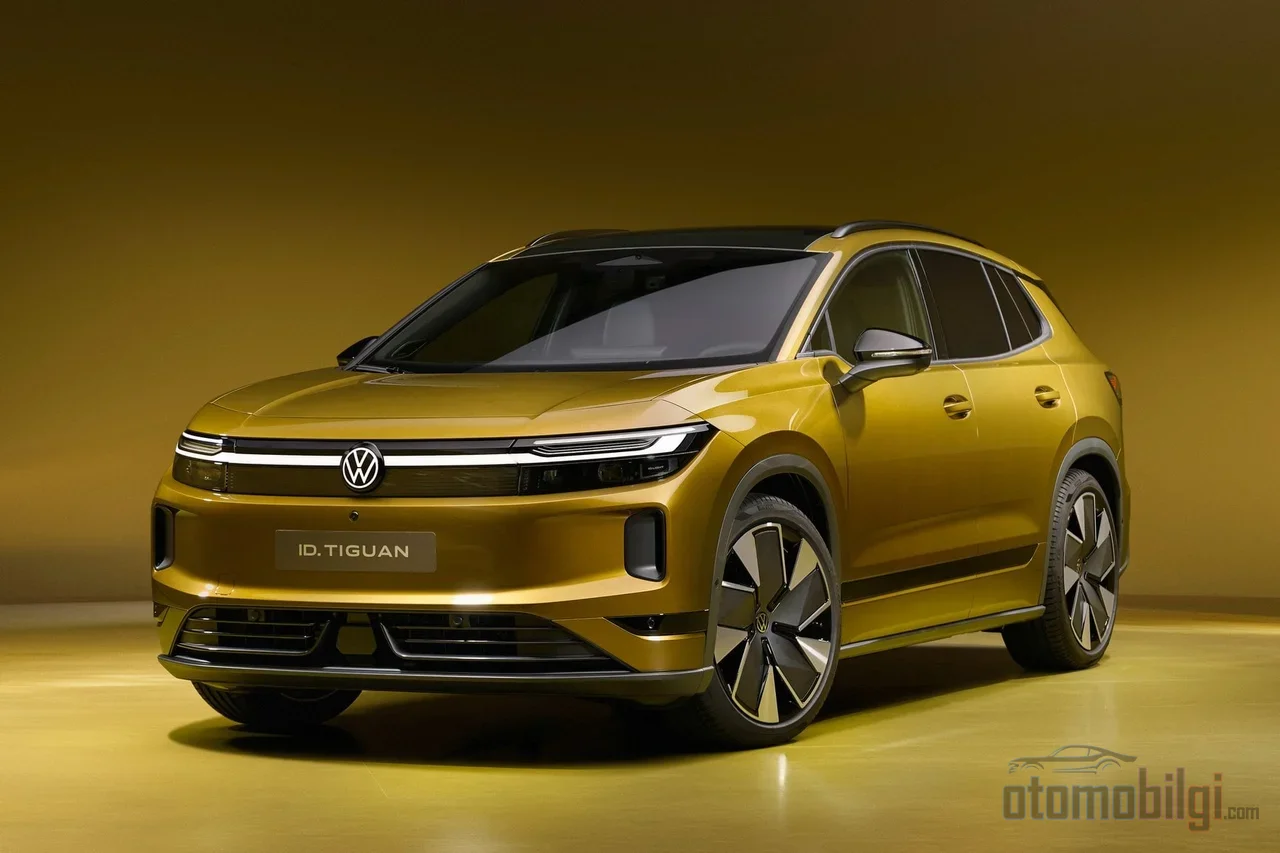
Volkswagen, ID. Tiguan held the world premiere of its new electric SUV bearing this name on October 9, 2026, and explicitly introduced the vehicle as the successor to the ID.4 and ID.5. In its most powerful version, it delivers 295 horsepower , and in its most efficient configuration it promises up to 600 km of WLTP range, positioning itself as the new benchmark of the brand's mass-market electric strategy.
Highlights
- World premiere on October 9, 2026; pre-sales begin on October 13 in Germany and most European countries.
- Starting price in Germany is 42,695 euros; market launch in early 2027.
- Three motor options: 190 PS RWD, 286 PS RWD and 299 PS 4MOTION.
- Range claim is 600 km WLTP in the most efficient version; 560 km for the AWD.
- Production is planned at the Emden plant in Germany.
Whose Place Does the ID. Tiguan Take?
The name choice is no coincidence. The Tiguan is Volkswagen's best-selling model worldwide, while the ID.4 and ID.5 are the brand's most successful electrics to date. Combining the two - that is, carrying a proven name into the main body of the electric era - is the essence of the strategy announced by Volkswagen CEO Thomas Schäfer. According to the company's own figures, over ID.4 and ID.5 units have been produced to date - more than 950,000 .
The Tiguan is our best-selling model, and the ID.4 and ID.5 are among our most successful electrics; the ID. Tiguan combines these two success stories. Thanks to MEB+, up to 600 km of range: a new benchmark for our electric SUVs built in Germany.
On the other hand, in the first assessments after the reveal, how "new" the vehicle really is became a matter of debate. While some publications presented it as a facelift of the ID.4, others pointed to the platform and content differences, concluding it is "much more than a facelifted ID.4." The fact is that the vehicle is built on the updated MEB+ architecture, offers new motor and battery combinations, and its design clearly distinguishes it from the ID.4. But the family resemblance carried by the body structure and basic proportions cannot be denied; for anyone who remembers models that sparked similar debates in the past, this is a familiar picture.
Motor Options, Range and Charging: Technical Data
The ID. Tiguan comes with three motors, and here Volkswagen has created a clearer tiering than before. The entry-level rear-wheel-drive version has 140 kW (190 PS) of power and a 58 kWh LFP battery; its WLTP range is 450 km with a 0-100 km/h time of 8.5 seconds. The mid-tier 210 kW (286 PS) RWD version relies on an 77 kWh NMC battery and promises 600 km of WLTP range, reaching 100 km/h in 6.6 seconds. The top-of-the-line 4MOTION offers 220 kW (299 PS) with 560 km of range and 6.3-second acceleration.
| Feature | RWD 190 PS | RWD 286 PS | 4MOTION 299 PS |
|---|---|---|---|
| Power | 140 kW (190 PS) | 210 kW (286 PS) | 220 kW (299 PS) |
| Battery | 58 kWh LFP | 77 kWh NMC | 77 kWh NMC |
| WLTP range | 450 km | 600 km | 560 km |
| 0-100 km/h | 8.5 s | 6.6 s | 6.3 s |
| DC charging power | 105 kW | 165 kW | 165 kW |
| Towing capacity | 1,800 kg | 2,000 kg | 2,000 kg |
On the charging side, on the AC side 11 kW, while on the DC side, with the small battery 105 kW and with the large battery 165 kW is mentioned. The 10-80 DC charging time is around 26 minutes for the 58 kWh battery and 29 minutes for the 77 kWh. Bidirectional charging is also comprehensive: V2L, V2H and V2G capabilities along with Plug & Charge and smart charging support are among the standard functions.
To be honest, the 165 kW peak DC figure lags behind competitors introduced in 2025-2026, such as the current BMW iX3 or the electric Mercedes GLC. However, the comparison should be kept fair: this vehicle is a product of the mainstream SUV segment, not the premium segment, and its pricing reflects that. It should also be added that the range claim applies only to the most favorable configuration, namely the 286 PS RWD version, and that homologation has not yet been completed, so the data is preliminary.
MEB+ Platform: Is There Really a Turning Point?
We all saw that in the ID.3 and ID.4 era, the MEB platform was not a bad foundation, but it had hit a wall in terms of charging speed and efficiency. MEB+ is the updated version of this foundation: two different battery chemistries are used; LFP, which provides a cost advantage at the entry level, and range-focused NMC technology in the upper versions. This distinction shows that the shift from the single-battery logic in electric vehicles to chemistry selection according to the market has now reached the mainstream segment.
The dimensions outline a practical family SUV profile: 4.62 meters length, 1.86 m width, 1.62 m height and a 2.77 m wheelbase. Up to 534 liters of cargo volume and a 32-liter front trunk (frunk) are offered; the vehicle is designed for five people. Preliminary WLTP consumption values range from 14.6 to 17.2 kWh/100 km depending on the version.
New Screens in the Interior and a Return to Physical Buttons
In the cabin, there is movement in two directions at once: the screens are getting bigger, but physical controls are coming back. The standout innovation is the 12-inch passenger screen, used for the first time in a European Volkswagen; it has a privacy mode the driver cannot see, and the passenger can listen to the audio via Bluetooth headphones. In front of the driver there is a 10-inch digital instrument cluster, and in the center a 15-inch infotainment screen.
Reducing the touchscreen burden is among the most anticipated corrections of recent years: a console button bar for climate control, physical buttons on the steering wheel, and a console roller for volume and radio settings. We used to consider a return to buttons a regression; in the touchscreen era, this is now the very essence of perceived quality. The equipment list includes standard one-pedal driving, Connected Travel Assist with automatic stopping at red lights, Qi2 inductive charging points, optional massaging and ventilated seats, a 480-watt Harman Kardon sound system, a panoramic glass roof and Digital Key.
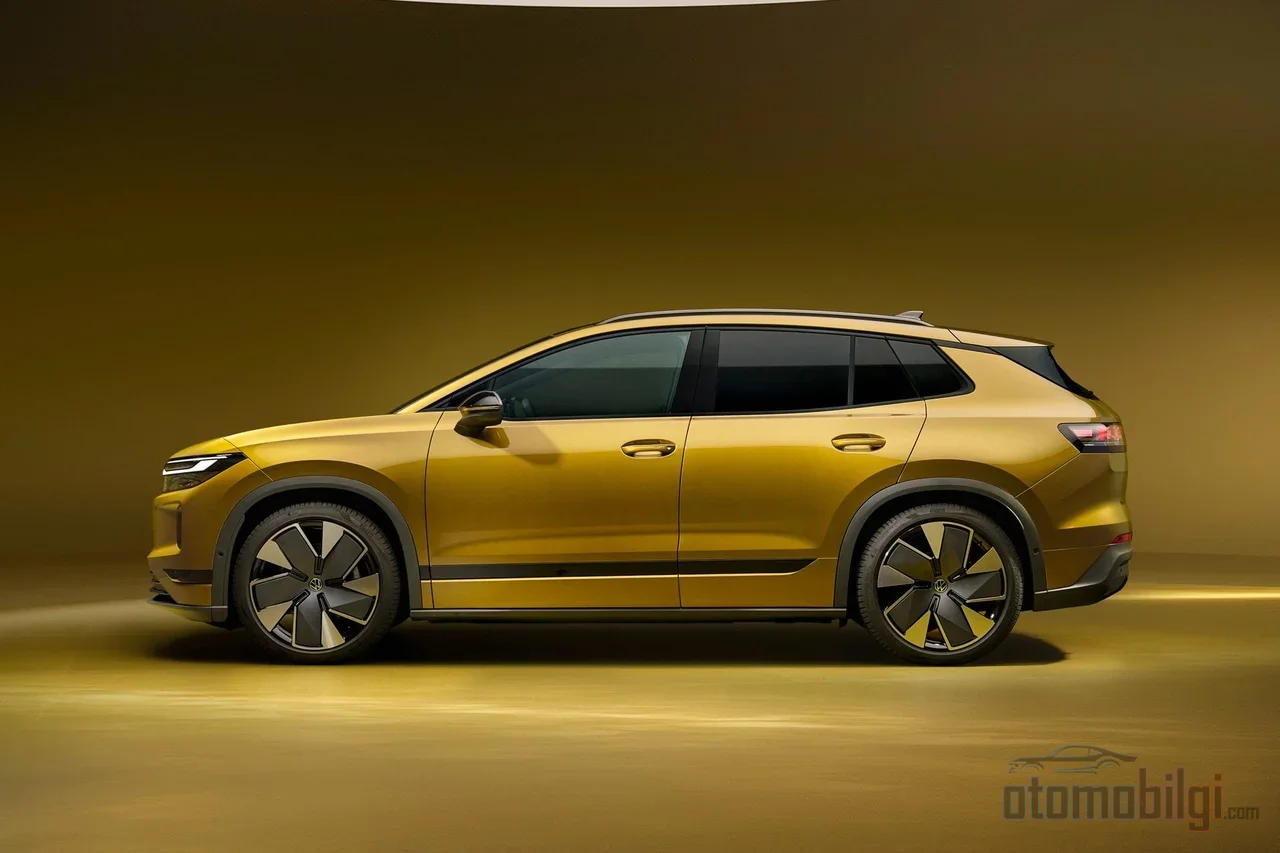
There is also an interesting nostalgic touch in the design: blue-red gauges recalling the Golf IV and a virtual garage featuring six classic Volkswagen models (Golf I, Golf II Country, Golf IV, Tiguan I, Race Touareg and Beetle). In the exterior design, the new design language called "Pure Positive" replaces the ID.4's soft crossover lines with a stronger SUV character; the return to classic pull-type door handles is also part of this package. Four trim levels are offered: Trend, Life, Style and R-Line.
Pricing, Launch and Production Schedule
Pre-sales On October 13, 2026 begin in Germany and many other European countries; prices in Germany start from 42,695 euros. The market launch in early 2027 will take place, and the vehicle will be sold alongside the gasoline, diesel and hybrid Tiguan; in other words, the arrival of the electric Tiguan does not spell the end of its internal combustion sibling. Production is planned at the Emden plant; the name change at the plant was confirmed by worker representatives in January 2026, with Volkswagen's official confirmation coming on September 28, 2026. A notable detail on the pricing side: the starting price is slightly above the current ID.4's 40,580-euro starting point.
The picture is more ambiguous for the US market. Some American publications position the vehicle as a 2028 model year, which points to a delayed US entry; frankly, the launch timing on the US side is not yet clear in the sources. This is because Volkswagen ended ID.4 production in Chattanooga and is shifting its US product strategy toward gasoline SUVs; assessments that its mass-market electric vehicle experiment failed to find the expected reception in that market are gaining increasing weight.
The Big Picture: A Divergence in Volkswagen's EV Strategy
The ID. Tiguan's Europe-focused launch should be read together with the halt of ID.4 production in the US. The brand's mass-market electric strategy is no longer a single global plan; it is a collection of decisions that diverge according to regional priorities. The group lowering its 2026 profit outlook due to a weak pricing environment, costly EV investments and pressure from Chinese competitors forms the backdrop of this divergence. It is a known fact that Volkswagen's deliveries in China fell by one percent in the third quarter of 2025 as it struggled with price wars; the group responded by announcing its new intelligent electric portfolio developed in 36 months and its AI-focused roadmap at Auto China 2026.
In this context, looking at the ID. Tiguan, it appears Volkswagen is trying to hold onto the mainstream EV market in Europe. Name recognition, corrected ergonomics, a split battery strategy and production in Germany are steps in the right direction. The lag in charging speed, however, is consistent with the vehicle's positioning, at most a shortcoming. In the electric era, simply introducing models is no longer enough; choosing which weapon to fight with in which region of the market has itself become the strategy. The ID. Tiguan is the clearest product of Volkswagen's choice.
Sources
- A Volkswagen bestseller goes electric: world premiere of the new ID. Tiguan - Volkswagen Newsroom
- VW ID. Tiguan premiere: ID.4 successor starts at €42,695 - electrive.com
- Volkswagen ID. Tiguan 2027 - Autohled.cz
- 2028 Volkswagen ID. Tiguan Replaces the ID.4 EV - Car and Driver
- The Volkswagen ID4 Is Dead After 2026 - Edmunds
- Volkswagen slashes 2026 profit outlook - Automotive News
- Auto China 2026: Volkswagen Group Unveils Record Product Offensive - Volkswagen Group