BYD Apologized: Great Tang's Wheels Were Installed Backwards
Fitting wheels of different widths on the front and rear axles of a car is one of the most seemingly simple and most embarrassing mistakes that can come out of a production line. BYD had to admit exactly this mistake on November 11, 2026: Some examples of the company's flagship electric SUV, the Great Tang, had left the factory with the narrow front wheels and tires fitted to the rear, and the wide rear wheels and tires fitted to the front. The problem did not emerge from the company's own audits, but through complaints from drivers taking delivery of their vehicles.
In the shadow of quality debates that have come up several times in three months, this recall once again reveals the tension between scale and quality control at China's fastest-growing automaker. So how risky were the reversed-mounted wheels really, how many vehicles were affected, and what will owners do?
How Did the Reversed-Mounted Wheels Come to Light?
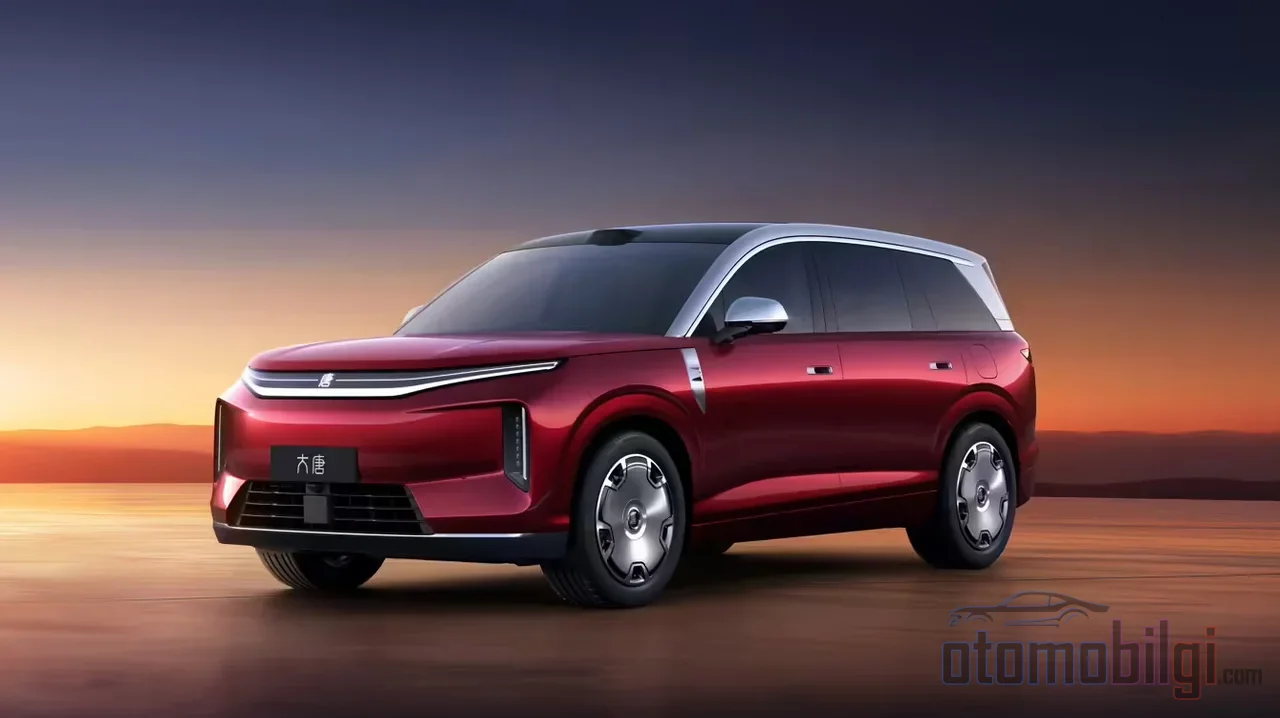
Although the mistake looks cosmetic at first glance, it actually is not; equipping the rear axle of large SUVs with wider tires and wheels while the front axle gets narrower ones is a deliberate engineering choice. In the Great Tang, however, this arrangement had been reversed: The sets that should have been narrower at the front and wider at the rear had swapped places. The first to notice the difference were the drivers who carefully inspected their tires after taking delivery of their vehicles.
Assembly errors are nothing new in automotive history; in the past, problems like this were caught by hand and eye at service centers weeks later. Now, photos shared on social platforms bring mistakes to light alongside the very first vehicles that leave the factory. BYD's statement was also a product of this new reality: The company apologized on November 11 through its official account and explained the source of the problem.
Key Points
- BYD admitted that wheels were reversed-mounted on some Great Tang SUVs on November 11, 2026
- The root cause was explained as supplier Hubei Biaoyu Industrial entering the product codes incorrectly
- The Great Tang is a 7-seat electric SUV with a starting price of 239,900 yuan and a declared range of 536 km
- The number of affected vehicles was not disclosed; owners are being offered free inspection, wheel replacement, and warranty renewal
The Source of the Mistake: A Supplier Coding Error
BYD pointed not to a mess on its own production line, but to a data error in the supply chain behind the reversed-mounted wheels. The Hubei-based supplier Hubei Biaoyu Industrial entered the product codes of the wheel sets incorrectly; this incorrect coding resulted in the front and rear sets getting mixed up at the factory. The company described the incident as a glitch in its own coding system combining with supplier data.
This distinction matters for BYD: It is an explanation presented less as a direct assembly line discipline failure and more as a vulnerability in the digital infrastructure managing parts flow. However, from the reader's point of view, the result is the same: The flagship model hit the road without verifying the position of the wheels on its body.
Measures Taken on the Production Line
BYD reported that it has fixed its coding system and even added extra visual inspection stations so that subsequent production batches would not be affected. Similar additional assurances have also been put in place on the supplier side. In other words, a two-way control mechanism has been established to prevent the problem from recurring; the fact that this was not in place from the start for a part like a wheel, which should be visually noticeable instantly, is a separate matter of debate.
Is There a Safety Risk, How Many Vehicles Are Affected?
According to BYD's own tests, the reverse-mounted wheels do not affect the vehicles' road handling and do not pose a direct safety risk. The company, emphasizing this finding, implies that the incident remained within the bounds of a cosmetic fix. In contrast, drivers voiced concerns that narrow tires wear out faster under load and about possible safety issues in the long term.
The number of affected vehicles remains a piece of information the company has not disclosed. BYD shared neither how many vehicles were produced during the period in question nor the total number covered by the recall. Considering that the Great Tang has gathered more than 100,000 reservations before sales and 14,000 vehicles have been delivered so far, the potential scope of the problem is by no means small; but that does not mean every delivered vehicle is affected.
How Will the Process Work for Owners?
BYD announced a comprehensive compensation package for the vehicles found to be affected. The process consists of the following steps:
- Free inspections will be carried out at service centers for affected vehicles
- Reverse-mounted wheel sets will be replaced free of charge
- The vehicles' warranty periods will restart as of November 11, 2026
The restart of the warranty is the most concrete concession given to owners: A vehicle that has had a wheel replacement is treated almost like a brand-new vehicle. Rolling back the warranty counter is not a common practice in the automotive world; BYD's move can be read as a sign that the company itself has grasped the seriousness of the matter.
Why Is the Great Tang a Critical Model for BYD?
The Great Tang is a 7-seat, fully electric SUV positioned at the pinnacle of BYD's Dynasty series. The vehicle's price in the Chinese market is around 239,900 yuan; that corresponds to roughly 37,000 dollars. Its stated range is 333 miles, or approximately 536 kilometers. It is not yet on sale in Europe; 2027 is targeted for its global launch.
So this vehicle is not an ordinary volume model sold in China, but a showcase product carrying the brand's technology and positioning ambitions. The more than 100,000 reservations show consumers' confidence in the model; and precisely because of that, the cost of a fault in a fundamental part like a wheel turns into a matter of reputation beyond the 14,000 delivered vehicles.
BYD's Growth Pace and the Quality Control Debate
The wheel case cannot be considered independently of BYD's recent quality agenda. Last month, the company announced a brake pedal recall covering 183,211 vehicles, including Tangs produced between 2014-2022. In September 2026, a total of 32,009 Shark 6 units were recalled in Australia and New Zealand due to the risk of abnormal wear and breakage of the cable carrying the spare wheel and the wheel falling off while driving; Owners of the 2,918 vehicles in New Zealand were advised to remove the spare wheel until repair. In October, the total number of vehicles covered by the recall in China and Australia exceeded 215,000.
This picture coincides with a period of increasing regulatory pressure in China. Stricter rules have come onto the agenda, from door handles to driver assistance systems and battery standards; examples discussed in the industry include an axle distance deviation exceeding the permitted limit in the Xingyuan and fuel consumption above the declared figure in the Qin L DM-i. In an environment where a rapidly growing production scale and a shrinking tolerance zone apply at the same time, every new BYD recall echoes louder than the last.
Meanwhile, the brand's momentum has not stalled: Its sales in the United Kingdom rose by 80 percent over the past year, and more than one in twenty vehicles sold in that market carries the BYD badge. In the same period, the company reached its 19 millionth production milestone. On a separate front, as part of Jaguar Land Rover's legal initiative regarding a Defender-like design, a raid was carried out on BYD's offices in the Netherlands to collect documents; a ruling from the Dutch court is expected this week.
Conclusion: Apology, Compensation and the Real Test
In short, the answer to the question is clear: BYD admitted that in some examples of the Great Tang, the front and rear wheel sets left the factory installed in reverse; it explained the root cause as incorrect product coding by the supplier Hubei Biaoyu Industrial, and did not share the number of affected vehicles. According to its own tests, the company argues that there is no safety risk; owners are being offered free inspection, wheel replacement and a restart of the warranty, and additional visual checks were added to the production line.
To put it with a thirty-year-old reminder: In this industry there is no error-free manufacturer; manufacturers are remembered by how they deal with their errors. BYD's apology and compensation package came quickly and comprehensively. The real test will be for no similar news to hit the agenda until the global Great Tang launch beginning in 2027; because at a manufacturer whose scale is growing this quickly, forgiveness for a visible defect like a wheel does not come that easily.
Sources
- BYD Issues Recall On Flagship SUV Because The Wheels Were On Backwards
- BYD apologises for installing front and rear wheels in reverse
- Chinese car giant puts SUV wheels on the wrong way
- BYD apologizes for installing Chinese SUV's wheels backwards
- BYD Auto New Zealand official Shark 6 recall notice (September 2026)