Tesla's Sales in China Dropped by 66 Percent, Market Share at 0.8 Percent
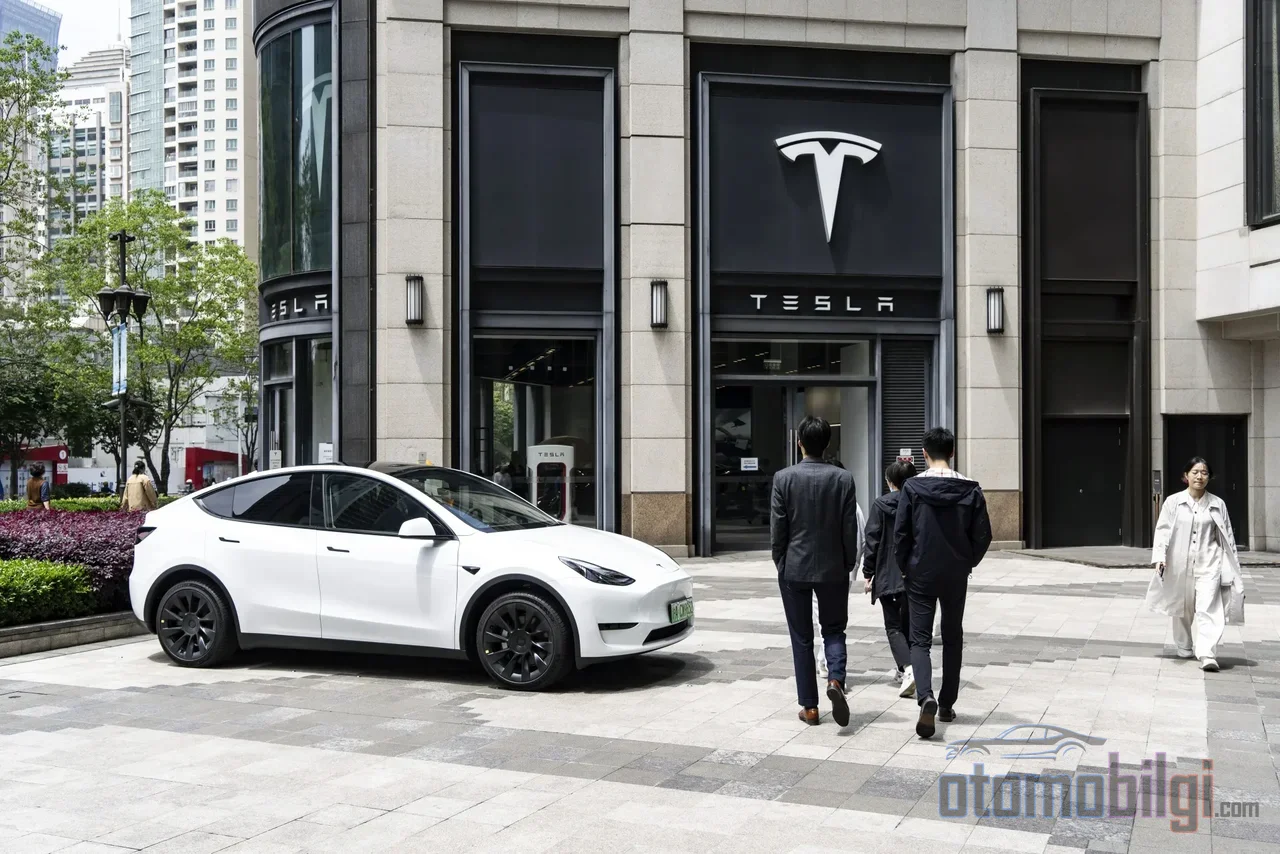
Tesla's domestic sales in China fell to their lowest level in four years in October 2026: 8,817 vehicles. So is this slump merely the result of the quarterly cycle, or is it a sign of a deeper demand and competition problem?
The company's factory in China produced and sold 67,829 vehicles in October, a figure representing a 10.3 percent year-on-year increase. However, all of this growth comes from exports. While 59,012 vehicles were shipped abroad, only 8,817 vehicles were delivered to Chinese buyers. That figure means a 66.1 percent drop compared to October of the previous year and an 86.4 percent drop compared to September. For the first time since July 2022, Tesla has fallen below the 10,000 threshold on a monthly basis.
This gap between the surface and the depth of the numbers points to a new phase in Tesla's journey in China. The Shanghai factory is becoming more of an export base with each passing month, and the cost of this transformation is the erosion of market share in the world's most competitive electric vehicle market.
Key Highlights
- October 2026 domestic sales: 8,817 vehicles, a 66.1 percent year-on-year decline
- 59,012 of total production were exported; the export share hit a record at 87 percent
- NEV market share fell to 0.80 percent; the lowest level since April 2022
- January-October exports reached 420,984 vehicles, surpassing domestic sales
- The November-December recovery will show whether the decline is timing-related or structural
Why Did Domestic Sales Fall So Much?
When evaluating Tesla's domestic market performance in October 2026, two separate metrics need to be distinguished: total production and domestic deliveries. The company continued production in October with 67,829 vehicles, a figure 10.3 percent higher than October of last year. However, the source of this increase is not sales to Chinese customers.
Actual domestic sales remained at 8,817 vehicles. This figure includes 7,807 Model Y units and 1,010 Model 3 units. In September, Tesla had delivered 64,837 vehicles to the Chinese market. The drop in October translates to an 86.4 percent contraction on a monthly basis. A retreat of nearly one-third in a single month is too large to be explained as a coincidence.
Tesla's market share in the Chinese market also directly reflects this decline. The company's share of NEV (new energy vehicle) retail fell to 0.80 percent; a year ago this rate was 2.03 percent, and in September it stood at 5.98 percent. Its share in the battery electric vehicle (BEV) category also slipped to 1.15 percent. Both rates are the lowest seen since April 2022.
Is the Quarterly Cycle Explanation Sufficient?

Tesla's well-known sales model is built on prioritizing export orders at the start of each quarter and leaving domestic deliveries to the end of the quarter. The intense campaign period in September has also pulled some demand forward. This explanation largely accounts for October being weaker than September.
But the question is: is it a periodic fluctuation, or a structural decline? Looking at the first months of the quarters in 2026 is illuminating at this point:
- January 2026: 18,485 domestic sales
- April 2026: 25,956 domestic sales
- July 2026: 27,249 domestic sales
- October 2026: 8,817 domestic sales
October came in at less than half of the previous lowest first month of a quarter for the year. The four-year perspective is even more striking: Tesla's October lows stood at 40,485 in 2024, 26,006 in 2025, and 8,817 in 2026. A seasonal cycle can explain why October was weaker than September; but it cannot explain October coming in at just a third of last year's figure.
Why Did Tesla Fall Harder Than the Overall Market?
In October, China's passenger vehicle market as a whole contracted by roughly 25-27 percent year on year, with retail sales falling to 1.643 million. The NEV segment also showed a decline of between 10 and 13.7 percent (minor differences exist between preliminary data and the final compilation). However, this market-wide contraction is not enough to explain Tesla's 66 percent collapse.
The Impact of Policy Changes
Two major policy changes lie behind the slowdown seen across the market. China halved the NEV purchase tax exemption on January 1, 2026, capping it at 15,000 yuan. In addition, trade-in subsidies are also being phased out gradually. These two developments have created a general headwind affecting all manufacturers.
But this headwind hits Tesla far harder than the rest. While the market shrank by around 10 percent, Tesla's 66 percent decline shows that the problem does not stem solely from macro conditions. The loss of competitive strength is a bigger part of this picture.
Competitors' Delivery Table
Competitors' performance in the same month makes it clear why Tesla's decline needs to be explained by competition:
- Xiaomi: Broke 2026's monthly record with over 50,000 deliveries; sold approximately 336,000 vehicles in the first 10 months
- Leapmotor: 106,127 deliveries, a 51 percent year-on-year increase; above the 100,000 mark for four consecutive months
- BYD: Its best month of the year with a total of 490,168 deliveries including exports (441,706 vehicles when only NEV sales are taken into account)
Faced with Chinese manufacturers' rapid model renewal cycles and aggressive pricing strategies, Tesla's Model 3 and Model Y lineup, which has remained fundamentally unchanged for years, is struggling to hold demand. This stands out as the company's most fundamental structural problem in China.
What Does the Increase in Exports Mean?
Tesla's October exports rose 66.27 percent year on year and 93.30 percent compared to September, reaching 59,012 vehicles. The export share of total sales reached a record 87 percent (the previous record was 76.01 percent in October 2022). Exports came in just below July's record of 66,330, the second-highest monthly level on record.
Over the January-October period, this gap becomes even more pronounced. Domestic sales fell 15 percent to 389,905; the lowest first ten-month total in at least four years. Exports, by contrast, rose 101.28 percent to 420,984 vehicles. With October, cumulative exports have for the first time surpassed domestic market sales; last year, the domestic market was more than double the exports.
The year-by-year January-October domestic sales trend also shows a one-way decline: 462,355 in 2023, a peak of 500,688 in 2024, 458,710 in 2025, and 389,905 vehicles in 2026. That is a loss of roughly 110,000 vehicles compared to the 2024 peak.
VAT Rebate Cut and Pulling Exports Forward
Behind this jump in exports lies a fiscal calendar as well. China's Ministry of Finance and State Taxation Administration are lowering the VAT export rebate rate for NEVs from 13 percent to 9 percent as of April 1, 2027; the rate will be determined according to the customs declaration date. This is a clear signal encouraging manufacturers to squeeze exports in before the deadline.
Tesla's October exports of 59,012 fit exactly this scenario. The company alone accounted for 10.1 percent of China's passenger NEV exports in October (BYD took a 28.3 percent share the same month with 164,679 vehicles). However, the export valve is not unlimited: shipping costs and discounts in overseas markets can squeeze profit margins. From April 2027 onward, this valve will become financially more expensive.
Tesla's Response and Financing Move
Tesla leans on statements attributing the October drop to the first month of the three-month period. However, the data show that this explanation does not tell the whole story; the difference from the first months of other quarters of the year is very large.
The company is also making moves on the marketing side: On October 30, a new financing program was announced in China. For selected Model 3 and Model Y variants, the minimum down payment on 5-year interest-free loans was lowered to 39,900 yuan (about 5,940 dollars); this is roughly half the previous level. The program is valid for vehicles ordered between October 30 and November 30. In addition, the Shanghai factory's local parts usage rate has risen to 98 percent; this creates a flexibility area on the cost side.
However, incentives such as the down payment reduction do not solve the problem of an aging product lineup. The market share dropping to 0.8 percent is a sign that pricing alone is not enough.
November and December: The Real Test
Last year's end-of-quarter recovery was striking: Tesla had reached 73,145 domestic sales in November 2025 and 93,843 in December 2025. If a similar jump occurs this November and December, the October dip can largely be read as a matter of timing.
But if sales do not approach those levels, the picture changes. Tesla would then be facing a structural problem in the world's largest electric vehicle market. And at that point, export valves will also become more expensive in April 2027; as the company continues production in China, the pressure on profit margins will increase.
The short answer is this: the 8,817-vehicle domestic sales figure in October 2026 is not only about the quarter cycle; the drop of market share to 0.8 percent, the January-October domestic market total falling to 389,905, and exports surpassing domestic sales should all be read together as an export curtain concealing Tesla's demand and competition problem in the Chinese market.
The next eight weeks will clarify whether the four-year low is a temporary calendar effect or the beginning of a permanent decline. In automotive history, such scissors movements usually point to a single fact: production continues, but the market is no longer in the same place.
Sources
- Tesla's China sales crash 66% to lowest level in over four years
- Tesla retail sales in China fall to lowest since July 2022 as export share hits record
- Tesla's China-made EV sales rise 10.3% y/y in October
- Xiaomi's October EV deliveries top 50,000, hit 2026 monthly high
- China to lower VAT export rebate on new energy vehicles
- Tesla China Sales Drop: Is The Shanghai Plant Turning Into An Export Hub?
- Tesla's China Sales Sink to Lowest Since 2022 as Exports Take 87% of Output