UK's Used Car Market Back at Pre-COVID Levels

The UK's used vehicle market has captured a year-on-year growth momentum it has not seen since the days before the coronavirus pandemic. Market data announced as of November 2026 shows the sector moving on stable ground after years of a volatile course. The most striking part of this picture is on the demand side: electric vehicles have come to the fore as the most sought-after segment in the UK's used car market.
This is less a news item about a development, and more a news item about the closing of an era. For the years between 2020 and 2022 had made the market unrecognizable on both the supply and price side, while the 2023-2025 period played host to the volatile course of the recovery. The picture we have now is a summary of where this long climb has arrived.
How was the market's strongest post-COVID annual performance built?
2026 has been a year of stability in the full sense for the UK used car market. The sector closed out 2025 with volume just over 2 percent above the previous year; retail prices had held steady. The first half of 2026 added growth on top of this course: in the second quarter of the year, the used car market grew by 0.7 percent, surpassing the 2 million sales threshold in a quarter for the first time since 2021. By the end of the year, transaction volume is expected to reach 7.83 million units, an increase of 0.9 percent compared to the previous year; this figure is still below historical peaks, but in terms of direction and stability it is the healthiest picture of the post-pandemic period.
Highlights
- The used car market grew by 0.7 percent in the second quarter of 2026, exceeding 2 million sales
- Used electric vehicle transactions rose by 67 percent on a quarterly basis, reaching a record 110,761 units
- In January 2026, the average used car price was £17,294, the highest monthly average since November 2023
- Electric vehicles were the fastest-selling fuel type at 38 days
- In August 2026, used electric vehicle prices rose year-on-year for the first time in 40 months: +3.8 percent
On the demand side: buyers have returned
Buyer interest made a strong entry into 2026. In January, platform visits reached 86.3 million, a monthly increase of 24.7 percent. More meaningful is that roughly one in nine consumers sees vehicle ownership as a basic need, and in more than eight of the ten regions people are at least as confident they will be able to buy a vehicle as they were last year. In other words, this growth is not a speculative wave; it is based on the everyday need purchases that form the backbone of the market.
Why are electric vehicles the most sought-after segment?
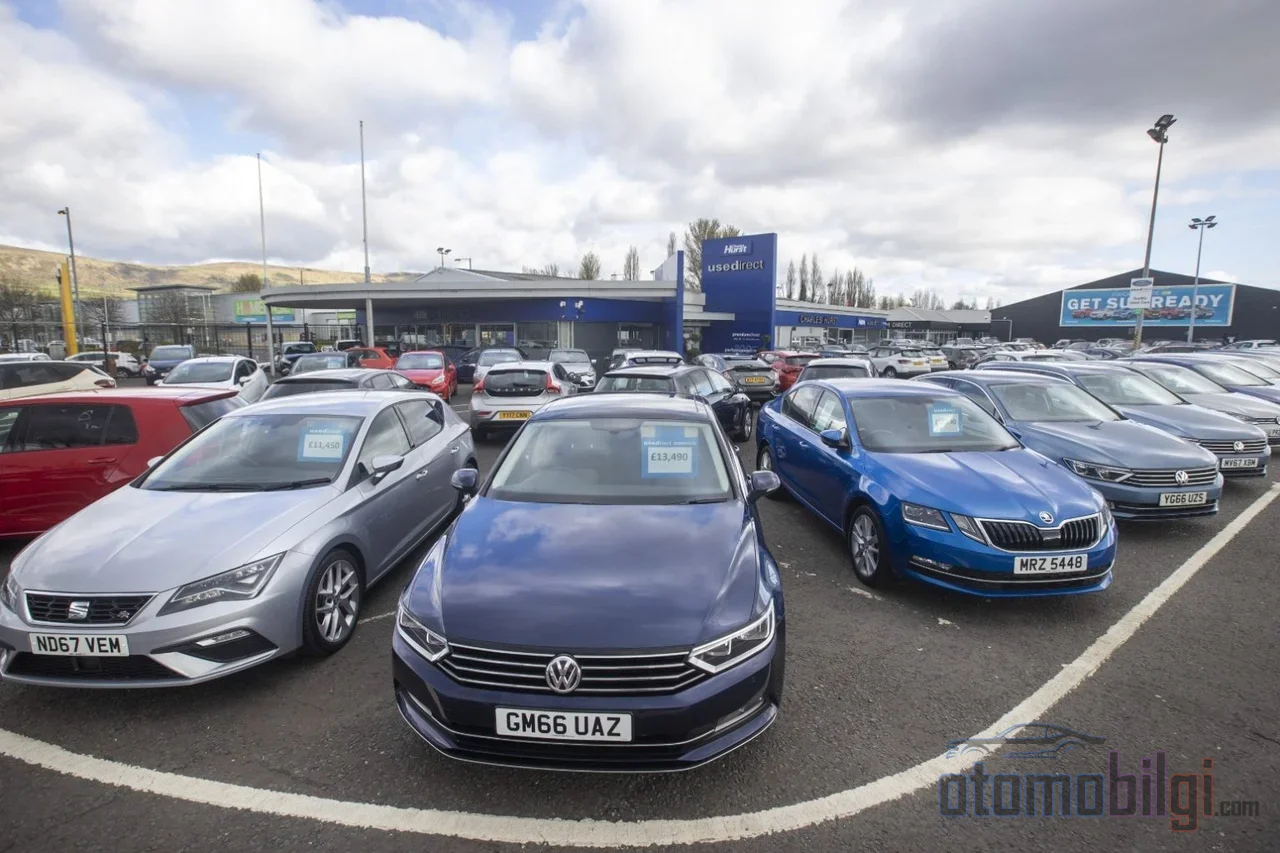
The rise of electric vehicles in the used car market is no longer a trend, but a structural transformation. In the second quarter of the year, used battery electric vehicle transactions rose by 67 percent year-on-year, reaching a record 110,761 units. In January, electric vehicle demand grew by more than 16 percent year-on-year, and the number of electric vehicles on Britain's roads reached 2 million.
Sales speed data also points in the same direction: In January 2026, electric vehicles became the fastest-selling fuel type with 38 days; electric cars in the 3-5 year age band changed hands in 34 days. In the same age group, electric prices are moving in parallel with their petrol equivalents. For used car buyers, one of the questions that has remained unanswered for a decade was whether a used electric car is a reasonable purchase; 2026 data is increasingly answering this question positively.
The end of a 40-month series in pricing
There was a notable turning point in electric vehicle pricing during the year. In January, despite strong demand for used electric vehicles, supply increased by 33.1 percent, and the average retail price fell to 23,678 pounds, a 7.2 percent annual decline. By August, used electric prices on a similar basis recorded a 3.8 percent annual increase; this marked the end of a 40-month uninterrupted series of annual declines. The weight of the increase comes from the 3-6 year age band; meaning first-generation electric cars are now being priced with a consistent demand base. Valuation experts noted in March that battery electric cars lagged behind the general market in wholesale value movement, and that although retail demand was strong, the trade side had not yet caught up with it; there are also signs that independent dealers have returned to trading electric vehicles.
Price and age profile: the new anatomy of the market
The general price level is in remarkable calm. In January 2026, the average used car price was 17,294 pounds; this is the highest monthly average since November 2023. The annual increase is only 0.2 percent, while the monthly movement is 0.1 percent. The average selling time is 41 days, the same as a year ago.
Looking at the age bands, the picture becomes more colorful. 10-15 year old vehicles are the star segment of the market: prices are at an average of 6,949 pounds, a 9 percent annual increase; while demand rose by 7.3 percent, supply shrank by 0.3 percent. Petrol vehicles, with an average price of 15,039 pounds, recorded an annual increase for the tenth consecutive month; however, while demand fell by 2.5 percent, supply shrank by 7.1 percent. On the diesel side, a marked contraction stands out; in an environment where used electric car sales rose by nearly 40 percent in September, diesel sales fell sharply.
The fragility of the wholesale side
Beneath the relatively calm appearance of the retail market, the wholesale valuation side was volatile. In March 2026, the general used value movement on a 36/60 basis fell by 1.2 percent; excluding the pandemic years, this was the largest decline recorded for a March in recent decades. The distribution by fuel type is also significant: battery electric showed the worst performance with a 3.6 percent loss, while petrol lost 0.6 percent, diesel and hybrid 0.8 percent, and plug-in hybrid 1.3 percent. Stable retail prices combined with falling wholesale values is a sign that sellers' profit margins are thinning.
The invisible gap on the supply side
What will really challenge this picture is the structural problem on the supply side. Around 2.5 million new vehicles that could not be sold during the pandemic years now present themselves as a deep gap in the market's mid-age segment. With 5-6 year-old stocks expected to shrink by 25-30% in 2026 compared to 2024, an erosion of up to 35% is anticipated in the 5-7 year-old band in 2027. This means that in a few years, vehicle availability in one of the market's busiest age segments will be seriously restricted. While this contraction supports prices in the short term, it is the biggest obstacle to volume growth in the medium term.
How is regulation shaping the market?
The UK government's electrification incentives directly feed the demand side. The Electric Car Grant was extended with an additional £1.3 billion in funding through 2030; grant levels were set at £1,500 and £3,750, with the list price threshold set at £37,000. The threshold for the Expensive Car Supplement was raised from £40,000 to £50,000 as of April 2026, and this change is expected to support electric demand. On the other hand, with the November 2025 Budget, an additional road tax charge was announced as of April 2028 of 3 pence per mile for electric vehicles and 1.5 pence per mile for plug-in hybrids; while the 2030 internal combustion sales ban was confirmed, hybrids were granted sales permission until 2035. The net effect of the budget is predicted to be a loss of around 120,000 electric vehicles, and weak expectations regarding household disposable income stand as a pressure factor on second-hand demand.
The short answer: What is the state of the UK second-hand market?
The UK second-hand market is showing its strongest annual performance since before the coronavirus: In the second quarter of 2026, transaction volume rose by 0.7% to above 2 million, the annual volume expectation is 7.83 million vehicles, and prices are holding steady at half of the annual rate. The market's most sought-after segment is now electric vehicles; transactions increased by 67% on a quarterly basis, and second-hand prices turned positive annually for the first time in 40 months.
In the past, the second-hand market was a slow and predictable mechanism that operated on the leftovers of the new vehicle market. Now it is a market in its own right, with its own demand dynamics, its own price curves, and its own supply problems. What 2026 has revealed is this: the market is growing, but not growing easily. The extraordinary momentum of electric demand, the mid-age supply gap, and the fragility in wholesale pricing all appear in the same picture. The coming two years will decide which of these three forces prevails, and therefore the trajectory of prices and volumes.
Sources
- Used car market returns to growth as EV sales accelerate
- Used car market enters into 2026 with surge in buyer engagement, but supply headwinds loom
- Used car market enters 2026 with positive momentum as 2025 sales finish 2% ahead of previous year
- Future Car Market Overview Used Car April 2026
- Cox estimates stable 2026 used market, but flags supply risks
- Used Electric Car Prices 2026: Rising or Falling?
- Road to 2030
- UK EV Market Share & Registration Stats 2026