Mercedes Halts Its Factory Investments in Germany
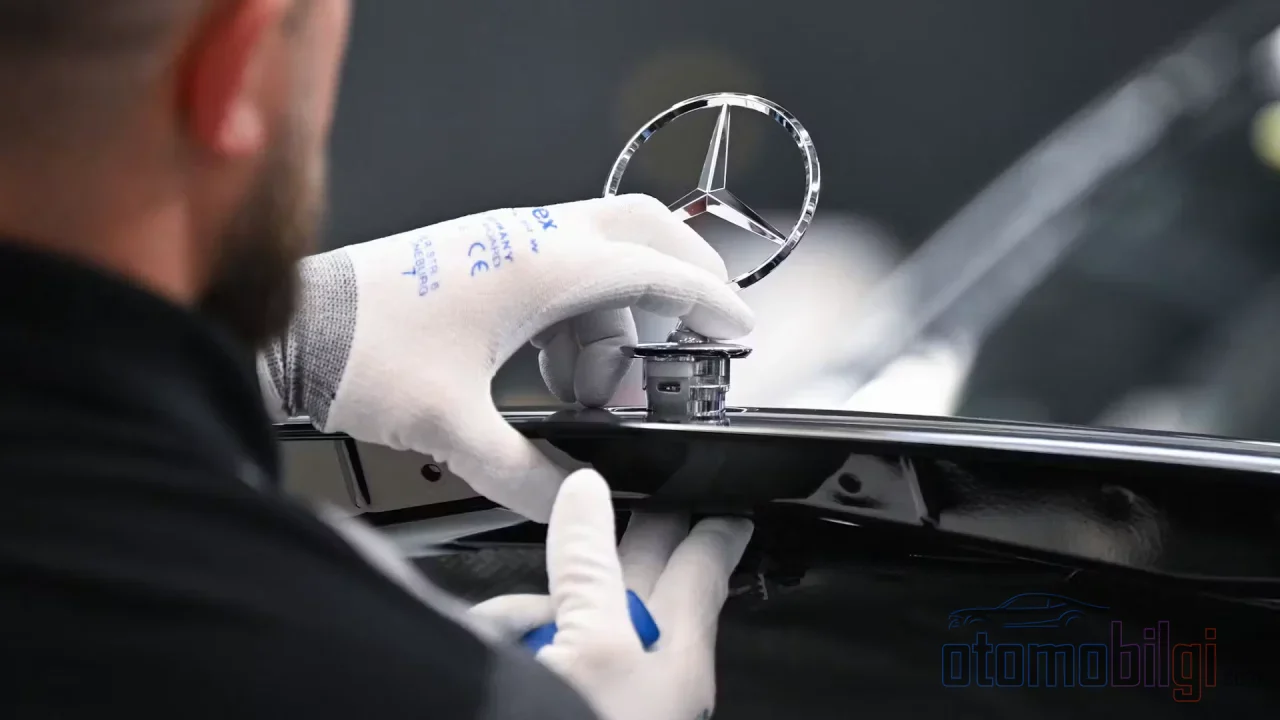
One of the most enduring images of German automotive history was the sight of three-pointed stars lined up along the production line flowing out of Sindelfingen. On November 12, 2026, a heavy silence fell over the backdrop of that scene: Mercedes-Benz announced that it was temporarily halting new investments at all of its plants in Germany, and for the first time put factory closures on the table so openly. The decision is news in itself; the real question is what accumulation of factors brought it about.
The answer lies hidden in the summary of the last three years: weakening electric vehicle demand, a sharp loss of sales in the Chinese market, a billion-euro burden from US tariffs landing on the profit table, and German production costs that have become many times more expensive compared to Eastern Europe. Mercedes's investment freeze decision is the sum of these four items.
How the Investment Freeze Decision Was Explained
Michael Schiebe, the board member responsible for production, reported via a note published on the company intranet that the management board had reached a joint decision to stop all new investments at the German plants. The phrase "for now" in the announcement stands out; meaning that technically this is a temporary halt. However, the continuation of the same note makes the notion of temporariness quite relative: management states that, despite countless intensive talks with the unions, it could not see a path to agreement, and that if no change in the cost structure is achieved, which German plants would need to be closed must be examined carefully.
Two possibilities stand side by side in Schiebe's message. Management emphasizes that it wants the new generation of vehicles to also be produced at the plants in Germany; on the other hand, it acknowledges that the possibility of new products being produced only abroad is also on the table. This diplomatically worded sentence honestly reflects the tension at the bargaining table exactly as it is: the price of staying in Germany is cost cuts to be shared with the unions, and the price of not staying is the closure of two factories.
Highlights
- Mercedes-Benz temporarily halted new investments at all of its plants in Germany on November 12, 2026.
- The company is evaluating the closure of two German factories if costs do not come down: one assembly plant, one powertrain facility.
- Hourly labor costs in Germany can be up to 5 times higher than at Eastern European plants.
- The company revised its profit expectation downward last month by 5.8 billion euros; Mercedes's sales in China fell by about 19 percent in 2025.
- IG Metall is demanding a 5 percent raise in wage negotiations; management considers the demand extremely excessive.
Production Costs Are at the Center of the Dispute
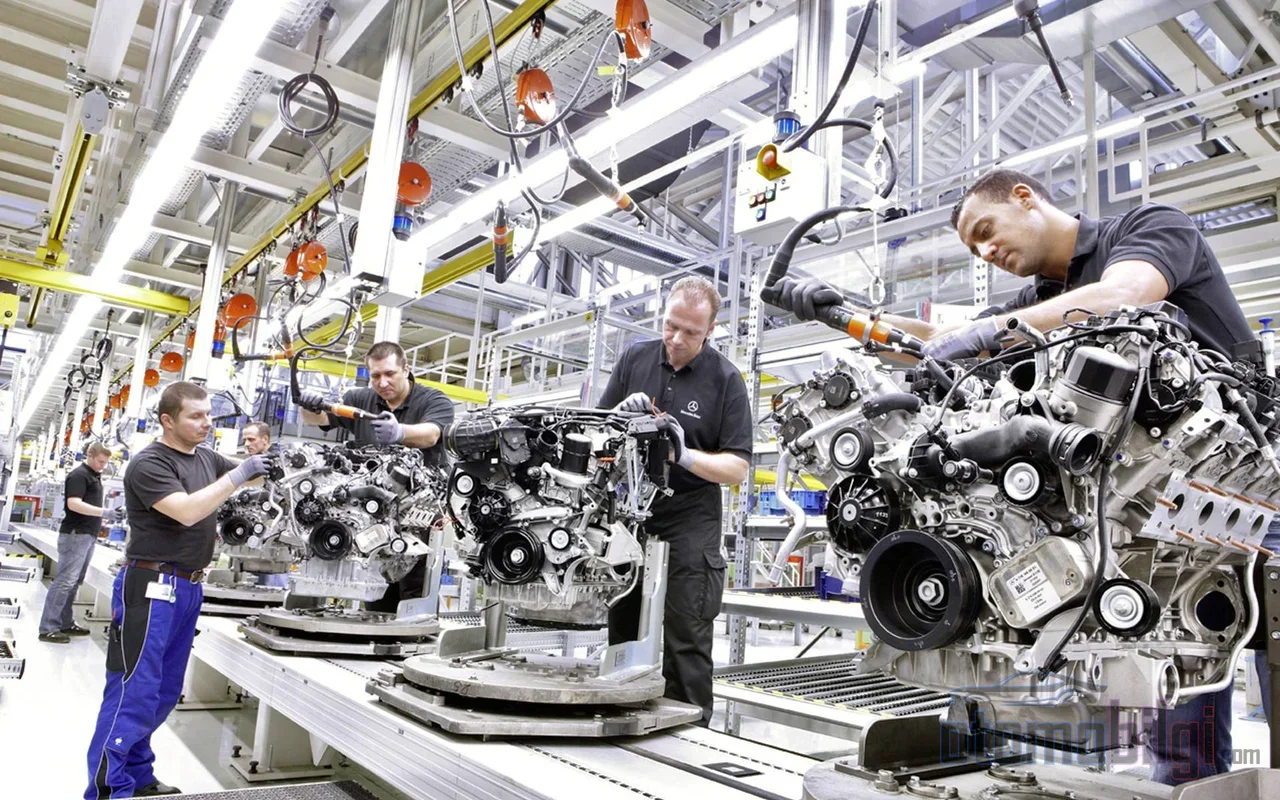
Mercedes's claim is clear: The hourly labor cost at German plants can reach up to 5 times that of plants in Eastern Europe; administrative costs also weigh heavily in a similar way. Management wants a productivity package that includes extending working hours without additional pay to compensate for this; cuts to special payments such as profit sharing, vacation, and year-end bonuses are also on the agenda.
The other side, however, is not holding back. IG Metall is demanding a 5 percent raise in the ongoing wage negotiations. Board member responsible for human resources Britta Seeger describes this demand as extremely excessive, saying that labor costs in Germany are already very high in international comparison. Seeger adds that the company still wants to prevent factory closures under all circumstances, but that they now have to address this option in more concrete terms and that it is necessary to examine which locations can be operated profitably in the long term. There were also protests among employees against the demands.
Which Factories Are Candidates for Closure
A few weeks ago, Schiebe had clearly stated that if cost reductions do not materialize, two German factories would have to close. According to the expected scenario, this would affect one vehicle assembly plant and one drivetrain and components facility. However, which facilities these are has not been officially announced.
On the assembly side, names can be listed: Sindelfingen, Rastatt and Bremen. On the drivetrain side, Stuttgart-Unterturkheim, Affalterbach, Berlin, Hamburg, Kamenz and the locations in Thuringia stand out. The possibility of closure was first raised at an employee meeting in Sindelfingen in September 2026, and the 40-hour workweek as well as the Kecskemét plant in Hungary were also mentioned in the same context.
Rastatt's Special Position
Rastatt is a question mark in itself. As reported by Reuters, Mercedes is moving A-Class production from Rastatt to Kecskemét starting from the second quarter of 2026. The Kecskemét plant was expanded with an investment of around 1 billion euros; production of the new electric C-Class began on the expanded line, which was inaugurated in July. So a concrete production shift from Germany to Hungary has already taken place. Nevertheless, whether Rastatt is among the closure candidates has not been officially confirmed. The same uncertainty applies to all other facilities.
The Economic Background of the Decision
Reading this picture merely as a labor-management dispute falls short. Mercedes has been struggling with declining sales and a profit squeeze in recent years. Last month, it became the third major German manufacturer to cut its annual outlook: the profit expectation was lowered to 5.8 billion euros, i.e. to the 2025 level; whereas previously at least a 15 percent increase had been forecast.
Two ruptures on the market side are decisive. The first is China: Mercedes' largest single market and a country that historically accounted for roughly one-third of passenger car sales. Demand for luxury foreign brands has weakened noticeably; Mercedes' sales in China declined by about 19 percent in 2025. CEO Ola Källenius told Bloomberg that the business in China has now been transformed into a "in China, for China" strategy of 100 percent. The second is the United States: Rising customs tariffs under Donald Trump imposed a profit cost of around 1 billion euros on the company last year alone.
How the Electrification Plan Is Falling Apart
Mercedes's current predicament is the natural extension of the break in its electrification plan. In February 2024, the company pushed its electrification target back by 5 years; it announced that electrified sales, including hybrids, would reach at most 50 percent of the total by 2030. The plan to sell only electric vehicles by 2030 was abandoned; it was announced that the pace would be dictated by customer demand.
The repercussions on the production side followed one after another. The next-generation MB.EA platform prepared for mid-size and full-size electric vehicles was halted. Due to weak demand in the US, some deliveries of the EQ series were paused, and prices were cut by up to 15,300 dollars. In February 2025, after 2024 profit fell by about a third and electric vehicle sales collapsed, a 10 percent cost-cutting program was announced. Today's investment freeze is the latest link in this chain; there is a consistent distance of more than two years between them.
In the same period, Källenius called for comprehensive reform to keep German manufacturing competitive and warned that German industry could collapse within a decade. The company is currently restarting its voluntary separation program and negotiating additional cost cuts with the unions.
Not Just Mercedes's Problem
Looking at German automotive as a whole, Mercedes is the most recognizable face of the picture, but not the only one. Volkswagen and Audi announced sweeping savings programs and layoffs; Audi is heading toward a workforce reduction of 7,500 people. BMW reported lower earnings in the third quarter due to problems stemming from China. Volkswagen's Gamechanger plan was shelved; Porsche is also struggling with similar troubles.
Automotive analyst Ferdinand Dudenhoffer evaluates Mercedes's announcement as the unsurprising outcome of a difficulty the company has been emphasizing for months, and he states his overall judgment without hesitation: he argues that unless there is a fundamental realignment of the cost structure, the automotive industry in Germany will die out entirely. In his view, Thursday's news is a sign of the biggest crisis the German automotive industry has faced since its founding.
What Does Mercedes's Investment Freeze in Germany Mean
In summary: On November 12, 2026, Mercedes-Benz temporarily halted new investments at all of its facilities in Germany; if costs do not come down, it is considering closing one assembly plant and one powertrain factory. The decision is a combination of weak electric vehicle demand, lost sales in China, US tariffs, and a labor cost difference of up to 5 times compared to Eastern Europe. Management still holds out hope for an agreement and says it wants the next generation of vehicles to be produced in Germany; but if no agreement is reached, the new models may be produced only at facilities abroad.
For someone who has been following this industry for thirty years, the picture is familiar, but on an unusual scale. In the past, the factory in Germany was the center of the brand's prestige; Production seeking cost advantages would shift to Eastern Europe or overseas, but the home of the three-pointed star was never in question. Now the home itself is on the table. The 1 billion euro expansion in Kecskemét and the new electric C-Class line are the most tangible sign of where the geographic center of gravity is shifting. Whether it is a permanent freeze or a bargaining chip will become clear at the union table in these weeks; but the sentences being spoken are as heavy as the era itself.
Sources
- Mercedes-Benz halts all further investment at German facilities - DW
- Mercedes-Benz halts new investment in German plants, considers closures - Euronews
- Mercedes halts German plant investments, weighs closures - Automotive News (Reuters)
- Mercedes to halt German investments, mulling plant closures - Yahoo Finance UK (AFP)
- Mercedes to halt German investments, mulling plant closures - France24
- Mercedes-Benz halts German investments as plant closures loom - Reuters
- Mercedes says German production not competitive, two plants under threat - Reuters
- Production start of the new electric C-Class and expansion of plant Kecskemét - Mercedes-Benz Group
- Mercedes-Benz delays electrification goal - Reuters
- Mercedes CEO Flags Pivot to New '100% China for China' Strategy - Bloomberg