Volkswagen Tempest: Next to the China-Made Van Crafter
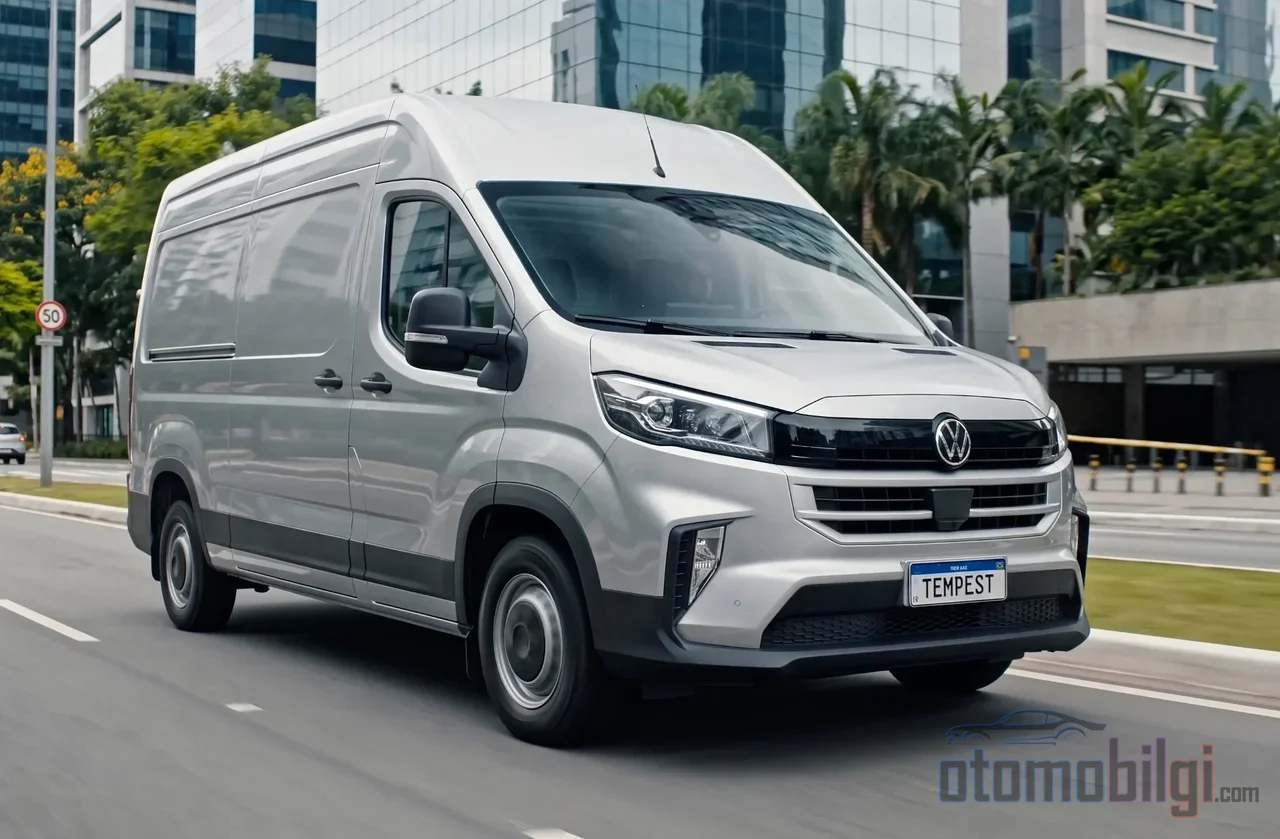
Volkswagen is adding another model to its light commercial vehicle lineup - a rival to its own Crafter: Tempest. The sheet metal panels of this large van are born in China, at SAIC facilities; Wolfsburg's contribution consists of the new front-end design and, allegedly, more than 250 technical modifications. The real interesting part of the story is why the brand put under its emblem a vehicle that will be sold in the same segment as its own large van, the Crafter - even in the same showroom in some markets.
The answer is simple but unsettling: The Crafter doesn't exist in South America. Volkswagen chose to fill this gap with a product sourced from outside, and to do so it reached out to SAIC, its oldest partner in China since 1984. More than 1,000 pre-orders have already come in from Brazil, which shows the math wasn't counted wrong.
What is the Tempest and where does it come from?
The Tempest is essentially a rebadged Maxus Deliver 9. The same vehicle has also been sold since 2019 as the LDV Deliver 9 and Maxus V90. Volkswagen has redrawn the front end from scratch: A slim black grille, the VW emblem and the cooling intake in the redesigned front bumper combine with the existing LED headlights. Inside, the 12-inch infotainment screen has been retained as-is. So the differential, the door panel and the screen are the same; the identity is Volkswagen.
It is offered in Cargo, Window, Minibus and Truck body types with two different roof heights. Volkswagen's engineering team stating that they made more than 250 technical modifications, more than 50 production process adaptations and 1.5 million kilometers of testing shows the bag isn't empty. Still, the vehicle's production is done entirely in China, at SAIC facilities.
Highlights
- The Tempest is a rebadged version of the Maxus Deliver 9, produced in China
- Engine: 2.0-liter turbodiesel, 174 hp, 400 Nm; 6-speed manual, rear-wheel drive
- Cargo volume varies by variant: 9.7-12.3 m³
- More than 1,000 pre-orders in Brazil; sales expanding to Argentina early next year
- Part of a R$ 300 million (approximately 54 million dollars) investment in Volkswagen Trucks and Buses
Technical table: Tempest alongside the Crafter
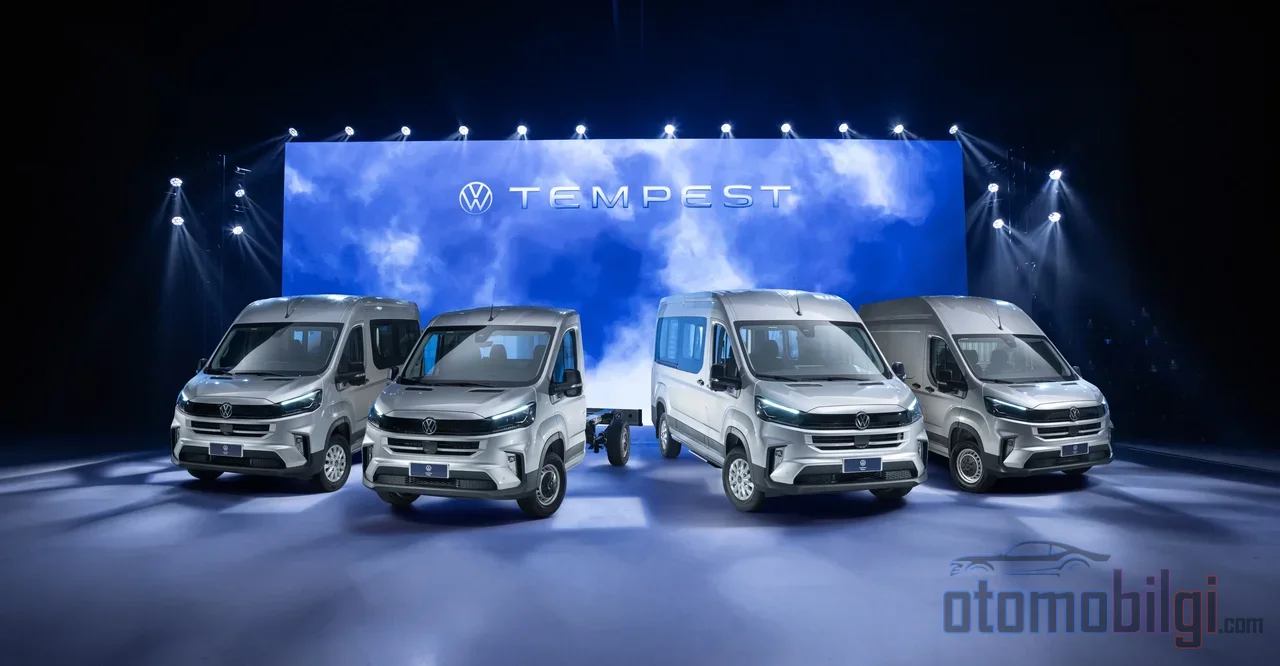
The technical side is laid out simply. The SAIC-sourced 2.0-liter four-cylinder turbodiesel produces 174 hp and 400 Nm of torque with performance modifications specific to the Brazilian market. The only transmission option is a 6-speed manual; power goes to the rear wheels. While the Crafter, sold in various markets around the world, offers cargo volumes ranging between 9.3-18.4 m³, the Tempest keeps this figure in the 9.7-12.3 m³ range.
| Specification | Volkswagen Tempest | Volkswagen Crafter (global) |
|---|---|---|
| Production | SAIC, China | Entirely Volkswagen |
| Cargo volume | 9.7-12.3 m³ | 9.3-18.4 m³ |
| Engine | 2.0 turbodiesel | - |
| Power / Torque | 174 hp / 400 Nm | - |
| Transmission | 6-speed manual | - |
| Drive | Rear-wheel drive | - |
Prices have not yet been announced; Volkswagen appears to have left this topic until a date close to sales.
What does it mean to compete with your own vehicle?
Here's the funny part: The LDV Deliver 9 is a direct competitor to the Crafter in markets such as Australia, New Zealand, Europe and the United Kingdom; the two models are sold side by side in the same markets. Volkswagen putting a rival that uses the body of its own large van under another brand name is a new example of the practice known in automotive language as badge engineering.
This strategy is not foreign to the world of trucks and light commercial vehicles; it is one of the well-known ways of reducing R&D costs. What is more striking is the similarity Volkswagen has with its own past: The first generation of the Crafter, from 2006 to 2016, was a rebadged Mercedes-Benz Sprinter. The second generation, which arrived in 2017, began to be designed and produced entirely by Volkswagen, and is also sold as the MAN TGE. So Volkswagen is a brand that has done the badge-swapping job in both directions, with a thirty-year perspective. In the past, it bought from Mercedes and sold as Volkswagen; now it buys from China and sells as Volkswagen.
The South America plan and the SAIC partnership
The Tempest is not standalone; it comes as part of a R$ 300 million investment, roughly 54 million dollars, made in the Volkswagen Trucks and Buses division. The vehicle will first go on sale in Brazil; it has been confirmed that sales will expand to Argentina early next year.
The partnership with SAIC dates back to 1984 and is one of the oldest foreign joint ventures in automotive history. For Volkswagen, this relationship is no longer merely a source producing for the Chinese market; it is also the starting point for vehicles that will fill out its global product lineup. Next year, an electric Amarok pickup for South America will join the Tempest; that vehicle will also use SAIC underpinnings, but production will take place in Argentina.
Develop in China, sell worldwide strategy
The Tempest is one of the first tangible products of a larger strategic shift that became clear at the end of October. The brand is moving from its years-long localization approach of developing vehicles exclusively for the Chinese market to a model of carrying technologies developed in China to overseas markets. Within this framework, next-generation models will be produced with technology developed in China for Latin America, Africa and parts of Asia.
Behind this shift lies a decline in electric vehicle sales. This year, the group launched its biggest product offensive ever in China: More than 20 electric vehicles will hit the road in 2026, around 30 electric models by 2027, 50 models by 2030, of which about 30 will be fully electric. To be able to finance these targets, getting maximum efficiency from its development capacity in China imposes itself.
Why is the Tempest a reasonable move?
The short answer is this: While Volkswagen fills the markets where the Crafter is absent with a SAIC-sourced product, it allocates serious resources to the engineering side to protect its brand value. The 1.5 million kilometers of testing and more than 250 modifications exist to show that this is more than an ordinary badge swap. On the other hand, things are not standing still on the Crafter side: Volkswagen will itself produce the new fully electric generation of the Crafter from 2028 onwards.
In the van market, customer loyalty depends on the product's reliability; the promise of the badge alone is not enough. Tempest's more than 1,000 pre-orders in Brazil are a positive first signal. The real test will be what the vehicle shows over the years in intensive commercial use. Volkswagen knows this business well, going back to the Sprinter era; now it is taking the same test with a China-sourced body.