From Martı to Robomarti: The Driverless Taxi Era Begins in Istanbul
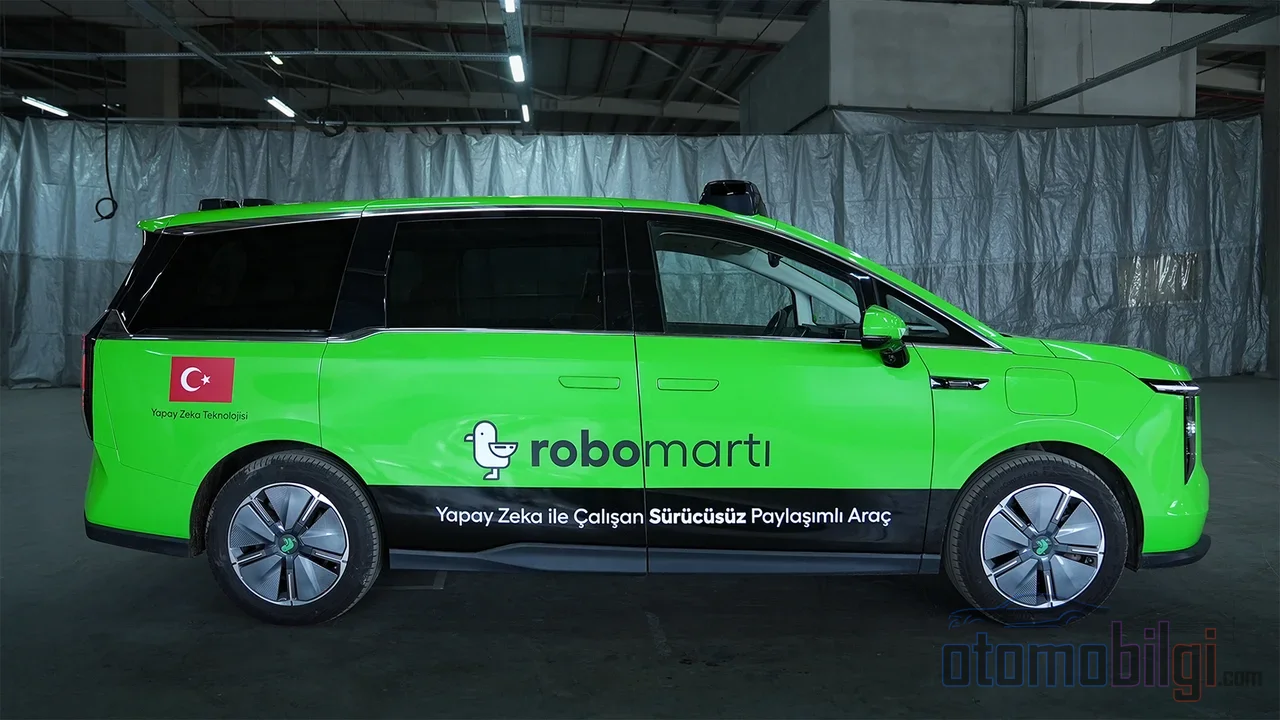
In the middle of a week when the Marti TAG debates were at their most heated, the company's founder Oguz Alper Oktem shared a short video on social media: footage showing a green, steering-wheel-free vehicle moving on its own and opening its doors automatically. The post was titled Robomarti. According to Oktem, the prototype stage is behind us; the vehicle will soon be summonable from the Marti app. How close is this to reality, really?
Highlights
- Robomarti was introduced on October 27, 2026 via Oktem's social media post; a driverless prototype developed by Marti engineers.
- In the video, the vehicle moves on its own and opens its doors automatically; the color is the Marti green we all know.
- The usage concept resembles Tesla's Robotaxi: summon it from the app, hop in, and it drives you driverlessly to the designated point.
- No technical details have been disclosed yet, including the driving level, sensor infrastructure, range, and launch date.
- The announcement came at a time when the request to shut down was rejected in the Marti TAG lawsuit.
What Is Robomarti and How Will It Work?
Robomarti is the name of Marti's driverless shared vehicle concept. According to Oktem's announcement, the project goal will work as follows: the user will summon the vehicle from the Marti app, the vehicle will come on its own, pick up its passengers, and take them to the designated point without a driver. In other words, no one will be behind the wheel; the vehicle's direction, speed, and maneuvers will be determined by software.
This operation is an exact copy of a model already being tried around the world. Tesla's Robotaxi service, launched in Austin with a limited number of vehicles, and Europe's first driverless taxi line carrying passengers in Zagreb in partnership with Uber are examples of the same idea in different markets. In this context, Robomarti is read as a domestic counterpart; the similarity is so obvious that the tech press even positioned the vehicle directly as a rival to Tesla's Robotaxi.
Oktem stated that the vehicle will soon be summonable from the app. Beyond that, however, there is almost no concrete information available. In my thirty-year career, I have seen plenty of such reveals; the distance between an exciting video and a vehicle that actually enters service is often longer than we assume at the reveal.
Why Do the Undisclosed Things Matter?
Robomarti's technical track record is, for now, a blank page. All of the following headings are questions that must be answered for the vehicle to hit the roads anytime soon:
- Autonomous driving level: At which tier of the SAE classification does the vehicle fall? Fully autonomous (Level 4), or a level requiring intervention under certain conditions?
- Sensor and computer infrastructure: Lidar, radar, camera array; computing power. None of it has been disclosed.
- Range and battery capacity: It is assumed to be electric, but there is no figure.
- Passenger capacity: It is unknown how many people the cabin is designed for.
- Launch date, service area, vehicle count, and pricing: The most eagerly awaited yet silent part of the announcement.
These shortcomings are an important yardstick for measuring how bold the claims in the launch really are. It is not possible for the vehicle in the footage to prove on its own that it operates independently in every traffic condition; Everyone who has been through the wringer in this business knows what Istanbul traffic means. The real test for a driverless taxi will come not in a promotional video but in daily operations.
Is There a Connection to the Tensor Partnership?
Marti has another previously announced card up its sleeve: the strategic partnership established with US-based Tensor in July 2026. The framework of this agreement was announced as the phased rollout of Tensor's Level 4 autonomous vehicles in cities across Turkiye. The technical connection between Yesil Robomarti and this partnership is not yet clear; the company has not clarified whether the two projects share the same infrastructure.
Still, the timing is telling. An autonomous partnership in July, a driverless prototype launch in October. This sequence shows that the company is presenting its autonomy goal as part of a serious roadmap. The details of that roadmap, however, were left to future announcements.
Why Is Tension with Taxi Tradesmen at Its Peak?
The Robomarti launch came at the very height of the tension between Marti TAG and taxi drivers. It was announced that the shutdown request in the Marti TAG lawsuit was rejected, and the service continues to operate despite the court ruling. TESK General Chairman Mehmet Yiginer said that this decision cannot be considered a general transport permit; the debate over whether drivers will be fined continues.
The Istanbul Taxi Tradesmen's Chamber (ITEO) describes Marti TAG as a pirate operation and has shared posts refuting Oktem's October 23 announcement of legalization. The history of the tension is also recent: in an unfair competition case, Marti TAG services were ordered to be suspended, and in February 2025 four taxi drivers who detained and assaulted a Marti TAG driver in Ankara were arrested.
Oktem's stance strikes an interesting balance. While making a call for peace to taxi drivers in the launch video, he is also announcing a product that aims to eliminate their very profession. In the past, a driver's license and a taxi plate were the guarantee of a profession; now software and sensors are challenging that same profession. The social cost of this transformation will be as much a subject of debate as the technology itself.
Is the Legal Groundwork for Autonomous Vehicles in Turkiye Ready?
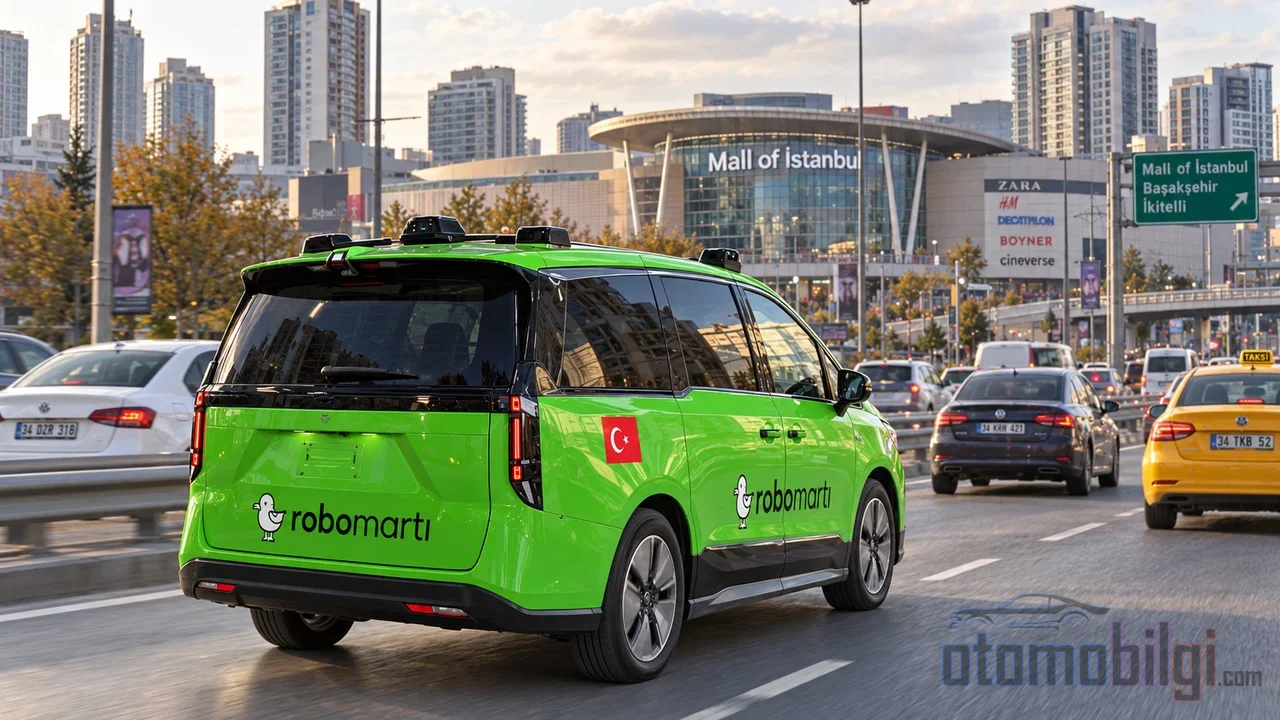
Setting technical readiness aside, the regulatory side is still in its infancy. There is no comprehensive legislation specific to autonomous vehicles in Turkiye; the Regulation on the Approval of Fully Autonomous Vehicles issued at the end of 2024 is considered the first regulatory step. A regulation exists for the type approval of the autonomous driving system (ADS) in category M and N vehicles, but it falls far short of the breadth required by driverless urban taxi operations. Experts state that until 2030 will be needed for the legal infrastructure to become complete.
This table suggests that the main obstacle in front of Robomarti is not technology but legislation. For a driverless taxi to be able to carry passengers, insurance, liability, audit, and licensing regimes need to be defined beyond type approval. Given the legal fatigue Marti has experienced on the TAG side, it is a matter of curiosity how the autonomous side will manage this process.
The Scale and Market Calculation Behind Marti
Although Robomarti may look like a showcase product, Marti has a serious operation at its disposal. As of 2026, the company's platform has reached more than 8.2 million unique users. The TAG service, meanwhile, has more than 4.4 million distinct passengers and more than 544,000 registered drivers. The company has raised its 2026 revenue expectation to 85 million dollars.
This scale shows that the autonomous concept is planned not as an ordinary engineering exercise but as a service that will rest on the existing user base. A user summoning a driverless vehicle from within an app that is already installed reduces the marketing cost; the real issue is operational maturity and regulatory permission. How quickly Marti can secure its gains along these two axes will determine the fate of the project.
| Topic | Known Status | Not Disclosed |
|---|---|---|
| Announcement | October 27, 2026, social media | - |
| Visual | A green vehicle with automatically opening doors | - |
| Use | Summoning from the app, point-to-point transport | Exact launch date |
| Autonomy | Offered without a driver | Level, sensor infrastructure |
| Hardware | - | Range, battery, passenger count |
| Operation | - | Service area, number of vehicles, fares |
When Will Robomarti Be Added to the App?
There is no exact date. Oktem only stated that the vehicle will soon be summonable through the app; what that statement means, in which area it will start, and with how many vehicles the service will launch is unknown. Technical details, including driving level, sensor infrastructure, and pricing, were not disclosed. So the most honest answer we can give today is this: Robomarti is a project that has been introduced but not launched; to see it on the roads, both technical validation and the legal groundwork need to be awaited. The videos alone do not prove that it operates independently in traffic; the real test will come with the first real passenger journey.
Ultimately, Robomarti claims to be the first concrete step that carries Turkiye's driverless transportation debate from theory into practice. It is said that the prototype stage is behind it; and for it to prove that it has moved past that stage, the undisclosed details will now have to start being shared. Setting aside tension with taxi businesses, legal gaps, and technical uncertainty, Marti's user base of more than 8 million gives this project a serious head start. Now the job is to turn the green vehicle in the video into a real service.
Sources
- Martı in the Media (official page)
- Martı launches its driverless shared vehicle service
- Martı (company)
- A Local Rival for Tesla Robotaxi: Martı's Robomart Is Coming
- Martı Founder Öktem's Robot Martı Project
- Has Martı TAG Been Shut Down? What Happened in the Martı TAG Lawsuit?
- The Martı TAG Debate Isn't Over: Will Drivers Be Fined?
- Tesla's Cybercab Hits the Roads
- Türkiye's First Regulatory Step on Autonomous Vehicles
- Regulation on Type Approval of Motor Vehicles