Gary Paffett: Double DTM Champion of 2005 and 2018
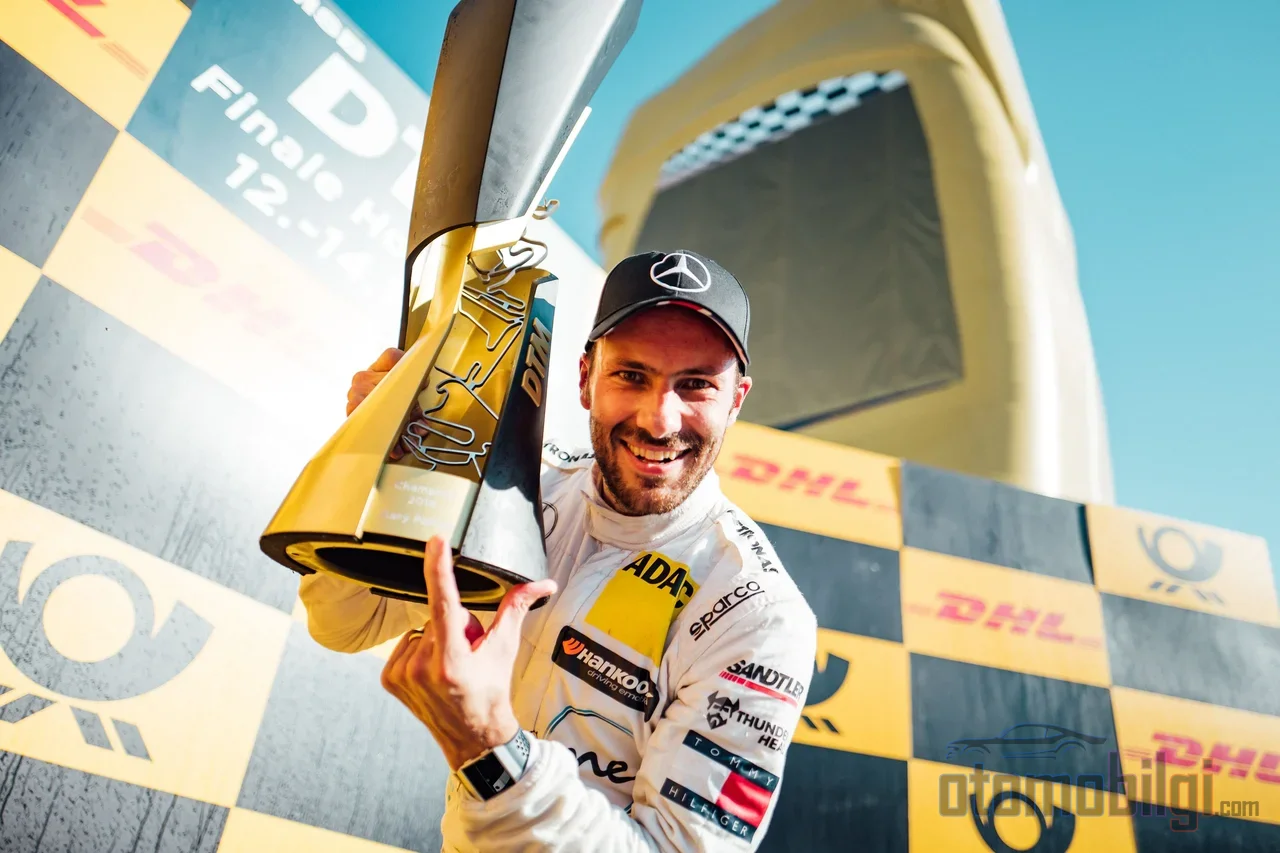
Just imagine: A kid growing up in Bromley just outside London makes his way from karting tracks into Germany's most brutal touring car arena, and ends up sitting at its summit. That is exactly the story of Gary Paffett. So how did Gary Paffett become DTM champion? The answer is not just one lucky season; it is a long journey crowned with two separate championships, stretching from karting to formula-style single-seater series, and from there through a difficult crossroads to Mercedes' HWA team. Finishing at the top in both 2005 and 2018 writes one of the most consistent foreign drivers in DTM history.
DTM Right Up to the Door: Karting, German Formula 3 and a Difficult Decision
Paffett was born in Bromley on 24 March 1981 and warmed up with karting, just like most drivers. The real leap came in 2002: he won the German Formula 3 Championship and suddenly appeared on everyone's radar. The following year he set out to continue his single-seater career, but his team ran out of money. This is where the story's turning point lies: a budget crisis, the worst nightmare scenario for a driver, pushed Paffett toward the door that opened onto DTM.
In fact, the first encounter had happened earlier. At the end of the 2001 season, he tested a DTM car, the AMG-Mercedes CLK, for the first time. He then did Formula 1 tests in Barcelona in 2002 and Valencia in 2003; his talent was unquestionable, but there was no seat. When he moved to DTM in 2003, he raced with a 2002 model car and took his best result of his first season with a sixth place at the A1-Ring. The start was modest, but the pace was clear.
The 2005 Season: A Championship That Came With a Heavy But Clever Car
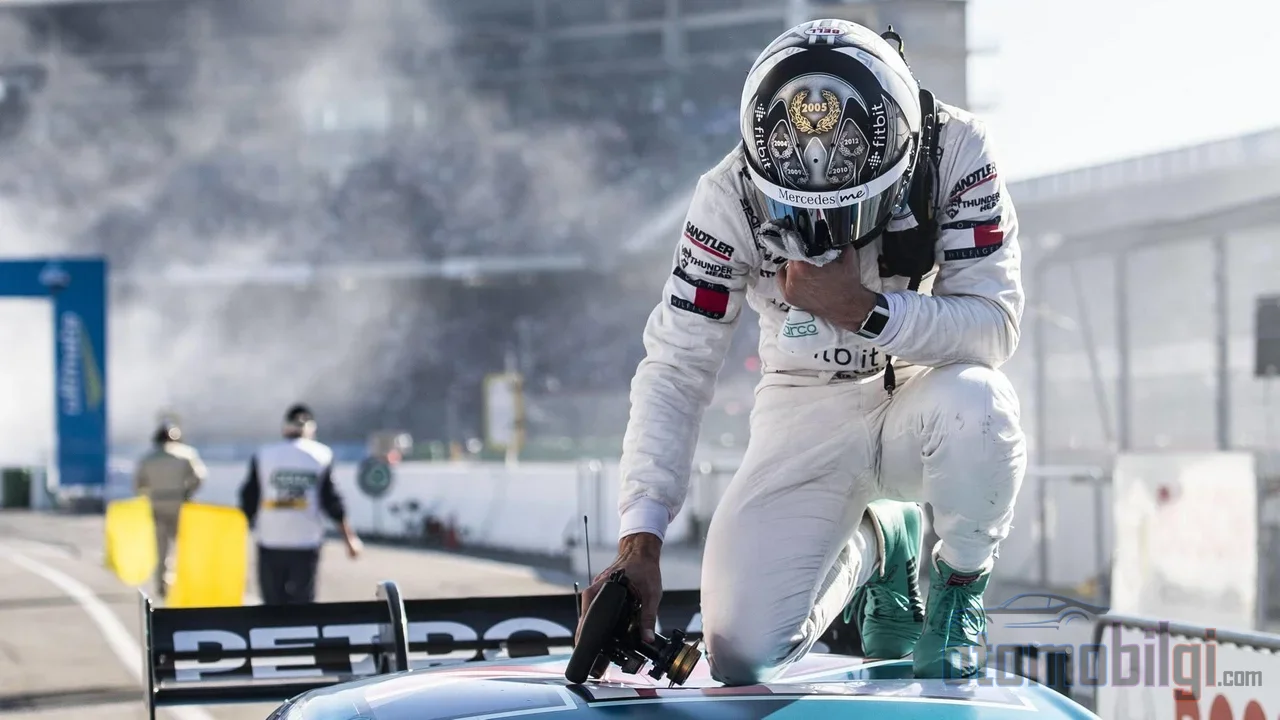
2004 was Paffett's first full DTM year, and with the current AMG-Mercedes C-Class in the HWA team he collected 4 wins and 1 pole position, finishing the championship in second place. It was not hard to guess what a driver who finished second in his first full season would do the following year. In 2005, competing with the DaimlerChrysler Bank AMG-Mercedes team's C-Klasse 2005 car, he won 5 of the 11 races he entered and became champion with 84 points. It was his third DTM year of his career.
Highlights
- Paffett became DTM champion twice, in 2005 and 2018.
- In 2005 he finished at the top with 5 wins in 11 races and 84 points.
- His career includes a total of 60 wins and 88 podiums.
- The 2005 DTM cars had a minimum weight of 1,050 kg including the driver.
- Between 2004-2014 he raced for the HWA team for exactly 8 seasons.
The breakdown within the season became clear at the end of August: As of 28 August, after his third foreign race, Paffett was leading with 60 points; Mattias Ekstrom was one point behind on 59, and Tom Kristensen was third with 41 points. In other words, the championship was won not by a single corner's margin, but with points dripping in at every stage.
Istanbul and Norisring: Two Critical Moments of the Season
He won the 2005 Istanbul race on a wet track, and there he highlighted not the car but the team: a structure that got a good start in difficult conditions and managed the pit stops flawlessly. Keeping that huge touring car body on a wet track is like running on a slippery surface in the rain; every small throttle movement can send you into the wall.
The race that holds a special place in Paffett's own memory was the Norisring: Right in the middle of the championship battle with Ekstrom, as he drove just behind him, the safety car was deployed. Moments like this show how fragile a season can be; a single safety car changes the strategy from top to bottom in an instant.
The Rules of 2005: Ballast and Weight Games
2005 was also the year the rules got tougher. The brand that won a race ran the next round with a 10 kg handicap weight; the second-placed brand kept its base weight. Ballast was limited to plus/minus 20 kg. Mercedes, because of its previous success, entered some races with a full 20 kg of extra weight; Mika Häkkinen's victory at Spa came under exactly such a burden. In other words, Paffett's 5 wins were victories that also carried the price paid by his brand.
AMG-Mercedes C-Klasse 2005: The Race Machine in Numbers
So what were these cars? The 2005 DTM regulation car carried a 4-liter 90-degree naturally aspirated V8 engine; with 4 valves per cylinder, it produced roughly 475 hp at 7,500 rpm despite the air intake restrictors. Different measurement methods across sources put this value in the 460-469 hp range; an ordinary difference stemming from the restrictor measurement. Torque was above the 500 Nm level, the car was rear-wheel drive and weighed about 1,070 kg including the driver. The minimum weight for 2005-spec cars was set at 1,050 kg; teams using 2004 cars could run this combined weight lower.
| Specification | Value |
|---|---|
| Engine | 4.0 L naturally aspirated V8, 4 valves per cylinder |
| Power | Approximately 460-475 hp @ 7,500 rpm |
| Torque | Above 500 Nm |
| Weight (including driver) | Approximately 1,070 kg |
| Minimum weight (2005 spec) | 1,050 kg |
| Ballast limit | Plus/minus 20 kg |
There is also one thing that must not be confused: The 582 hp Mercedes-Benz CLK DTM AMG produced between 2004-2005 was a certified road car; its 5.5-liter V8 accelerated from 0-60 mph in 3.8 seconds, but it had little to do with the regulation car that raced on the track. That legend you see on the road is not a plastic model of Paffett's championship car, it is a separate story.
The HWA Years: An Englishman at the Heart of a German Giant
When the DTM was re-established in 2000, Bernd Schneider and Mercedes were at the top; BMW was not even on the scene yet. When Opel pulled out at the end of the 2000s, the series turned into a full-blown Audi-Mercedes duel. It was in this environment that Paffett raced for exactly 8 seasons, from 2004 to 2014, in Mercedes' HWA team, and as a driver from England he settled into the very center of German touring car racing. It is like a Frenchman becoming the top scorer in the Bundesliga; unusual and respect-inspiring.
The road was not smooth. After 2005, he spent a year as McLaren's Formula 1 test driver; when the race seat was given to Lewis Hamilton in 2007, Mercedes called him back to the DTM with the DaimlerChrysler Bank AMG-Mercedes C-Class. He led Mercedes to a 1-2-3-4 victory in the 2010 season opener at Hockenheim; he had been leading since lap 11 and kept the car safe to the finish. In 2011, following the previous year's second place, he signed with HWA again. His only dark year was 2014: in a season that coincided with Mercedes' weakest period in the DTM, he finished 22nd and for the first time ended a full season outside the top 10.
2018: A Second Crown in the Farewell Year
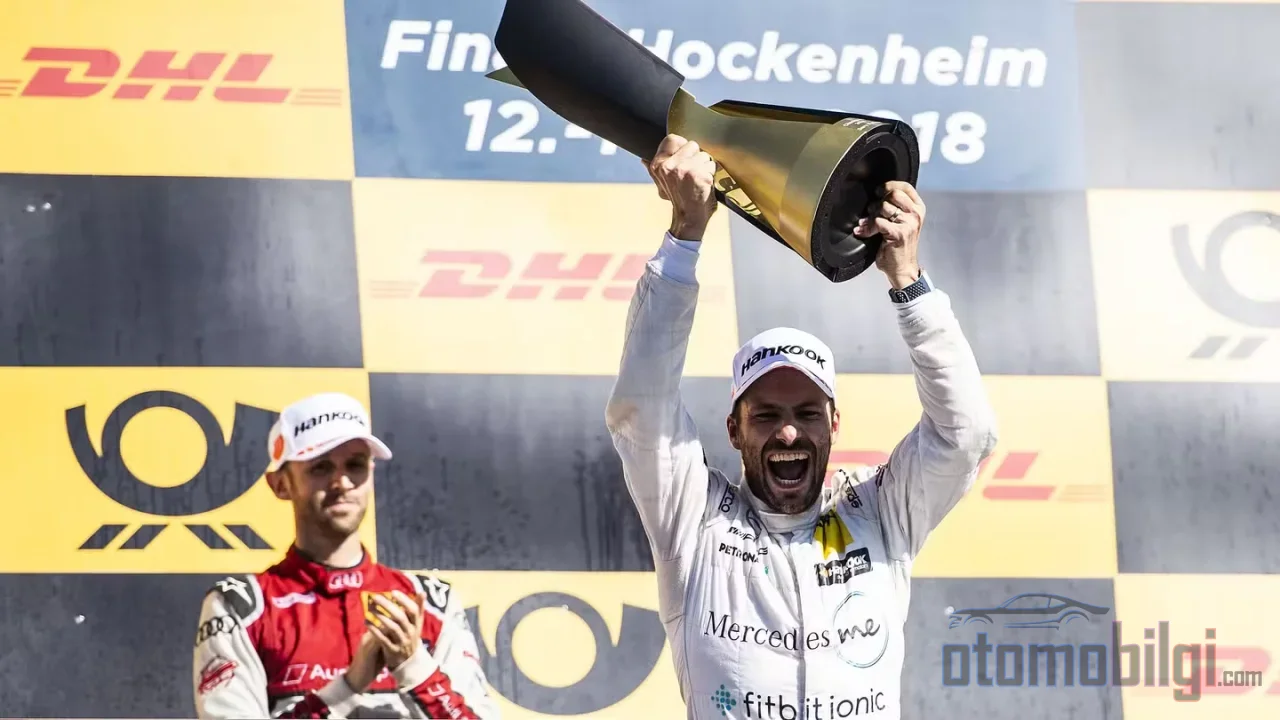
In 2015 he moved from HWA to ART Grand Prix; with his experience he helped the new team speed up, and he closed out his 12th DTM season in ninth place. The real finale, however, was written in 2018. In Mercedes-AMG's 30th and final DTM season, he completed the season with the Mercedes-AMG C 63 DTM in which he finished third in the 436th and, for Mercedes, last DTM race at Hockenheim, and declared his second championship, 13 years after 2005. Moreover, Mercedes-AMG collected all three championships that year: the drivers', team and manufacturer titles all went to Mercedes-AMG together with Paffett.
An interesting detail: Paffett's signature track was Zandvoort. He could not fully explain why, but he was fast every time he went there; he delivered some of the most dominant performances of his career at that seaside circuit. Another honest admission is this: when he started in the DTM he thought the series would be easy; after winning the 2005 championship, he admitted it was the hardest title he had ever won. The secret of the following years was simply hard work.
After the DTM: Formula E and the Management Seat
His track career did not end, but it changed direction. He stepped into Formula E with HWA RACELAB, and in 2021, with a short-term deal, he took a farewell lap in the DTM with Mucke Motorsport's factory-backed Mercedes-AMG GT3 and moved into the GT world. Today he is on the other side of the pit wall: he works as Racing Director of the CUPRA Kiro team in Formula E. The Briton who learned the German touring car arena now sits at the management desk of the electric single-seater world.
The Short Answer: How Did Gary Paffett Become DTM Champion?
In summary: After his 2002 German Formula 3 championship, a budget crisis in his single-seater career in 2003 led Gary Paffett to the DTM; his first full season ended in second place in 2004, and in 2005, with the DaimlerChrysler Bank AMG-Mercedes team's C-Klasse 2005 car, he won his first championship with 5 victories and 84 points in 11 races. In 2018, completing his farewell season to the series at the top with the Mercedes-AMG C 63 DTM, he became champion for the second time. His place, tied for third among the most race-winning drivers in DTM history with 60 victories and 88 podiums, is the lasting legacy of a young man from Bromley in the German touring car elite.
Sources
- Paffett crowned DTM champion - Autosport
- Paffett strikes back: win and DTM Championship lead
- Gary Paffett - Wikipedia
- Gary Paffett is DTM champion for second time
- Gary Paffett: Moving from Mercedes DTM giant HWA to ART refreshing
- Mercedes confirms Gary Paffett
- Paffett reveals the story behind his unlikely DTM return