How Did HWA Racing and Mercedes Build Their DTM Empire?
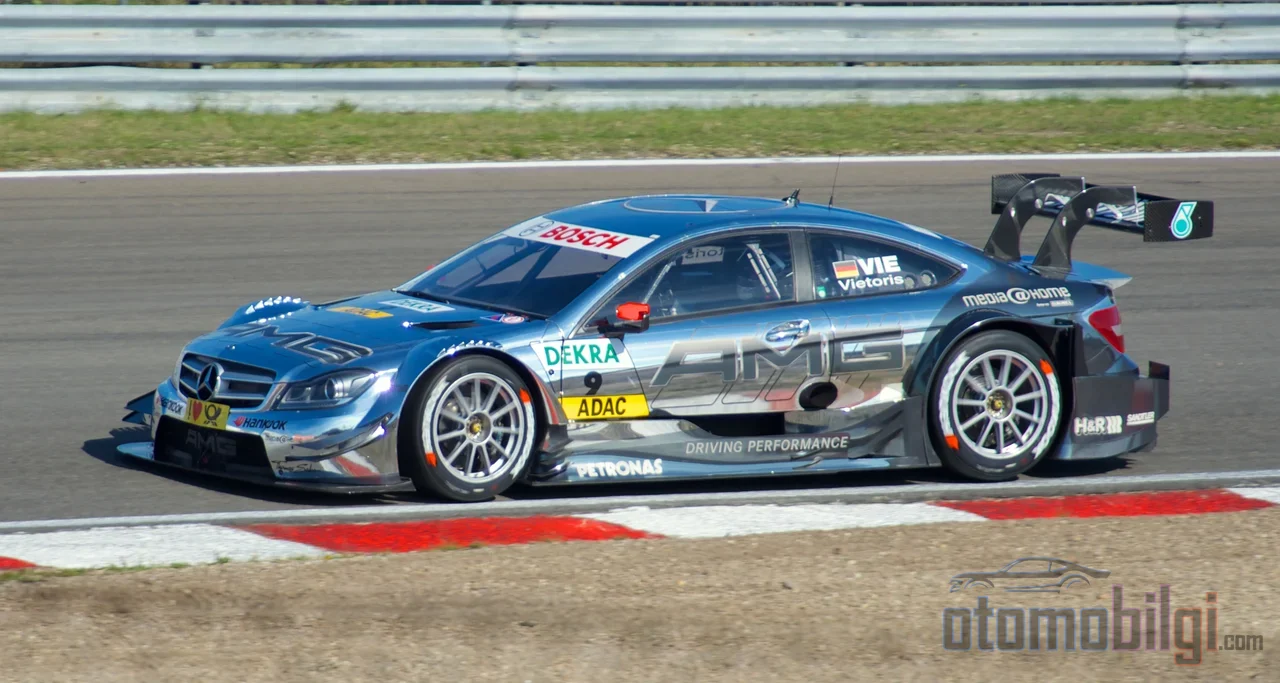
When Mercedes officially entered the DTM in 1988 with the 190 E 2.3-16, nobody knew for certain that this would be the first vehicle of an empire. Moreover, at the center of this empire there would stand not a factory, but a small engineering company. The HWA and Mercedes-Benz partnership became the most successful team-engine manufacturer duo in DTM history, with 11 drivers' championships and more than 180 wins until 2018. So how did they manage it? If you're ready, let's go back to the beginning of the story.
Mercedes' Entry into the DTM: The 190 E Era Begins
It all actually began in 1984. That year, the German touring car championship known as DPM held its first race at Zolder, and since the 190 E 2.3-16, which would become Mercedes' weapon, entered production that very year, it missed the first season. In 1985, Leopold Gallina, with the 190 E 2.3-16 prepared by Hartmann Motorsport, became the first name to take this car from race to race in the DTM. In 1986, the championship changed its name to DTM (Deutsche Tourenwagen Meisterschaft), and Volker Weidler, with the Marko RSM team's car, finished 2nd in the championship in its first year, giving Mercedes a serious signal: This car has potential. The rivals, of course, didn't sit idle.
The rivals didn't sit idle, of course. Turbocharged Ford Sierras reached 500 horsepower in 1987, and as a penalty they had to carry 370 kg of ballast; BMW, for its part, unleashed the legendary E30 M3 on the tracks the same year. Mercedes spent the 1987 season as a preparation year without establishing an official team and made its real move in 1988.
1988 was the turning point: Mercedes officially became the factory team. Five teams took part in the championship with a total of 14 units of the 190 E 2.3-16. AMG also stepped in at this point as Mercedes' official partner. Johnny Cecotto and Kurt Thiim brought the first victories, Mercedes closed the season with 6 race wins, and Roland Asch finished 2nd in the championship. done. Up until that day, the Mercedes unit in Unterturkheim had been handling engine development; from that point on, AMG took over the job.
Highlights
- The HWA-Mercedes partnership amassed 11 drivers' championships and more than 180 victories in the DTM.
- In 1988, Mercedes started the official factory program with 5 teams and 14 units of the 190 E 2.3-16.
- HWA AG was founded in 1998/99 by its founder Hans Werner Aufrecht; It developed and operated the DTM cars on behalf of Mercedes.
- Bernd Schneider became the series' record champion with 5 DTM titles.
- After the 2018 season, Mercedes ended its 30-year DTM journey and focused on Formula E.
According to Group A rules, the race car had to have the same exterior shape as the road car you sold. Mercedes turned this rule into an art.
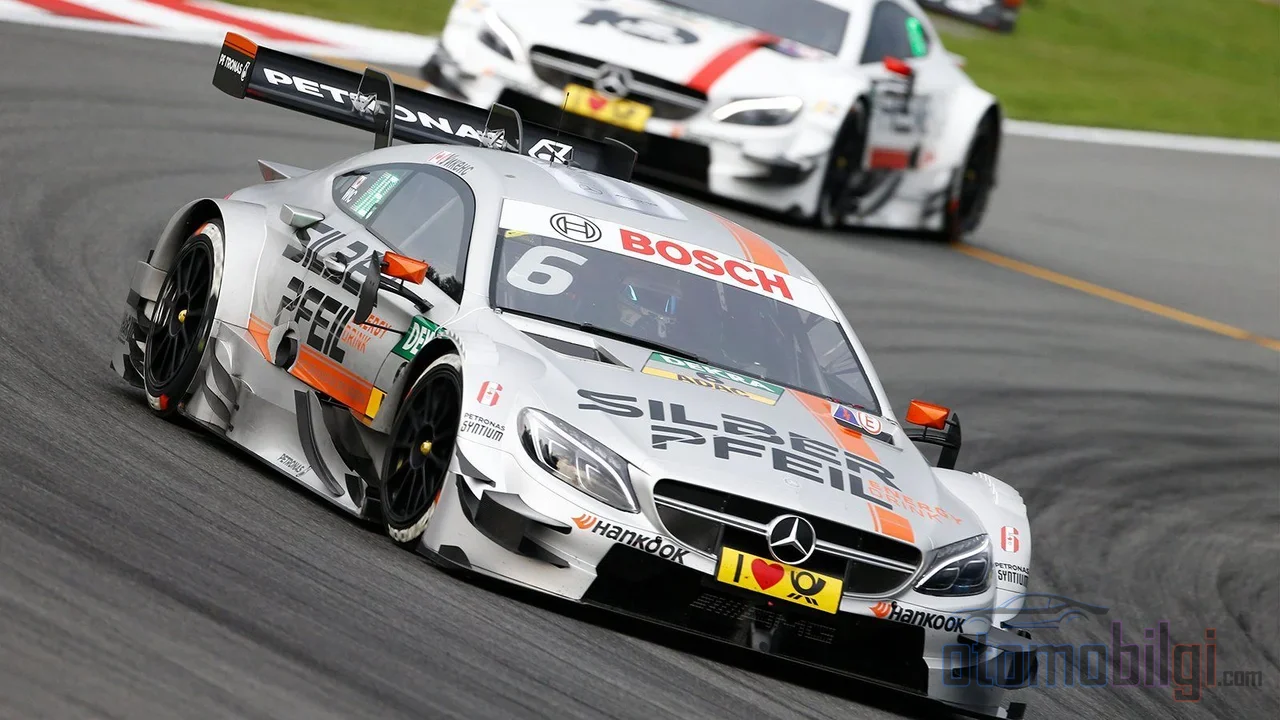
Under Group A rules, the race car had to share the same outward shape as the road car you sold. Mercedes turned this rule into an art form. The 190 E 2.5-16 was introduced at the Frankfurt Motor Show in September 1988; In March 1989, the Evolution 1 took the stage in Geneva. Only 502 units were produced, and the racing version produced approximately 315 bhp of power. Considering the 204 bhp of the road version, you understand the scale of the transformation for racing. At its launch on May 14, 1989, Roland Asch won the first race at Mainz-Finthen, proving there could be no better introduction.
The Evolution 2, which arrived in 1990, was brought to life through homologation production at the Bremen factory and raced for the first time on the Nordschleife. That famous silhouette with the huge rear spoiler is a product of exactly this era. The road car produced 235 hp @ 7,200 rpm with its 2,463 cc Cosworth-developed engine; the race version started the season at around 333 bhp and climbed to 360 bhp by the end of the season. In 1992 the engine reached roughly 373-380 bhp at 9,500 rpm, and the car received a new 6-speed gearbox and power-assisted brakes. That season Mercedes won 16 of DTM's 24 races and, with Klaus Ludwig, took both the drivers' and manufacturers' championships.
From AMG to HWA: An Engineering Company Becomes a Factory Team
Now we come to the most interesting part of the story. AMG was founded in 1967 by former Daimler-Benz development engineer Hans Werner Aufrecht and Erhard Melcher. From 1988 to 1993, AMG's DTM program amassed a total of 50 victories. On January 1, 1999, Aufrecht transferred the majority stake in AMG to DaimlerChrysler AG. But he did not give up his passion for racing: in late 1998/early 1999 he founded HWA AG, which bore his initials. Records about the founding year shift by a year between 1998 and 1999; what is clear is that the responsibility fell within this period.
From that moment on, HWA was responsible for developing and operating the Mercedes-branded DTM cars. In other words, a division of labor emerged where AMG-Mercedes raced while HWA designed the cars and managed them on track. HWA was an independent company but effectively served as Mercedes' factory team. So much so that even the production of limited-run road cars, such as the CLK DTM AMG built in 2005, was entrusted to HWA. Think of it not as the uncle's mechanic in the garage, but as the city's best engineering office: different signs hang on the door, but the real craftsmanship always comes from the same hands.
Let's add an honest nuance as well: although AMG became an official partner in 1988, it was not alone in turning the 190 E into a winning car; teams like Snobeck also made significant contributions to the development load. The empire was built not as a single wall but like a shared fortress; HWA's central role was consolidated with the 2000s.
The Championship Machine: The Schneider, Häkkinen and Spengler Era
Bernd Schneider: The Man with Five Titles
Bernd Schneider moved to AMG-Mercedes in 1992 and won his first championship in 1995 with the AMG C-Class; moreover, that year he claimed both the DTM and ITC championships back to back. When the DTM was reborn in 2000, he won the first two seasons with HWA and reached his fifth DTM championship in 2006. He became the only name to be champion in both the old and new DTM. His career also includes 1 FIA GT championship; he accumulated 46 victories and 112 podiums in 275 DTM races (in some records, 43 victories and 226 races also appear according to different counting periods; difference, depending on where the period boundary is drawn). In retirement, he stayed in the scene as an AMG ambassador. Today he is still remembered as the driver with the most DTM championships.
The DTM Path of F1 Stars
2005 was a year of change for HWA. F1 champion Mika Häkkinen returned to the DTM with AMG-Mercedes and won his third race; moreover, his teammate was the three-time champion Schneider. In the same season, Bruno Spengler and Jamie Green were also among the fastest drivers of the series in their early years. In a short time, Spengler became the new face of the HWA school and settled into the center of the championship fight.
A Dominant Era in Numbers
HWA's dominance was not limited to individual success. In 2010, the team won 9 of 11 races and closed a race with the top three steps of the podium. At Hockenheim, since the DTM's rebirth in 2000, Mercedes won 18 of the 25 races on the track; in other words, the home venue was, figuratively speaking, HWA's backyard. The AMG Mercedes C-Class is also remembered as the most successful car in DTM history.
Farewell in 2018 and Beyond: How Did This Empire End?
Mercedes-AMG announced its withdrawal from the DTM in 2017. 2018 became the final season, and the company's focus shifted to Formula E. Thus ended the brand's 30-year presence in the category. With the news of the withdrawal, it was debated whether HWA could keep the DTM alive on its own; after taking part in Aston Martin's DTM program for a while, HWA also left that venture. In 2019-20, Mercedes took over HWA's Formula E venture, officially joining the series as the Mercedes-EQ Formula E Team; so HWA once again played the role of a bridge.
But the story did not end completely. The customer racing partnership between Mercedes-AMG and HWA officially began in 2010 and lasted 15 years; in December 2025, the two parties parted ways. Today, HWA describes itself as more than a company providing technical services, and the team celebrating its 25th anniversary still carries the title of the most successful team in DTM history. The company's recent projects also salute its past: along with the W201-based, roughly 700,000-pound HWA EVO restomod and the EVO.R prototype with a carbon body producing 500 bhp, whose Nurburgring tests are underway, a new W124-based project is on the agenda.
So What Was the Secret of This Empire?
The short answer is this: A model that combined Mercedes' factory resources with HWA's independent engineering agility turned into a division of labor that could produce championship after championship over the thirty years from 1988 to 2018.
Looking more broadly, we see a three-legged foundation. First, the vehicle policy that turned homologation rules into a weapon with the Evolution series. Second, the technical knowledge seamlessly transferred from AMG to HWA; the company sign changed, but the brains remained the same. Third, the driver tradition stretching from Schneider to Häkkinen and Spengler, preparing each generation. This trio made it possible to establish a lasting dominance in a series where brands came and went. Mercedes withdrew in 2018, closing this empire with its own hands; but the system that was built continues to live on today in HWA's road projects. The empire was not destroyed, it simply moved from the track to the garage.
Sources
- DTM, Rallying and Senna: The Story of the 190E
- DTM - Mercedes 190 E 2.3-16
- Guide: Mercedes-Benz W201 190 E 2.5-16 Evolution 1
- Mercedes 190E Evolution II: The DTM Baby Benz
- HWA AG - History
- HWA Thanks Mercedes-AMG for 15 Years of Partnership
- HWA Team - Wikipedia
- Bernd Schneider (racing driver) - Wikipedia
- DTM - Mercedes-AMG
- AMG Mercedes C-Class - the most successful car in DTM history - Motorsport.com