How Did Klaus Ludwig Become DTM's First King?
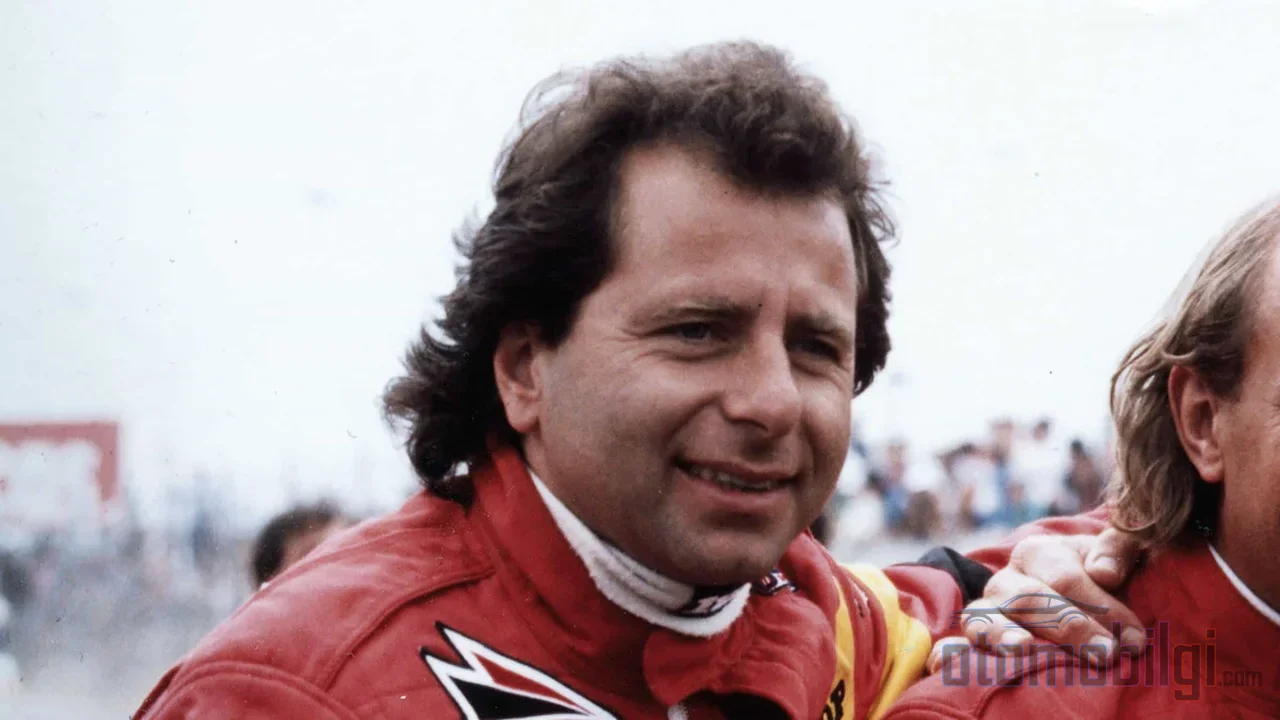
Three-time DTM champion, two-time Le Mans winner, and the undisputed king of touring cars: Have you heard the story of Klaus Ludwig? Everyone knows Bernd Schneider, but in the "old DTM" the hardest name to beat was Ludwig. So how did this Bonn-born man end up becoming champion with Ford and then started carrying the banner of Mercedes?
In this article I tell Ludwig's career from start to finish: From the Ford years of the 1970s to the surprise championship of 1988, from the legendary partnership with Mercedes to the farewell title in 1994. If you're ready, let's begin, because this story is not an ordinary driver portrait.
Where Does the King's Nickname Come From?
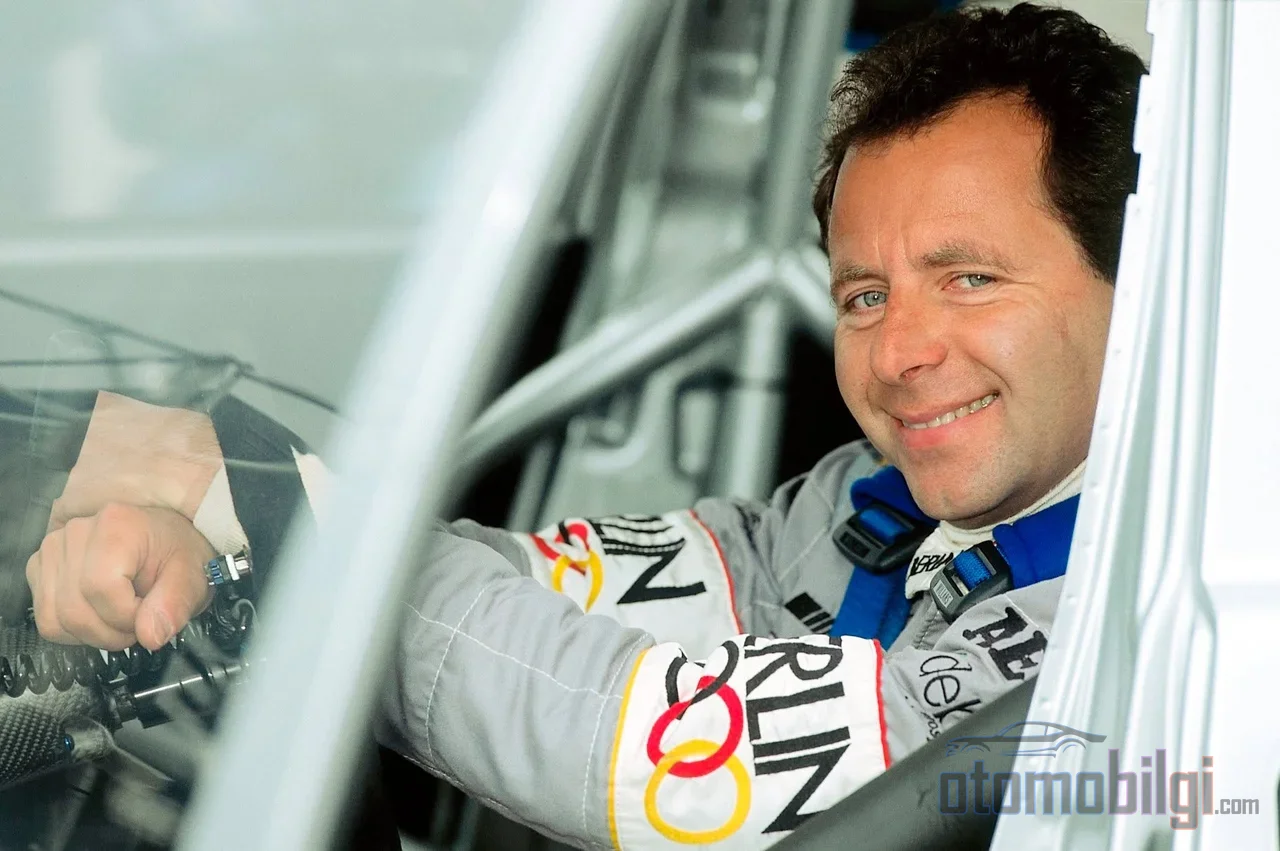
When his name came up in the pit lane, everyone called him Konig Ludwig - that is, "King Ludwig" in German. This nickname was not given for nothing: the man had practically established a throne in both touring car racing and sportscar racing. Imagine, even if you were the fastest in a series, you would still have to beat someone whose name was "King". Very few drivers could carry that pressure.
Actually, the story begins in the early 1970s, in a very humble place: slalom races and small touring car events. In 1973 he stepped into the German racing championship with the Ford Capri 2600 RS and took several top-five finishes with the Capri that same year. Over the next two years he had his first big success with the Zakspeed Ford Escort, and in 1974 and 1975 he scored victories with the Ford Capri 3.0 RS3100.
So even before the DTM was founded, Ludwig was already one of the stars of German motorsport. In the 1970s he raced for Ford in the Deutsche Rennsport Meisterschaft (DRM) and became DRM champion in 1979 with Kremer Racing's Porsche 935. Meanwhile, the sportscar front was not left empty either: He won the 24 Hours of Le Mans back-to-back with Joest Racing's 956, and the 1985 victory was Porsche's tenth win at Le Mans. In the mid-1980s he appeared on the IMSA scene and raced extensively in the Group C world championship with the 956 and 962. It is truly rare for a driver to be this effective on both the sprint and endurance sides.
How Was the DTM Born and Why Did Ludwig Arrive at Exactly the Right Time?
Let's take a little history break, because Ludwig's second spring coincides with a new championship. The German Racing Championship, the DRM, ran for years as an expensive, prototype-focused series, but the costs spiraled out of control. In 1984 the answer came: Deutsche Tourenwagen Meisterschaft, that is, the DTM. The idea was simple - race cars derived from real road cars, real brands, real competition.
The first champion was Volker Strycek in 1984, with the BMW 635CSi. Yes, surprisingly, in the first championship season it was a driver who won no races at all who took the title thanks to the series' consistency. In 1985 Per Stureson became champion with the Volvo 240 Turbo, and in 1986 Kurt Thiim. So when Ludwig arrived in 1988, the series was already an established, serious arena of competition.
Highlights
- Klaus Ludwig became DTM champion three times: 1988, 1992 and 1994.
- The 1988 championship came with the Ford Sierra RS 500 Cosworth and was Ford's first DTM crown.
- His nickname was "Konig Ludwig" - that is, "King Ludwig" in German.
- He won the 24 Hours of Le Mans twice in a row; his 1985 victory was Porsche's 10th Le Mans win.
- Bernd Schneider surpassed Ludwig numerically with his fourth title in 2003.
1988: Ford Sierra RS 500 Cosworth and the First Crown
The 1988 season staged one of the DTM's finest rivalries - actually, one of its very finest rivalries: BMW M3 versus the Ford Sierra RS 500. Over the season, 11 races were run, and the two main powers of the scene were clear - BMW's agile M3 and Ford's turbocharged monster, the Sierra RS 500 Cosworth. If you want a comparison: While the M3 performed like a table-top acrobat, the Sierra was like a mountain climber planting engine power into the road.
Ludwig raced for the Team Hein Gericke Ford Grab Motorsport team in the Ford Sierra RS 500 Cosworth - a 1993 cc turbocharged four-cylinder engine, car #18. His teammate was Frank Biela, who would later make his name with Audi; on the other Ford side, Klaus Niedzwiedz and Manuel Reuter ran in the Ringshausen team.
The cinematic scene of the season came at the third round at the Nurburgring Eifel. In the first race, Ludwig finished second on the podium behind Kurt Thiim's BMW M3 and Roland Asch's Mercedes 190 E 2.3-16. In the second race, he took the lead, but then the engine faltered and the man fell off the podium to fifth. That's what the DTM was like back then: a heart attack risk every weekend. Despite this, Ludwig carried the season with his consistency, and Ford won its first DTM championship in 1988 with Klaus Ludwig in the Sierra Cosworth RS 500. For the Ford brand, this was one of the sweetest touring car moments in its history.
The Mercedes Years: The Second Crown with the 190 E Evolution II
In the early 1990s, Ludwig's address changed: he was now on the AMG-Mercedes side. He took the wheel of the Mercedes-Benz 190 E 2.5-16 Evolution II, one of the series' most iconic cars. You remember that white box with the wing-like rear spoiler - the car is on display at the Mercedes-Benz Museum even today, exhibited precisely as Ludwig's 1992 championship car. A road car carrying a spoiler nearly the size of a hotel lobby winning races still seems incredible to me.
In the 1991 season, Ludwig was already appearing with the Evo 2 at events like Wunstorf, but the real explosion came in 1992. On June 18, 1992, he had a tremendous weekend at the Nurburgring: with the AMG-Mercedes 190 E 2.5-16 Evolution II, he won both of the two races. Over the season, this consistency carried him to the top, and Ludwig claimed his second DTM championship. The first crown with Ford, the second with Mercedes - a driver reaching the summit with two major brands is the clearest proof of his versatility.
Meanwhile, a small note on the car front: that Evo 2 in which the 1992 championship was won ran on BILSTEIN suspension - it gives an idea of the technical partnerships of the era. So the "road car to race car" formula meant serious work not only on the engine side but on the suspension side as well.
1994: Third and Final Championship with the New C-Class
In one of the last golden pages of DTM before Class 1, Ludwig was once again right in the middle. 1994 was the first season of the legendary Mercedes C-Class DTM (W202) - and Ludwig won his third DTM championship at the wheel of this new car. Winning the German Touring Car Championship for the second time with a Mercedes-Benz, two years after his first title, shows just how enduring the man was. Just think about it: With Ford in 1988, and with Mercedes in 1992 and 1994. The brand changes, but the crown does not.
The 1994 championship has yet another meaning: that year, the Bernd Schneider era had not yet even begun. Schneider would go on to win both the DTM and ITC championships in 1995 and build his own empire, but Ludwig's third crown proved that the closing chapter of the old DTM was written by the king himself.
Ludwig or Schneider? The Eternal Debate
The question that must be asked right here is this: if Ludwig stopped at three championships, why does he still carry so much weight when compared with Schneider? The answer is not the numbers, as you might think, but the difference in eras.
When Schneider took his fourth DTM title in 2003, he surpassed Ludwig numerically and technically became the most successful German touring car racer. That is an indisputable statistic. But even official DTM historiography accepts this fact: the hardest name to beat in the old DTM was Klaus Ludwig - in that era he was the number one driver in both touring cars and sports car racing. So if Schneider is the king of the numbers, Ludwig was the king of the old order. Putting the two on the same scale is like comparing different cars from different eras: passionate but impossible.
Driving Style and the Legacy That Remains
What made Ludwig special was not only the results. His contemporaries describe him as a striking, magnetic figure; in the early 1980s he exploded onto the IMSA scene with the wild Zakspeed Mustang. He had a flamboyant, showy but never out-of-control driving style. He was a man who quickened your heartbeat as you watched him race, unsettling yet fascinating.
And the most beautiful part of his legacy is this: the man is still on the scene. In the promotions for the Grand Meeting to be held in 2026, he is listed among the guests under the title "Konig Ludwig". So even after all these decades, one of an event's biggest trump cards can still bear a Ludwig signature.
So Who Was the First King of DTM?
If you want the answer, here is the summary: Klaus Ludwig became champion three times, winning the DTM in 1988 with the Ford Sierra RS 500 Cosworth, in 1992 with the Mercedes 190 E 2.5-16 Evolution II, and in 1994 with the Mercedes C-Class DTM W202. His first championship was also Ford's first crown in the DTM. Although Schneider later surpassed the number with four titles, the reputation of being the hardest name to beat in the old DTM still belongs to Ludwig. That is why they call him the King - and no one can truly claim that throne.
Sources
- Klaus Ludwig - Wikipedia
- Klaus Ludwig is coming to the Grand Meeting 2026 - grandmeeting.de
- Klaus Ludwig - His Career - dailysportscar.com
- Klaus Ludwig - Mercedes Benz Archive
- 1988 DTM - round 3 Nürburgring Eifel - touringcarracing.net
- Ford Sierra RS 500 Cosworth 1988 - zwischengas.com
- How Bernd Schneider became DTM's greatest ever racer - dtm.com
- DTM - Schneider's fourth title - autosport.com
- Successful DTM season - Mercedes-Benz public archive
- 24 Hours, one driver one car: Klaus Ludwig and Porsche - 24h-lemans.com