The Role of the Airbag and ABS Revolution in the Rise of DTM
Share This Page
Behind the rise of DTM lie not so much engine power as two small electronic miracles: ABS and driver aids used seriously on the track for the first time. By the late 1980s, the German touring car championship had turned into a laboratory where manufacturers tested and matured their most expensive technologies, and these technologies soon began to seep into everyday road cars. So how exactly did this transfer work, and where does the airbag story fit in? Let's find out.
Highlights
- DTM began in 1984 with rules based on production cars; the first season had 16 different models on the grid.
- The BMW E30 M3 won two championships, in 1987 and 1989; its racing version produced 300 hp above 8,000 rpm.
- The Audi V8 quattro won the championship in 1990 with Hans-Joachim Stuck; with ~415 hp it was ~300 kg heavier than its rivals but hard to beat.
- Mercedes' 190E 2.5-16 Evolution II, with its Bosch Motronic ECU and racing ABS, reached the top in 1992 with Klaus Ludwig.
- The Class 1 rules introduced in 1993 opened the door to ABS, four-wheel drive and electronic aids - the first three were banned in Formula 1.
Why was DTM born as a technology laboratory?
Let's first take a short trip through history, because the reason for everything lies there. The German series that preceded DTM, DRM, drifted toward increasingly expensive prototype sports cars and collapsed when the money ran out. The German racing world then made a very clever move: instead of monsters that raised power to spine-chilling levels, production-based rules built on the cars you saw on the street. The series, which ran its first two seasons under the name "Deutschen Produktionswagen Meisterschaft," took the name DTM in its third season.
This "road car" foundation is exactly what turned the series into a technology laboratory. Think about it: if a manufacturer can put a braking system it tested in racing into a customer's car a few years later, racing is no longer just advertising - it's an R&D budget. Even in the first season there were interesting balancing rules - up to 120 kg of ballast for dominant cars, and a 70 kg penalty for engines with three or more valves per cylinder. In other words, competition was so tight that technological superiority didn't just fail to guarantee wins - it was actually penalized!
How and when did ABS arrive on the racetracks?
The story of ABS is much older than you might think. The concept goes back to 1908 and the idea of an anti-skid regulator; the patents for the first fully electronic ABS are also dated to 1928-1936. But the real breakthrough came in 1978: Mercedes-Benz introduced ABS that year, and this step is considered a milestone in automotive safety. Let me explain it simply: ABS prevents the wheels from locking when you brake hard. If a wheel locks up, you lose steering and the car skids; ABS, by interrupting the brakes several times per second, keeps you able to steer while still slowing down. Just like touching and feeling ice with your bare hand instead of a glove - the system constantly checks "is it gripping, is it not."
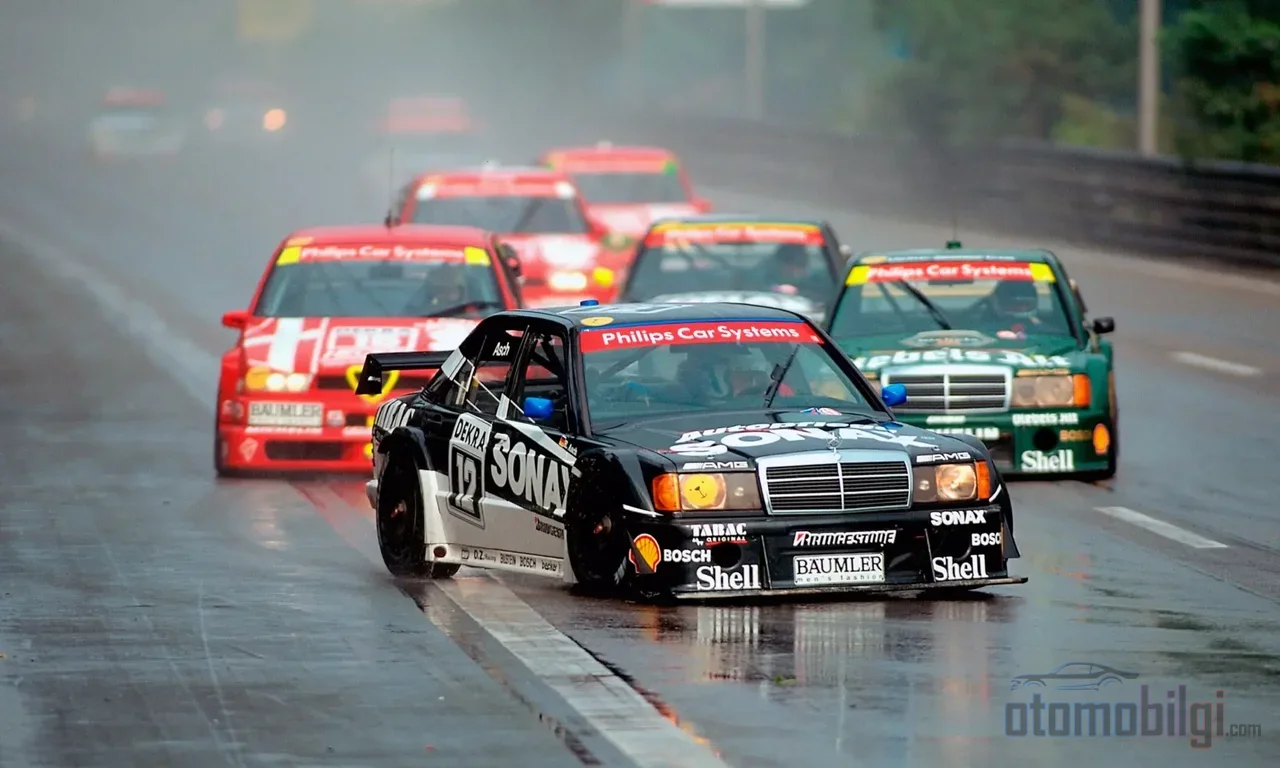
On the racing side, however, things moved to another dimension. ABS in a road car is designed for safety; racing ABS, on the other hand, keeps every wheel individually controlled just below its grip limit for performance. Mercedes' 190E 2.5-16 Evolution II is the textbook example of this: Bosch's Motronic engine control unit and the racing-purpose anti-lock braking system are cited as the elements that lifted this car on the track. Combined with the Cosworth-built 2.5-liter 16-valve engine producing 350-360 hp, this car, developed to break BMW's dominance, took the championship with Klaus Ludwig in 1992. We are talking about a braking system, but in fact we are talking about the track's most hidden advantage: while others rescue the tire under braking, the ABS-equipped car uses the tire to its very last point at every brake application.
E30 M3, 190E Evo II and Audi V8: three rivals of an era
The Group A era was the warm-up laps of this technology race. And here, the character of the three brands came to the surface.
BMW E30 M3: lightness and revs
The first M3, developed by BMW Motorsport, is called the most influential car in DTM history, and deservedly so. The racing version produced 300 hp with its S14 engine revving beyond 8,000 rpm - a serious jump compared to the road version's 200 hp. BMW built more than 300 racing kits between 1987-1992 and took the championships with this car in 1987 and 1989. The lightweight chassis and balanced weight distribution were the symbol of an era that raced with physics, not electronics. The Sport Evolution version, sold in limited numbers for homologation, remains one of the most sought-after BMWs today. Just ask around: Have you ever heard the sound of an inline-four breathing at 8,000 rpm, even once? If you had, you could never forget it.
Mercedes 190E Evo II: racing with electronics
Mercedes' answer was electronics. The 190 E 2.5-16 Evolution II was among the first DTM cars to combine racing determination with electronic systems suitable for road use. While the Motronic ECU kept the engine on its most efficient map in all conditions, the racing ABS never gave up ground under braking. The seeds of this "system integration" idea, now standard in a modern race car, were sown in this car. Moreover, the story continues even today: The HWA EVO production cars, a modern interpretation of the Evo II, began customer deliveries in July 2026, and the 190E is returning to racing with a two-car effort. Legends never die, they just evolve.
Audi V8 quattro: distributing power to four wheels
Audi, however, knocked on a completely different door: all-wheel drive. The luxury sedan entered DTM with an upgraded version of its V8; for Group A homologation, the 3.6-liter engine was pushed to 414 hp, and the car was lightened to ~1,225 kg. It was roughly 300 kg heavier than its rivals, but hard to beat with its power and chassis setup. The result: Hans-Joachim Stuck became champion in 1990, Frank Biela repeated the feat in 1991, and Audi went down in history as the first manufacturer to defend a DTM championship. In 1991, with a new front splitter and adjustable rear wing, output was said to have risen to ~500 hp. Audi withdrew from the series in 1992 after a dispute with the management over a controversial crankshaft design, but the path it had shown - all-wheel drive and power transfer management - would become the foundation of the era that followed.
| Car | Period | Power | Signature feature |
|---|---|---|---|
| BMW E30 M3 | 1987-1992 | 300 hp @ 8,000 rpm | Lightness, revs, two championships |
| Audi V8 quattro | 1990-1991 | ~415-500 hp | All-wheel drive, heavy but powerful |
| Mercedes 190E Evo II | 1990-1992 | 350-360 hp | Bosch racing ABS and Motronic ECU |
The 1993 turning point: Class 1 rules said full throttle to technology
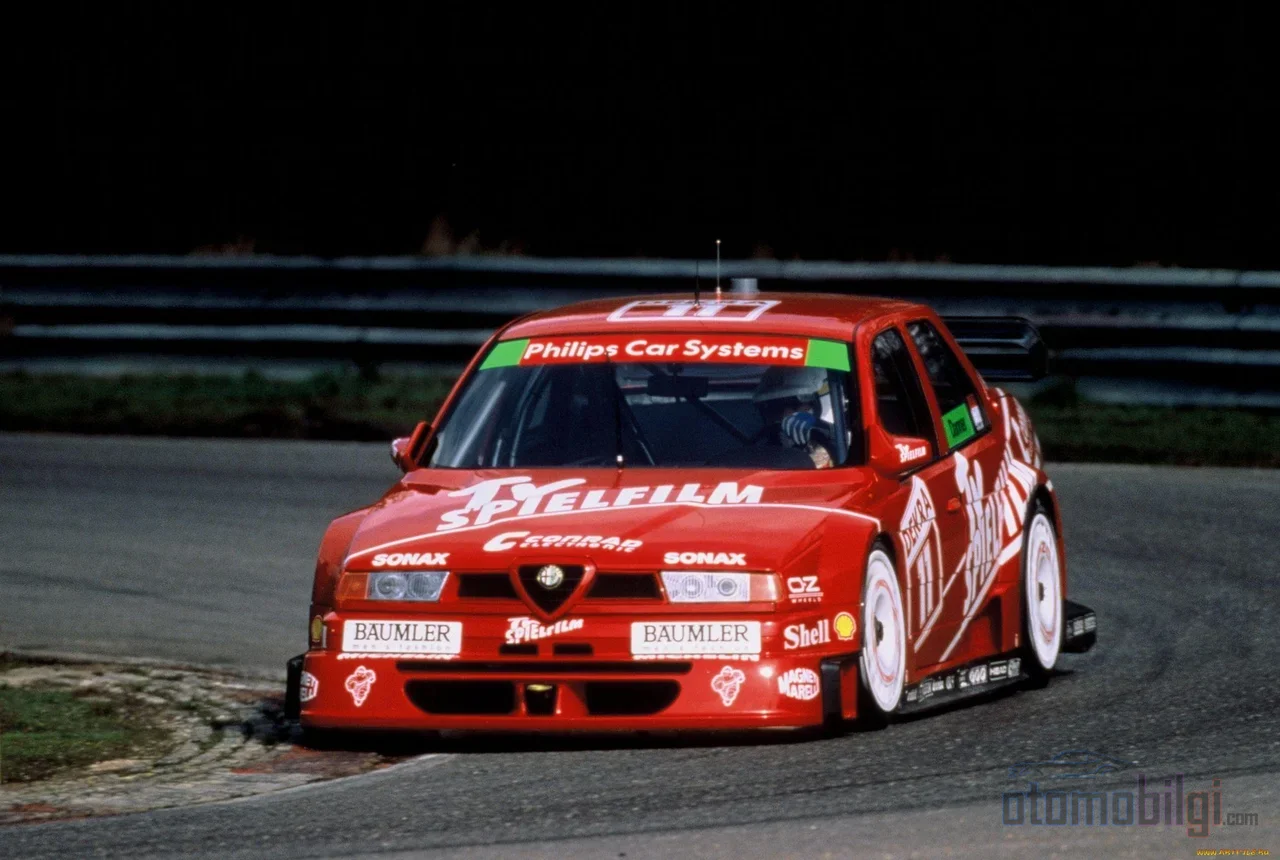
Here comes the most critical part of the story. In 1993, the DTM abandoned Group A rules and moved to the freer FIA Class 1 Touring Cars regulations in the 2.5-liter engine category. These rules gave ample room for ABS, all-wheel drive, electronic driver aids, and carbon fiber chassis - and note this: at that very time, the first three were banned technologies in Formula 1. So for a while, DTM cars carried electronics "more advanced" than F1. These cars could produce around 500 hp and featured traction control, electronic differentials, and advanced aerodynamics.
The old DTM also had nothing to do with modern GT3-style balance of performance systems; while balance was achieved through air restrictors and weight measures, in Class 1 this system was removed and manufacturers were given freedom to develop. This freedom both gave birth to legendary cars and came at a heavy price: In 1995 the series ran in parallel with the FIA International Touring Car Series, in 1996 they merged under one roof, but the cost of distant races like Suzuka and Interlagos and the FIA's cut of revenues and TV rights strained the teams. Opel and Alfa Romeo withdrew at the end of 1996, and with only Mercedes remaining, the championship was cancelled. The series returned in 2000 as the "Deutsche Tourenwagen Masters" with more controlled, lower-cost rules. Since the technical details of Class 1 are the subject of a separate page, we won't go deeper here - but keep this sentence in mind: technological freedom was both the series' peak and its first death bill.
Did the airbag really come from the DTM? An honest answer
I mentioned the airbag in my headline, so I have to be honest with you. Among the legends circulating is the phrase "the DTM spread the airbag to road cars" - but there is no clear evidence that we can support this story with real events. The development of the airbag progressed independently of the DTM, as the product of manufacturers like Mercedes-Benz pursuing their own safety programs; Just as Mercedes introduced ABS in 1978, there is a lineage of pioneering adoption of safety technologies in large-scale production vehicles. So the most accurate picture is this: ABS and electronic aids were technologies genuinely transferred from the track to the road; the airbag, however, stands outside this transfer story as a parallel safety revolution. In motorsport, the airbag is actually usually a part that is removed - instead of rescue systems, the racing seat and roll cage come into play. Sometimes technology stories are even more interesting when told correctly, I think.
So how did the real transfer work? In the past, track-to-road technology transfer consisted mostly of power and aerodynamics; today, this transfer has shifted to the software side. Formula 1's active suspension from the late 80s and early 90s is regarded as the direct ancestor of today's adaptive suspensions. The traction control and electronic differential logic that DTM matured during its Class 1 era are the ancestors of the systems you use in almost every new car today, often without even realizing it.
What does DTM's technological legacy mean today?
Looking at the lineage stretching from the E30 M3's 8,000 rpm purism, to the ABS-equipped and electronically loaded Evo II, and from there to the all-wheel-drive Audi V8, one thing is clear: DTM earned its nickname as the Formula 1 of touring cars not just for its speed, but for experiencing the future of the street car early, on the track. Manufacturers saw this series as a showcase, because the systems they developed here were tested under the most brutal conditions, and the winning system would become, a few years later, the computer secretly giving commands to your car's brake pedal. Even when the series closed in 1996 and returned in 2000 with more cautious rules, the ideas from this "laboratory" era continued to live on in cars. The next time you brake hard and the car stops dead straight, smile: there is more than thirty years of racing history in there.
Sources
- Deutsche Tourenwagen Meisterschaft - Wikipedia
- 5 Legendary Cars From the Glory Days of the DTM
- DTM Story: Season 1984 part 1 - SRT
- BMW M3 Gruppe A DTM 2,3
- The BMW M3 E30
- Tech & Product Overviews Inside the 190E Evo II
- Mercedes-Benz 190E Evo 2 DTM [TECH TOUR]
- HWA Delivers HWA EVO Production Vehicles - HWA AG
- Giant Slayer: The 1990 Audi V8 Quattro DTM
- Anti-lock braking system - Wikipedia
- How Motorsport ABS Works (Bosch ABS M5)
- The Future Of Racing Tech Transfer to Street
- How Formula One Technology Reaches Road Cars
- Was this the golden age of touring car racing?
- The Original DTM Championship (1984-1996)