How Did DTM Come About, Why Did It End, and Return?
Share This Page
DTM, or Deutsche Tourenwagen Meisterschaft, was born in 1984 in Germany as a touring car championship based on road cars, racing under Group A regulations; it closed in the mid-90s due to costs, was reborn in 2000 with stricter rules, and switched to GT3 cars in 2021, taking its current form. In short, it lived three different lives - and each one is one of the most colorful pages in motorsport history.
Highlights
- First season 1984 was raced, and in its opening year there were more than 100 individual entries.
- The original series 1996 closed due to costs and a lack of manufacturers; the last champion was Manuel Reuter, and the last team champion was Opel.
- DTM 2000 returned under the name Deutsche Tourenwagen Masters.
- 2021 saw Class 1 prototypes abandoned in favor of GT3 cars.
- Since 2015, every event has consisted of two separate sprint races; races today are 55 minutes + 1 lap.
1984: It All Started with Group A
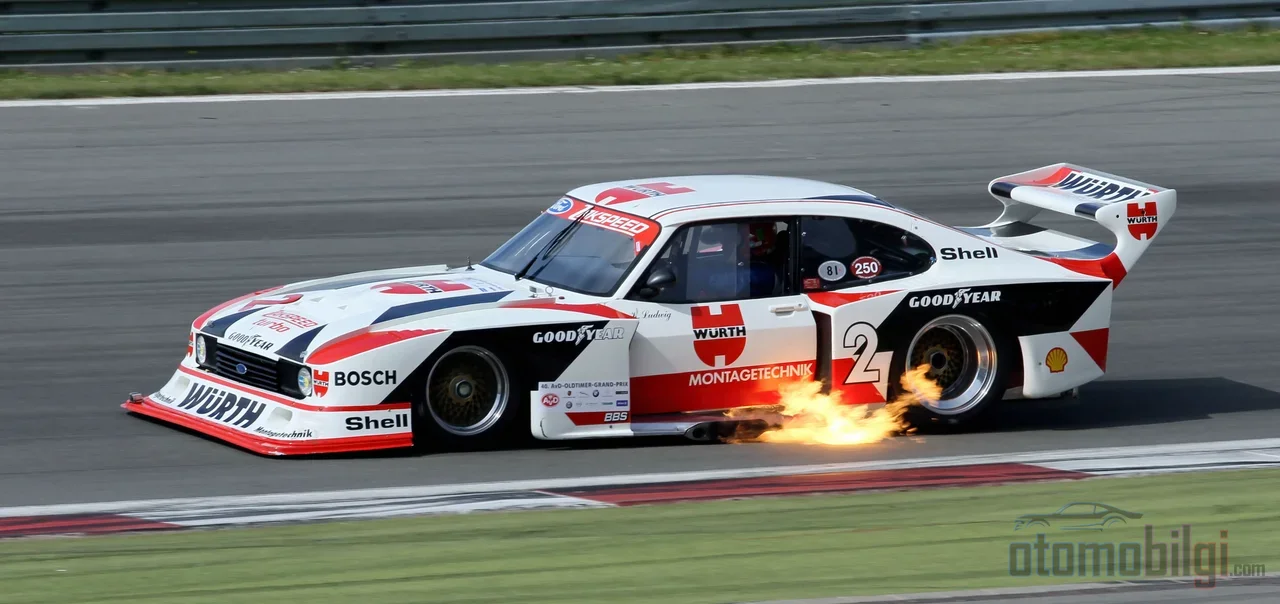
Imagine: it's the mid-80s and there's a racing series in Germany, but the cars aren't simulations - they're racing versions of cars you could see on the street. That was the magic of DTM. The series moved away from the overly technological and expensive Group 5 regulations of the earlier Deutsche Rennsport Meisterschaft and was founded on a new format based on Group A rules. So it wasn't high-tech boxes on the track, but cars that were actually sold.
The first season was also a complete crowd festival: the opening campaign saw more than 100 individual entries and cars. This shows how easily privateer teams, as they were called, could join the series. Little money, lots of racing, real cars - this recipe immediately captivated both drivers and spectators. In the following years, manufacturers eagerly joined as well; Mercedes-Benz, Audi, Opel, Alfa Romeo and BMW gradually became the main players of the series. On the tire side, giants like Michelin, Dunlop and Bridgestone took the stage.
So how was racing done in the first era? The rules were completely different from today: the three drivers who made the podium in one race carried extra weight from the next event onward. In other words, the price of success was extra kilograms on the car - you could call it an early version of today's success ballast logic.
Golden Age: The BMW M3 E30 vs. Mercedes 190E Rivalry
The late 80s and early 90s are known as DTM's legendary era, and for good reason: brand wars. In the early 90s, BMW, Mercedes-Benz, Ford and Volvo were key names in the series. But the fiercest battle was actually between two cars: BMW M3 E30 and Mercedes-Benz 190E 2.5-16 Evolution II. These two machines were locked together on the track throughout the era; enthusiasts still watch those races over and over today.
According to one source, the M3 E30 became the defining car of the era, producing around 375 hp. But the golden age isn't just the story of two cars: the factory-backed battles between BMW, Mercedes-Benz, Audi, Opel and Alfa Romeo formed the heart of the series. With its V8 car, Audi won the 1990 and 1991 championships, effectively slowly opening the door to a new era - fully road-car-based rules were being gradually phased out.
Here's a question for you: does a race car with a body identical to the car you see on the street excite you more, or a prototype guaranteed to be the fastest on the track? The entire history of DTM is essentially about the tension between two camps searching for the answer to this question.
Why Did DTM Close in 1996?
Here comes the bitter part of the story. The series was run in 1995 and 1996 under an international format called ITC, and this format pushed manufacturers to gradually turn touring cars into prototypes. The cars got faster but the costs exploded. By the end of 1996 the money ran out and the series closed. Simply put, excessive costs and the inability to find enough manufacturers were the cause of the original DTM's death.
The problem was that the championship had become far too expensive; we couldn't find enough manufacturers in Germany or Europe willing to jump into the series.
Just imagine: the final champion of a championship becomes the person who explains most clearly how his own series died. In later years, Reuter made another striking observation - he argues that post-2000 DTM made the same mistakes as the ITC. In other words, the lessons were not fully learned; this debate still continues in motorsport circles today.
2000: Rebirth with the Deutsche Tourenwagen Masters
The series' death was not permanent. After the ITC, in 2000 a new series was established, also drawing on the experience of the previously existing Supertourenwagen Cup: officially named the Deutsche Tourenwagen Masters. This time the remedy was clear: stricter rules and tighter cost control. We can say the goal was not to ban prototype-looking touring cars, but to keep them within regulated boundaries - like taxes owed to the state, the clearer the rules are, the less anyone tries to push the limits.
In this new era, the cars also got their own category: Class 1 Touring Cars. This concept, referring to FIA's silhouette-style touring car regulations, was used by both DTM and the Japanese Super GT series. The two series jointly prepared the common Class 1 technical regulations to be applied in both. The goal was clear: to keep costs under control with a set of standardized parts and increase competition. The standard parts were to be produced and distributed in both Europe and Japan - think of it like smartphone parts being manufactured in different countries and assembled into the same phone.
The final and most radical form of Class 1 was adopted starting from the 2019 season, according to the official announcement. This regulation involved a switch to two-liter, turbocharged, four-cylinder engines. In other words, instead of large-displacement, growling engines, compact but aggressive units were on the track. We should also not forget a description once used for the DTM of the 2000s and early 2010s: many enthusiasts describe those cars as "prototype racing in touring car clothing." It was very exciting, but was the pure touring car spirit still there? It was precisely this question that set up the series' next turning point.
2021: The Switch to GT3 and the Manufacturer Bosses
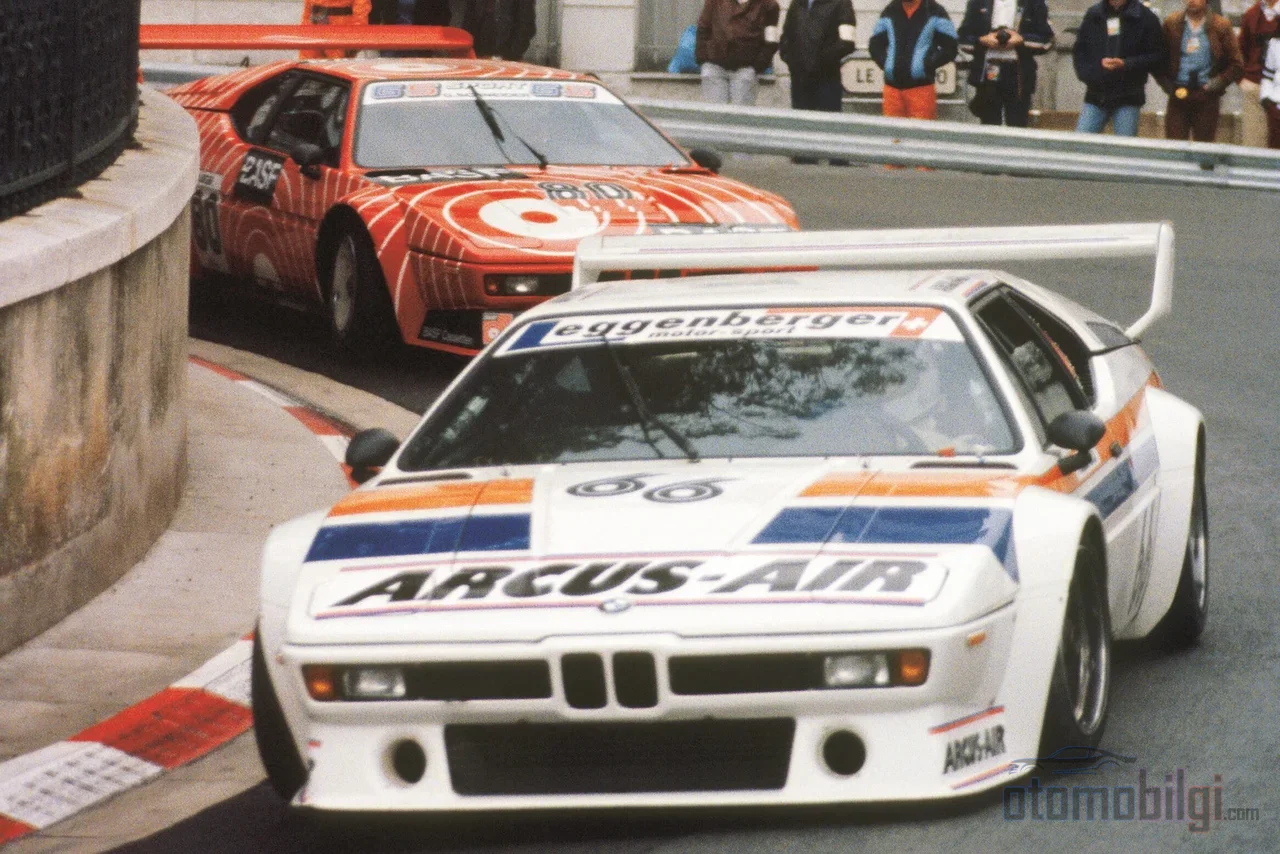
Now we come to the most dramatic chapter of the 21st century. Mercedes had already left the DTM; then Audi announced it would withdraw from the series at the end of the 2020 season, casting serious doubt on the championship's future. Audi was leaving as the reigning champion of that era - ending its DTM commitment in line with its carbon neutrality goals, no less. BMW Motorsport boss Jens Marquardt had said that Audi's withdrawal made the series' future questionable. Result? BMW was left as the sole manufacturer in the series in 2021, and interestingly, BMW had previously spoken out against the switch to GT3.
The switch happened nonetheless: in 2021, the DTM abandoned its purpose-built Class One cars and moved to GT3 machinery. The Class One regulations were eventually abandoned entirely, and GT3-based rules were adopted. From 2021 onward, the cars became identical to GT3 cars in terms of production year, performance, and engine. GT3 means ready-made race cars - a standard racing class that manufacturers derive from their road cars and many teams share. Think of it this way: in the concert hall, everyone now plays the same type of guitar, and no one can bring a custom-built instrument.
The switch had a purpose: attracting more participants. Mercedes also returned to the series in the GT3 era. But the matter is not undisputed: a long-standing fan base sees this change as the series' decline. On one side are those who say "this change can save the DTM," and on the other are those who consider the GT3 switch part of the slow death of European motorsport. According to some experts, Class 1 costs could never be brought under control, which is why the switch to GT3 was inevitable. A classic motorsport dilemma: identity or survival? The first champion of 2021 was Maximilian Götz, who left the series with Mercedes' changing participation, Maximilian Götz became - going down in history as the first name of the GT3 era.
Formats, Points, and Ever-Changing Rules
The story of the DTM was written not only by its cars but also by its race format. The rules have changed considerably since 1984: in the early period, the extra weight applied to podium finishers gradually turned into a specific system. The main milestones on the racing and points side are as follows:
- 1984: Drivers finishing in the top three carried extra weight at the next event.
- 2015: Each event turned into two separate sprint races.
- Points system: Drivers score points in the top 15 positions; the winner collects 25, second place 20, third place somewhat fewer points.
- 2023: A newly restructured points system came into effect.
- 2025: Saturday and Sunday races were set at 55 minutes + 1 full lap; pit stop rules were changed.
In the GT3 era, adjustments were also made on the format side: the ban on team orders and changes to pit stop rules top the list. In other words, the series keeps renewing not only the car but also the rhythm of race day. Do you think that's cool, or does finding out that a rule changed only after you learned the new one surprise you too? I'll admit, for me it's both.
| Period | Car regulations | Highlight development |
|---|---|---|
| 1984-1996 | Group A based production cars | Launch with more than 100 entries; the M3 E30 vs 190E rivalry |
| 1995-1996 | ITC format | Prototyping, cost explosion, closure of the series |
| 2000-2018 | Silhouette style touring cars | Rebirth with strict cost control |
| 2019-2020 | Class 1 regulations | 2-liter turbo, 4-cylinder engines; shared rules with Super GT |
| 2021-present | GT3 | Single manufacturer era, Mercedes' return, ban on team orders |
Three Lives, One Series: Where Is DTM Today?
Looking at DTM's 40 years, one lesson emerges: surviving in motorsport is not about the right car, but the right costs. The Group A era was simple but charming; the Class 1 era was crazy but expensive; the GT3 era is accessible but sparked an identity debate. Reuter's warning about "the same mistakes" still rings in our ears because, in short, it's right: if the money runs out, even the most beautiful cars can't stay on the track. How the next chapter will be written, time will tell - and we, for our part, keep reading every page of this story with great pleasure.
Sources
- Deutsche Tourenwagen Meisterschaft - Wikipedia
- Deutsche Tourenwagen Masters - Wikipedia
- Class 1 Touring Cars - Wikipedia
- 1984 DTM Season | DTM Wiki - Fandom
- DTM Story: Season 1984 part 1 - srt.art.blog
- DTM made the "same mistakes" as ITC - Motorsport.com
- DTM, Super GT Finalize Joint Class 1 Regulations - Sportscar365
- Super GT, DTM Formally Announce Class 1 Technical Regulations - DailySportsCar
- Audi withdrawal to leave BMW as DTM's only manufacturer in 2021 - RaceFans
- Audi announces decision to quit DTM after 2020 - Motorsport.com
- DTM Dealt Body Blow By Audi Post 2020 Pull-Out - DailySportsCar
- BMW warns against DTM switching to GT3 cars - Motorsport.com
- DTM Will Switch to GT3-Spec Cars in 2021 - Autosport
- DTM, GT3 and the Slow Death of European Motorsport - GP Rejects
- Insight: How DTM Has Evolved for its Second GT3 Season - Sportscar365
- Why 2021 champion Gotz is not returning to DTM this year - Autosport
- The DTM: all you need to know - Pirelli
- The ins and outs of the DTM - Red Bull Ring
- DTM Rating: This is how points are awarded - Red Bull
- DTM rules, points system - TNF's Archive
- The real DTM - A look into Class One (Part 1) - DrRacing's Blog
- DTM - the Story 1984-2012: The Official DTM Book - Google Books