DTM's Unforgettable Races: Moments That Changed the Fate of Championships
Share This Page
DTM's unforgettable races are moments that show how a single race can change a championship, even the image of an entire brand. Since 1984, the greatest drama of German touring car racing, the most dramatic tire blowouts, and the most controversial team orders have all happened in this series. Here is the story of the races whose destiny changed in that corner, in that second.
Highlights
- Volker Strycek, 1984 won the championship without winning a single race.
- Audi, 1990 reached the championship on its first attempt with the V8 Quattro.
- Timo Scheider, 2008 won the championship by a margin of only 4 points .
- Team orders 2020 were banned in, 2021 the ban was lifted in.
- René Rast, 2025 declared his title by winning the Hockenheim finale.
Why is DTM a series where a single race matters so much?
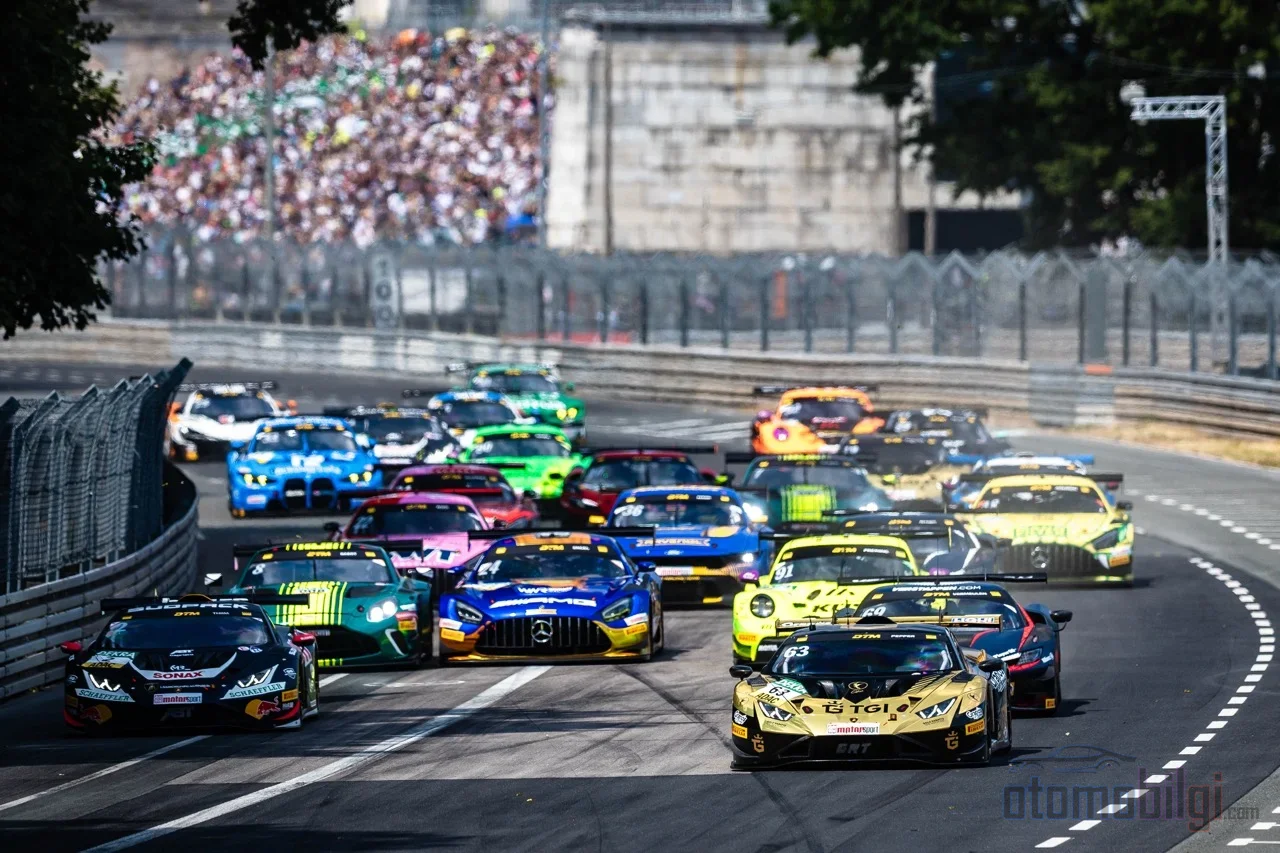
Think of it this way: in DTM, the points system awards points to the top 15; the winner gets 25, second place gets 20 points. So the difference between winning a race and finishing two places behind can single-handedly determine destiny at the end of the season. Moreover, the cars are so close to each other that contact in the final corner or a tire blowout can turn the championship table upside down. Imagine a system where fast cars are slowed down with extra weight or narrower tires; the order gets reshuffled at every race.
Even the series' founding story is the product of practical thinking: in 1984, it started as an alternative to the era's expensive sports prototype races, under FIA Group A regulations and with private teams' production cars. Back then its name was Deutschen Produktionswagen Meisterschaft; that is, literally the "German Production Car Championship". Since customer teams could also race, the competition was both broad and full of surprises.
Is it possible to become champion without winning? The impossible scenario of 1984
DTM's first season taught us one of the strangest lessons: the champion, Volker Strycek, did not win a single race all season! Driving a BMW 635 CSi, Strycek took the title through his consistency. The winner of the first race, meanwhile, was Harald Grohs, also from the BMW camp. Though this result may sound absurd, it captures the essence of DTM: durability and consistency can be more valuable than one-off brilliance.
The surprise continued the following season: in 1985, the Swede Per Stureson, Volvo 240 Turbo reached the championship with. A non-German car reaching the top in Germany's biggest series was one of the biggest surprises of those years.
In which races did the Class 1 era experience its golden age?
The series' technical peak began in 1993, when the Group A rules were abandoned and the category moved to the free 2.5-liter engine class of FIA Class 1 Touring Cars. ABS, four-wheel drive, and electronic driver aids became widespread in these cars; moreover, some of these were even banned in Formula 1 at the time. The touring car became not gossip, but technology developing like a laboratory.
1990: Audi becoming king on the first attempt
Wanting to fill the gap after Ford's withdrawal, Audi V8 Quattro entered the series and became champion in his first attempt with Hans-Joachim Stuck. The power of the eight cylinders and the Quattro's four-wheel drive advantage were the only thing worth talking about that year against BMW's and Mercedes' four-cylinder cars. A brand's entry into the series could hardly have turned out better.
1991 and 1992: Scores settled at Hockenheim
In 1991 the title fight lasted until the season's final race at Hockenheim; Frank Biela rose to the top with the Audi V8, and Audi became the first manufacturer in DTM history to successfully defend the title. In 1992, however, the wheel was in other hands: Mercedes-Benz 190E 2.5-16 Evo 2 won exactly 16 races in the season. Klaus Ludwig took his second title and wrote his name down as the first two-time champion; Thiim finishing second, Schneider third, and Rosberg fifth completed the Mercedes lineup, and the season officially turned into a subsidiary brick.
1993-1996: The Alfa Romeo surprise and the grand finale
In 1993, when engine capacity was fixed at 2.5 liters and the cylinder count at six, the balance shifted: Nicola Larini, with the Alfa Romeo 155 V6 TI won his first championship. In 1994, Ludwig overtook Larini by a 72-point margin with the Mercedes C-Class. 1995 was Bernd Schneider's dominant year: he amassed 155 points, nearly double the 83 points of runner-up Jan Magnussen. The series' first era was brought to a close in 1996 by Manuel Reuter; with the Opel Calibra V6 he became that era's last champion. That year the two series had merged under the ITC name, but the FIA taking the lion's share of revenue, the travel costs of faraway races like Suzuka and Interlagos, and increasingly expensive TV rights crushed the teams; when Opel and Alfa Romeo withdrew, the championship was cancelled. Season after season, the races went down in history; it was fascinating to see in what kind of racing the series stayed alive.
After 2000: The Schneider era and drama measured in points
In 2000, the series returned under the name "Deutsche Tourenwagen Masters" with low-cost control rules; veteran F1 driver Gerhard Berger had a hand in the organization. The champion of the comeback was once again Schneider, and his run that began with the Mercedes CLK extended to a third title in 2001, a fourth in 2003, and a fifth in 2006. No DTM driver has ever reached that number.
But my favorite is 2002: Laurent Aiello, with the Audi TT-R left Schneider behind and became champion by taking four wins in five races. Then came 2008, and the drama hit its peak: Timo Scheider, with the Audi A4 won the championship against Paul di Resta by a margin of only 4 points . 4 points! A penalty given in a single race, a place lost in a single corner... any of it could have created that difference.
Final corners, burst tires, annulled points
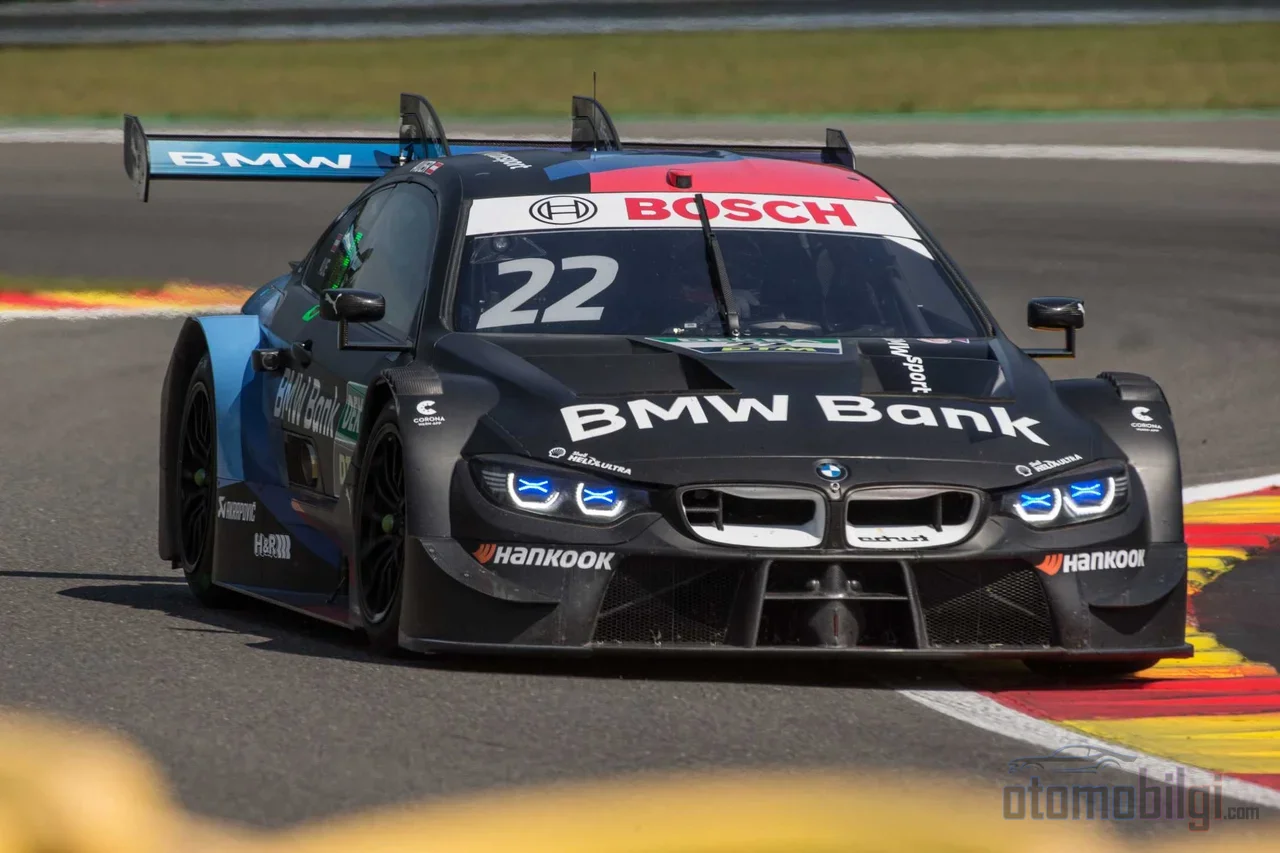
The modern era of the DTM has left a rich archive when it comes to championships decided in the last race. In 2012, BMW returned to the series twenty years after leaving it, with the E92 M3, and in its very first season back it won the drivers', teams', and manufacturers' triple. In 2017, René Rast, Audi A5 DTM proclaimed the championship with in the second half of the season; celebrating his second title at the Nürburgring in 2019, he became the first champion of the Class 1 era. In the 2025 finale, too, the stage belonged to him: winning the race at Hockenheim, he closed out the season like a commander.
2026: Tire blowout and a 15-second penalty
One of the most striking recent examples came from the Red Bull Ring weekend: title contender Thomas Preining's tire blew out and the results table changed from top to bottom. In the following weeks of the same year, Maro Engel, despite finishing the race fifth, dropped to 17th place with the 15-second penalty he received and lost his 11 points; he was left 23 points behind in the title fight. This is the clearest snapshot of how a single race can turn the points table upside down. At the Nürburgring, after the problems Engel and Auer experienced in the Mercedes-AMG camp, it was BMW that was smiling: Marco Wittmann celebrated with victory.
2026 Hockenheim finale: Crash, drama and question marks
The season's Hockenheim finale was approached with a title battle that lasted until the last race, and the season, like in 2019, the first year of the Class 1 era, determined its champion in the finale. In the first race, Lucas Auer celebrated victory with Landgraf-Mercedes, while the title drama escalated after Preining's crash. Moreover, there was another question on the table: Did Auer yield to his Mercedes teammate who was in a better position in the title race? A yield made of his own accord does not count as a rule violation, since the ban on team orders was lifted in 2021; but the suspicion is still being discussed. The debate over whether a "yield" decision in DTM is legal or a matter of reputation has become as interesting as the championship itself.
Are team orders legal in DTM? What is the difference from F1?
Short answer: Yes, they are legal now. Team orders were banned in DTM in 2020; but when the series switched to a customer-racing-focused formula, the ban was lifted as of 2021. In Formula 1, the picture is different: although orders are legal there, instances of disobedience to orders like "Multi 21" - that famous night when Vettel overtook Webber - still create debate. The 2021 DTM finale is also one of the classics of these debates: Max Götz won the title with Mercedes in the controversial finale; title contender Kelvin van der Linde had been slowed by contact with Liam Lawson at Turn 1, and the legitimacy of the results was discussed for weeks. In 2015, Audi driver Timo Scheider was disqualified from the race for colliding with two cars, and Audi's "push them out" style approach caused a huge storm in the series.
Why are these races still being discussed?
Because DTM has taught the same lesson throughout its history, every single time: one race, sometimes one corner, can change a brand's perception for a decade. Audi wrote itself into the summit at first attempt by becoming champion in 1990; Alfa Romeo turned the regulation change into a golden opportunity in 1993; BMW crowned its return with a title in 2012. The series shut down in 1996 due to costs, was reborn in 2000, and entered a new era with Audi's withdrawal at the end of 2020 - but those dramatic moments stayed in memory far longer than the winners. Which one do you think is the greatest of the unforgettable? In my view, the answer depends on who lost what at which corner.
Sources
- Gallery: 34 years of amazing DTM-winning cars
- Deutsche Tourenwagen Meisterschaft
- Greatest BMW M race victories worldwide
- Best DTM Cars
- Götz Takes DTM Title In Controversial Season Finale
- Two tyre pools and the "Rene Rast rule": What's changing in DTM regulations
- DTM Hockenheim: Auer wins after title drama and Engstler crash
- Illegal DTM team orders at Mercedes-AMG? Auer offers curious explanation
- DTM Nurburgring: Wittmann wins for BMW after AMG meltdown
- Will Engel's 15-second penalty cost him the DTM title?
- "Push him out": Audi sparks DTM furore
- The ins and outs of the DTM
- DTM: Drama and podium at the season finale
- René Rast wins his second DTM title on Hankook race tyres at the Nürburgring
- Final DTM thriller in Hockenheim
- With Mercedes leaving DTM, Audi and BMW say they may follow
- How F1 teams have dealt with driver rivalries in the past