Behind the Scenes of DTM: Teams, Engineers, and Paddock Culture
Share This Page
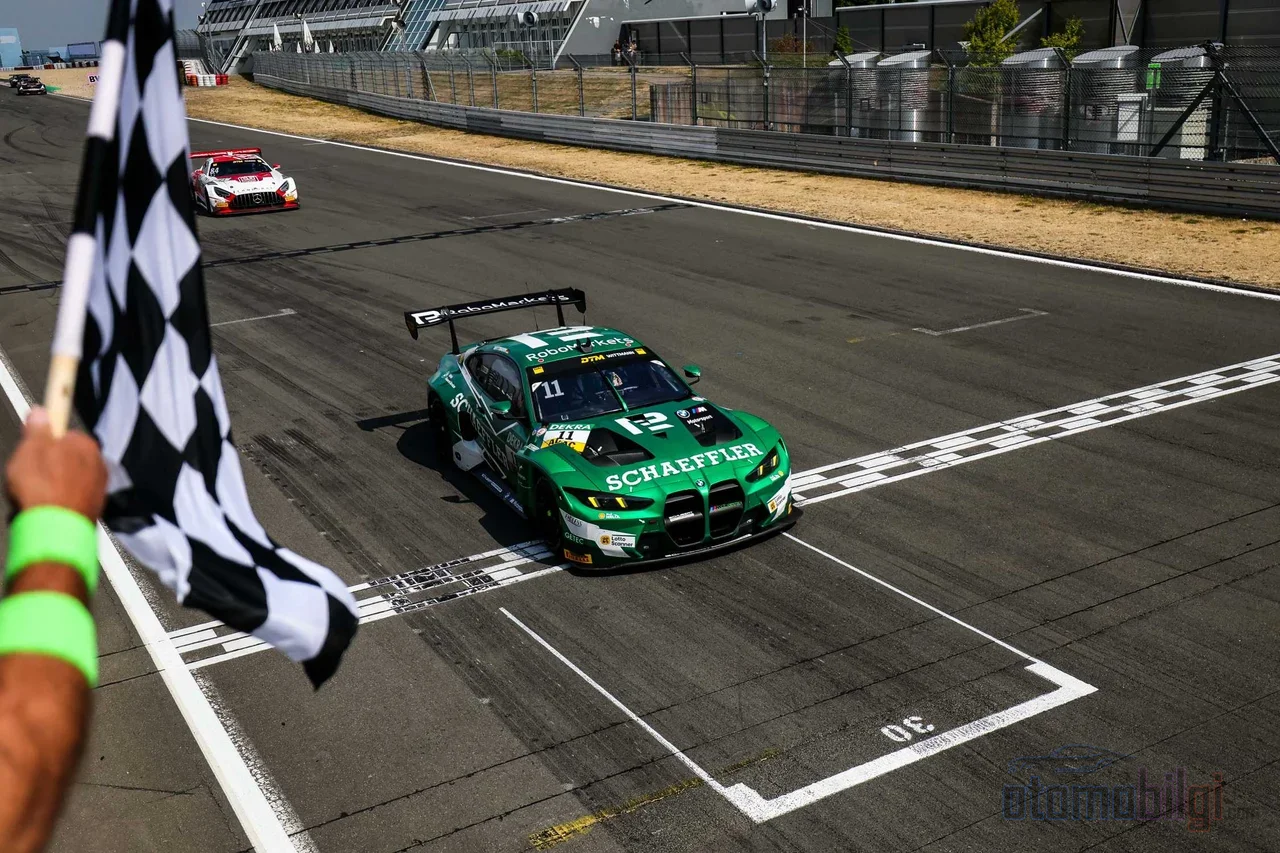
The story behind the DTM tells far more than the names on the podium: what truly embraces the championships is the engineers, mechanics, strategists in the garages, and their effort spanning years. From the founding of legendary teams like HWA to the manufacturers' departures, from pit wall communication to tire decisions, this page tells the story of the DTM as a teamwork story beyond vehicle and driver narratives.
Highlights
- HWA, together with Mercedes-AMG until 2018, achieved 11 drivers' championships and more than 180 wins achieved
- Bernd Schneider became DTM champion 4 times (2000, 2001, 2003, 2006) with HWA
- Mercedes-Benz left the DTM at the end of 2018, and Audi at the end of 2020 respectively
- The DTM has been racing with GT3 cars since 2021 racing with GT3 cars
- The 2026 champion was Thomas Preining, and the teams' champion was Manthey EMA
Who really decides the winner: the driver or the garage?
When watching the DTM, most of us focus on braking points, overtaking moves, and the thrill of the final corner. But consider this: why does one of two drivers racing the same car always finish ahead? The answer usually doesn't end with the driver's talent. The winner of a race weekend is actually established inside the garages before qualifying even begins, while engineers dissect the data. So what exactly happens inside these garages? This page goes exactly there, to that side the cameras don't see.
In the DTM's history, the names of some garages have become almost synonymous with championships. Chief among them is HWA. But HWA's story begins from a place much older than the DTM, from the founding of AMG.
HWA: The racing wings of AMG flew from Affalterbach
The name of HWA AG comes from Hans-Werner Aufrecht, who founded AMG in 1967. In late 1998, Aufrecht sold his majority stake in AMG to DaimlerChrysler; during this process, the motorsport department and part of special vehicle production passed to the newly founded HWA AG. In short: AMG's racing side became a separate company standing on its own. Even today, hearing that trophies are displayed on workbenches in Affalterbach gives one chills - supposedly as a constant reminder to the engineers that "your efforts are equivalent to a championship." I think this is the most elegant form of engineering motivation.
HWA's DTM history goes back to 1988. The resulting table leaves nothing to say: fourth place in 1989, third in 1990, second in 1991, then the summit in 1992; championships again in 1994 and 1995 (the 1995 title included in the ITC). The development and race operations of Mercedes-branded DTM cars were also on HWA's shoulders. Until 2018, HWA and Mercedes-AMG accumulated a total of 11 drivers' championships and more than 180 wins ; HWA was therefore frequently described as "the most successful team in DTM history."
The names behind the trophies
HWA's list of DTM drivers' champions is like a parade of the series' golden age: Bernd Schneider (2000, 2001, 2003, 2006), Gary Paffett (2005, 2018), Paul di Resta (2010) and Pascal Wehrlein (2015). As for the teams' championship, it went to HWA in 2000-2003, 2005, 2006, 2008-2010, 2015 and 2018. The 2010 season deserves special mention: that year HWA won 9 of the 11 races and swept the top three in the drivers' standings. Such dominance is not the work of a single driver alone, but of the entire garage. Names like Jamie Green also raced in the DTM with HWA colors for years.
There is also a side that extends beyond the DTM: in 1998-1999, HWA produced 20 units of the Mercedes-Benz CLK-GTR Straßenversion due to homologation rules, and in 2002 built 6 more roadsters from spare parts. In addition, 180 units of the CLK-DTM road cars were produced. HWA also left its fingerprints on the development of road cars such as the SL65 AMG Black Series. A company that ran the Mercedes DTM program for about 20 years clearly knows how to leave the track as well.
Brand wars and how the garages prepare for battle
One of the things that makes DTM what it is was the competition between manufacturers. The factory teams of Mercedes, Audi and BMW took their place on the grid not just with cars, but with massive engineering infrastructures. Behind the Mercedes-AMG DTM team, the connection between the design department and racing operations was so tight that the engineers summarize it in a single sentence:
Our mission is to develop the car together.
But not every act of the brand wars ended in victory. At the end of the 2018 season, Mercedes-Benz announced it was leaving the DTM and turned toward Formula E. With Mercedes' exit, only two factory teams remained in the series - and BMW had previously withdrawn from the series and returned five years later. Then it was Audi's turn: At the end of the 2020 season, Audi also announced it was withdrawing from the DTM, leaving BMW alone as the series' sole manufacturer. These exits were not just about fewer logos on the grid; it meant the withdrawal of the hundreds-strong engineering armies behind each factory team from the series. Think of a garage closing as the end of a process involving as much effort as the trophies hanging on its walls - that is why these exits were truly painful for the fans.
After these transformations, the DTM also changed its identity: In 2021 it switched to GT3 cars and moved away from its touring car heritage. Still, the series continues to keep its past alive with historic cars. Looking at the winning cars, the variety is dazzling: 1984 BMW 635 CSI, 1985 Volvo 240 Turbo, 1986 Rover Vitesse, 1987 BMW M3, 1988 Ford Sierra... A gallery of winning cars spanning 34 years tells on its own just how colorful the touring car era was.
The garage's command center: the pit wall and engineer-driver communication
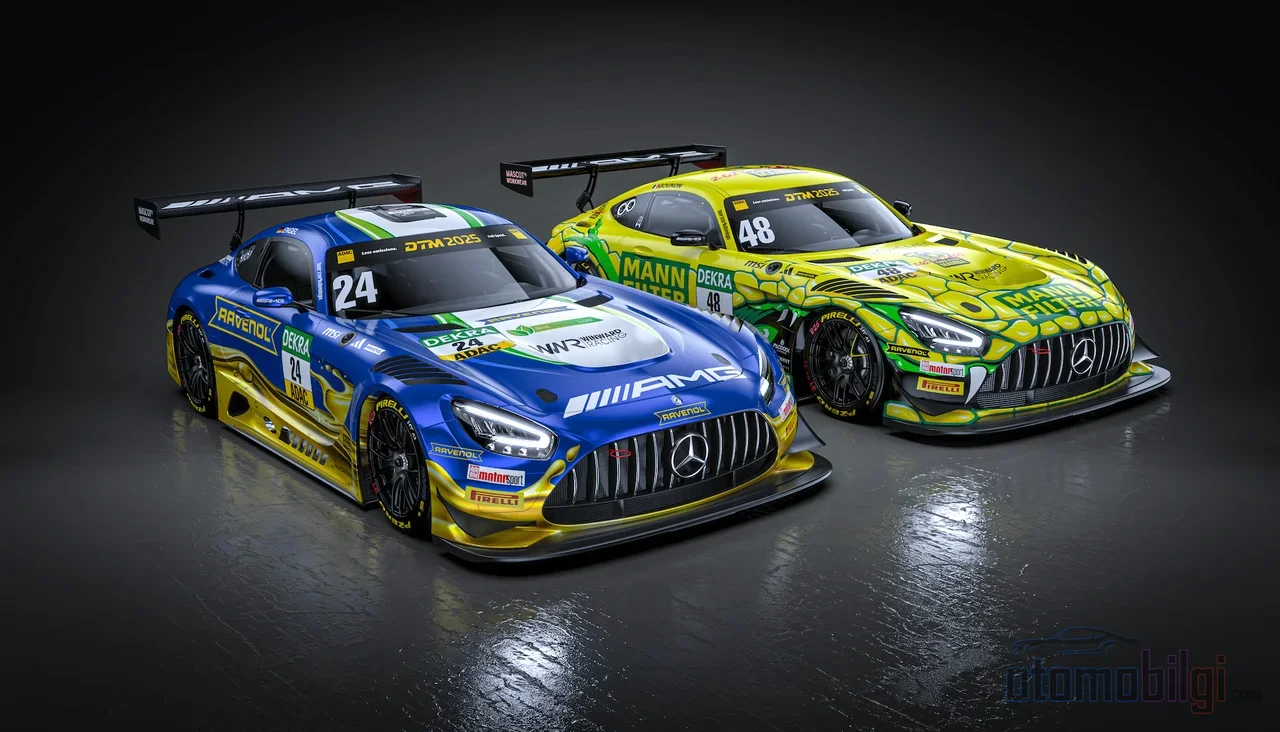
Now let's move on to my favorite part: during the race, the garage actually turns into a tiny command center. Manthey Racing's building called the "Pit Stand" is a fine example of this; the communications hub there serves as the command point where all information is collected throughout the race. Telemetry, lap times, tire data, competitor analysis - it all comes together in this center and turns into decisions. You can think of it like a game command post, but here the "game" is a real war in which parts worth hundreds of thousands of euros are at stake.
So how is the bridge between the driver and this center built? The answer: radio communication. The race engineer is the voice in the driver's ear; the person telling them about tire condition, rivals' strategy, and pit stop timing. The driver, in turn, relays their feelings and the car's behavior in the opposite direction - things like "the rear tires are sliding on corner exit." Although modern telemetry measures everything, split-second feedback from the driver out on the track is still worth its weight in gold. And the interesting part: no matter how much technology advances, even old methods like the pit board live on as backup communication. It's like scribbling something in a notebook even though you have a phone - the oldest method is sometimes the most reliable one.
How are strategy, tire, and pit stop decisions made?
At the core of race strategy there are a few big decisions: which tire compound to start on, when to change tires, and on which lap to make the pit stop? Accurately predicting how the tires wear out over the course of the race is the backbone of strategy. In qualifying sessions, strategy works a bit differently: the strategies built in qualifying revolve around getting the new tire set out onto the track at the right moment, avoiding traffic, and putting in the cleanest lap. In other words, in qualifying you're racing in the garage just as much as on the track.
The working order of the pit stop crew is a discipline story in itself. Each person has a single task: one removes a wheel, one fits it, one stabilizes the car. They work in seconds, even tenths of a second; that's why pit crews train for hours outside of races as well. Think of it like a band - everyone plays their own note, but in the end a single melody must emerge. If a note goes wrong, the result is a pit stop longer than necessary and lost positions. These details of DTM's own pit culture, rarely caught on camera, show that the series carries its true character behind the garage walls.
Garage culture in the GT3 era: how does DTM live today?
Even after the big departure of the factory teams, DTM did not die; it renewed its identity. Since 2021 the series has been racing with GT3 cars, and it is now a stage for the engineering skill of customer and independent teams from different brands. This transformation also changed the garage culture: it is no longer so much one manufacturer's massive factory operation, but a race of different teams building their own operations. And this race is still very much alive.
The 2026 season is the best proof of this. Thomas Preining claimed his second title at Hockenheim to take the championship, while the teams' champion was Manthey EMA . The grid featured three DTM champions and at least eleven DTM race winners - meaning the competition still carries the spirit of the old factory era. The season, which consisted of a total of 8 race weekends, closed with Maro Engel winning the final race. ABT Sportsline, meanwhile, continued its partnership with Lamborghini in 2026, joining the grid with the new Lamborghini Temerario GT3 . To me, the most inspiring thing about DTM is that the engineering culture that once worked in Mercedes' and Audi's garages now lives on under other brands' flags.
The closing of a garage: Why do legends fade?
The story of HWA also has a chapter of transformation. After Mercedes' exit from the DTM, HWA directed its energy toward customer racing. The HWA-Mercedes-AMG customer racing partnership officially began in 2010; the first joint project was the SLS AMG GT3 (delivered from 2011 onward), while its successor, the Mercedes-AMG GT3, was described as "the most successful and best-selling GT3 race car to date". This partnership, which also played a role in the GT2, GT4 and GT Track Series models, reached more than 15,000 race entries. In other words, the labor of a DTM garage does not vanish when it leaves the series; it continues to live on in other categories.
This chapter always makes me think this: in motorsport, the real legacy is not the cars but the teams that create them. The car goes to a museum, but the engineering knowledge a garage has accumulated is carried forward by new projects, new brands, and new championships. The trophies on HWA's workbenches are precisely a reminder of this.
Toward the end: The curtain closed on the pit lane
You look at the DTM differently now, don't you? Behind the embrace of the flag pattern, there are decades of engineering labor, garages stayed in until midnight, and split-second decisions made for fractions of a second. HWA's 11 championships, the brands' painful exits, the new heroes of the GT3 era - all are chapters of the same story: the story of people and technical labor. Next time you watch the DTM, when you turn the camera to the pit lane for a moment, remember how much story the engineers sitting there read from the data on the screens. What do you think is the most fascinating thing about this behind-the-scenes world: the championships, or the garage culture that makes them possible? I think the two go hand in hand - and the DTM proves it.
Sources
- HWA Thanks Mercedes-AMG for 15 Years of Partnership in Customer Racing
- HWA Team
- HWA AG
- Behind the Wheel of the HWA EVO, a Modern Take on Mercedes DTM Legend
- Mercedes to quit DTM after 2018, confirms Formula E entry
- Audi to withdraw from DTM after 2020
- Audi Exits DTM Racing, Leaving BMW as Last Automaker Standing
- Deutsche Tourenwagen Masters
- Stellar field set to shine in the 2026 DTM
- DTM Homepage
- How the DTM is keeping its touring car past alive
- Gallery: 34 years of amazing DTM-winning cars
- ABT Sportsline unveils DTM cars for the 2026 season
- Behind the scenes of the Mercedes-AMG Motorsport DTM team
- From chalk to talk, how driver/pit communications have evolved
- Anatomy of a Pit Crew