Team Orders and the Driver Cockpit Policy in DTM
Share This Page
Team orders in DTM are official instructions, shaped by championship mathematics, whereby a team can tell its own two drivers to swap positions or give up the fight during a race. They decided championships many times throughout the series' history, were completely banned in 2022, but the controversies never ended. So how exactly did these orders work, in which races did they decide fate, and why are they still being talked about? Let's explain.
Highlights
- At the 2021 Norisring, Mercedes instructed its two leading drivers to let Maximilian Götz win.
- At the 2021 season finale, manufacturer orders made Götz the DTM champion.
- Team orders were removed in 2020, and have been completely banned since 2022 under Paragraph 20.2.
- Despite the ban, suspicions of position swapping continue; drivers are forced to make their own statements.
What Exactly Are Team Orders?
Think of it this way: you and your closest friend are competing in the same class, but the teacher wants coordination between you for the overall success of the class. The situation in motorsport is similar, the only difference being millions of Euros, championships, and careers on the table. Team orders are when a team tells its two drivers, who would normally race each other, to change their race strategy. Sometimes a hierarchy is established in advance, sometimes a one-off decision is made during the race: stay behind now, get your reward later.
Why would such a thing even be needed? The reasons actually seem logical: protecting the championship leader's points, saving fuel, reducing the risk of mechanical failure, and most simply, preventing two teammates from crashing into each other. There are even crazier examples in history: In the early years of F1, it was even legal for a driver to hand over their own car to the team leader when the leader's car broke down. So team orders have always existed in motorsport; the question was where they should stop.
2021 Norisring: Mercedes' Most Talked-About Decision
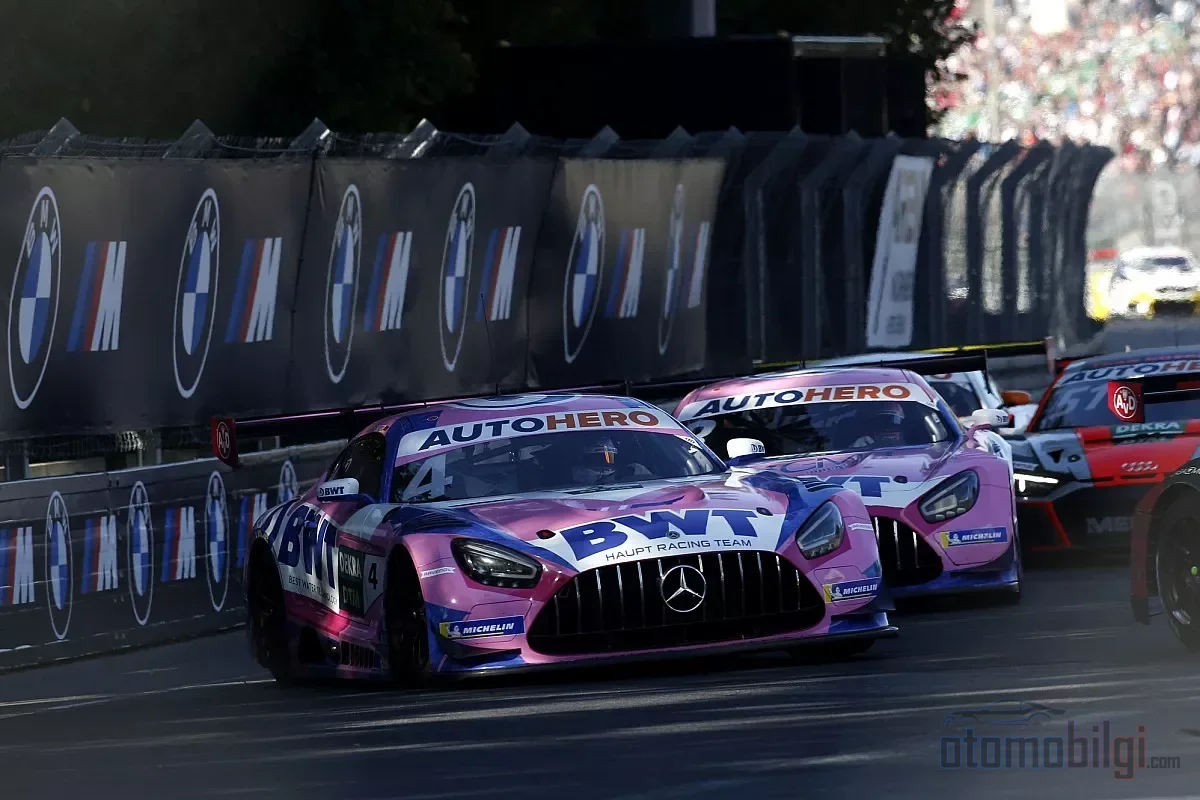
Now let's turn to the most controversial scene in DTM history. The 2021 Norisring race was a battle that directly affected the season's championship decision, and Lucas Auer and Philip Ellis from Mercedes-AMG had been leading the race for a long time. Then an instruction came over the radio: Maximilian Götz should move ahead and win the race. In other words, the two leading drivers gave up their own race to their teammate. Götz scored a crucial victory on the road to the championship, while Mercedes defended the decision in the face of widespread backlash.
The logic here was this: Götz was Mercedes' strongest championship asset that year, and the team wanted to direct every advantage in the points table toward him. In an ordinary race, this might not have raised anyone's eyebrows. But at the heart of a championship battle, two drivers handing their chance of winning over to someone else turned the back rooms upside down. As you can guess, opinions split in two: on one side, those who see this as the natural outcome of championship mathematics, and on the other, those who believe sporting fairness was trampled on.
2021 Final: How Many Stages Did It Take to Build a Championship?
Norisring was only the beginning of the road; the real scandal happened at the 2021 season finale. In the final race, Kelvin van der Linde and Liam Lawson collided at the first corner, and this crash initially seemed unlikely to make anyone champion. But thanks to coordination between different Mercedes-AMG teams, Maximilian Götz finished in front and was declared DTM champion. A championship was decided not by a single driver or a single team, but through the cooperation of multiple seemingly independent teams under the same manufacturer umbrella.
Imagine it like this: a school team has five different players and they all seem to be playing a single game plan, but they are listed separately on the scoreboard. From the outside they look independent, inside they share one heart. This is precisely why the atmosphere turned toxic after the final. In the sports press, the view prevailed that influencing the championship outcome through cooperation between seemingly independent teams damaged the credibility of the sport. The instructive part is this: the DTM example showed how much controversy teams resorting to such tactics would create, but it alone was not enough to deter anyone.
How Did the DTM Rules Change? A Short Timeline
The series' approach to team orders changed direction three times over the years. When Audi Sport's boss Dieter Gass announced that team orders would be lifted for 2020, we read it as a simplification move; but the real transformation came in the structure of the championship. After the costly Class 1 project, the DTM ran under Group GT3 regulations for the first time in 2021, Audi and BMW withdrew as manufacturers, and the series moved to a formula focused on customer racing. Right at this transition, the previously lifted team order restriction effectively disappeared, and the chaos of 2021 happened. Then the organization threw down the gauntlet.
| Period | Status | What Happened? |
|---|---|---|
| 2020 | Lifted | Audi boss Gass announced that team orders were lifted for this year. |
| 2021 | Vacuum | With the GT3 transition, the rule was effectively ineffective; the Norisring and final controversies erupted. |
| 2022 and beyond | Full ban | Under Paragraph 20.2, team orders and position agreements between manufacturers were explicitly banned. |
How harsh was the ban introduced in 2022? The organization openly announced that teams and drivers influencing race action with team orders could even face exclusion from the championship. In other words, the penalty was no longer a few points or a grid drop, but the threat of complete removal from the series. Even names like Marco Wittmann expressed support for this ban, saying that team orders had at times become too obvious to ignore. Watching a driver lose his own race without ever smiling is indeed possibly the least supportive spectator experience.
So Why Are There Still Suspicions Despite the Ban?
Here comes the funny and equally annoying part: Since 2022, team orders and agreements between manufacturers are officially banned, but some position swaps watched on track still raise eyebrows. When there is a rule, drivers are uncomfortable; when there is no rule, they are not at ease either. Recently, a suspected position swap involving a Mercedes-AMG car and its teammate dominated the agenda; on the driver's side, Auer offered cramps in his foot after the race as an alternative explanation. In another example, Preining tried to explain with a joke why he let his teammate Feller pass. But think about it: because orders are banned, drivers now have to explain every pass in their own words. And that doesn't end the transparency debate - it fuels it.
The human side of the matter is heavy too. Former DTM driver Daniel Juncadella openly stated that the series' political structure in the past ruined his career in a way, and that he later sought support from a psychologist. So team orders are not just demoralizing for the viewer; for drivers forced to battle the system for a teammate, they are a genuine career and mental health issue. If you are said to have slowed down in a race, no one has to believe you, and the label on that memory stays with you for life.
What's the Situation in F1 and NASCAR? Let's compare
DTM is definitely not swimming alone in these waters. In F1, the FIA banned team orders that could influence race results at the end of the 2002 season. The result? Ferrari's famous radio message at the 2010 German GP showed the ban wasn't working as intended, and the FIA admitted at the end of 2010 that the rule didn't work in practice and removed it from the regulations from 2011 onward. So even the pinnacle of world motorsport went through the full cycle of make a rule, break the rule, take the rule back on this issue. A team order is a decision given for a specific scenario, for that particular race; it doesn't mean a permanent number-one driver hierarchy. Knowing this distinction gets you halfway through the debates.
A current F1 example concerns DTM directly: the position swaps between Lando Norris and Oscar Piastri at McLaren, which began in 2024, extended up to the 2025 Italian GP, and the team order issued earned Norris 3 points; Norris finished the championship just 2 points ahead of Max Verstappen. So a single team decision determined the entire fate of a championship. McLaren's side of the line is clear too: team orders will only come into play when a driver is mathematically out of championship contention. NASCAR also has manufacturer orders; serious rules targeting team orders were introduced after the 2013 Richmond scandal. It seems that in any series, putting championship math and sporting fairness in the same bowl is hard.
Frequently Asked Questions
Are team orders legal in the DTM today?
No. As of the 2022 season, they are fully banned under Paragraph 20.2, and this ban also covers position agreements between manufacturers. Offending teams and drivers may face exclusion from the championship.
Did team orders really change the championship?
It did. The 2021 DTM final made Maximilian Götz champion through coordination between different Mercedes-AMG teams. In F1 in 2025, McLaren's decision at the Italian GP was one of the factors that brought Norris the championship by a 2-point margin.
Are a number-one driver hierarchy and a team order the same thing?
Not exactly. A team order can be a situation-based instruction given for a specific scenario or race; it does not require establishing a permanent number one - number two arrangement. Of course, there have been cases during seasons where this effectively turned into a hierarchy.
If there is a ban, why do drivers have to explain their swaps?
Because an official order can no longer be given. When a team-mate is passed or a swap is allowed, the driver is left with only their own justification: cramps, a tire problem, an explanation - even if it is a joke. This situation reopens the transparency question every single time.
Final Word: Fairness or Championship Math?
DTM's adventure with team orders teaches us three things. First, making a rule is not enough; F1's 2002-2011 experience and DTM's 2021 chaos prove that the ban must be enforceable. Second, for the brands these decisions are not just about the track: Mercedes in 2018... Careers such as winning all three possible championships, including the drivers' title, with Gary Paffett in the 30th DTM season are part of the brand's racing heritage. When Audi said farewell as a factory team in 2020, it had won 28 of 36 victories with the RS 5 DTM; BMW returned in 2012, collecting the drivers', teams' and manufacturers' championships all at once with Bruno Spengler. Alongside such a legacy, a single team orders scandal can cast a shadow over a decade-long image in one week. Third, and in my view most importantly: the ban arrived, the penalties got tougher, but the suspicions never ended. If it were up to you, which side would you choose - fairness or the standings? I'll be waiting in the comments.
Sources
- Team orders
- Mercedes defends team orders call in DTM title decider
- DTM announces complete ban on team orders for 2022 season
- DTM will abolish team orders for 2020, says Audi chief Gass
- Wittmann glad "obvious" DTM team orders now banned
- Are the team orders used in DTM's controversial finale legal in Formula 1?
- DTM, finally, completely ban team orders
- Controversy in DTM: Mercedes-AMG Team Orders Under Scrutiny
- Preining jokes about why he let team-mate Feller through
- Suspicious DTM Team Orders at Mercedes-AMG? Auer's Explanation
- Juncadella says politics in DTM "destroyed my career"
- DTM - Mercedes-AMG
- Spengler wins DTM drivers' title
- 2021 Deutsche Tourenwagen Masters
- Schubert Motorsport Wins DTM Team Championship
- Team Orders In Brazil Led McLaren Teammates to Swap 1-2
- Zak Brown reveals when McLaren will enforce team orders