Driver Duels That Shaped DTM History
Share This Page
The greatest driver duels in DTM history weren't just about two fast men battling on the track; they directly changed the fate of championships, team strategies, and even the engineering decisions of brands. The Mercedes-Audi rivalry between Bernd Schneider and Mattias Ekström, Ralf Schumacher and Gary Paffett sharing the same garage, and Alex Zanardi's incredible comeback story are among the most unforgettable pages of this series. Here's far more than a classic driver list: the story of how competition shaped race results.
Highlights
- Bernd Schneider 5 times DTM champion: 1995, 2000, 2001, 2003 and 2006
- Mattias Ekström, at the 2007 Hockenheim finale 152,000 spectators secured the championship in front of
- The pit strategy against Bruno Spengler became the decisive move of the 2007 championship
- Alex Zanardi, in 2018, tested a BMW M4 DTM driven entirely with hand controls
- The Class 1 era began with the 1993 rules and closed at Hockenheim in 2020
Which was DTM's greatest driver duel?
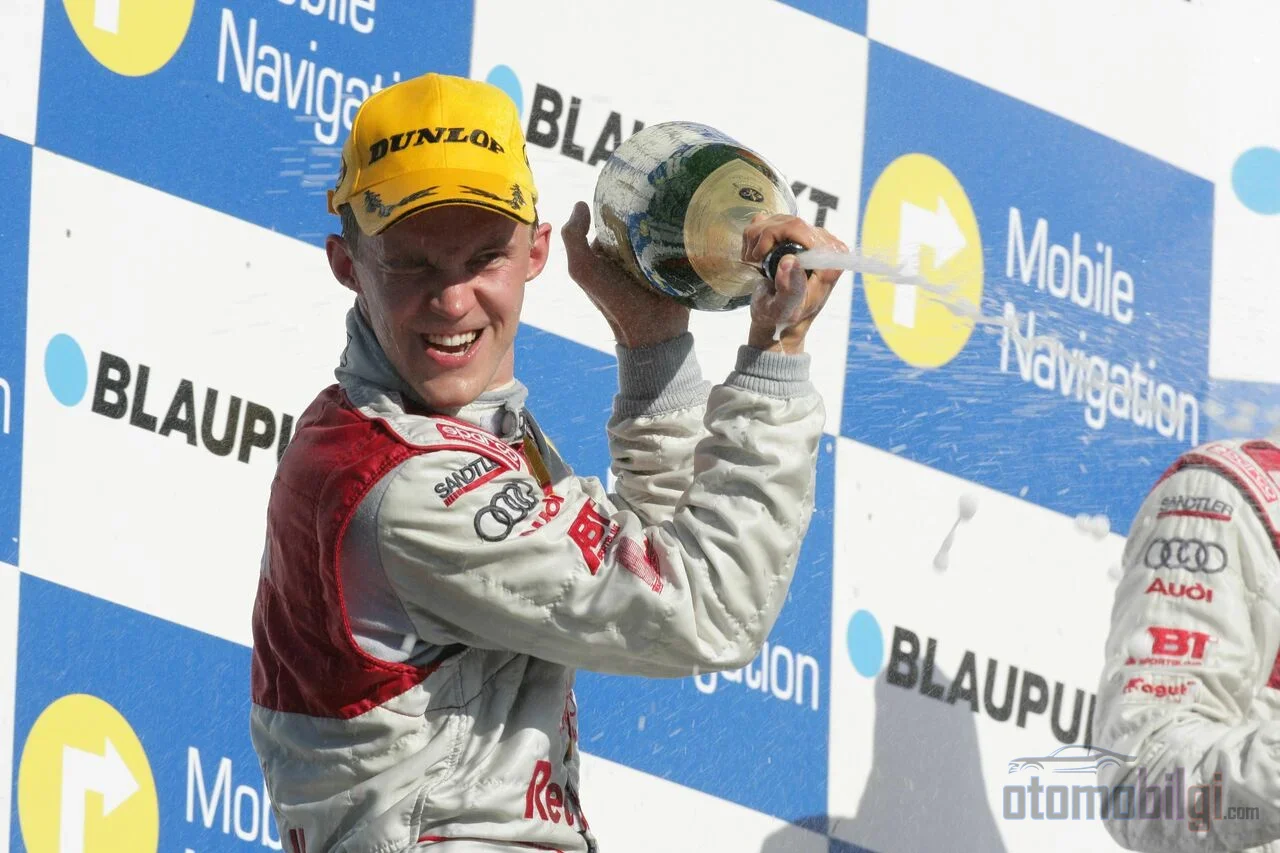
For most racing fans, the answer is clear: the rivalry between Bernd Schneider and Mattias Ekström. One was Mercedes' old lion, the other Audi's young star. Nearly every championship race of the 2000s DTM took shape in the orbit of these two names. Schneider was a disciplined, flawless, and calculating driver; Ekström was more aggressive, bolder. This contrast was the on-track face of the brand war between Mercedes and Audi.
The numbers tell the story: in the DTM Masters era, Schneider amassed 22 wins, 66 podiums, 19 pole positions, and 30 fastest laps in 119 races. Ekström, meanwhile, won his first championship in 2004, in the first season of Audi's return as a factory team. Then came 2007, and the duel's most dramatic scene took the stage.
The 2007 Hockenheim finale: the championship won by strategy
Think of October 14, 2007: a record-breaking 152,000 spectators at Hockenheim, and on the track, a fierce battle for the championship. Mercedes' Bruno Spengler won the lead race, but the real issue was the points table. Ekström's task was simple: finish ahead, take the trophy. Abt Sportsline built its strategy directly around Spengler, and this is where it becomes clear how much duels are a matter of intelligence.
Ekström deliberately delayed his two mandatory pit stops; Spengler pitted early and lost time. Mercedes' Jamie Green won the race, but Ekström finished third and turned the championship into Audi's fifth DTM crown. Choosing whether to make your mandatory pit stop early or late is as critical as choosing tires on an F1 weekend. A single pit window can decide a championship. In the same race, Timo Scheider earned the first podium of his career, and Martin Tomczyk scored points with a ninth-place finish despite a first-lap collision. Team orders, pit strategy, and rival analysis converged in a single race - that's why DTM duels are so fascinating.
Schneider's final dance: how does experience win?
Schneider's 2007 Brands Hatch victory is a classic example showing that duels are won not only with speed but also with patience. He took the first win of the season with a flawless pit strategy and, under pressure from his rival in the closing laps, completed all the demanding laps without making a single mistake. Just imagine: toward the finish, with tired tires and an Audi pressing behind you, every corner is an exam. Schneider always passed these exams with flying colors.
But the duels were not one-sided. In 2002, Mercedes' consecutive championship streak was broken by Laurent Aïello in the Abt-Audi TT-R seat; Schneider finished second that year. So the battle of the German marques did not revolve around just two names - every championship was an answer to the one before it. Schneider ended his career with the retirement he announced on October 21, 2008; Ekström, after his 2004 and 2007 championships, handed Audi's standard-bearer role to Timo Scheider at the end of the 2000s. Scheider won back-to-back titles in 2008 and 2009, then in 2010 Mercedes' Paul di Resta and in 2011 Audi's Tomczyk climbed to the top step of the podium.
How does the battle of marques transform drivers?
To understand DTM's duels, you first need to know the soul of the championship. The first champion of the series, born in 1984, went down in history with an interesting detail: although Volker Strycek won the championship with the BMW 635 CSi, he went into the records as a driver who never won a race. In the 80s, the BMW M3 E30 dominated the tracks; from the second half of the 80s to the early 90s, Ford and Alfa Romeo were also part of the dispute. In the Alfa Romeo 155 V6 TI era, Nicola Larini and Klaus Ludwig stood out.
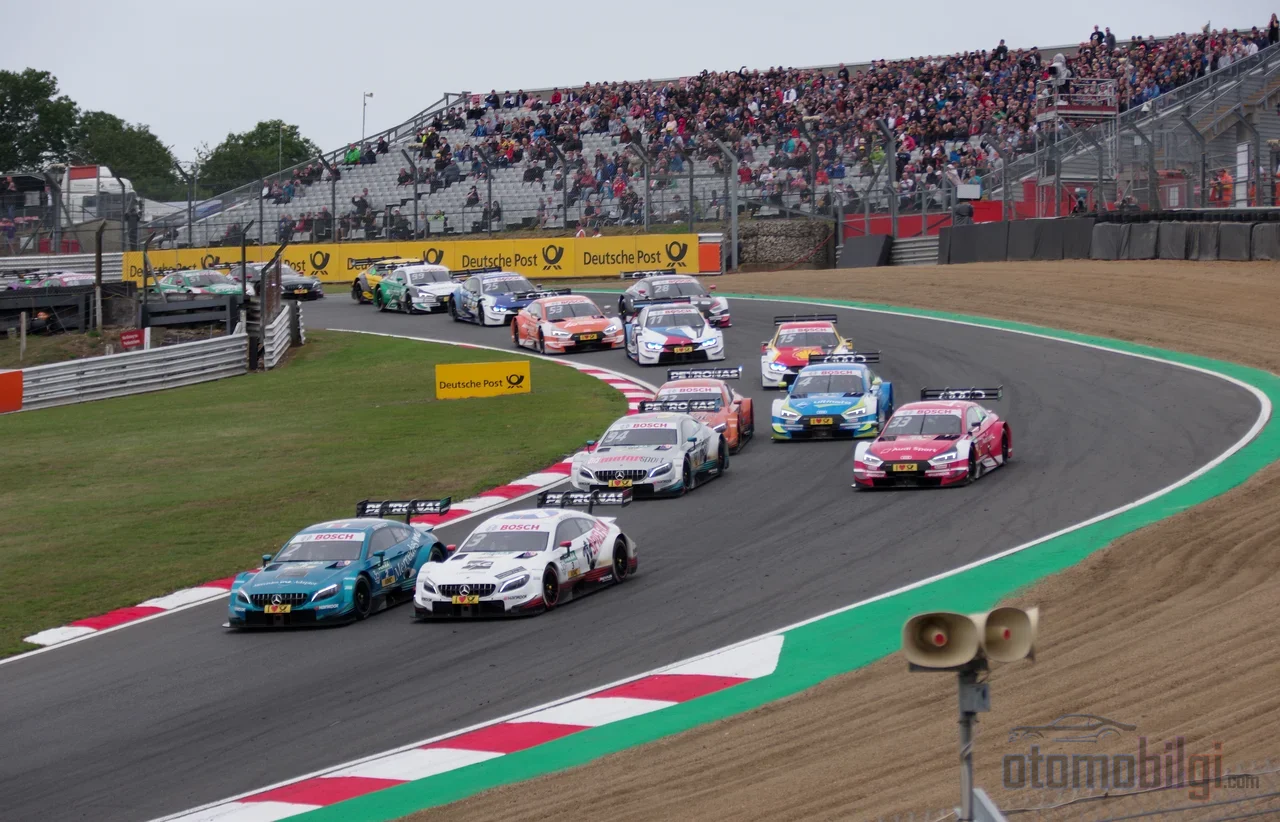
Then came the Class 1 rules. Introduced in 1993, these rules gave teams great technical freedom, even allowing 2.5-liter engines, and that period is remembered as one of the golden ages of touring car racing. The DTM, reborn in 2000, came with a different formula: specially developed cars from Mercedes-Benz, Opel and Abt-Audi, 4.0-liter naturally aspirated V8 engines, and performance balanced by air restrictors. For some, this era was touring car racing in disguise as a prototype series; but the duels were incredibly balanced. When Opel withdrew at the end of the 2000s, the stage turned into a two-way contest, and when BMW returned after 18 years with the M3 DTM in 2012, Bruno Spengler promptly became champion. The presence of three marques produced far more interesting rivalries than one marque's overwhelming dominance.
Ralf Schumacher and Gary Paffett: two weapons of the same marque
Not every duel was between marques; sometimes the fiercest battle took place under the same flag. Gary Paffett was a Mercedes factory driver who raced in the DTM from 2003 to 2018, won two championships, and had a career with 23 wins and more than 185 races - he had even previously served as McLaren-Mercedes' F1 test driver. Ralf Schumacher, after an almost complete F1 career, joined Mercedes-Benz's DTM project in 2008; David Coulthard was also among the names who joined the Mercedes ranks in the same period.
In 2011 at Brands Hatch, Paffett and Schumacher, AMG Mercedes C-Class in the seats was on track under the same team name. Two experienced names competing within the same brand is a fine example of how team culture works. The most colorful scene of this duel, however, happened off the track: when BMW won the 2015 manufacturers' championship, Paffett voiced the view that BMW had won the championship with a worse car. That's the heat of brand-to-brand rivalry - championships are fought over not only on the track but also in words. In 2017, Mercedes finished second to BMW in the manufacturers' standings by only 8 points; it was a series where a few corners, a few pit stops, even thousandths of a second decided fate.
Alex Zanardi: an inspiration story beyond the duels
There is a name on the list of DTM duels that did not technically enter as a championship rivalry but left a deeper mark than all of his rivals: Alex Zanardi. He lost his legs in his 2001 accident and returned to racing in less than two years. Between 2003 and 2005 he raced in the European Touring Car championship, and then for five years in the WTCC. In 2004 he completed a full season, with cars capable of reaching around 240 km/h and in 2005 he won the Laureus Comeback of the Year award.
How? With cars fitted with hand controls. Zanardi's story also touched the DTM world in 2018: together with BMW Motorsport, a M4 DTM car that could be driven entirely with hand controls was tested at Vallelunga. In other words, a driver combined his physical limitation with engineering to knock on the door of one of the highest levels of racing. Zanardi's death was announced in May 2026; BMW M's broadcast emphasized that his achievements in race cars were impressive but his impact as a human being was greater. His name being mentioned on these pages when DTM duels are discussed is not in vain - he was one of the names who reminded us what competition is really about.
From Class 1 to GT3: how technology changed the duels?
The flavor of the duels is the same as the flavor of the rules. The Class 1 era closed at Hockenheim in 2020; its final two seasons were characterized by the two-liter four-cylinder turbo engines developed by Audi. BMW collected 500 points in the manufacturers' standings that season. What came after? DTM switched to the GT3 format, and after 2021 there were regular entries from BMW, Mercedes, Porsche, Audi and Ferrari; Mercedes-AMG returned right away. The 2025 season brought the excitement of a championship in which six drivers' fates came down to the final race, with Mercedes-AMG winning the manufacturers' championship and Manthey EMA taking the teams' championship.
As technology changed, the nature of duels changed too. While the atmospheric V8s of the 2000s and the aerodynamic pressure of their big rear wings hid the difference between drivers in pit strategy and tire management, the Class 1 turbo era brought a different kind of engineering contest. In today's GT3 regulations, on the other hand, the balance of performance mechanism keeps the manufacturers close together - meaning every duel turns into an even more linear battle. So is this a good thing? I think so: the more balanced the rulebook, the more drivers can win the championship.
| Duel / Era | Rivals | What Decided It? |
|---|---|---|
| The 2000s Mercedes-Audi rivalry | Bernd Schneider vs Mattias Ekström | The 2007 championship was decided by pit strategy in front of 152,000 spectators |
| The 2002 turning point | Schneider vs Laurent Aïello | Mercedes' run of consecutive championships ended with the Abt-Audi TT-R |
| The internal rivalry at Mercedes | Gary Paffett vs Ralf Schumacher | In 2011 at Brands Hatch, two drivers of the same team battled on track |
| The 2015 manufacturers' championship | Mercedes vs BMW | BMW won; Paffett's criticism of the car sparked debate |
| The 2017 manufacturers' standings | BMW vs Mercedes | Mercedes finished second by just 8 points |
The legacy the duels left to the DTM
The most beautiful thing about a duel is that it makes both drivers better. Thanks to Ekström, Schneider got a little faster every weekend, and thanks to Schneider, so did Ekström. The manufacturers pushed each other the same way: Audi's 2007 strategic victory triggered Mercedes' pit window calculations, and BMW's 2012 comeback championship prompted engineering responses from Audi and Mercedes. Competition shaped not only the results table, but also the workshops and the wind tunnel.
Today in the DTM, which continues under GT3 regulations, there are new names, new manufacturers and new duels. But the pit laps Schneider calculated at Hockenheim, the mandatory stops Ekström saved for the end, and Zanardi's hands reaching for the steering wheel controlled by his wrists still tell the story of this series' identity. Which one do you think is the most unforgettable duel in DTM history? On my list, the top spot never changes, but if your favorite is different, there is probably a good reason for it.
Sources
- Mattias Ekström clinches DTM title for Audi
- Bernd Schneider (racing driver)
- Schneider does everything right to win at Brands
- Deutsche Tourenwagen Masters
- Gary Paffett | DTM Wiki
- Ralf Schumacher - Mercedes-Benz Public Archive
- David Coulthard, Ralf Schumacher to race for Mercedes in DTM
- Mercedes driver says BMW won DTM manufacturers' title with worst car
- Alex Zanardi
- Alex Zanardi - Laureus
- BMW Motorsport And Alex Zanardi Develop An M4 DTM Race Car
- Mourning for Alex Zanardi
- Gallery: 34 years of amazing DTM-winning cars
- DTM Class 1 era draws to a close at Hockenheim - BMW Group PressClub
- DTM - Audi
- DTM Standings