BMW, Mercedes, and Audi: The Brand Wars on the DTM Stage
Share This Page
DTM, or Deutsche Tourenwagen Meisterschaft, has been Germany's most colorful touring car racing series since 1984, where BMW, Mercedes-Benz and Audi battle it out on the track. The three brands' decades-long rivalry shaped the entire history of the series, from legendary cars to rules being overhauled from top to bottom. In short, when DTM is mentioned, we think not of a single brand but of the ongoing war between three giants.
Highlights
- The first DTM race was won by in 1984 a BMW 635 CSI ; at the wheel was Volker Strycek.
- In the all-time wins ranking, Mercedes-Benz leads with 210 wins .
- BMW E30 M3 and Mercedes-Benz 190E 2.3-16 rivalry defined the DTM of the 80s.
- In 2019 turbocharged Class 1 engines returned; Audi's RS 5 DTM reached 610 hp.
- Since 2021 the series has been racing with GT3 cars.
How It All Started in 1984: BMW and Mercedes' First Showdown
The series surprised no one in its very first race, promising a full-blown brand war. The star of the opening season at Hockenheim was the BMW 635 CSI driven by Volker Strycek. But the real story began after that: two small monsters built for homologation, BMW E30 M3 and the Cosworth-backed Mercedes-Benz 190E 2.3-16, practically claimed the DTM as their own from the mid-80s onward.
These two cars were actually special productions born for Group A rules; that is, they were designed to be sold on the street and raced on the track. Over time, Mercedes added the 2.5-16 Evolution versions to the 190E; BMW answered with more championships. The E30 M3 reached the top in 1987 with Eric van de Poele and again in 1989. Of course, there was also a third player in the picture: the Ford Sierra Cosworth, a serious rival that sometimes made the two German giants of the Group A era sweat quite a bit.
The Golden Age of the 90s: From Audi V8 to Class 1
We move on to the most romantic era in the series' history. In 1990, Audi joined the fight, and it did so not quietly but with a full slap: with the Audi V8 quattro Hans-Joachim Stuck became champion in 1990, and Frank Biela in 1991. Audi thus also earned the title of the first manufacturer to successfully defend its championship; even Walter Röhrl was seen at the wheel of this car. Mercedes' revenge was not long in coming, and it pocketed the 1992 championship with the 190E 2.5-16 Evo 2 .
Class 1 Rules Changed Everything
The Class 1 regulations introduced in 1993 gave engineers enormous freedom; for example, 2.5-liter engines were allowed. This was the beginning of the era when the cars transformed from touring cars into expensive prototypes. That year's champion, surprisingly, was the Alfa Romeo 155 V6 ; the Italians' victory on German tracks is still talked about today. In this period, cars such as the BMW M3 E30, Mercedes 190E Evo II and Alfa Romeo 155 V6 TI became classics; according to many enthusiasts, the E30 M3 is the most legendary DTM race car of all time.
So Why Did the Series Fall Apart in 1996?
The Class 1 cars were brilliant but the numbers didn't add up. During the international ITC era, a large share of revenue went to the FIA, and teams complained of low returns despite increasing investment. At the end of 1996, the first era of the series came to an end due to high costs. In the closing meetings, everyone's priority was different: Opel wanted cost control, Mercedes defended expensive competitive development, BMW wanted an international series, and Audi insisted that quattro be allowed all-wheel drive. Finding common ground was difficult, and the series disappeared for four years.
The New DTM: The 2000 Comeback and Audi Dominance
The series came back to life in 2000 when Mercedes and Opel returned by agreement; the first race was held in May 2000 on the short track of Hockenheimring. There is also a small naming detail: since many races were planned outside Germany, it was not granted "Meisterschaft" (championship) status and the name was Deutsche Tourenwagen Masters updated as. In the early years, the cars were 2-door compact bodies like the Opel Astra Coupé and Mercedes CLK ; Abt Sportsline quickly joined as well with its Audi TT based car. That TT-R reached the championship in 2002 with Laurent Aïello.
In 2004, Audi sat at the table as a factory team, and that same year Mattias Ekström won his first championship. In this period, the bodies returned to D-segment sedans: Audi A4, Opel Vectra GTS and Mercedes C-Class; all dimensions were identical for the sake of equality. Opel withdrew at the end of 2005 with cost cuts; although the ARD television deal required three manufacturers, the series continued with two brands. The result? An Audi empire from 2007 to 2009: Ekström took his second title in 2007, and Timo Scheider became champion back to back in 2008 and 2009. Mercedes held out as long as it could and wrote a championship for Paul di Resta in 2010.
BMW's 2012 Comeback: Three Championships After 20 Years
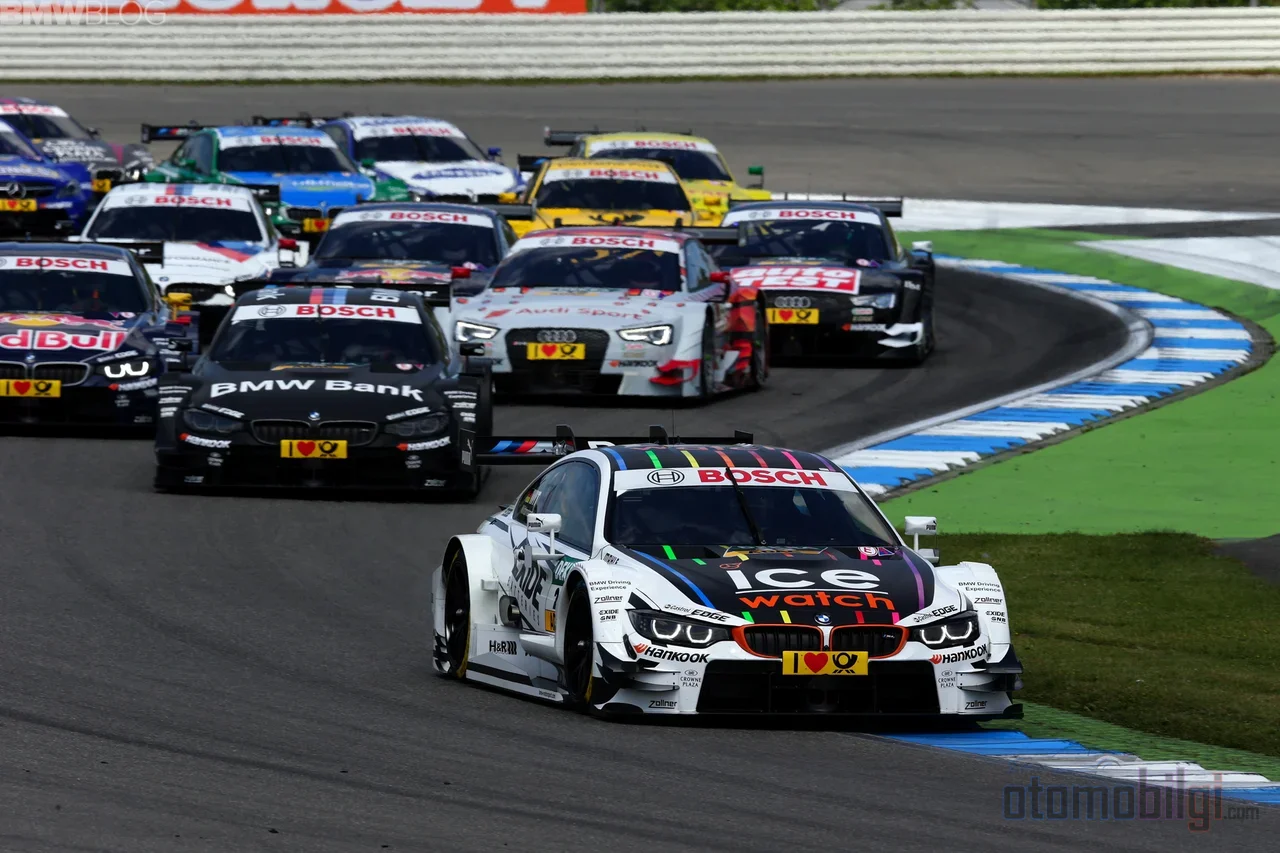
Now let's come to the sweetest moment of this story. BMW returned to the DTM in 2012 after exactly a 20-year absence and what did it do? It didn't just participate; that same year it won the drivers', teams' and manufacturers' championships all at once. While Bruno Spengler became drivers' champion, BMW Team Schnitzer took the teams' standings, and BMW took first place among manufacturers. Planning such a comeback seems more like a movie scene than a plan, doesn't it?
In the following years, the ball stayed on both sides of the field: Audi switched from the A4 to the A5 in 2012, and to the RS5 in 2013. In 2015, Pascal Wehrlein became champion with Mercedes; in 2017, René Rast rose to the top and won the teams' and manufacturers' championships with Audi Team Rosberg. But in July of the same year, some bad news arrived: Mercedes-Benz AMG announced it would end its DTM program at the end of 2018; the German brand turned to Formula E in the same period.
The Class 1 Era: Turbocharged Monsters and the Series' Transformation
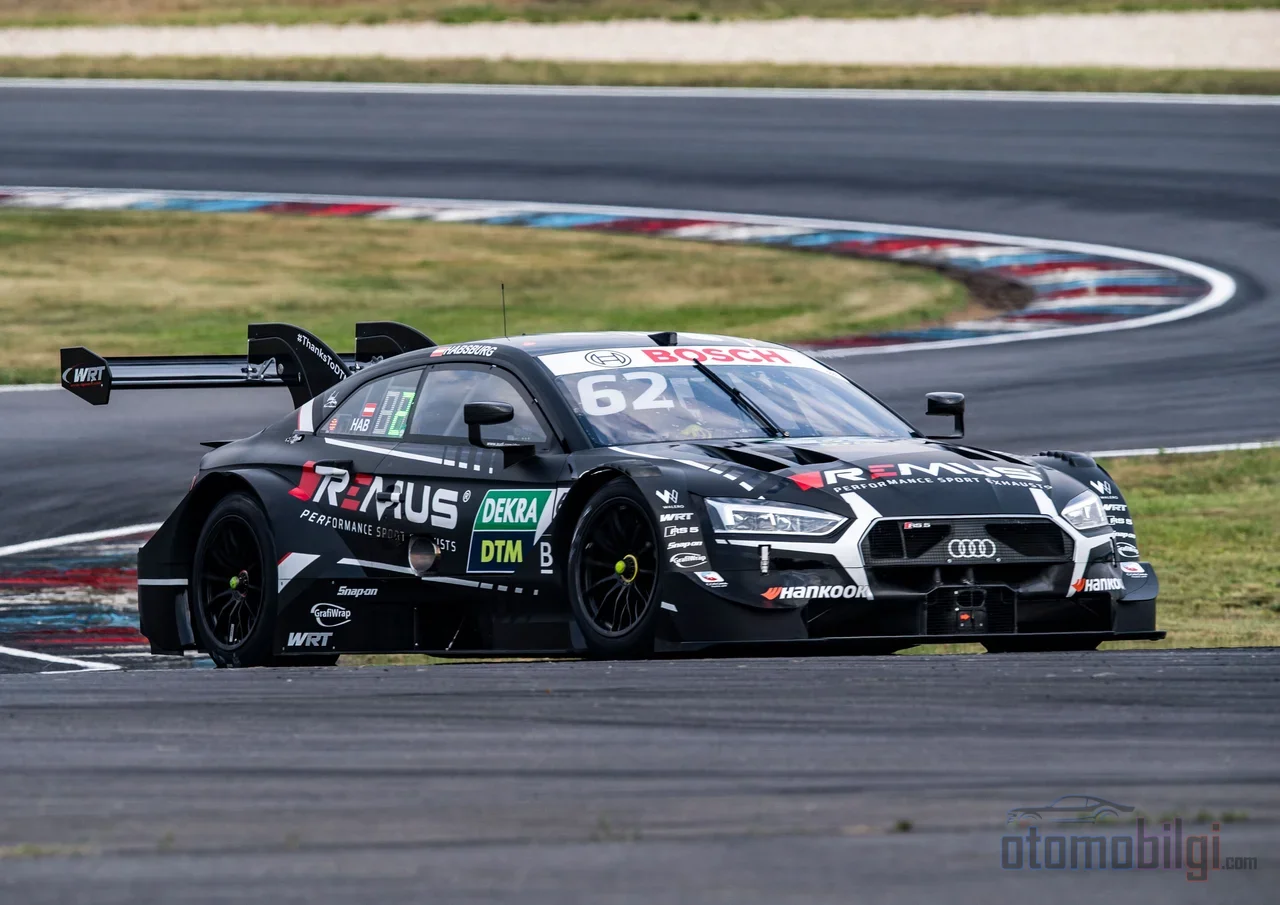
In 2019, for the first time since 1989, turbocharged engines returned to the DTM. The new Class 1 regulations were based on 2.0-liter turbo four-cylinders, and the sounds were incredible. Audi's RS 5 DTM the engine produces more than 610 hp, and it also had a "push-to-pass" function giving the driver extra power on demand; in 2020 the base power was raised to 580 hp while push-to-pass was increased to 60 hp. R-Motorsport, trying to fill Mercedes' gap, arrived with four Aston Martin but left after a single season without achieving competitive results. In the final race of that same season, the Honda, Lexus and Nissan machines of Super GT GT500 took to the track as guests; afterwards the Dream Race, where the two series met, was run at Fuji.
Then came the big blow: when Audi suddenly withdrew at the end of 2020, BMW was left as the only Class 1 machine owner. Some describe these cars as "roofed, less powerful F1"; excessive downforce and costs capping out for private teams are cited as the biggest problems. The result was obvious: the series switched to Group GT3 regulations in 2021 and changed its path somewhat. This transition is still debated; for some, Class 1's costs and Audi's withdrawal ended the old series, while for others GT3 didn't ruin the DTM, it merely transformed it.
DRS and push-to-pass rules will prevent a driver from being dominant from start to finish.
How Did the Race Format Shape This Competition?
It wasn't just engine power driving the brand wars; the format was also something that heated up the fight. For years DTM machines completed 0-100 km/h acceleration in about 2.6 seconds and reached a maximum speed of 280 km/h ; among touring cars they were the fastest after Australia's V8 Supercars. The turbo generation, with~2.8 seconds and 300 km/h , accelerated a bit less and climbed more. DRS on the rear wing has made overtaking easier since 2013; the Balance of Performance system introduced in 2015 was removed due to the protests before the 2017 penalty. That same season, the number of cars was reduced from 24 to 18 for the balance of quality and cost.
The safety side of the technology isn't empty either: in the prototype silhouette era, the cars were front-engined and rear-wheel drive; the roll cage works like a space frame, and crash elements were made from CFRP. HYLO, an aerodynamic safety system developed by Audi Sport in 2020, was added to the rear wing but proved short-lived with the GT3 transition. On the tire front the order is clear too: Dunlop 2000-2010, Hankook 2011-2020, and Pirelli afterwards.
The driver front is a story in itself. F1 and sports car stars like Bernd Schneider, Mika Häkkinen, David Coulthard, Jean Alesi, Ralf Schumacher, Robert Kubica and Tom Kristensen raced in this series. DTM also became a ladder that opened the door to F1 for names like Paffett, di Resta and Wehrlein. The all-time official standings list includes names like Marco Wittmann (112 races, 15 wins), Bruno Spengler (195 races, 16 wins) and René Rast (58 races); the standings themselves are open to debate, of course.
A Scoreboard Nobody Could Settle
After all this story, the question is obvious: which brand has been more successful? The all-time wins ranking is roughly as follows:
| Brand | Victory |
|---|---|
| Mercedes-Benz | 210 |
| Audi | 142 |
| BMW | 104 |
| Alfa Romeo | 41 |
| Ford | 30 |
| Opel | 20 |
Mercedes' position at the top also tells an interesting contradiction: the brand lived an "underdog" story, spending years away from championships in the shadow of BMW and Audi, and only took its first title with the 190E Evo II. But when you look at the win count, the picture says the exact opposite. Isn't that the beauty of DTM? Some measure it by championships, some by wins, and some by that E30 vs 190E feud.
What's the Situation Today: The GT3 Era and the Brands' New Roles
Today the series races with GT3 cars, meaning it relies mostly on customer teams rather than full factory support; BMW, Mercedes, Porsche, Audi and Ferrari are consistent participants. Audi manages the private teams' entries through its customer racing division. Since 2021 the cars have been balanced with Balance of Performance; Pirelli took over tire supply. There was also a major change on the corporate side: in December 2022 the ITR was dissolved, the rights passed to ADAC, and from 2023 onward the series is essentially called DTM "in name only".
The 2025 calendar consists of 8 races: six in Germany, one each in Austria and the Netherlands. The format has also become concrete: both races are 55 minutes plus one lap; on Saturday there is one mandatory pit stop within a specific window, and on Sunday there are two. Although the old Class 1 prototypes have been replaced by freely sold GT3 cars, three names on the scene are familiar; the paths of BMW, Mercedes and Audi still cross on the same asphalt. So if it were you, which side would you cheer for? I think you'd have to make a choice too.
Sources
- Deutsche Tourenwagen Masters - Wikipedia
- List of Deutsche Tourenwagen Masters records - Wikipedia
- Gallery: 34 years of amazing DTM-winning cars - Top Gear
- DTM - Audi.com
- Footage: The new Audi turbo engine for the DTM - Audi.com
- BMW caps dream comeback with three titles - BMW Group Press
- The 10 greatest DTM drivers of all time - ranked - DTM.com
- The real DTM - A look into Class One (Part 1) - DrRacing's Blog
- Audi reveals new 2.0 litre t/c DTM engine - RaceTech Magazine
- Rene Rast Crowned 2017 DTM Champion - GTspirit
- Mastering DTM Racing: History, Formats - IMAGO Blog
- Top 5 Classic DTM Cars - Snaplap
- Why DTM Cars Became Racing Legends - Double Apex
- Which is better, BMW E30 M3 or Mercedes 190E? - Top Gear