Women at the DTM Wheel: Why Are There So Few?
Share This Page
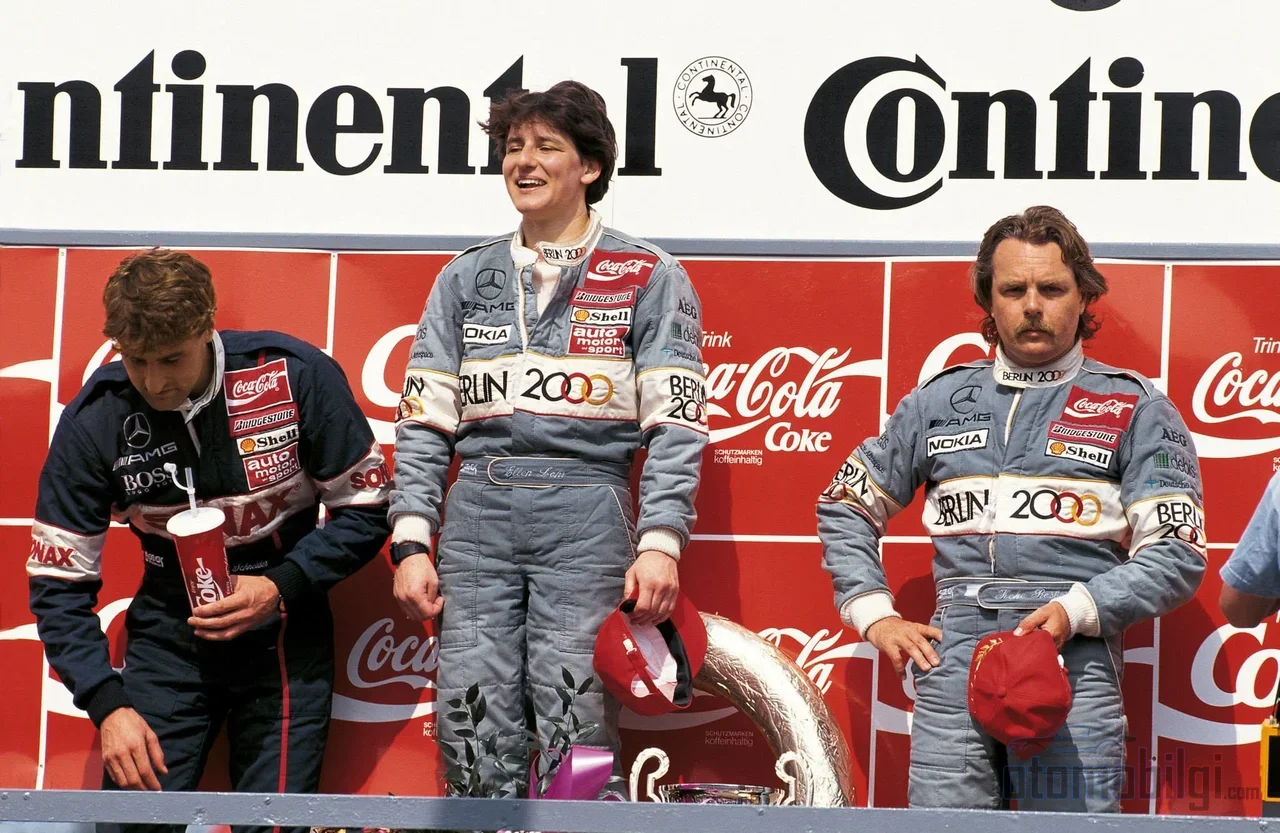
The only woman to win a race in DTM is Ellen Lohr; The German racer, at Hockenheimring in 1992, claimed victory with AMG-Mercedes and has not given up that title to anyone to this day. So why is one of the world's toughest touring car series still remembered with a single female winner? That is exactly the question this page tries to answer.
Highlights
- With her 1992 Hockenheimring victory, Ellen Lohr became the first and only female race winner in DTM history.
- The original DTM lived from 1984 to 1996; the series returned in 2000 under the name Deutsche Tourenwagen Masters.
- In her DTM career, Lohr accumulated 110 starts, 1 win, 5 podiums and 1 pole position.
- The Class 1 era came to an end in Europe in 2020; its place was taken by GT3-based cars.
- The current DTM entry list does not include a female driver.
When we think of DTM, the same things always come to mind: the heated rivalry between BMW and Mercedes, the 500-horsepower roar of the Class 1 monsters, and the whirlwind battles of legendary drivers. But on this page, I want to come in through a slightly different door. Because amid all these legends there is a fact, one that is both striking and somewhat frustrating: In nearly forty years of German touring car racing, there have been almost no female drivers on the grid. There is one, but even she is an exception. Let's unravel this story together.
First, A Quick Tour of DTM: Where Did the Series Come From?
DTM, or Deutsche Tourenwagen Meisterschaft, got its start in 1984. In its early years, the series ran not with today's super-technological prototypes, but with production cars built to Group A regulations. In other words, slightly hardened versions of the cars sold on the street were on the track. The list of championship-winning cars is a nostalgia box in itself: In 1984 the BMW 635 CSI, in 1985 the Volvo 240 Turbo, in 1986 the Rover Vitesse, in 1987 the BMW M3, in 1988 the Ford Sierra. Different brands reaching the top one after another shows just how open a battlefield the series has been from the start.
The first era became legendary with the FIA's involvement in the 1990s, and the Class 1 era began. Alfa Romeo, Mercedes, BMW and Opel played their cards on the same stage. But like every good thing, this era too came to an end: the series closed at the end of 1996 and was reborn in 2000 under the name Deutsche Tourenwagen Masters. Class 1 technology, meanwhile, lasted in Europe until 2020; in 2021 it gave way to Group GT3-based cars.
Women Are Almost Absent From the Grid: What Do the Numbers Say?
Now let's get to the crux of the matter. Throughout DTM history, female drivers have taken up very, very little space on the grid. The single exceptional name is Ellen Lohr, the only woman to win a race in DTM. Apart from her, female presence in the series has been seen more behind the scenes: for example, Charline Mohncke, responsible for pit stops, and race engineer Laura Müller, are two of the few women who have served in the DTM. So women are part of this series, but not in the driver's seat; they are at the trackside, in front of telemetry screens.
The situation is not much different today either. When you look at the current DTM driver list, you see names like Kelvin van der Linde, Nicki Thiim, and Marco Wittmann, but there is no female driver on the list. Imagine: in one of the world's most competitive touring car series, only a single female victory has come about in forty years. This statistic is both a record and a warning in itself.
Ellen Lohr: The Story of the Only Win
Ellen Lohr was born in Germany on April 12, 1965, and her career is a classic racing enthusiast's journey. After winning a championship in Formula Ford, she began her DTM career in 1987 with the Alpina BMW team. She later raced for the AMG-Mercedes and Zakspeed teams. Her statistics are as follows: 110 starts, 1 win, 5 podiums, 1 pole position, and 1 fastest lap. She achieved her best season result in 1993 with 10th place.
But of course, the pinnacle of this career is that famous victory. Lohr became the first woman to win a race in the DTM, at Hockenheimring in 1992 with AMG-Mercedes, and to our knowledge today, she is still the only woman to have done so. Let's think of it with an analogy: In a league that has run for decades like the DTM, only a single goal having been scored shows both how special the person who scored it is and why everyone watching the league feels something is missing.
Let's also clarify one detail: Sometimes different numbers appear in the statistics regarding Lohr's DTM career. The reason is that the counts cover different periods; the figures including the races from the series' international ITC period between 1991 and 1996 differ from those obtained when only the classic DTM count is kept. What is certain is this: Lohr's DTM/ITC journey at the end of 1996 ended with the series' closure, and she then raced for two years in the European Truck Racing Championship. In her overall career, she started a total of 399 races; 142 of them were in the truck championship. Yes, it may seem like a switch from Formula to trucks, but for Lohr it was all the same thing: racing. She also emphasizes that today is the most positive era ever for female racers; in other words, there is an optimistic signal against somewhat pessimistic readings.
One-Off Appearances: The Wildcard Debate
The presence of female drivers in the DTM was mostly limited to one-off guest appearances rather than a long-lasting career like Lohr's. In the series' history, examples of a female driver securing a permanent, multi-season seat are almost negligible. This is not merely a lack of talent; if you consider that the sponsorship networks, junior categories, and team trust needed to reach the driver's seat form a long chain, then when one link of the chain breaks, the entire path is closed.
To be honest here, it is also not possible to verify some of the names circulating on the internet. For example, there is no reliable record of a specific female wildcard entry; so I won't give room for speculation. The fact we know is this: the presence of female drivers in the DTM remained exceptional, one-off, and mostly short-lived.
So Why Are There So Few Female Drivers?
This is the real issue, and there is no single cause; several factors have stacked up on top of each other. Let's list them:
- Technical and format mismatches: For example, F1 cars have power steering, but F2 cars don't. When women jump from one category to another, the car's character changes abruptly; this is a factor that makes stepping up to the top tier harder for everyone.
- Open and implicit sexism: Academic studies show that female racers face both demeaning beliefs and behaviors and institutional barriers in automotive racing. In other words, the doors aren't just narrow-sometimes they are completely closed.
- The shadow of historical roles: Early female drivers were seen as less important than the cars on the track; when they took part, they were often presented as a striking decorative element. And when racing became more competitive and powerful cars entered the scene, societal biases about speed and power went as far as outright bans on women.
- Respect wasn't given automatically: Female drivers, unlike their male counterparts, had to earn respect themselves; and that effort had to be spent all over again every time.
Let's think about this with an analogy from everyday life: Suppose you are a very good computer gamer, but everyone who wants to enter a tournament first has to find a clan, then find a sponsor, and then get invited onto the stage. If you don't have an acquaintance who opens the door for you at the first step, and you're expected to prove yourself to someone at every turn, even the most talented player may never make it onto the stage. The path for women to reach the DTM, or even the upper tiers of motorsport in general, is exactly such a chain-and throughout history, the links of this chain have been fastened more loosely against women.
How Hard Was It for a Woman in the Class 1 Era?
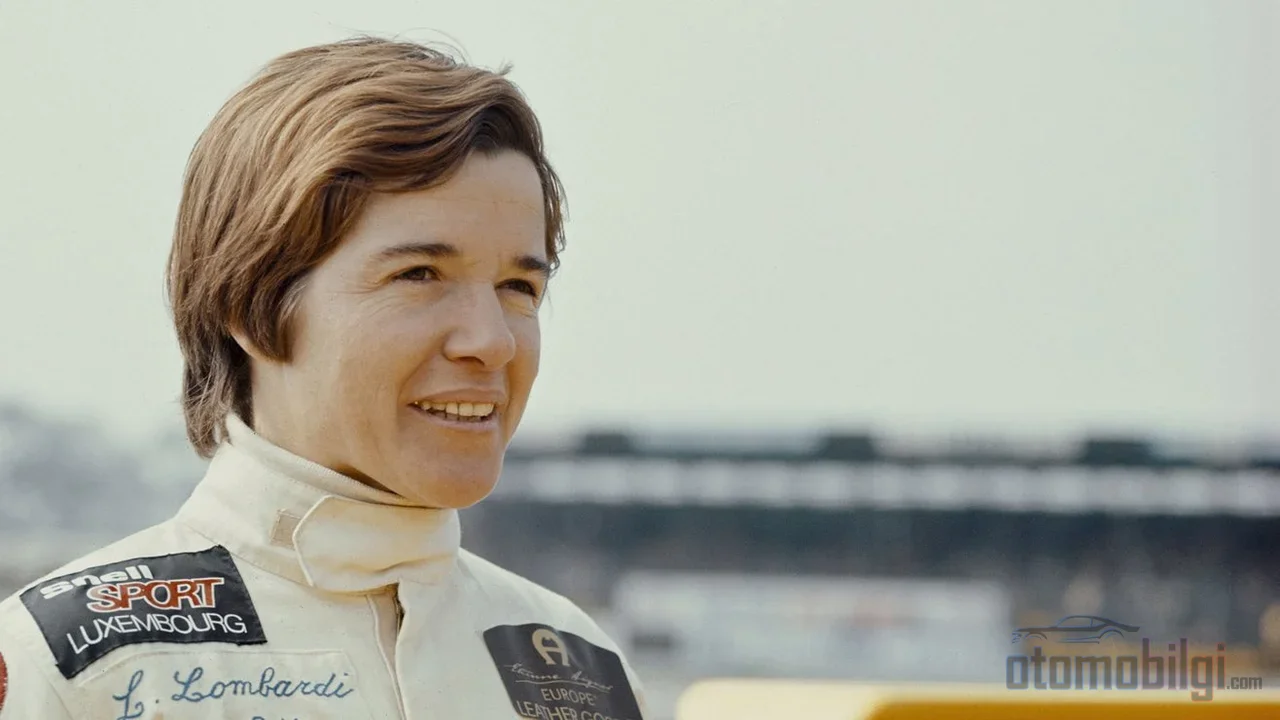
Let's briefly recall the Class 1 cars, because it's important for understanding the environment in which Lohr won that victory. These cars were front-engined and rear-wheel drive; they had a look reminiscent of the manufacturers' road cars. But the appearance was deceptive: the 2020 BMW Class 1 car combined Formula 1-inspired technology with a closed-roof silhouette. The Mercedes-AMG DTM car produced around 500 HP and lacked driver assistance systems. So use your imagination: In front of you, a 500-horsepower monster demanding a reaction every second, with no ABS, no traction control; and behind you, a team structure that questions you for every mistake. Lohr won races in this world. That alone is an incredible feat.
Now let's add how intense a race day was: A DTM race day ran on a tight schedule consisting of two practice sessions, two qualifying sessions, and two races. Physical endurance, mechanical understanding and quick adaptation are essential. For female drivers to race in this environment, they needed to be not only fast but also institutionally supported, and history shows that such support was rarely given.
A Brief Look into the Future
DTM's technology side has always been on the move: In the series' final years, development work was carried out on an electric series called DTM Electric, which envisioned a standardized chassis and drivetrain platform. New platforms, new formats and perhaps new perspectives. Ellen Lohr saying she is hopeful for today's female racing drivers is not for nothing; the closed doors of the past are slightly more open today. But the absence of a female driver on the DTM grid is still an unresolved reality.
My concluding sentence is simple: DTM's brand wars, Class 1 monsters and legendary drivers are great, but this story also has a real hero: Ellen Lohr. And her being the only one stands like a to-do list rather than a record: to open the doors wider for the next generation. Do you think the next DTM winner could be a woman? I insistently say yes.
Sources
- Ellen Lohr
- Deutsche Tourenwagen Masters
- Ellen Lohr – Career Stats, DriverDB Rating & Results
- Ellen Lohr – Recaro World of Recaro
- Ellen Lohr: Times never so positive as they are now for women racers
- Ellen Lohr – Motorsport career
- Ellen Lohr Drove An AMG Mercedes To Become The First Woman To Win A DTM Race
- Driver | DTM
- These women play crucial roles in the DTM
- The Original DTM Championship (1984-1996)
- 34 years of amazing DTM-winning cars
- The real DTM – A look into Class One (Part 1)
- The mind-blowing tech of a DTM car
- Development of a Vehicle Concept and Electric Drive (DTM Electric)
- How Does a Race Day Work in DTM?
- Why are there no female drivers at the top of motorsport?
- A study of professional women racecar drivers' agency
- Race to Equality - History of Women in Racing
- Women-Only Racing: Breaking Barriers in Sports
- Women pushing against sexism in motorsports