How Does a Race Day Work in DTM? Format, Qualifying and Points
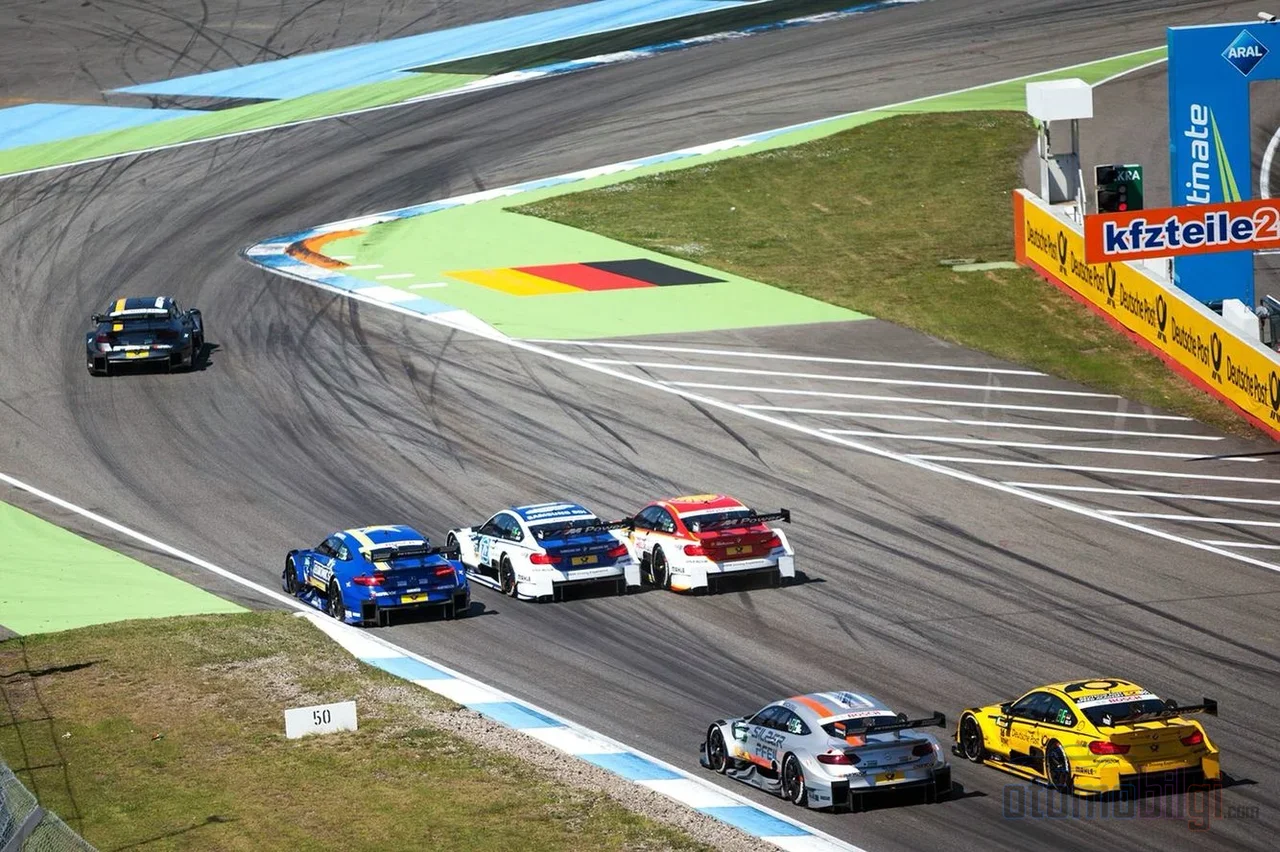
Share This Page
A DTM race day runs on a tight schedule of two practice sessions, two qualifying sessions and two races: drivers take to the track with a single car, qualifying determines the grid for both races, races last 55 minutes plus one lap, and a pit stop rule for performance purposes comes into play in each race. The top 15 drivers score points; the winner walks away with 25 points.
Highlights
- A driver can accumulate a maximum of 56 points over a race weekend
- Race distance: 55 minutes plus one lap
- The top 15 drivers score points; the winner takes 25, second place 20
- In Sunday races, two mandatory pit stops since 2025 are in effect
- Qualifying sessions typically run between 9:00-10:00 in the morning
How Does a DTM Race Weekend Unfold? Step-by-Step Schedule
The sweetest thing that sets DTM apart from F1 is this: with a single ticket you get both Saturday and Sunday, and you watch two separate races. The weekend progresses like two interconnected mini tournaments. There is a separate qualifying session for each day, and a separate race for each day. So a driver who has a bad Saturday still has every hope open for Sunday.
The standard flow works like this: before each race day there is a qualifying practice session, and then the grid for that day's race is determined. Qualifying usually runs between 9:00 and 10:00 in the morning; so you need to grab your morning coffee and glue yourself to the screen, because the real action starts on track in the afternoon. As for the race itself, since DTM's return it has run in a 55 minutes plus one lap format. This duration was brought back due to television broadcast issues; in other words, a length that fits the channel and is predictable. Both for viewers and for the teams.
And for those who are curious: if you go to the grandstands, your ticket covers both races, you can do a pit walk, teams hand out caps and flags, and you get a chance to get autographs from the drivers. DTM's grandstand culture is truly generous.
How Do Qualifying Sessions Work and Why Are They Criticized?
Qualifying is the heart of DTM. Because the grid for both races comes out of it; the faster you set a time, the further forward you start. Today's format has been in place since 2023: a single session, roughly 20 minutes of time hunting. It seems simple, doesn't it?
But there is an interesting debate here. The fact that no car turns a lap during ten of those 20 minutes has become the target of criticism. Imagine: you have taken your place at the track in the morning, you are in front of the TV, and there is empty asphalt on screen for half an hour. Some team bosses are clear: nobody wants to sit in the pit lane for ten minutes.
So what is the solution? For 2027, a two-part format proposal is on the table. First, a 10-minute timed session will run, and the top 10 drivers will advance to a short "shootout," meaning a final with a single lap. Those outside the top 10 also have an advantage: since they have done fewer laps, they may have fresh tires. This proposal is not yet a finalized rule; ADAC is expected to prepare the proposal. There is also the preference of the broadcaster side: they want qualifying to end half an hour before the race, meaning the excitement to connect directly to the race.
"We shouldn't sit in the pit for ten minutes."
How Do Pit Stop Rules Change Race Strategy?
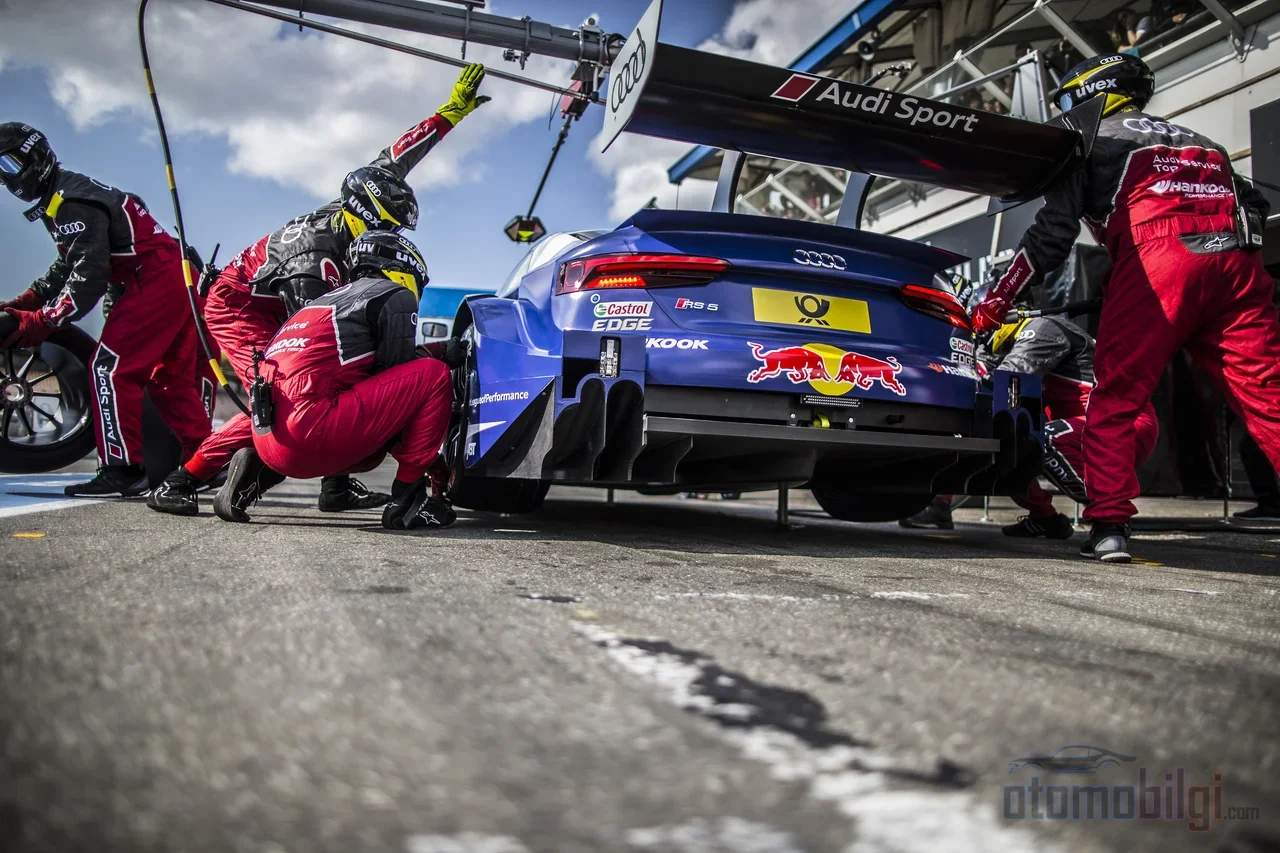
This is the part of DTM I love the most: races are won not only by the fastest, but also by the smartest. DTM emphasizes the sprint race format; there is a single pilot per car, which means no driver changes. That's why pit stops are referred to as "performance pit stops." In F1, you must use at least two different tire compounds in dry-weather races, so at least one stop is mandatory; in DTM, however, stops are shaped entirely by the rules and the performance balance of the cars. In short, a pit stop is more than an obligation - it's a chess move.
The old rule and the 2025 change
The old rules required one mandatory pit stop and tire change in every race. From 2025 onward, two mandatory stops were introduced in Sunday races, bringing a completely different excitement to these Sundays. Two stops mean two different windows and two different risks. When will you pit? How will you calculate traffic? What if a safety car comes out and disrupts your plan? These questions turn Sunday races into a thriller.
The tire side is also critical. In 2026, drivers are given three sets of tires for race days, but this rule applies to half-distance races. And one of the debates on the table is Saturday: it is being discussed as a problem that some drivers deliberately slow down or retire their cars to preserve their tires. To prevent this, awarding 1 point for every completed lap was proposed; but it has one drawback as well - it doubles the loss for a driver involved in a crash. The more likely scenario, however, is providing a fourth set of tires across all race weekends. There is even discussion about moving the second mandatory stop on Sunday to Saturday; in return, a wider pit stop window is being requested.
DTM Points System: Why Are 25 Points Alone Not Enough?
Points are the engine of the championship battle. The basic rule is extremely clear: whoever collects the most points over the season becomes champion. But DTM's points scale is wider than F1's. While F1 awards points to the top 10 drivers, DTM awards all of the top 15 drivers. The winner 25 points, second place 20 points, third gets less, and the table goes down to 15th place.
What does this mean in practice? Scoring points alone is easier, but to play for the top you need to push to the front in every race. When you add a two-race weekend into the mix, the calculation grows: a single weekend can accumulate up to 56 points for a driver. This rarely happens, of course, but the theoretical ceiling being so high makes the championship race breathtaking. A bad Saturday can be compensated with a good Sunday; the wide scale makes exactly this possible.
| Item | DTM | Comparison with F1 |
|---|---|---|
| Scoring positions | Top 15 | Top 10 |
| Winner's points | 25 | 25 |
| Runner-up's points | 20 | 18 |
| Number of races (per weekend) | 2 | Usually 1 |
| Weekend points ceiling | 56 | Much lower |
| Race length | 55 min + 1 lap | Distance-based |
| Number of pilots (per car) | 1 | 1 |
The History of the Format: What Has Changed Since the 80s?
Today's format did not appear overnight. DTM experienced its first era between 1984-1996 , and those late 80s and early 90s are still referred to as the "golden era": hard contact, aggressive overtakes, and brand rivalry. The 90s, on the other hand, were the wildest period of the championship for most fans. The Class 1 rules introduced in those years provided great technical freedom from 1993 onwards: 2.5-liter engines with up to six cylinders and AWD were possible. The result was sophisticated monsters like the Alfa Romeo 155 V6 TI, Mercedes C-Class and Opel Calibra . That was the very philosophy of Class 1 anyway: to achieve a certain level of quality by restricting the design, character, and dimensions of the cars.
Then came a big turning point. From the 2019 season onwards, DTM switched to common Class 1 rules with Super GT: 2.0-liter, turbocharged, four-cylinder engines. The road to common technical rules had actually opened earlier; with its 2014 concept, the DTM and the Super GT GT500 side were already looking in this direction. Before the DTM, there was also a championship called DRM, which featured "crazy race cars" in the 70s and 80s; in other words, the wild roots of German touring car racing go even deeper.
In terms of the race format, the most decisive development was the 55 minutes plus one lap distance introduced upon the championship's return. As for why: television broadcast issues. A fixed and predictable duration suits both the broadcaster and the viewer. Today, the championship is run with GT3-based cars, and this structure carries its own sprint format, pit stop rules, and points scale, which is what differentiates DTM from GT World Challenge.
Upcoming Changes: Proposals on the Table for 2027
DTM is not standing still; the format is constantly being polished. The proposals brought to the table at a four-hour team principals' meeting at Sachsenring give us hints about what the race day of the future will look like. In addition to the two-part shootout qualifying, the tire and points proposals I mentioned in the last section are also part of this package: a fourth tire set, a second stop that could be carried over to Saturday, and the idea of 1 point per lap.
There is also an ongoing debate on the technical side: torque sensors, which are standard in WEC and IMSA, could provide better data for the balance of performance and prevent cheating. But the main counterargument is the high cost; the many sensors that became mandatory this season have already increased teams' expenses. Therefore, some figures suggest awarding points from practice sessions instead of torque sensors. A separate note for Mercedes: the difficulty of warming up the previous generation non-heated Pirelli tires had led to opposition against the short qualifying proposals; thanks to the faster warm-up of the DTM spec tire introduced this year, the change now seems possible. Positive signals in this direction have also come from the championship's sporting directorate.
So what will the outcome be? Nothing is certain for now; ADAC is expected to prepare the recommendation. But one thing is certain: DTM is not closing the rulebook in order to keep race day as exciting as possible, both on track and on screen. Pay attention to these details while watching the next race weekend, and your viewing experience will surely change completely. Do you think the two-stop format makes the races more interesting? I definitely think yes.
Sources
- DTM Rating: This is how points are awarded
- The ins and outs of the DTM
- Deutsche Tourenwagen Masters – Wikipedia
- Mandatory Two-Stop Strategy Introduced for Sunday Races
- DTM considers major format shake-up with two-part shootout qualifying for 2027
- 2026 DTM Calendar
- Super GT, DTM Formally Announce Class 1 Technical Regulations
- DTM / GT500 2014: The ultimate touring cars
- Explainer: How the DTM Works
- DTM: How the German Brands Created and Dominated