How Much Does a DTM Season Cost, and Who Pays the Money?
Share This Page
The cost of a DTM season varies significantly depending on the type of team: the entry fee is around 100,000 euros per car, while the total budget of a factory-backed operation can reach millions of euros; during the Class 1 era, Audi's single-season budget was estimated to be around 80 million euros. The parties paying most of this money are the manufacturers and sponsors; team salaries are managed as the largest line item in most cases.
Highlights
- ADAC charges an entry fee of around 100,000 euros per car in the DTM.
- Audi's estimated budget for the first year of its Class 1 era was around 80 million euros.
- The cost of Class 1 cars was estimated at around $800,000 to $1 million per car.
- Team salaries are the largest single cost item of a DTM season.
- After the manufacturers withdrew, the series switched to GT3 regulations in 2021.
teams having to transport their equipment, spare parts and cars to eight different races is a giant cargo operation spinning across the map of Europe. Budget Line Items of a DTM Season
Take a lap around the garage behind the pit lane: behind every team there are engineers who have been working for months, mechanics covered in degreaser, and strategists who get through the weekend as smooth as a freshly ironed pair of trousers. All of these come at a cost, and every cost has a budget line item. In the DTM, these items can roughly be grouped into three baskets: car and development, manpower, and logistics.
The first basket starts with the money paid to the series itself. ADAC charges an entry fee of around 100,000 euros for each car entering the series; for a two-car team, that means 200,000 euros out of pocket before the season even begins. This is followed by car supply: tires, brakes, gearboxes and wheels come from third-party suppliers throughout the season. During the Class 1 era, this chain looked like this: gearboxes from Hewland, brakes from AP Racing, wheels from ATS, and tires from Hankook from 2011 to 2020.
The second and heaviest basket is people. Team salaries are clearly cited as the largest single cost item. No surprise there: in a DTM team, it is not just the drivers but also the engineers, mechanics, data analysts and strategy team who expect a salary every month. The third basket is logistics: the equipment, spare parts, and vehicles of the teams are transported to eight different races - a giant cargo operation revolving across the map of Europe. The exact figures for this item are not publicly available, but to grasp its scale, consider this: even a single piece of wind tunnel equipment forgotten over a race weekend can change a shipment.
Do drivers make money from this?
The short answer: for the most part, yes. So much so that, when comparisons were made in the racing circles of that era, unlike the DTM, drivers in other series were often the ones paying manufacturers or teams for a seat; in the DTM, on the other hand, nearly all drivers were paid a salary. Only some drivers in private teams could fall outside this rule. So DTM, at least in its heyday, positioned itself as a series where the driver earned the money rather than bringing it.
Factory Team or Customer Team? Who Really Pays the Money?
At the heart of DTM's economy lies this question. A factory team is, as the name suggests, the manufacturer's own operation: its budget, engineers and driver roster are largely fed from the brand's own coffers. Customer teams, on the other hand, are squads that receive cars and technical support from the manufacturer and race with their own budgets. The difference is felt as full-scale factory backing on one side and a more modest operation on the other.
Manufacturer support is not one-size-fits-all either. Some manufacturers enter the operation directly with engineers, drivers and budget, while others support from further behind the scenes. There were periods when Mercedes went beyond supplying spare parts and factory drivers to its customer teams and even provided extra funding. Sponsorship is the other half of the picture: for most teams, the biggest source of income is sponsorship deals; prize money, manufacturer support and, rarely, paying drivers are complementary items alongside that. ARBURG's long-standing partnership with ABT Sportsline is a good example that the sponsor-team relationship can go beyond a single season; the company is continuing its DTM and team sponsorship in 2026 as well.
The picture was not always sunny for privateer teams. Towards the end of the Class 1 era, the series had become, quite literally, too expensive for privateer teams; next to Audi's estimated 80-million-euro factory budget, a single-car privateer team's season cost roughly a quarter of that figure. So while the door appeared open, many teams came to the threshold, saw the budget, and turned back.
The Class 1 Era: The Years When Costs Exploded
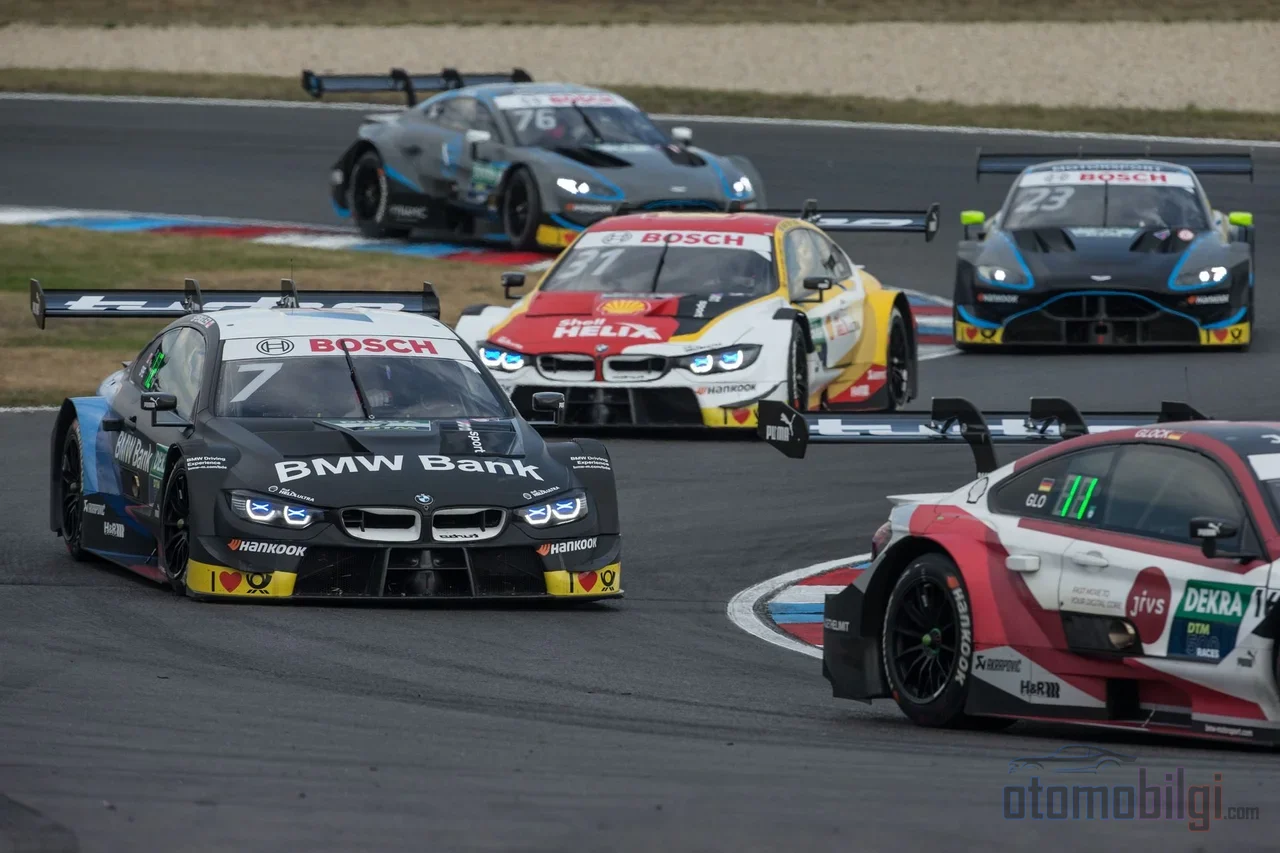
DTM's brightest and most expensive age was the period when the Class 1 Touring Cars rules reigned. In 2019, the series returned to turbocharged engines for the first time since 1989: 2.0-liter turbo units offered 610 horsepower plus 30 horsepower of push-to-pass in the first year, while in 2020 base power was lowered to 580 horsepower and push-to-pass was raised to 60 horsepower. The cars were prototype silhouettes dressed as road cars; carbon parts floating in the air, bodies that looked like street cars on the road.
This level came at a price. Aerodynamics packages were developed in the wind tunnel before the season, then kept equalized throughout the season. Sounds disciplined, doesn't it? But the development war itself was already swallowing millions. The cost of Class 1 cars was estimated at roughly $800,000 to $1 million per car; for the total cost of a single season, wide estimates ranging from $4 to $10 million were discussed. Let me add this right away: these last figures are not official budgets, but estimates circulating in racing circles. But all three pointing in the same direction is meaningful - upward.
| Item | Approximate Value | Note |
|---|---|---|
| Entry fee (ADAC) | ~€100,000 / car | 200,000 euros for two cars |
| Audi Class 1 season budget | ~80 million euros | First year estimate |
| Private team season budget | ~20 million euros | Roughly one quarter of Audi's factory budget |
| Class 1 car cost | ~800 thousand - 1 million dollars | Estimate per car |
| Biggest item | Team salaries | Single largest cost |
What war was this, exactly? The brands' budget battle
The cost story actually goes back much further, to the 90s. In the international version of the original Deutsche Tourenwagen Meisterschaft that continued on (ITC), a large share of the revenue flowed to the FIA; the teams said - and felt - that they were not getting a return on their growing investment in high technology. The result was the closure of the series at the end of 1996. Moreover, even the new rules debate after 1997 was a money war: While Opel prioritized cost control, Mercedes-Benz advocated expensive but competitive development, BMW wanted an international series, and Audi stubbornly clung to quattro's all-wheel-drive system. Four brands, four different wallet logics.
Opel's story sums up the fragility of factory budgets in a single sentence: the brand withdrew from the series at the end of 2005, precisely for cost reasons, as part of GM's sweeping cost-cutting operation in Europe. Having a factory team also means bearing the risk that one day that factory may walk away from the table.
The Chain of Manufacturer Withdrawals and the Series' Economic Turning Points
The end of the Class 1 era was like a row of dominoes. The first stone came from Mercedes: the brand left the series at the end of 2018 to focus on Formula E. At the time, it was said that Audi and BMW might follow the same path - and what was said came true. Audi announced its withdrawal at the end of 2020; the reasons cited were the economic and financial effects of COVID-19 and its Formula E-focused strategy. Only one Class 1 manufacturer was left behind: BMW.
A manufacturer war with a single brand is unsustainable - and the budget math said so too. In 2021, the series switched to modified GT3 cars instead of Class 1. The economic logic of this switch was clear: GT3 rules ended full factory entries and put budgets under protection. The place of teams that entered the series because of excessive costs and immediately left was taken by steady participation from the BMW, Mercedes, Porsche, Audi and Ferrari camps. So in a sense, DTM lowered its insurance: a less glamorous, but longer-lasting model.
Meanwhile, the old lesson of the ITC still hung in the air: despite cost-control efforts, Class 1 was ultimately shut down because of rising costs as well. History repeated itself, but this time the series redesigned itself so the repetition would not be fatal. In December 2022, the ITR was dissolved and the rights passed to ADAC; from 2023 onward, DTM continues under this umbrella as a name. Reducing the grid from 24 cars to 18 in 2017 was also a product of the same economic logic: improving quality, making things easier for existing manufacturers, and making the series genuinely attractive for newcomers.
Where Do Budgets Stand Today in the GT3 Era?
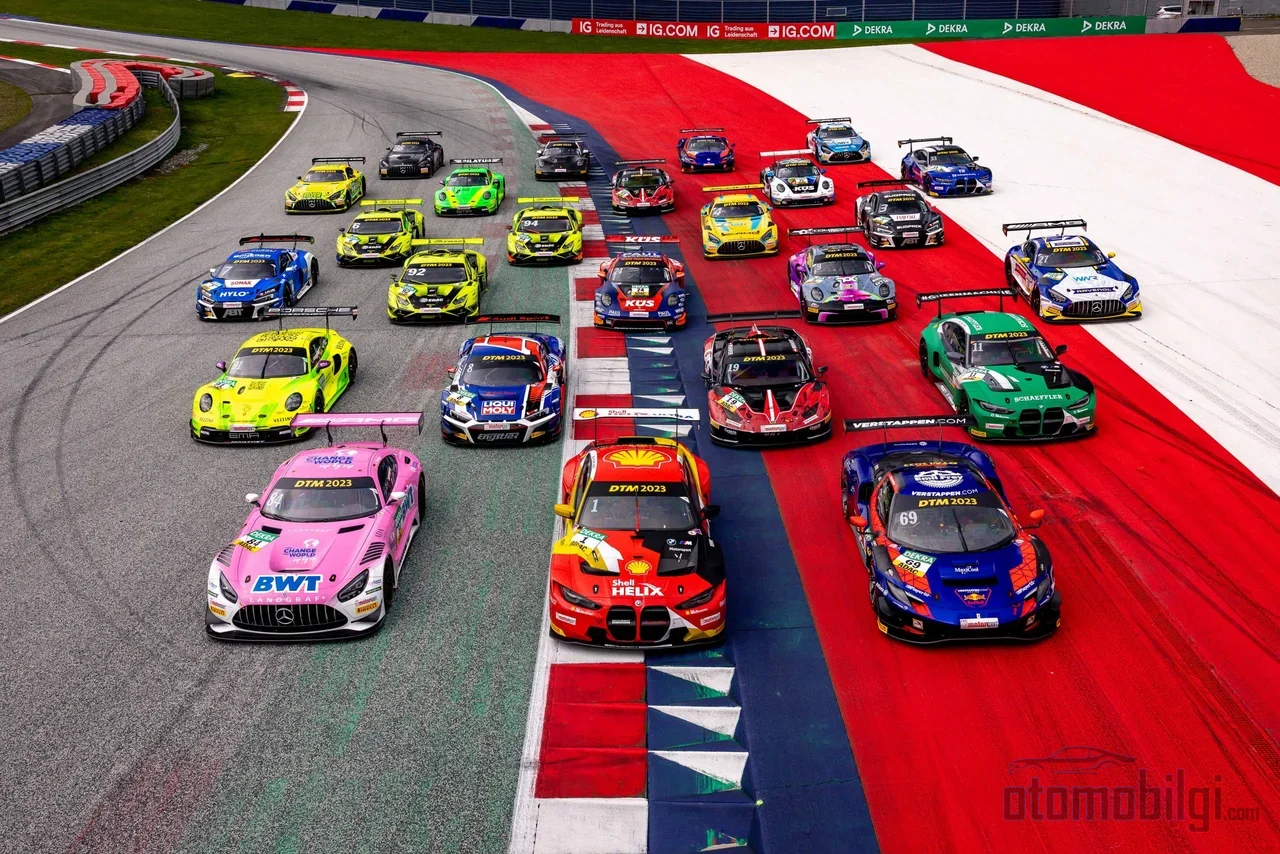
In the GT3 era, DTM's economy became more distributed, with more players involved. In 2024, Lamborghini and McLaren joined the grid, and in 2025 Aston Martin and the Ford Mustang GT3; all of them not for a factory war, but with the flexibility that the customer team model provides. This diversity achieved what Class 1 could not: allowing teams with different budget sizes to coexist on the same grid. According to rumors circulating in the paddock, BMW was said to be considering cutting its motorsport budget by reducing factory support from three cars to two - which shows that manufacturers' wallets still hold the pulse of the series.
The door for young talents is also tied to the economy: The winner of the Road to DTM program is given 170,000 euros in funding. So the series is written not only into the budget plans of big brands, but also of the new generation of drivers.
The Lesson Behind the Numbers
DTM's financial history actually fits into a single sentence: the brighter the technology shines, the bigger the bill grows. 80-million-euro factory budgets, horsepower wars, and brand battles were magnificent, but they cut off their own footing; the GT3 model, by stepping back from where the war was heating up, kept the series alive. I believe what keeps a racing series alive is not speed, but balance. What do you think - would you want to go back and see the madness of Class 1, or is this smarter DTM your favorite?
Sources
- Deutsche Tourenwagen Masters
- Class 1 Touring Cars
- DTM too expensive for privateer teams
- This is how much it costs to race a full DTM season
- Is BMW slashing its motorsport budget next year?
- Audi withdrawal to leave BMW as DTM's only manufacturer in 2021
- Explainer: How the DTM Works
- Mercedes to support customer teams in DTM
- ARBURG to remain sponsor of the DTM in 2026
- From Karting To The DTM
- Gallery: 34 years of amazing DTM-winning cars