The Evolution of DTM Engines: From V8 to 2.0 Turbo
Share This Page
The roar of the machines in the pits changes in an instant: a wild V8 sound licking your ears gives way to a whistling turbo. This is not a race day, but the moment an era closed in the DTM's engine history. But the real question is this: How exactly did the heartbeat of German touring car racing change over the decades? Let's lift the hood and take a look at history.
1984: It all started with production cars
When the original DTM, that is Deutsche Tourenwagen Meisterschaft, first spun its fans in 1984, there was an entirely different kind of racing on the scene: racing versions of real, road-going production cars. Early regulations allowed Group 2 and Group 4 homologated vehicles; meaning you first had to sell enough of them on the road to increase the power. This is called homologation, and the entire magic of classic DTM lies hidden in this rule.
The stars of this era are still spoken of with admiration. The BMW M3 (E30) produced around 400 hp when it was introduced with its four valves per cylinder and dual overhead camshaft engine; it hit the track with a body lightened through the use of alloys. Standing opposite it was the Mercedes 190E family. Even the road version, the 190E 2.5-16 Evo II, produced 235 hp and 245 Nm of torque at 7200 rpm, reaching 100 km/h in 7.1 seconds - a street car for sale, don't forget! The 2.5-liter 16-valve Cosworth-built engine in the racing version, with the support of the Bosch Motronic ECU, reached the 350-360 hp range.
So how was so much power extracted from a street car? Just as you don't merely study to get high marks on an exam but also try to answer every question in the most efficient way: the engine's breathing path, ignition management, and internal friction were each optimized separately. No forced induction, because the rules did not allow forced feeding - solutions like turbochargers and superchargers. You had to draw power from revs and engineering finesse.
The 90s: The Audi V8 war and the first Class 1 experience
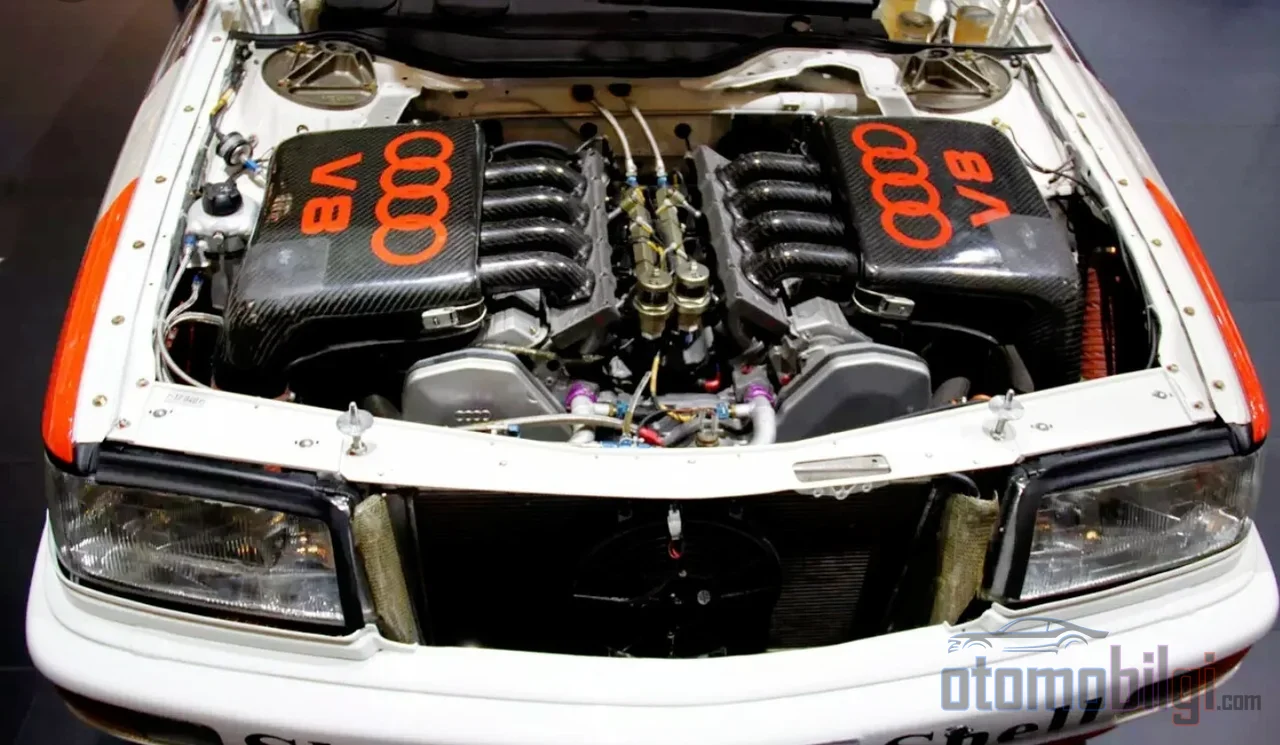
Into the middle of the BMW-Mercedes duel, a third player entered in the early 90s: Audi, with the V8 quattro. The 1992-spec engine produced around 373 hp at 9500 rpm, and the car entered the track with a weight of around one ton. Quattro's idea of all-wheel drive was so radical that even years later the debate over whether the rules would allow four-wheel drive continued - Audi wanted this permission, the rivals did not.
Then the FIA's Class 1 regulations took things to a whole new level. The first generation of Class 1 rules allowed a maximum of six cylinders, 2.5 liters, and four valves per cylinder in the engine. Since turbochargers were banned, manufacturers tried to extract power from the high-rev domain: Alfa Romeo was leaking power from its 2.5-liter engine just under the 11,500 rpm limit. The BMW M3 and Mercedes classics, with their engines revving to nearly 12,000 rpm, are among the most romantic moments of the touring car, leaving their sound in our ears even today. The Opel Calibra, meanwhile, ran with a Cosworth KF engine during the ITC era; the additional engine regulations introduced in 1996 have been a subject of debate for years.
But this high-tech feast came at a price: money. During the ITC era, the majority of revenue flowed to the FIA, and the teams were operating at a loss despite their heavy investments. The result? The series was shut down in 1996 due to costs. Keep this story in mind: it will repeat itself twice.
Highlights
- The first DTM season was in 1984; the cars were production cars homologated in Group 2 and Group 4.
- The 190E Evo II's race engine was built by Cosworth: 350-360 hp, with Bosch Motronic.
- The spec engine between 2000 and 2018 was a 4.0-liter naturally aspirated V8; initial output was 460 hp.
- In 2019, the switch was made to 2.0-liter turbocharged four-cylinders; Audi's engine exceeded 610 hp and weighed only 85 kg.
- The Class 1 era ended at the end of 2020 due to costs and Audi's withdrawal.
2000: Order returned when everyone used the same V8
Three years later, the series returned under its new name, Deutsche Tourenwagen Masters, and this time there was a radical decision on the engine front: everyone would use a similar 4.0-liter naturally aspirated V8. As the Mercedes CLK, Opel Astra Coupé and, shortly after, Abt Sportsline's Audi TT-R took to the track, engine output was controlled by air restrictors - apertures that limited the airflow into the engine. This is a solution that can be likened to a filter fitted to the tip of a faucet: the engine is the same, but the amount of water it can drink can be reduced. On the Mercedes CLK, twin 28 mm air restrictors limited power and revs; peak output was approximately 460-470 bhp, with torque around 300 lb-ft.
Between 2000 and 2005, Opel supplied both the cars and the engines built by Spiess: first the Astra, then in 2004-2005 the Vectra GTS V8. It withdrew at the end of 2005, citing costs. Mercedes-Benz's own DTM V8 was a 4,000 cc, naturally aspirated unit producing between 476-500 hp. In 2004, Audi joined as a factory team and the three manufacturers moved to D-segment sedans: the Audi A4, Opel Vectra GTS and Mercedes C-Class. The reason for switching from the TT-R to the A4 was also interesting: the lack of a suitable two-door coupé. That year Mattias Ekström became champion, and Audi's DTM adventure quickly grew to eight team championships.
You can think of this V8 era like an orchestra: different instruments playing within the same set of notes. The sound matched this - the deep, clear, classic growl of the naturally aspirated V8 became the series' identity. Power climbed over the years: reaching 500+ hp in 2017-2018, and by early 2019 all preparations were being made for a new era.
Why did everything turn to turbos in 2019?
Here is the series' sharpest corner. In 2019, DTM turned to turbocharged engines for the first time since 1989, replacing the 4.0 V8 with a 2.0-liter turbocharged four-cylinder. The main reason lay in shaking hands with Japan: Super GT's GT500 category had moved to this formula in 2014; DTM following the same path in 2019 was meant to technically merge the two series and even make the dream of joint races possible. Class 1 rules individually restricted engine architecture, displacement, fuel flow of 90 kg/hour, and maximum revs; the rev limiter kicked in at 9,500 rpm.
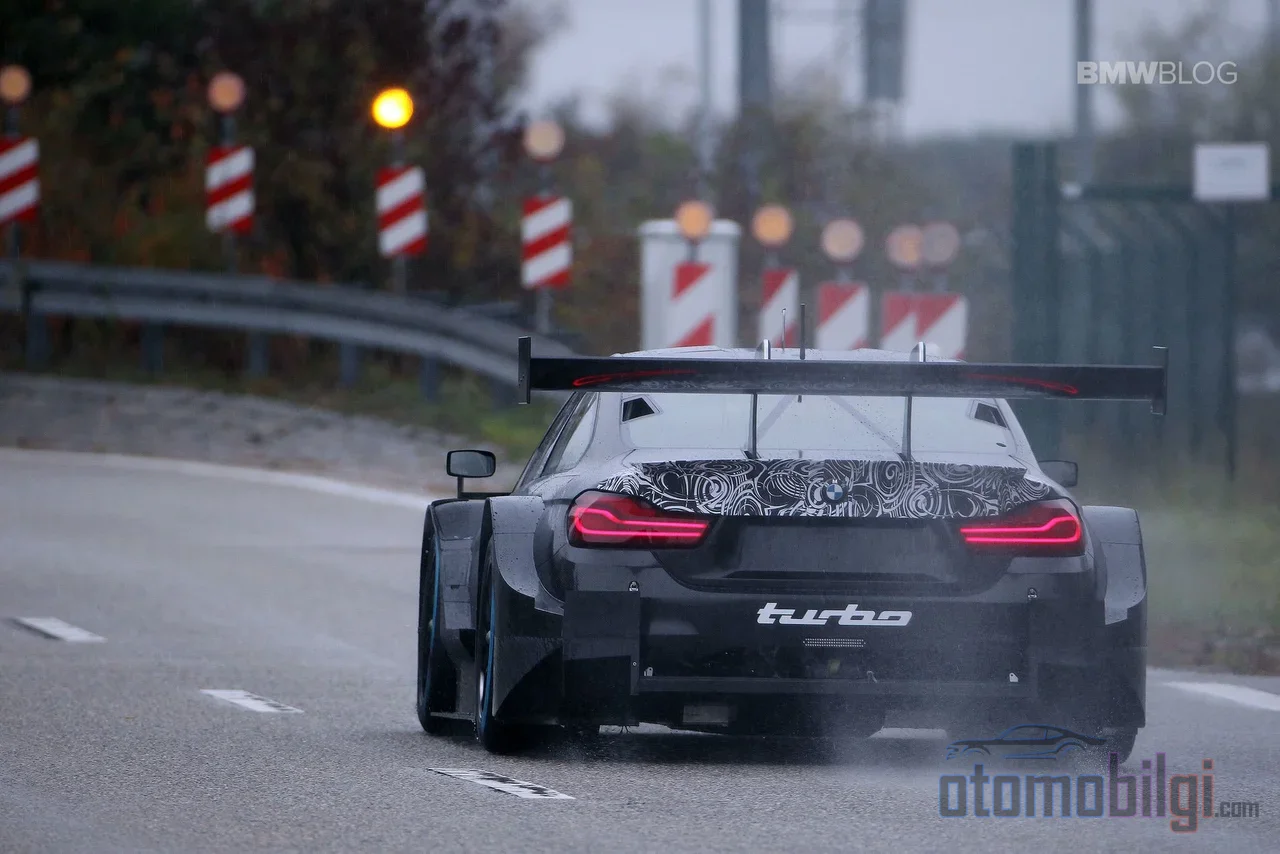
So where does a two-liter engine get 600 horsepower? The answer is simple but brutal: boost pressure. A strong turbo pressure of about 50 psi forces far more air and fuel into the cylinders than normal. Here's an analogy for you: if a naturally aspirated engine breathing is like breathing through your nose, this turbo is like being hooked up to an oxygen tank. Audi's RS 5 DTM engine was the pinnacle of this craft: 2.0 liters, four cylinders, TFSI direct injection, and a weight of just 85 kg. It produced over 610 hp, operated with a fuel ceiling of 95 kg per hour, and targeted a service life of about 6,000 km over the season. BMW's turbo engine, developed in parallel, was in the same league with over 600 hp and a life of more than 6,000 km. For comparison: the Class 1 engine produced about 150 bhp more power than its counterparts in road cars.
The performance figures also spoke for themselves. While the new-generation cars completed 0-100 km/h in about 2.8 seconds and reached 300 km/h, the pre-V8 generation ran 2.6 seconds and 280 km/h. The cars used 102 RON fuel.
From the V8 to the turbo four: How did DTM engine sounds change?
This topic is the most emotional one for most fans. Think of the sound of the naturally aspirated V8: each cylinder plays its own rhythm, and the roar from the exhaust tells you exactly what is happening inside the engine. The turbo four, on the other hand, is less an instrument and more a compressed-air artist - a sharp shriek at high revs and turbo whistles stand out. Detailed acoustic comparisons from DTM are unfortunately limited; but the engineering side of the transition was clear: the switch from the classic naturally aspirated, indirect electronic injection formula to the direct-injection turbo formula permanently changed the character of the sound as well. High turbo revs and fast response on the flywheel side completely transformed the way the engine communicated with the driver.
Placing the eras side by side shows the evolution at a single glance:
| Era | Engine | Approximate power | Standout feature |
|---|---|---|---|
| 1984-1996 | Production-based 2.5L inline-4 and V8 | 350-400 hp | Homologation, naturally aspirated high revs |
| 2000-2018 | 4.0L naturally aspirated V8 (spec) | 460-500+ hp | Power control via air restrictor |
| 2019-2020 | 2.0L turbo inline-4 (Class 1) | 600-610+ hp | 85 kg engine, 9,500 rpm limit |
| 2021- | GT3 engines (free) | Balanced via BoP | Cylinder count and displacement free |
Why did the Class 1 era last only two years?
Technically magnificent, financially disastrous. Class 1 engines were products of mind-blowing engineering, and so were their prices. Then at the end of 2020, Audi withdrew from the series with a sudden decision; BMW was left as the sole Class 1 car on the grid. Continuing this arrangement with a single manufacturer made no sense, and DTM switched to Group GT3-based cars in 2021. The ITR was dissolved in December 2022, and from 2023 onward the DTM name lives on with a completely different organization and rulebook.
Now notice that cycle: In the '90s, Class 1 technology killed the series because of costs; in 2020, the second Class 1 era also ended, again due to rising costs. The tension between high technology and budget is the twice-repeated curse of DTM history. In the GT3 era, however, the engine format is completely free - displacement and cylinder count are not restricted; front, mid, or rear engine positions are all allowed. This model, based on customer teams instead of factory entries, brought a more stable grid: after BMW, Mercedes, Porsche, Audi, and Ferrari, McLaren and Lamborghini joined in 2024, and Aston Martin and Ford in 2025. In the 2025 season, Thomas Preining became drivers' champion, while Mercedes-AMG won the manufacturers' title and Manthey Racing the teams' title; the Saturday and Sunday races were run in a 55-minute plus one lap format.
The short answer to DTM engine evolution
Let's wrap up the opening question. The DTM's engine history has passed through three major eras: from 1984 to 1996, production-based engines tied to homologation rules (BMW's inline fours and sixes, Mercedes' high-revving fours, Audi's V8); from 2000 to 2018, 4.0-liter naturally aspirated spec V8s restricted by air restrictors; and from 2019 to 2020, 2.0-liter turbocharged four-cylinder Class 1 units exceeding 610 hp. Each era changed its sound, its power, and its engineering philosophy; none managed to win the battle against cost. Today the engine format is free under GT3 rules, but there is a generation that misses that classic V8 growl and the '90s sound approaching 12,000 rpm - and rightfully so.
Sources
- Deutsche Tourenwagen Masters - Wikipedia
- Class 1 Touring Cars - Wikipedia
- The mind-blowing tech of a DTM car - DTM.com
- Audi reveals new 2.0 litre t/c DTM engine - RaceTech Magazine
- Audi's New Turbo-Four Race Engine Has More Than 610 HP - MotorTrend
- The New BMW DTM Engine - BimmerFile
- Mercedes CLK DTM: the anatomy of the 2000s V8 touring car - evo
- The real DTM – A look into Class One (Part 1) - DrRacing's Blog
- 2026 Sporting Rules and Regulations - ADAC Sport / GTM GmbH
- DTM Story: Season 1984 part 1 - srt.art.blog
- Non-Turbo Power Gains | Mercedes-Benz 190E Evo 2 DTM - HP Academy
- Listen To These Two DTM Icons Rev To Almost 12,000 RPM - The Drive