Aerodynamic Wars in DTM
Share This Page
DTM's aerodynamic wars shaped the championship's competitive balance in every area, from wings to diffusers, from dirty air to DRS: during the Class One era, cars produced even more downforce than GT race cars, while the rules' struggle to manage dirty air kept the series' famous 'racing below' alive. Here is the complete story.
Highlights
- Class One cars above 600 hp producing 2.0-liter turbocharged raced with engines.
- The common rear wing, diffuser and splitter rule made DRS the strongest weapon for overtaking.
- DRS provided a top speed gain of approximately 9 km/h at tracks like Hockenheim.
- Minimum weight 1070 kg, wheelbase 2750 mm .
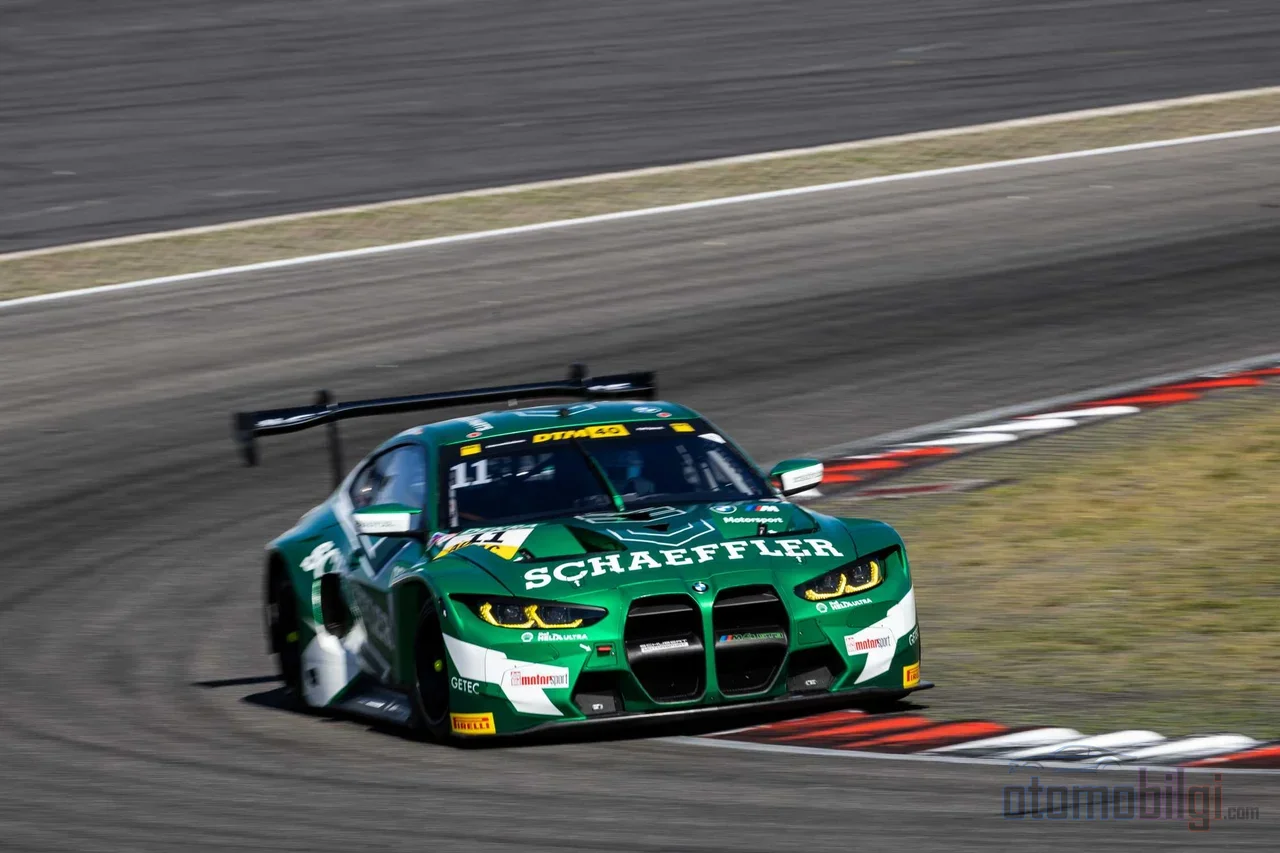
- The series' switch to GT3 regulations in 2021 ended these aero wars.
Why is aerodynamics so important in DTM cars?
A race car's wings and diffuser work like an inverted airplane wing: instead of pushing air upward, they press the car onto the road. As downforce increases, the tires are pressed more firmly to the ground, grip increases, and cornering speeds climb. In DTM, this physics defined the entire identity of the championship. Because throughout the series' history, regulators faced the same dilemma every time: give freedom to aerodynamics and the technology goes wild and costs explode, but restrict it and the close racing you are trying to protect suffers.
This tension is the main story of DTM's aerodynamic evolution. From the open rulebook of the 90s, to the Class One era with its common aero package, and finally to the GT3 age, every step along the way was a renewed search for the balance between 'speed' and 'raceability'.
Early 90s: Open rules and unrestricted wings
When the championship was born in the mid-80s, the cars were genuinely road cars; they made do with a few limited wings attached to the body. But once factory teams got involved, the rules quickly drifted away from this principle. In the early 90s, in the battle between Mercedes, Opel and Alfa Romeo, the series became one of the most technologically advanced classes in the world, and the very open rulebook offered engineers practically an unlimited playground.
The price of this freedom was ballooning costs. Open aero development made the cars ever faster while sending budgets soaring, and the championship ended in 1996 - by which point it had become internationalized under the name ITC, with all the races moved outside Germany. So DTM's first great aerodynamic war ended without a clear winner.
The Class One era: Massive downforce packages
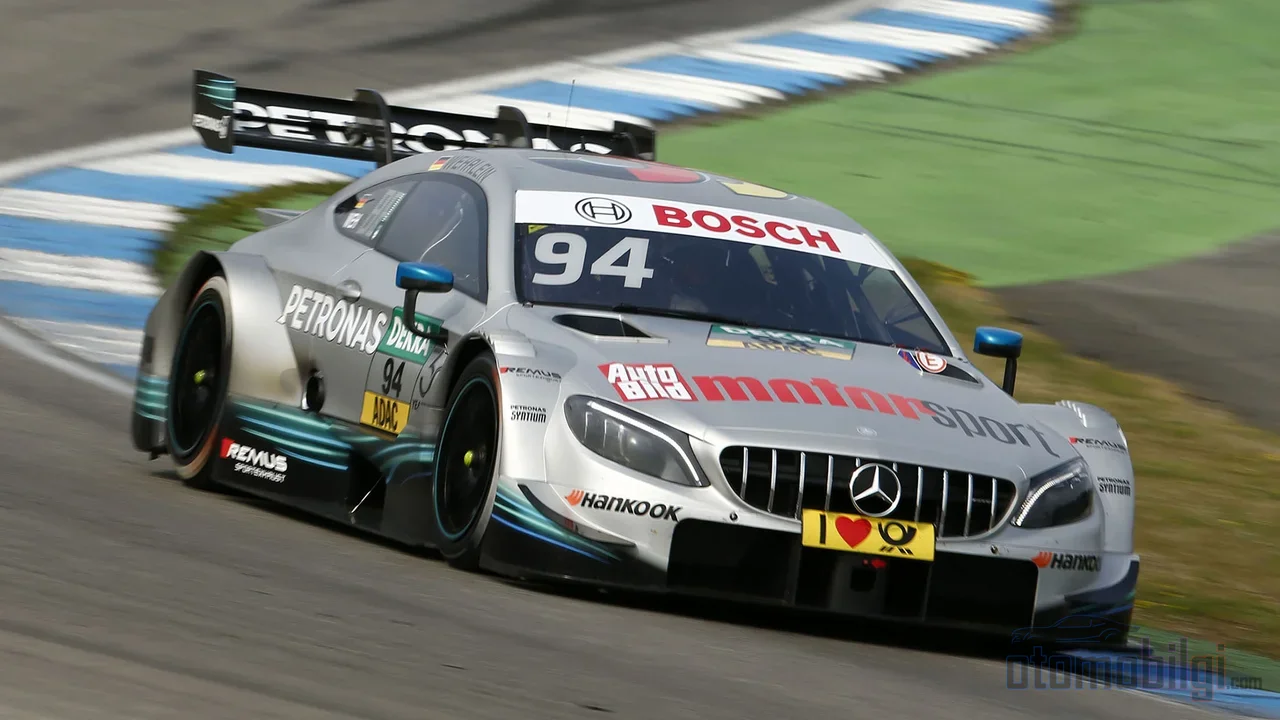
Reborn in 2000, the series agreed on the same basic regulations as Japan's Super GT from 2014 onward, a process completed in 2019: the switch was made from 4.0-liter naturally aspirated V8s to turbocharged 2.0-liter units, and this international class took the name Class One. The result was the last and most radical aero chapter of the 'real DTM'.
What was surprising? The rules appeared to restrict everything. The monocoque, suspension components, floor, rear wing, rear diffuser and front splitter were identical on all cars. But even the shared parts formed such a package that the downforce of the Class One cars was probably higher than that of any current GT racing car. The weak point was exactly there: high drag, meaning low aerodynamic efficiency. The whole car accelerated on the straights like a sharp knife, but the same aero package condemned it to running with very high ride height and pitch sensitivity.
| Specification | Class One (2019-2020) |
|---|---|
| Engine | 2.0-liter inline 4-cylinder, turbocharged |
| Maximum revs | 9500 RPM |
| Peak power | Over 600 hp |
| Fuel flow limit | 90 kg/hour |
| Minimum weight | 1070 kg (with driver, without fuel) |
| Wheelbase | 2750 mm |
| Maximum width | 1950 mm |
| Layout | Front-engined, rear-wheel drive |
What did the 2019 changes break?
The 2019 cars carried a smaller front splitter and a wider but single-element rear wing compared to 2018. This combination reduced downforce, and worse, it shifted the aerodynamics forward: the pairing of a small front diffuser and a large rear wing created a destabilizing effect. So the aero teams' biggest concern was not performance but moving the balance forward - most of the remaining energy was already going into cooling the new turbocharged engines.
An interesting detail: when teams compared configurations with the same center of pressure under the old and new regulations, they encountered a much smaller downforce loss than expected. In other words, the rule change landed softer than it looked on paper. But the real difference was not in the rules, it was in the engineers' stance. The teams used low roll stiffness and tried to control the platform before the stiff bump stops came into play. Some Class One cars used extremely aggressive anti-dive and anti-lift geometries to maintain the balance of the aerodynamic platform during braking. In short, the car must not dive at the nose so the wings work properly - I can't recall another series where aerodynamics and suspension were so intertwined. It was an era when the suspension was in fact an invisible aero adjustment.
Audi's Rake, BMW's Nose
Despite the shared parts, the two approaches diverged: Audi adopted the high rake concept, a stance keeping the rear higher, while BMW worked with a smaller pitch angle. It was said that the BMW side believed Audi's approach was more effective but could not change its existing design. The banning of the third spring and dampers in 2019 was one of the factors feeding this creativity; although it was debatable whether the ban really delivered savings, it clearly pushed teams toward clever solutions like anti-dive/anti-lift. (Claims that Audi had advantages in engine power and fuel flow regulations remained in circulation as unverified speculation.)
The race below: Dirty air, slipstream and the DRS balance
You know what DTM drivers call the 'bumper-to-bumper race': two cars separated by mere meters inside the horn, a battle that makes viewers leap out of their seats with excitement. But behind this spectacle lies demanding physics. The car ahead leaves turbulent, so-called 'dirty' air behind it. This disturbed flow reduces the following car's downforce and disrupts its aero balance; as a result, the chasing car struggles to corner at the same speed and has to slow down. Examples have been given in Formula 1 of a following car losing up to 35% of its downforce - in race cars this effect applies in every class.
But that same dirty air also has a beneficial side: the slipstream. On the straights, while you're being dragged along in the low-pressure zone behind the car ahead, your drag decreases and your speed increases. So one phenomenon produces two different outcomes: on the straights it gives you the chance to close in, while in the corners it forces you to slow down before entering them. A good overtake lies hidden in the timing between these two forces.
The Class One regulations added a new layer on top of this balance: DRS. The common large single-element rear wing made DRS's drag-reduction effect incredibly pronounced - when the wing opened, air resistance dropped significantly and overtaking maneuvers gained serious speed. A maximum of 3 times per lap DRS could be used, and it was free to use except in sections exceeding lateral acceleration or brake pressure thresholds. On a track like Hockenheim this system provided roughly 9 km/h of top speed gain . Alongside it there was also Push-to-Pass: increasing the permitted fuel flow for a certain period boosted power, and in 2020 it was also free in practice sessions; qualifying times dropped accordingly. The logic of the regulator was very clear: if you cannot force closeness by restricting the aero, reward closeness with helper systems.
The meeting with Super GT: Two aero philosophies, one rulebook
One of Class One's most colorful moments came at the 2019 Dream Race at Fuji: DTM and Super GT cars raced under the same basic rules. But the apparent similarity was misleading. While DTM raced with a common aero package as part of cost savings, Super GT used more complex and sophisticated aero designs. One rulebook, two different engineering cultures on two continents - that is the most beautiful part of this comparison.
What happened to aerodynamics in the GT3 era?
Mercedes' departure in 2019, Aston Martin leaving at the end of the season after joining in 2019, and this pushing Audi to withdraw as well at the end of 2020, led the series to a radical decision: in 2021 the Class One regulations were completely abandoned in favor of GT3-based rules, and series ownership was transferred to the ADAC. The series keeps its name, but the view that 'the real DTM ended in 2020' is widespread among fans - it is common knowledge that GT3 cars generate front downforce through methods like splitters and shifting the weight balance forward, but never came close to Class One's insane levels of downforce.
By the way, the dirty air problem hasn't been solved anywhere in the world: even Formula 1's 2026 rules aim to reduce the role of ground effect with flatter floors and to alleviate the dirty air issue. So what DTM tried to balance with rules during its Class One era is, in fact, a fight at the very heart of motorsport.
To wrap up: Speed or racing?
Reading DTM's aerodynamic history, I think this: the fastest car of every era wasn't the best race car of that era. The unlimited wings of the 90s offered a technology feast but ended the series; Class One's shared aero package saved competitiveness but led engineers to wrestle with cooling and balance instead of 'real performance.' The regulator walked the same tightrope every time, and it was precisely thanks to this tension that DTM found its own identity. Close racing was no accident, but the result of design - and I believe this is still the most honest lesson in motorsport.
If it were you, what would you choose: unlimited aero freedom, or cars that can be closely followed?
Sources
- The real DTM – A look into Class One (Part 1) - DrRacing's Blog
- The real DTM – A look into Class One (Part 3) - DrRacing's Blog
- Slipstream and 'dirty air' explained - Racecar Engineering
- What's the difference between slipstream and dirty air? - RaceTeq
- Feature: Downforce in Formula One, Explained - Mercedes AMG F1
- Diffusers | Engineering basics - Racecar Engineering
- Why Super GT won't be left behind by DTM in Dream Race at Fuji - Autosport
- Deutsche Tourenwagen Masters - Wikipedia
- Class 1 Touring Cars - Wikipedia