How Is the Championship Won in DTM?
Share This Page
In DTM, the championship is determined by the total of the points accumulated across all races over a season: the driver who stacks up the most points becomes that year's champion, and the brand and car they drive go down in history as that season's winner. From 1984 to today, the champions of every era have climbed to this summit with different cars, different rules, and completely different technical approaches.
Highlights
- The first DTM season was run in 1984; the first champion was Volker Strycek, who reached the summit with the BMW 635 CSi.
- Bernd Schneider earned the nickname "Mister DTM" with his 5 DTM titles (1995, 2000, 2001, 2003, 2006).
- Between 1997 and 1999, no championship was held for three seasons; the old series came to an end due to high costs.
- The Class 1 era closed at Hockenheim 2020, and since 2021 the series has been racing with GT3-based cars.
- Thomas Preining went down in the record books as the series' most recent drivers' champion; the manufacturers' champion was Mercedes-AMG.
List of DTM Champions: Winners and Their Cars from 1984 to Today
Now let's get to the real question: How is the championship won in DTM? The answer consists of three parts: sitting in the right car, having the technology that best fits that season's rules, and staying consistent throughout the season with your mind set on the points system. The list below gathers, period by period, the champions and their cars that can be clearly verified in the sources. Unfortunately, data for some years is missing; at those points we will stay honest and tell you only as much as we know, without making up the rest.
| Year | Champion | Car / Brand |
|---|---|---|
| 1984 | Volker Strycek | BMW 635 CSi |
| 1985 | Per Stureson | Volvo 240 Turbo |
| 1986 | Rover Vitesse | Rover |
| 1987 | - | BMW M3 |
| 1988 | - | Ford Sierra |
| 1995 | Bernd Schneider | AMG-Mercedes C-Class DTM |
| 1996 | Manuel Reuter | the last champion of the old era |
| 2000 | Bernd Schneider | HWA Team, Mercedes |
| 2002 | Laurent Aïello | Abt-Audi TT-R |
| 2010 | Paul di Resta | AMG-Mercedes |
Notable names in the rest of the list are as follows: Mattias Ekström in 2004 and 2007, Timo Scheider back to back in 2008-2009 (the years of Audi's dominance), and Pascal Wehrlein with Mercedes in 2015. The series' newest champion is Thomas Preining; Mercedes-AMG took the manufacturers' title and Manthey Racing the teams' title.
The First Era (1984-1996): From Group A to Championship Battles
DTM did not start out with space-age technology in 1984 in any way. The first season was run under a regulation called Group A, based on production road cars; in other words, think of it as an accelerated street life, with the kind of cars you could genuinely see in your neighbor's garage racing each other. The first championship went to Volker Strycek, and the winning car was the BMW 635 CSi. Here's the detail that makes you fall in love with this sport's story: Strycek managed to become champion without winning a single race all season; the names who won races in 1984 were other drivers. That is exactly how the ruthlessness of the points system and the power of consistency work.
From Volvo to Ford: The Surprise Winners of the '80s
In 1985, the Swede Per Stureson reached the top with the Volvo 240 Turbo, and Volvo's square-box family car was written into racing history. That year, turbocharged cars won seven races; a detail showing that the turbo era had already knocked on the door. In the same period, Klaus Ludwig delivered a performance that pushed his rivals hard with the Ford Sierra Cosworth and the Sierra XR4Ti; Ludwig's name is mentioned as one of the biggest names of that era, but his championship years are not clearly separated for this period in widely circulated lists, so we will move on without giving a definitive year.
In 1987 and 1988, the winning cars were the BMW M3 and the Ford Sierra. In those years, Volker Weidler's name was in the spotlight, but be careful: Weidler was the DTM runner-up in 1986, not the champion. He is a legendary name and would later win the 1991 Le Mans, but calling him a "DTM champion" would be a historical error. Confusions like this are all over the internet; you keep moving forward with accurate information.
Schneider's First Summit and the Series' First Crisis
By the 1990s, the rules began to change: Group A was used until 1993, and then in 1994 the far more liberal FIA Class 1 rules were adopted. Technology began to soar, but costs soared too. In 1995, Bernd Schneider won his first championship with the V6-powered AMG-Mercedes C-Class DTM, and that same year he also added the ITC (International Touring Car Championship) title, wearing a double crown. The last driver champion of the old era was Manuel Reuter in 1996. And then? The series collapsed due to high costs; during the ITC era, most of the revenue went to the FIA, and the teams complained about low returns. From 1997 to 1999, no DTM championship was run for three years. Three years! Today a series panics over a two-week break - just imagine.
The 2000 Rebirth: A Judged Format and the Bernd Schneider Era
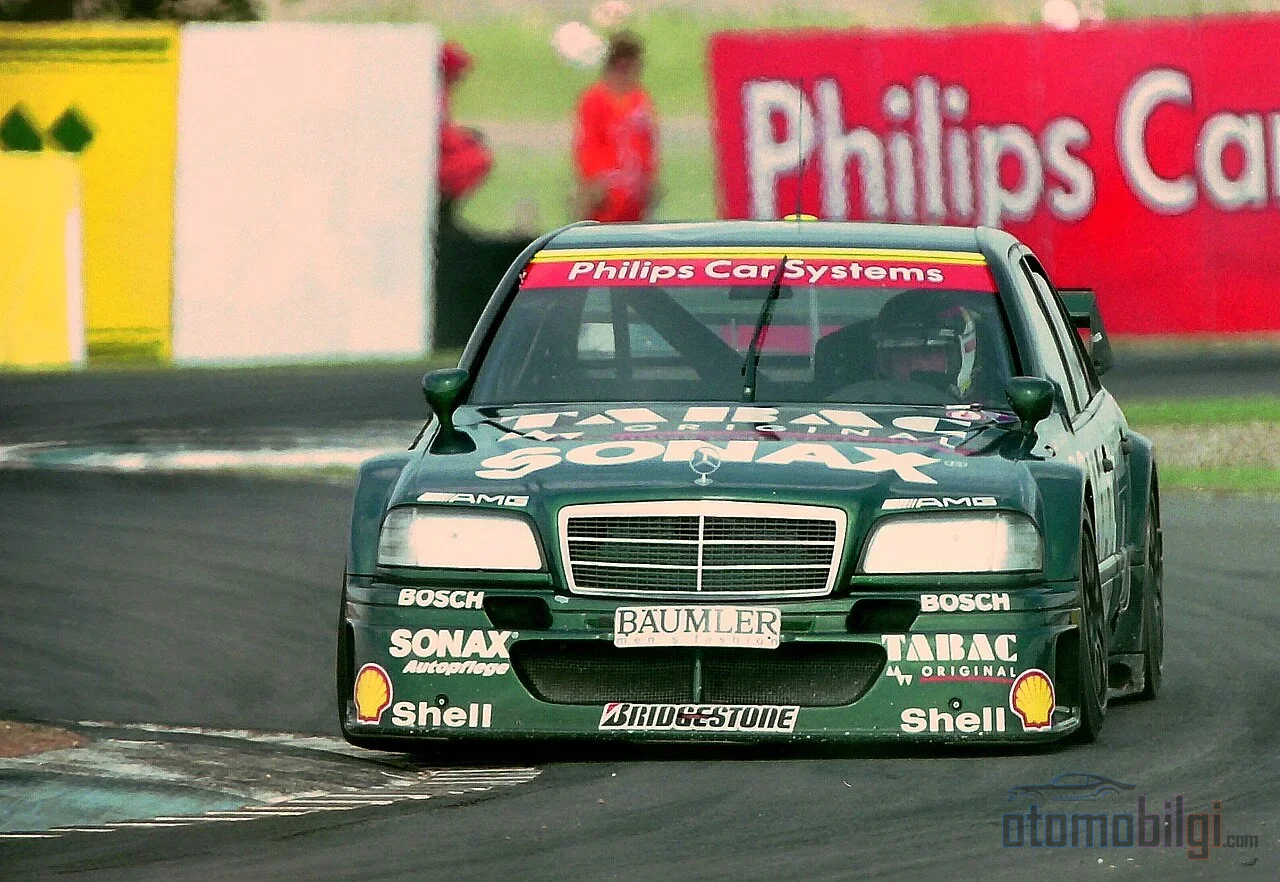
In 2000, the DTM returned under the name Deutsche Tourenwagen Masters, and this time everything was fully professional. The cars now had silhouette bodies resembling road cars but actually born for racing; in other words, a CLK on the outside, a full race car on the inside. The champion of the first season was no surprise: Bernd Schneider, with HWA Team and Mercedes, won both the first race and the championship at Hockenheim. With a total of 5 championships (1995, 2000, 2001, 2003, 2006), Schneider stands as the greatest name in the series' history, and the nickname "Mister DTM" was not given in vain.
The Mercedes–Audi Duel and BMW's Return
The mid-2000s was an all-out brand war. In 2002, Laurent Aïello brought Audi the championship with the Abt-Audi TT-R. In 2004, Mattias Ekström became champion in Audi's first year as a factory entry, and climbed to the top a second time in 2007. Right after that, Timo Scheider won back-to-back championships in 2008 and 2009; Audi's dominance in this period was a serious matter. In 2010, the ball bounced back to the Mercedes side: Paul di Resta became champion. In 2015, meanwhile, the young Pascal Wehrlein was crowned with Mercedes, delivering a "new generation" message.
Then BMW stepped onto the stage. In 2012, returning to the series after exactly twenty years, BMW won the drivers', teams' and manufacturers' championships all at once in its first year; the BMW M3 DTM swept all three titles. During the Class 1 era between 2012 and 2020, BMW took 40 wins in 9 seasons. On the Audi side, the numbers are staggering: In 2020, with the RS 5 DTM, it claimed 28 of the 36 wins and 95 of the 108 podiums. Even these two figures alone show how competitive the era was and how seriously the manufacturers invested.
How Car Technology Changed: From Group A to V8s, from V8s to Turbo
To understand how the championship changed with car technology, it is enough to open the hood. All of the "new DTM" cars between 2000 and 2020 were rear-wheel drive and for many years used 4.0-liter V8 engines; power was around 460 hp at the start. The body style also followed the fashion: in the early years 2-door coupés (Opel Astra Coupé, Mercedes CLK, Abt-Audi TT), from 2004 on 4-door sedans (Audi A4, Opel Vectra GTS, Mercedes C-Class), and from 2012 on coupés again (Audi A5 → RS5, BMW M3 → M4). Fashion goes around, and so do the series.
Then came the great leap. In 2019, DTM and the Japanese Super GT series formalized their "Class One" regulations link, and DTM switched to 2.0-liter inline four-cylinder turbo engines. The power was still frightening: In 2019, it reached 610 hp (including the 30 hp push-to-pass), while in 2020 it was a base of 580 hp + 60 hp push-to-pass. In other words, getting twice the power with half the sound of a mid-size family car from a race car the size of an Opel Vectra... For someone in love with technology, this is the moment where my hair stands on end.
But the bill for this technological peak grew steep. The construction and operating costs of the Class 1 cars wore down the teams and manufacturers; With Audi's sudden withdrawal, the Class 1 era officially ended at Hockenheim in 2020, leaving behind only BMW, which still had a suitable Class 1 car. This was the second time costs taught the series a lesson; that was also the cause of the end in 1996.
Race Format and Scoring: The Invisible Hand That Decides the Championship
The championship was won not only with speed but also with the format. The scoring today is Formula 1 style: the top 15 score points, with the winner taking 25 and second place 20. The system in 2000 was different: 20 points for first place, 15 for second, and 12 for third. So depending on which year you watched, the championship math changes completely; the leader of one season might not have become champion under another season's rules.
The race format did not stay fixed either: the return in 2000 came with two 100 km races; in 2001–2002, short (35 km) and long (100 km, with pit stop) races were run together; Between 2003 and 2014, single and long races of approximately 250 km with two mandatory pit stops were run. In 2015, the format switched to 40-minute Saturday and 60-minute Sunday races; in 2017, both races settled into a 55 minutes + 1 lap format, there was a brief return to fixed laps in 2019 before going back. As of 2025, there is 1 mandatory pit stop on Saturday and 2 on Sunday, and pit windows are locked to specific intervals. Technical details also shaped the format: DRS arrived in 2013, the HANS device has been mandatory since 2002, Balance of Performance was tried in 2015 but the system was removed in 2017 after team protests, and the grid shrank from 24 to 18 cars that same year.
So what impact does this have on the championship race? Let me make a simple analogy: if the championship is not the single question of an exam but a 20-question test, then the format and scoring determine how many points each question of that test is worth. A consistent driver who makes few mistakes beats the star candidate who occasionally takes pole position but ends up out of the race. 1984, when Strycek became champion without winning a single race, is the most extreme example of this.
The GT3 Era: How Is the Championship Won in DTM Today?
Since 2021, DTM has been racing with Group GT3-based cars; factory entries ended for budget savings, but BMW, Mercedes, Porsche, Audi and Ferrari participate regularly. In 2024, McLaren (720S GT3 EVO) and Lamborghini (Huracán GT3 EVO2) joined; in 2025, Aston Martin and Ford (Mustang GT3 with HRT) returned. So the brand war has not ended, it just took on a more cost-effective body. In this era, the tires come from Pirelli (since 2023; Michelin in 2021), races start with a rolling start, and DRS is banned on GT3 cars. In December 2022, the ITR was dissolved and the rights passed to ADAC; DTM today runs under the ADAC umbrella and secured its place on the calendar for 2026 with an eight-round, two-race weekend format and a success ballast system.
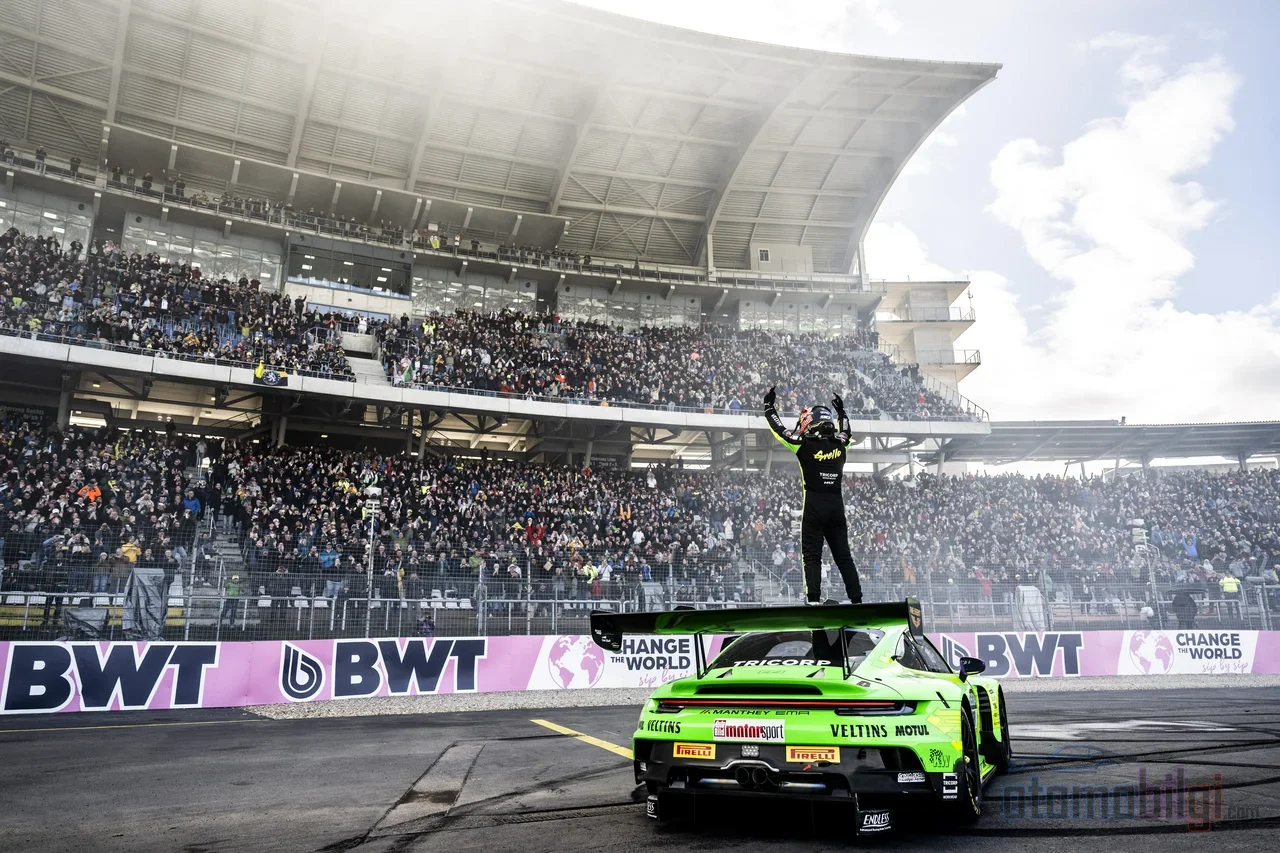
The name recorded as the latest champion is Thomas Preining; the manufacturers' champion is Mercedes-AMG, and the teams' champion is Manthey Racing. In the GT3 era, the championship is not about technology spending as much as the old Class 1's prototype monsters; it is a game of driver skill, team strategy and the balance of success ballast. The 2021 season saw a controversial finale, but the series recovered by banning team orders and is trying to regain the trust of its market.
So What Is the Formula for the Championship? To Sum Up Briefly
Looking at the four eras, the formula always stays the same: finding the car best suited to that season's rulebook, building a team strategy that accounts for the points system, and a consistency that does not waver throughout the season. Strycek reached the top without winning a race, Schneider five times, Ekström twice; the winning car evolved from the BMW 635 CSi to Mercedes-AMG, from the Audi TT-R to the Class 1 turbos. The only thing that changes is technology and format; the soul of the championship is the same as it was in 1984. Now, here's a question for you: which era's DTM takes first place in your heart? In my notebook, the 90s and the Class 1 years are on the podium, but this debate varies from reader to reader.
Sources
- Deutsche Tourenwagen Masters
- Deutsche Tourenwagen Meisterschaft
- Bernd Schneider (racing driver)
- Volker Weidler
- The Original DTM Championship (1984-1996)
- Gallery: 34 years of amazing DTM-winning cars
- All the BMW victories in the DTM since 1984
- Bernd Schneider
- DTM - Audi
- Super GT, DTM Formally Announce Class 1 Technical Regulations
- DTM Rating: This is how points are awarded
- The ins and outs of the DTM
- Deutsche Tourenwagen Masters - DTM Wiki
- What we know so far about the new-look 2021 DTM
- Aberdein Leads BMW As An Era Ends In DTM
- DTM Story: Season 1984 part 1
- The Glory Years of DTM Part 2: 1985-1990
- DTM champion Bernd Schneider ends career
- DTM Guide: History, Teams & 2026 Calendar