How Does Balance of Performance Work in DTM?
Share This Page
In DTM, Balance of Performance (BoP) is an adjustment mechanism that ensures racing cars designed by different manufacturers with different philosophies become evenly matched at championship level. Parameters such as engine power, minimum weight and aerodynamics are adjusted based on the analysis of previous races; the aim is to prevent a single manufacturer from gaining overwhelming dominance and to deliver a head-to-head battle. In short, on-track equality is mostly established not in the garage, but at the organization's desk.
Highlights
- DTM introduced the BoP system for the first time in 2015 .
- In the Class 1 era, cars with a fuel-free driver weighed only 1070 kg .
- The engines were 2-liter turbocharged inline-4 units and fuel flow was limited to 90 kg/hour .
- DRS added roughly 9 km/h to top speed at Hockenheim.
- Class 1 regulations were abandoned at the end of 2020 and a switch to the GT3 platform was made in 2021.
What Exactly Is Balance of Performance and What Does It Adjust?
The easiest way to think of BoP is this: you put three bakers making bread from three different recipes into a race, but you equalize the load the dough can carry. BoP does the same thing with racing cars; by changing power, weight, engine management and aerodynamic settings, it brings each car's performance potential closer together.
There is a critical nuance: BoP aims to balance the cars' potential but does not equalize everything on track. Operational factors such as tire management, driver skill and pit stop times remain untouched. In other words, the organization gives you equal opportunity, but the result is still determined by the driver and team. The term first made itself known in 2005 with the birth of the Group GT3 category; the aim was to enable different manufacturers to develop their own racing models without fueling expensive development wars. DTM, meanwhile, put this system into play in 2015 to improve its racing spectacle.
Decisions are not made in thin air: organizers look at data from previous races, and sometimes even from sessions within the same race weekend, and can change the settings at any point in the season. This flexibility preserves equality, but it is also the main source of controversy; a single decision can change the outcome of a race weekend on its own.
The Class 1 Era: Not Identical, But Equalized Cars
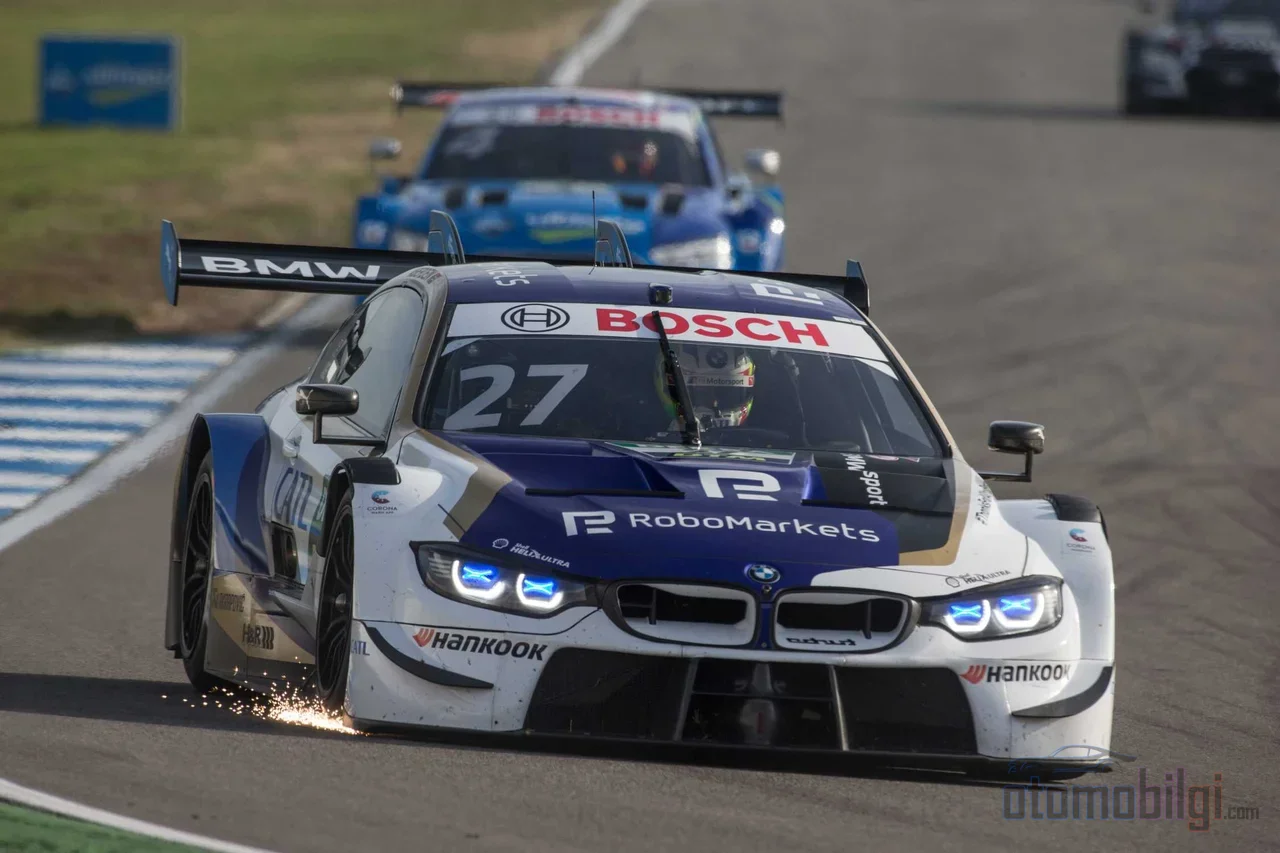
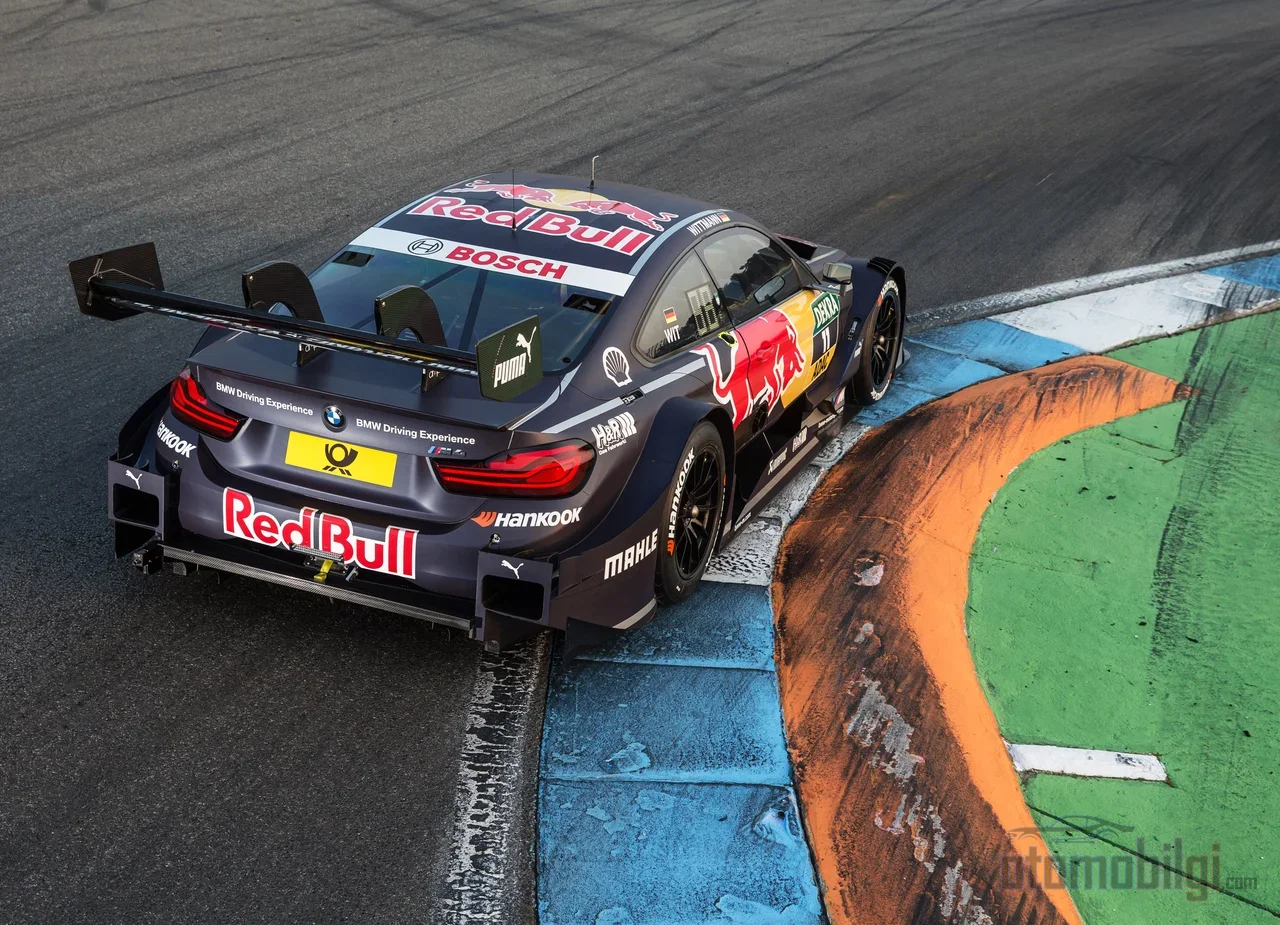
DTM's 2019-2020 Class 1 era is one of the periods that most clearly shows BoP's power and its limits. The series had agreed with Super GT on the same base regulations from 2014 onwards, and in 2019 replaced its 4-liter naturally aspirated V8s with 2-liter turbocharged units. The goal was threefold: to slow the cars down, reduce costs and improve the show. The general philosophy, in short, was: more power, less downforce, and therefore cars that were harder to manage under braking and in corners.
But here's the interesting part: the cars were not copies of one another. Although the regulations standardized many performance-critical areas, in the areas left to the engineers the character of each brand was clearly evident. And this is exactly where BoP's real test begins.
| Parameter | Class 1 Rule |
|---|---|
| Engine | 2-liter, inline 4-cylinder, direct injection, turbocharged |
| Fuel flow | Maximum 90 kg/hour |
| Maximum rpm | 9500 RPM |
| Minimum weight | 1070 kg with driver, without fuel |
| Wheelbase | 2750 mm |
| Maximum width | 1950 mm |
| Transmission and gear ratios | Fixed, 11 different gear ratio options |
| Aerodynamics | Common rear wing, diffuser and front splitter |
Despite the shared monocoque, fixed suspension points and common wing profiles, these cars probably produced more downforce than any current GT racing car. But aerodynamic efficiency was weak due to high drag; in other words, they were fast, but they paid the price of being fast.
What Happens When Brand Philosophies Collide?
Audi's high rake, BMW's low rake
In aerodynamics, the paths of the two brands diverged completely. Audi opted for the high rake concept, keeping the rear higher than the front; BMW went with a smaller pitch angle, meaning a stance more parallel to the ground. The funny detail in between is this: BMW realized that Audi's approach might have been more effective, but because it had designed its car around low rake, it could never unlock that potential. The rulebook was the same, the outcome was not; even standardized mandatory parts could not completely erase design philosophy.
The silent advantage in engine power
Audi was also thought to have the advantage on the power side. The brand could use high downforce settings even on fast circuits without losing too much top speed. The likely explanation is quite clever: Audi's engineers are believed to have positioned themselves before the injectors that measure fuel flow, storing fuel in the flexible sections of the fuel line during throttle cut phases and using this extra fuel during full throttle phases. The rule limits the flow passing through a meter; the fuel waiting before the meter remains in the shadow of the rules. It is precisely because of borderline cases like this that BoP constantly needs to be reviewed.
The balancers in the driver's hands: DRS and Push-to-Pass
The Class 1 era was not made up of restrictions alone. DRS could be used a maximum of three times per lap and teams decided for themselves where to activate it; except in zones where lateral acceleration or brake pressure thresholds were exceeded. At Hockenheim, DRS activation added about 9 km/h to top speed. Introduced in 2019, Push-to-Pass gave the driver the option to call up about 30 hp of extra power for a limited duration; the button worked in conjunction with the fuel flow restrictor. In 2020, both systems became usable in qualifying laps. In other words, balancing was done not only with penalties but also with incentives.
How Do Weight and Power Penalties Affect Races?
The most tangible tools of BoP are weight and power adjustments. If a brand starts to look too fast, a penalty lands on it: it carries extra kilograms or its engine power is reduced. This logic existed even in the very early days of DTM history; it is even known that movable ballast was used in Class 1 cars in the mid-90s to eliminate imbalance. In the modern era, weight works through the minimum weight limit: 2019 cars were approximately 986 kg without their driver, and the minimum weight had been lowered below 1000 kg; the power/weight ratio was at a level of 1.6 kg/hp . When the organization shifted this ratio, all the balances changed.
A small technical detail shows what kind of engineering battle these penalties create: when the third spring/damper was banned, teams resorted to aggressive anti-dive solutions at the front and anti-lift solutions at the rear to preserve the aerodynamic platform. Carrying extra weight works on the same idea; adding weight is the cleanest way to reduce performance without touching the car's center or aero balance. That is why it can be said that when teams receive the penalty news, they do not work on the car, but on the setup file.
Why Do In-Season Balance of Performance Decisions Constantly Create Controversy?
BoP is not a static table but a living document. The organization reviews the data after every race weekend and updates the adjustments when necessary. Throughout DTM history, adjustments made for specific circuits regularly became a topic of debate; it was clearly reported that modifications were made for different brands at different weekends. The series' own website defines the purpose of BoP as producing exciting races and offers examples of the system working. However, this constant intervention plants the following question in the minds of fans and teams: is the winner determined on the track, or at the table?
Sandbagging: The shadow game of deliberate slowness
The most painful side effect of BoP is sandbagging, i.e. deliberate slowing down. The logic is this: if BoP makes decisions based on past performance, a team that hides its car avoids penalties and seizes the advantage when full power is revealed. These accusations are not unique to DTM; in the 2016 WEC season, the Ford GT was accused of deliberately underperforming in tests and races, and a performance adjustment was applied after its domination in Le Mans qualifying. IMSA, on the other hand, imposes a 5-minute stop-and-go penalty on a sandbagging car mid-race; in other words, the series are developing teeth against this practice.
Is BoP a sport or a scenario?
The disagreement among fans is also fierce. One camp says the weight system makes races exciting and prevents domination; the opposing camp argues it is not a sport but an entertainment show. More radical critics claim that BoP is used as a political tool by which an organization decides who will be allowed to win, turning racing into a scripted production. There is also an example from DTM's recent history: rivals approached Manthey's proposed radical BoP reform with suspicion; the boss of the series' only BMW team, Torsten Schubert, said he smelled political calculation in the proposal and demanded that Manthey show its cards. Calls were also made for heavy penalties for BoP bluffing. As can be seen, the BoP debate is still alive and heated today.
Why Did Class 1 End and What Remains of DTM?
Class 1 came to an end as the number of manufacturers dwindled. BMW in 2012 after returning, the DTM long hosted at least three manufacturers, but at the end of 2018 Mercedes left, in 2019 Aston Martin, which joined that year, left at the end of the season, and when Audi also at the end of 2020 withdrew, the Class 1 regulations were abandoned. In 2021 the series switched to GT3-based rules; a while later, ownership was also transferred to ADAC. History is repeating itself in an interesting way: a story similar to 1996, when the open technical rule book inflated costs and killed the championship, was once again written for an aggressive and expensive formula.
Still, the Class 1 era will remain one of the periods that taught the BoP lesson best. Cars sharing the same monocoque, carrying the same wing, but designed with completely different philosophies being able to race on track was entirely the work of the balancing mechanism. Some call it engineering being restricted by trickery, while others see it as the only way for three different road cars sold to consumers to face each other fairly in a race. So which side are you on: the engineers' unlimited war, or photo-finish races?
Sources
- Balance of performance - Wikipedia
- Deutsche Tourenwagen Masters - Wikipedia
- The real DTM - A look into Class One (Part 1) - DrRacing's Blog
- Stage set for the Class 1 era - BMW Group PressClub
- DTM adds 'push-to-pass' system and changes its DRS rules for 2019 - Autosport
- #DTMBoP: Balance of Performance performs at Monza - DTM.com
- Manthey proposes radical DTM BoP reform - Sports/Yahoo
- DTM Manthey controversy: Calls for harsh penalties over BoP bluff - Motorsport.com
- The good, the bad and the balanced. My take on BoP - Dive-bomb
- What is "Balance of Performance"? - 24h-lemans.com