How Did ITC Collapse? The Chain of Crises That Brought About the End of DTM
October 27, 1996, Interlagos. Manuel Reuter, with his Opel Calibra, mathematically secures his championship and celebrates. Two races later, the series becomes history. Yes, you read that right: The world's craziest touring car championship collapsed at the very moment it placed the crown on its head. So how did the DTM come to an end? The answer hinges on a single key: The internationalization of the series under the name ITC in 1995-96. Most narratives pass over this period like a footnote; yet it was precisely there that the chain of events determining the series' fate began.
From DTM to ITC: The Dream of Internationalization
The DTM, which began at Zolder in 1984, was for a decade a championship beating at the heart of Germany. Then in 1995 the big dream arrived: the series was transformed into an international racing program and took the name ITC (International Touring Car Championship). The goal was very ambitious; to step beyond Germany's borders and gain a global audience. In 1995, the series was run both as a short German championship and as an international program; in 1996 the two merged, and the ITC became the 13th season of the former DTM. season of.
On paper this was a great idea. On the track, however, three major manufacturers, Mercedes-Benz, Alfa Romeo and Opel, were battling it out in the FIA Class 1 Touring Cars category. What was the problem? Money, distance, and television. When these three enemies attack at once, no series stands a chance.
Class 1: Formula 1 with a Roof
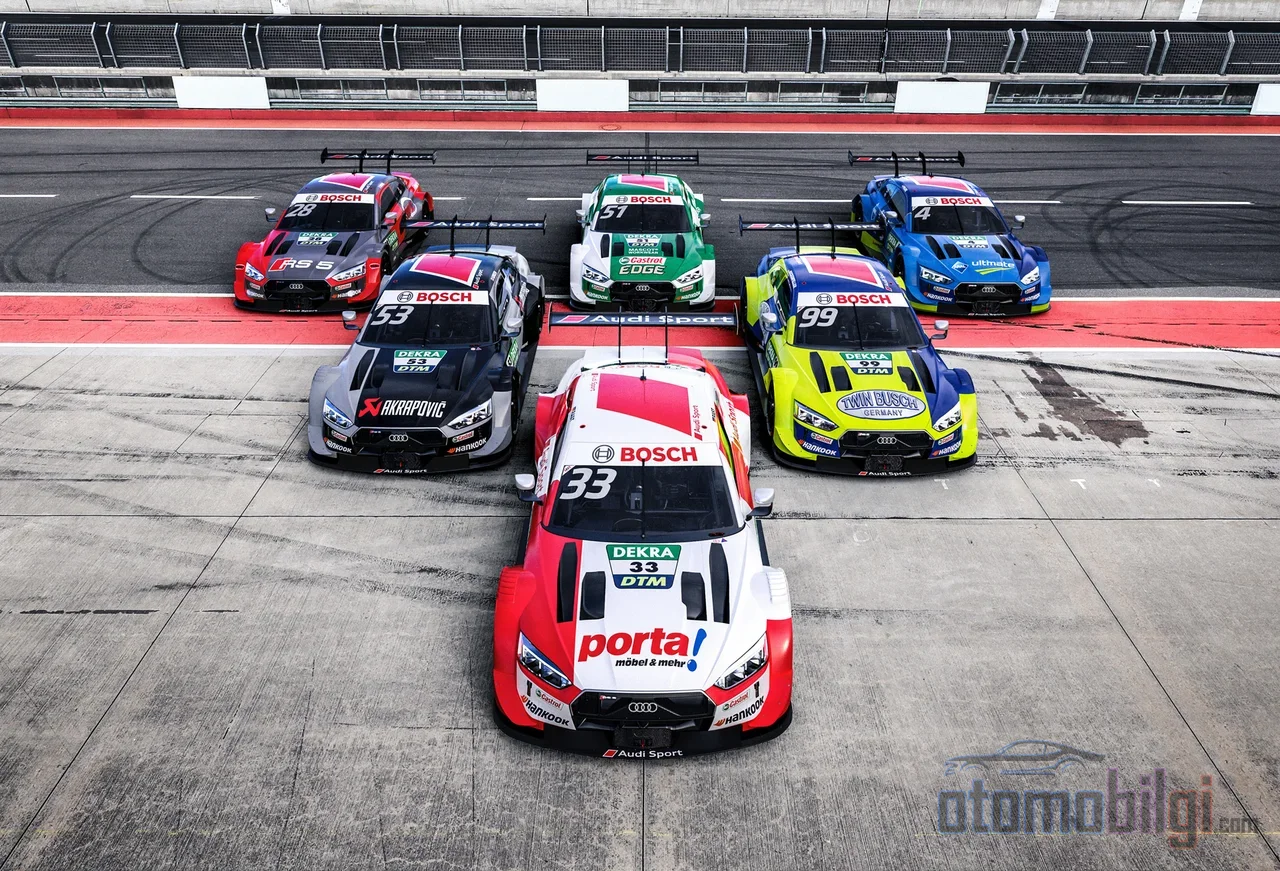
You cannot understand the ITC's collapse without understanding its cars, because the root of the cost crisis lies exactly here. The Class 1 rules allowed prototypes that now bore almost no resemblance to road cars. The 2.5-liter naturally aspirated V6 racing engines produced around 500 hp and revved up to 12,000 rpm. While Mercedes stuck to its standard rear-wheel-drive layout, Opel and Alfa Romeo opted for all-wheel drive. Opel's engine was Cosworth-derived; its differential was developed by the Williams F1 team. No one could argue that this car was a touring car and not a Formula 1 car with a roof on top.
Highlights
- In 1996, the DTM lived its only and final season as the international series under the name ITC
- Budgets per manufacturer reached approximately 100 million DM (about 51 million euros)
- Class 1 cars ran with V6s of around 500 hp and 12,000 rpm
- Alfa Romeo and Opel announced their withdrawal decision in September 1996
- The series was canceled in 1997 and returned as the new DTM only in 2000
The Electronic Extravaganza
So what made these cars so expensive? The list recounted by Manuel Reuter contains hardware too numerous to count: hydraulically adjustable front anti-roll bars, ABS, a semi-automatic gearbox, and special engines used only in qualifying sessions with a life of about 50 km. Mercedes' solution was a separate piece of engineering poetry: a system that hydraulically shifts a 60 kg tungsten mass rearward to optimize weight distribution at full throttle. In other words, the car rebalanced itself as it exited the corner.
Here's the interesting part: these electronic driver aids had been banned in Formula 1 at the end of 1993. In the ITC, however, engineers were working freely, and development never stopped for a second. the only problem was that nobody could be convinced. As a technology showcase it was magnificent; but at the same time it was the final nail in the coffin of the old DTM.
The Cost Crisis: An Expensive Championship from Benetton
Now we come to the most striking figure. In 1996, the budget per manufacturer exploded to around 100 million DM, which is roughly 51 million euros. Let's put that in perspective: Benetton's budget, with which Michael Schumacher won his second Formula 1 championship in the same period, was less than that. If a touring car championship costs more than a Formula 1 team, that series has a sustainability problem.
All-wheel-drive systems pushed costs even higher. But the real blow came from the travel budget: the races spread from Germany's core region to England, Italy, Portugal, Finland, France, Brazil and Japan. Two intercontinental trips, to Interlagos and Suzuka, were made to markets in those countries where these brands' road cars were not sold at all. So millions of marks were being spent, while the marketing return remained close to zero. The Japan round was originally planned for August at TI Circuit Aida, but due to low ticket sales it was moved to Suzuka and postponed to November. A small change on paper; in reality, a clear signal that the series' pulse was weakening.
Television and the Audience Bleed
Internationalization was a great idea; the only problem was that no one could be told about it. ITC struggled with weak media visibility and insufficient TV coverage. In Germany, meanwhile, interest and money had flowed entirely to the F1 side thanks to Schumacher's back-to-back successes in Formula 1. Why watch a series that is more expensive but less visible?
Audience numbers were also low, and by moving away from popular German circuits like the Nurburgring Nordschleife, the series weakened its bond with its own heartland. There are estimates that TV coverage in 1996 declined significantly compared to the 1995 DTM, and that viewership figures dropped by up to 40 percent; even though these final figures have not been definitively confirmed, the overall picture is clear: the audience was shrinking. While expenses hit the ceiling, revenues were collapsing. No manufacturer can carry that equation forever.
The Chain Collapse: Autumn 1996
Now let's look at how the events intertwined. September 1996: Alfa Romeo and Opel announced they would withdraw at the end of the season, despite having committed through the end of 1997. This broke the backbone of the series. When Mercedes-Benz was left as the sole manufacturer for 1997, the cancellation of the championship became inevitable.
Mercedes' quick recovery is one of history's cruel ironies: AMG-Mercedes immediately moved to the new FIA GT series, developed the Mercedes-Benz CLK GTR in just 128 days, and won that series in 1997 and 1998, effectively ending it with its own dominance. So the same cost logic that killed the ITC rewrote history wherever Mercedes went.
The Last Champion: Manuel Reuter and the Opel Calibra
But how did the on-track battle go? The championship was fiercely contested until the very end. Reuter, with the Opel Calibra, accumulated 218 points and topped the standings as the driver who scored points in all of the first 15 races of the season. Bernd Schneider was second with 205 points and 4 wins with Mercedes; Alessandro Nannini, from the Alfa Romeo campaign that included Nicola Larini, finished on 180 points with 7 wins. In the manufacturers' standings, Opel took 349 points, Alfa Romeo 340, and Mercedes-Benz 305; the gap between the three was truly a breath's width. Reuter being fined $10,000 for his podium celebration at Hockenheim is a small but amusing proof of just how financially strained a year the series went through.
A pleasant note for those looking back from today: Reuter still serves the touring car world as head of young driver programs at the HRT Ford team; Schneider, meanwhile, continues as a Mercedes-AMG ambassador. The ITC closed, but the people stayed in motorsport.
How Did It Bring About the End of the DTM? The Short Answer
Here is the clear answer the title promised: The ITC died because of Class 1's unrestricted technical freedom that pushed budgets to Formula 1 levels, the logistics costs created by the international calendar, collapsing TV and spectator interest, and, as a result, the withdrawal of Alfa Romeo and Opel. When Mercedes was left alone, the 1997 season was cancelled, and the series was only reborn in 2000. To sum it up in one sentence: The end of the DTM was not a single accident, but a chain reaction of cost and interest crises triggered by the dream of internationalization.
Rebirth in 2000 and the Lesson Learned
It took the series four years to recover. In 2000, the new DTM returned with a Germany-centered structure, V8-powered race cars in two-door coupe-style bodies resembling road cars, and most importantly, much stricter rules and tighter cost control. So the first rule of the series born on the ashes of the ITC was this: never again allow an unchecked technical race.
Class 1's legacy did not entirely die, though: In early 2014, the DTM signed a cooperation agreement to unify technical rules with the Japanese Super GT series. That unrestrained technological conquest of the nineties could not survive directly; but its lessons shaped today's more balanced series. The ITC was short-lived, expensive, and tragic; and that is exactly why it remains one of the most unforgettable stories in motorsport history.