Opel and Alfa Romeo's Forgotten DTM Adventure
Share This Page
When DTM comes up, everyone thinks of Mercedes, BMW and Audi, right? But wait a moment: In the most exciting years of the German touring car championship, in that glorious Class 1 era, there were two more names, and neither of them was just a "guest". One became champion in a year when almost no one expected it, and the other lifted the trophy just one season after building a project from scratch. Opel Calibra and Alfa Romeo 155 V6 TI - two of the most beautiful side stories in DTM history. As a high school student, I was genuinely shocked when I first learned about these two cars: how could these legends be sitting in a corner nobody talks about? Let's take a look together.
Opel Calibra DTM: First a Stillborn Project, Then a Great Victory
The car Opel sent into the racing crowd came from that elegant coupe sold on the streets. The Calibra was launched in the fall of 1989 and was seen as the successor to the Manta; some circles even nicknamed it the "Manta C". Its introduction also featured a wonderful detail: At the IAA 1989, the car was presented by the era's 20-year-old star Steffi Graf. So the Calibra was surrounded by stars from the moment it was born.
A Journey Unexpectedly Dragged into the DTM
The funny thing is, Opel had actually planned to enter the DTM not with the Calibra, but with the Omega. But in 1992 the regulations changed and the Omega no longer complied with the new rules; Opel had to withdraw the car. So the Calibra was planned for 1993 as its first DTM year - but that year, only a test race was held at Hockenheimring. So the project's beginning, my friends, was truly a painful one.
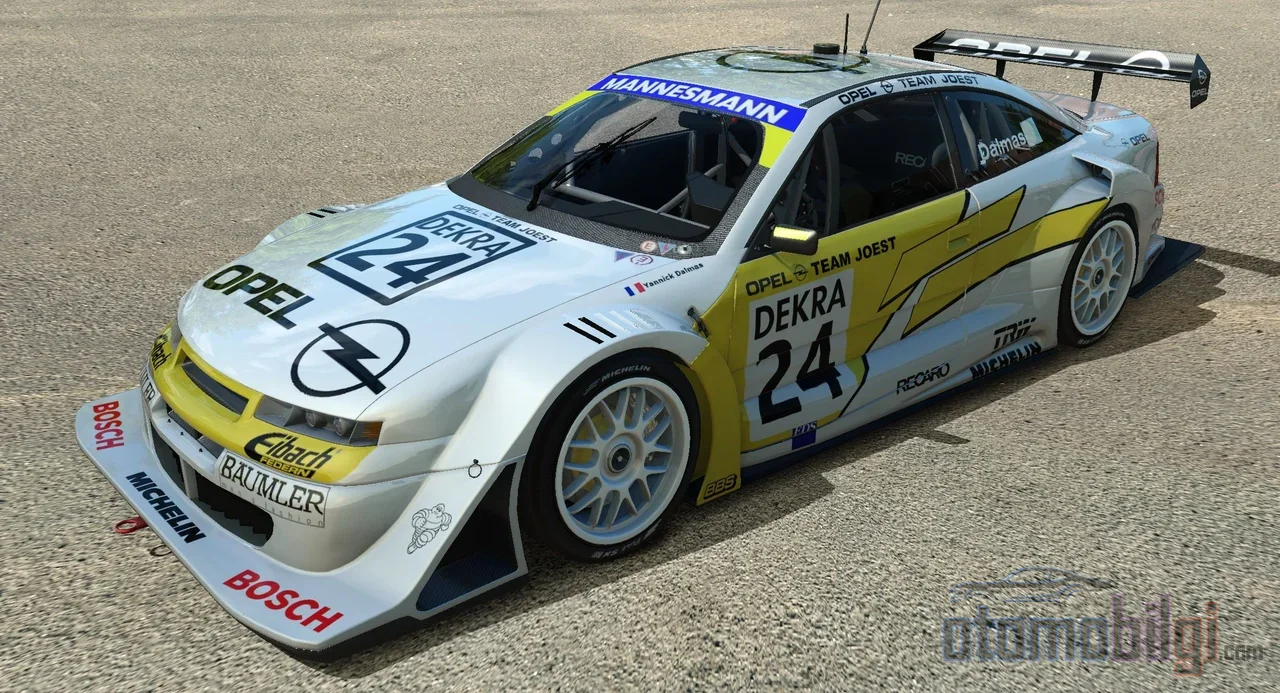
In 1994, Opel Team Joest started the season with three cars, but the season ended far below expectations; there were only minor successes. So what changed for everything to turn around two years later? In 1995, Opel played its gamble with two teams: on one side Team Rosberg - with Klaus Ludwig in the driver's seat and former F1 champion Keke Rosberg as team boss - and on the other, Joest's second team. This second team featured names like Manuel Reuter, JJ Lehto, Yannick Dalmas and Ni Amorim. Reuter's performance that year directly influenced Opel's decision to continue with the project.
1996: The Year of the Calibra
And 1996 arrived - the year when almost everything clicked for Opel. The brand went into battle with three teams: Ludwig and Uwe Alzen at Zakspeed, Hans-Joachim Stuck and Lehto at Team Rosberg, and at Joest Reuter, Dalmas and Oliver Gavin, who replaced young drivers Alexander Wurz and Oliver Gardner... Pay attention to this roster - names like Wurz would go on to careers reaching all the way to F1. At the end of that season, Manuel Reuter became champion and Opel won the manufacturers' title. A story that began with a test race ending in a championship - that's the sweetest kind of sport, in my opinion.
Highlights
- The Alfa Romeo 155 V6 TI, the only non-German car to win the DTM championship - a total of 38 victories
- Nicola Larini claimed the 1993 title with a season in which he opened by winning the first two races
- Manuel Reuter became champion in the Opel Calibra in 1996; Opel won the manufacturers' championship the same year
- The 155 V6 TI's Busso V6 engine produces approximately 420 hp and revved up to 11,000-11,500 rpm
- Alfa Corse built only 10 units of the 155 V6 TI for the 1994 season
What Kind of a World Was the Class 1 Era?
Now let's talk about the background, because the story of these two brands only makes sense in the context of that era's rules. The 1990 DTM season featured liberal regulations and a battle between manufacturers: a climb began that took touring cars step by step toward prototype level. In other words, the idea of a "race car derived from a road car" gradually turned completely on its head; these cars became like mini prototypes, only distantly resembling road cars.
But there's an interesting technical detail: Class 1 cars actually had low aerodynamic efficiency, because drag - air resistance - was high. Think of it this way - like the difference between a completely flat highway and a winding mountain road. High drag prevented the cars from stacking up on top of each other and effectively balanced the competition. Perhaps that's why those years left such a lasting impression. Later, to prevent a repeat of that massive spending spree of the mid-1990s, the new series after 2000 introduced cost control through strict technical regulations - but that's a completely different story.
Alfa Romeo 155 V6 TI: The Italian Who Made the Germans Turn Back Home
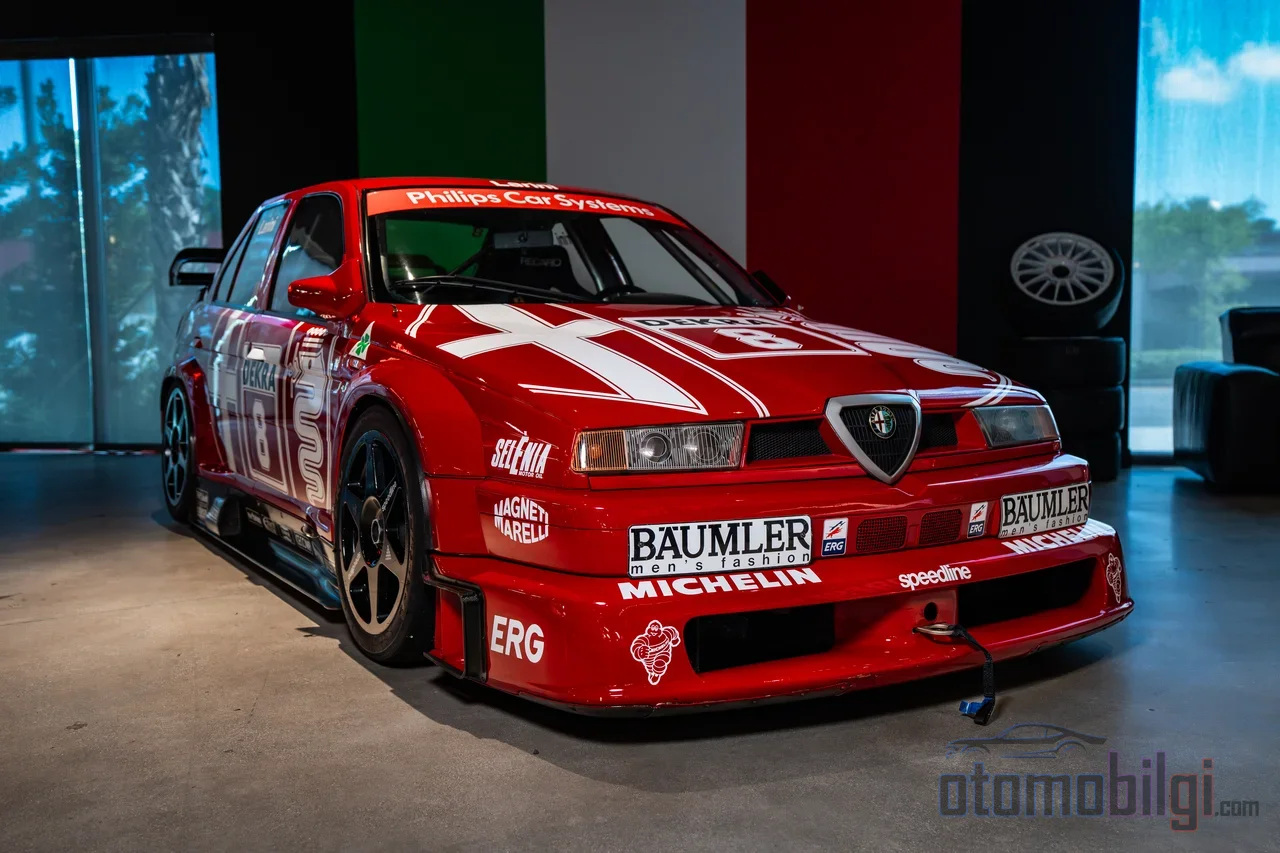
Now we've come to my favorite part of the story. In 1992, Alfa Romeo's 155 GTA won the Italian Superturismo Championship, and this victory gave birth to the idea of doing something bigger: why not go to the DTM and beat the Germans on their own turf? The result was a project that made history. The 155 V6 TI is the only non-German (and only Italian) car to win the DTM championship - and with a total of 38 wins, it still sits at the top of the lists.
Nicola Larini and the 1993 Season
The 1993 season reached its golden age with Nicola Larini. Larini hit the ground running by winning the first two races of the season; the victory at the Nürburgring was his third win. Records vary slightly on the number of races won during the season: it is recorded either as 11 wins out of 20 races, or 12 wins (10 by Larini, 2 by Alessandro Nannini). Such minor differences usually depend on which races were counted as part of the championship; but what is clear is this: that year, it was the Italians who took the trophy.
And in 1994: Alfa Corse built only 10 units of the 155 V6 TI for that season; one of them was given to the semi-official Schübel team. One of these cars went to auction years later and was listed with an estimate of about $850,000 - a pretty serious figure for a touring car, wouldn't you say!
The Busso Engine: The Hero's Little Secret and Its Agony
At the heart of the 155 lay the legendary 60-degree 2.5-liter Busso V6. Alfa Romeo homologated this engine and transformed it into a full-fledged racing engine; the result was approximately 420 hp and revs reaching up to 11,500 rpm (records vary slightly between 11,000 and 11,500 rpm). The car had a carbon body, active differentials, and major aerodynamic solutions. So in the mid-1990s, technologies resembling today's hypercars were being used inside a sedan.
But every hero has a weakness: The Busso engine was criticized for being heavy, and there wasn't the space engineers wanted between the cylinder banks. Make-shift engine solutions were sought, but the task was like a duel pushing the limits of Italian engineering - a war won not with a giant low-revving engine, but with persistence and grace.
| Feature | Alfa Romeo 155 V6 TI | Opel Calibra DTM |
|---|---|---|
| Engine | 2.5-liter 60° Busso V6 | 2.5-liter naturally aspirated V6 (Cosworth development) |
| Power | Approximately 420 hp | No separate power figure reported |
| Rev limit | 11,000-11,500 rpm | No separate rev figure reported |
| Technical highlights | Carbon body, active differentials | 4x4 drive system |
| Peak year | 1993 - Larini champion | 1996 - Reuter champion |
Alfa Romeo "Series 2": A Beautiful Idea With a Short Life
So what happened when everything was going so well? Here are the kind of questions readers are curious about: Why did Alfa Romeo leave DTM after the 1993 championship? The answer lies partly in the rules: After 1993, the technical regulations were revised to reduce the 155's advantage. In other words, moves were made to curb the Italians' speed before the rivals could make a comeback. Alfa and Opel later withdrew from the series at the end of the ITC era; the series returned in 2000, but that legendary Class 1 era had come to an end.
As for the "Series 2" project: It is known that six cars were built as 155 DTM racers with various engines ranging from I4 to V6, and that the project was cancelled. This short-lived project shows just how far ahead the Italian brand wanted to go - but unfortunately it was never officially completed. Still, don't worry, the story isn't over: Larini reunited with the 155 V6 TI in which he won the 1993 championship in 2024; the photos were a veritable nostalgia explosion. Also, in 2026, SGT Automobili introduced a road-legal restomod recreation based on the 155 DTM called the "55 Dynamic" - take the details with caution as they come from video sources, but it's certain the legend continues to inspire.
Why Were These Two Brands Forgotten, and What Legacy Did They Leave?
Perhaps the real question is: why are brands that won two championships told as a footnote? The answer is partly about perception. Mercedes, BMW, and Audi's battle lasted much longer, and the German automotive press naturally told the story of its own brands. Moreover, while Opel's Calibra remains a publicly beloved classic, the use of cheap materials at Opel at the time undermined reliability - there was a strange tension between the brand's racing success and its showroom reputation. Alfa Romeo, on the other hand, arrived with a short but brilliant intervention, won, and exited the stage; short stories aren't always remembered as well as long ones.
But the technical legacy was immense: carbon body, active differentials, high-revving naturally aspirated engines - all concepts still discussed in racing engineering even today. The unbalanced but fascinating atmosphere of the Class 1 era was radically different from the far more controlled world of modern DTM (like its 2-liter 4-cylinder rules after 2019). That was a time when racing engineering was truly pushed to its limits, with every brand fighting with its own unique solutions.
So here's a task for you: next time DTM comes up and everyone talks about Mercedes and Audi, step in and tell them that Nicola Larini lifted the trophy in Germany, and about Manuel Reuter's signature 1996 season with the Calibra. These stories are the sweetest side of motorsport - because remembering the teams that stayed in the shadows of the big brands but actually climbed to the top is, for a true car enthusiast, my favorite sign of devotion.
Frequently Asked Questions
Which was the only non-German brand to become champion in DTM?
Alfa Romeo. In 1993, with Nicola Larini in the driver's seat, the 155 V6 TI went down in history as the only non-German car to win the championship on German brands' home turf, and it still holds its record with 38 wins in total.
In which year did the Opel Calibra win the DTM championship?
1996. Manuel Reuter became the drivers' champion, and Opel won the manufacturers' championship the same year. Moreover, the Calibra's DTM career had begun in 1993 with a single test race run at the Hockenheimring - the road from the start to the top took exactly six years.
Why did Alfa Romeo and Opel withdraw from DTM?
After 1993, the technical regulations were revised to reduce the 155's dominance. Both brands later left the series at the end of the ITC era. The series returned in 2000, but that Class 1 era had ended.
Sources
- A piece of DTM history... Opel 1996 manufacturers' title
- Alfa Romeo 155 2.5 V6 TI - Stellantis Heritage
- Alfa Romeo 155 V6 TI: How Italy Humiliated Germany's DTM
- 1994 Alfa Romeo 155 V6 TI DTM - RM Sotheby's Paris 2025
- 1993 Alfa Romeo 155 - Classicdriver
- 1993 Alfa Romeo 155 V6 Ti DTM - squadralupo
- Did you know that Alfa Romeo won the DTM in 1993? - Official DTM page
- 1990 DTM Regulations Pushed Touring Cars Into Prototypes
- The real DTM - Class One (Part 2)
- DTM at close quarters - RaceCar Engineering
- Alfa Romeo 155 V6 Ti: The Italian That Humiliated Germany's DTM
- 1993 - Alfa Romeo 155 2.5 V6 TI DTM
- Alfa Romeo & DTM World Champion Nicola Larini back together - Autoworld
- Alfa Romeo 155 - Wikipedia
- 1993 Deutsche Tourenwagen Meisterschaft - Wikipedia