Why Did DTM Races Move to Donington and Suzuka?
Imagine a championship growing in Germany's own backyard: A touring car series where BMW, Mercedes and Audi battled it out, watched by millions on television on Sunday afternoons. Now imagine hearing that the series was suddenly moved to the racetracks of England, and even to Japan's legendary figure-eight Suzuka. That is exactly what happened to the DTM of the 90s. So why did a German championship move to Donington and Suzuka, and why did this bold move end in the series' collapse within two years?
When I first heard this story, I was confused. The name DTM contains "Deutsche", meaning German; if that's the case, why were the races held in England and Japan? The answer lies in the story of touring car racing's most ambitious globalization attempt. And this story is at once both inspiring and a cautionary tale. Let's take a look step by step.
How the German Brand Wars Turned into an International Product?
The DTM was the German touring car championship run between 1984 and 1996, and the series' main draw from the very beginning was brand rivalry. BMW brought out the E30 M3, Mercedes the 190E, and Audi unleashed the V8 quattro; the Audi V8 won the 1990 and 1991 championships, but the real show to watch was the Mercedes-BMW rivalry between Stuttgart and Munich. The battle between Klaus Ludwig's Mercedes 190E Evo II and Johnny Cecotto's BMW M3 Sport in the 1992 season tells on its own why the series was so beloved.
In 1993, things moved to a completely different dimension: the series adopted the Class 1 regulations. Under these regulations, race cars no longer resembled a road car very closely; they were machines loaded with advanced technology, almost thinking like prototypes. The Alfa Romeo 155 V6 TI and the Mercedes C-Class hit the tracks, and Opel joined in with the Calibra. This was the technical foundation of the globalization dream. In 1996, Alfa Romeo's 2.5-liter V6 produced close to 490 hp at around 12,000 rpm. Just imagine: a negotiable, dazzling, technology-packed package. It is perfectly understandable that such a product did not want to be sold only to Germany.
Highlights
- The DTM took the name ITC in 1995 to internationalize.
- A non-championship invitational race was run at Donington Park on July 18, 1993.
- The final race of the 1996 ITC season was run at Suzuka; the series ended that season.
- Teams had to pay $15,000 per race for the Japan rounds.
- The series was halted in 1997 and was re-established in 2000.
Why Did the DTM Become the ITC in 1995?
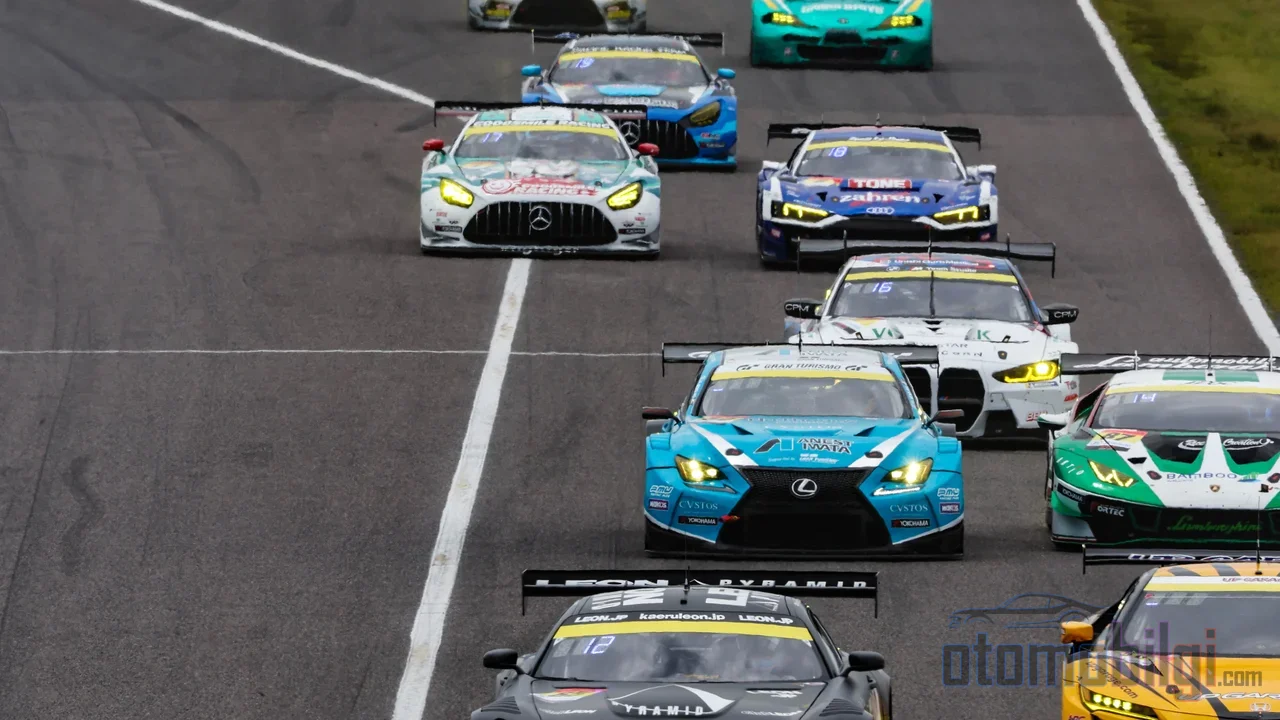
The answer is quite clear: to internationalize the series and race outside Germany. In 1995, the championship's name was changed to ITC, meaning International Touring Car Championship. This was not merely a name change; it was a declaration of open intent. The goal was to attract an audience beyond Germany and turn the series into a brand recognized worldwide.
Let's think of it with an analogy from everyday life: like a baker who sells bread at his beloved neighborhood bakery deciding one day to export his product to all of Europe and beyond. If the product in your hands is good, why not sell it to the world? The Class 1 cars were built with such advanced technology that it was only natural for you to think about marketing them as one of the world's best championships. What's more, the 1996 ITC season took this claim seriously and actually carried it through: the calendar covered Europe, Brazil in South America, and Japan in Asia.
Donington Park: The German Championship's Gateway to England
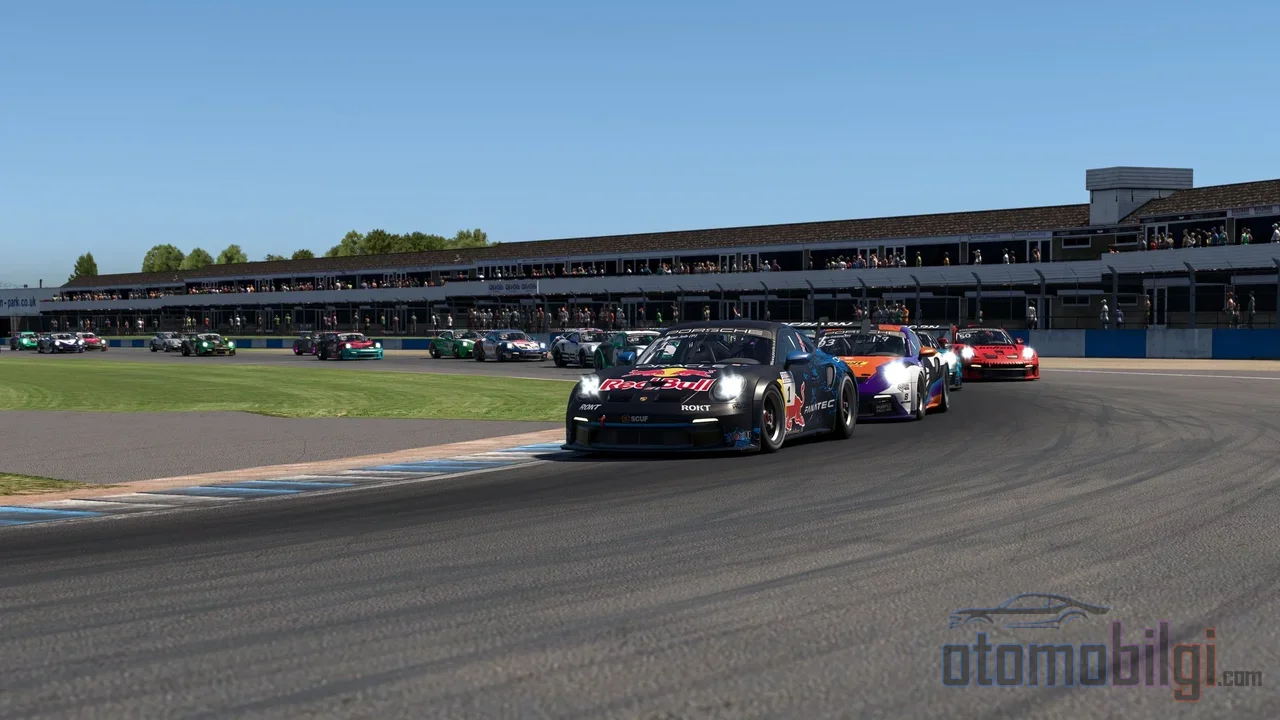
The England round had actually begun before 1995. On July 18, 1993 a DTM race was run at Donington Park in Leicestershire; but the interesting thing was that this race was an invitation event carrying no championship points. Everyone was there by invitation, there were no points, and the crowd was not at the expected level either. Still, the day ended with a victory: Christian Danner won his first DTM victory here, five years later.
Donington's selection was no coincidence. The circuit opened in 1931, became Britain's first permanent park-type racing circuit, and in 1993 hosted the European Grand Prix - that famous Senna victory. So for the German series to showcase itself at a historic British circuit was a sensible showcase in terms of international prestige. Later, the new-generation DTM knocked on this door again: the modern DTM calendar gave Donington Park a place once more in 2002 and 2003.
Suzuka: Why Was the Season Finale in Japan?
The Japan side was the boldest move of the game. Suzuka Circuit, officially Suzuka International Racing Course, was built in the Mie region in 1962 as a Honda test track. This 5.8 km, 18-turn world, signed by John Hugenholtz, is the only figure-eight layout holding FIA Grade 1 status. In other words, DTM was trying to take the stage at one of motorsport's most prestigious addresses.
The final race of the 1996 ITC season was run at Suzuka, and the organizers used a clever strategy to reach the local audience: Japanese drivers joined as guests alongside the series' regular drivers. Having local heroes on track was an approach designed to make the Japanese audience embrace the series. This nicely sums up the logic of the globalization experiment: you were taking the car and the championship to the world, but you needed to make the local audience feel that a familiar name belonged to them.
Why Did This Expansion Not Pay Off? The Shadow of Costs
Here is where the story turns ruthless. Going to Japan to race was fascinating on paper; in practice, it was expensive and laborious. In 1996, teams had to pay $15,000 per race for the races in Japan. Moreover, Japanese television companies were no longer interested in the event, and ISC, which held Formula 1's commercial rights at the time, would not even allow the three manufacturers to film. So both the logistics and the media side carried high costs, while revenues were weak.
There was also a revenue-sharing problem: During the ITC era, the bulk of the revenue generated by the championship flowed to the FIA. The teams complained about the small share left to them. TV rights prices had also risen; meaning that as the series' revenue grew, the teams' share shrank. On top of that came massive development and travel costs. This trio quickly painted an unsustainable picture.
Why Exactly Did the Series Collapse?
There is an interesting debate about responsibility here. While some pointed to costs as the primary culprit, 1996 champion Manuel Reuter pointed in a different direction: the series repeated, with the ITC, the mistake of prioritizing entertainment over engineering excellence. In other words, one side questioned the financial picture, while the other questioned the soul of the product. Most likely, both were right to some degree; Class 1 machines were technically magnificent, but sustaining that magnificence was becoming increasingly difficult.
The concrete ending came as follows: At the end of 1996, Alfa Romeo and Opel withdrew. The series was stopped in 1997 and was only revived in 2000. The ITC lived its first and only season; 1996 went down in history as both the thirteenth season of the German touring car championship and the ITC's only season.
Lessons from the Donington and Suzuka Experience That Remain Today
The true value of this expansion story is that it serves as a mirror for the years that followed. DTM did not lose its enthusiasm for going abroad in its post-2000 era either; plans for joint races with Super GT were prepared, attempts to come to North America were discussed, even a framework agreement was signed with Grand-Am, and BMW presented this as an important step toward internationalization. But the lesson of the past was how difficult it is to grow without losing the series' DNA.
A similar story played out in the recent period as well: With Mercedes' withdrawal at the end of 2018 and Audi's departure afterwards, the series moved to a GT3-based, consumer-oriented future; while BMW called for global regulations. It appears that the globalization desire of German touring car racing never faded; it simply wore a different outfit with each attempt.
So Why Did DTM Move to Donington and Suzuka? Short Answer
The 1990s DTM wanted to carry the appeal of the brand wars and the technological charm of its Class 1 cars beyond Germany. The series, which internationalized under the ITC name in 1995, tried to introduce itself to the world at historic British circuits like Donington and legendary Japanese venues like Suzuka; German manufacturers' global market outlook, the strategy of embracing the local audience with guest drivers, and the dream of an international viewership were the engine behind this move. But costs of up to 15,000 dollars per race, declining TV revenues, and the revenue share flowing to the FIA made this dream unsustainable even for two seasons. Donington and Suzuka were both the brightest and the most fragile moments of DTM's global dream.
Sources
- Deutsche Tourenwagen Masters
- 1996 International Touring Car Championship
- 1993 Donington DTM
- Motorsport Magazine Database – 1993 Donington DTM
- DTM made the "same mistakes" as ITC (Reuter)
- ITC farewell Hockenheim 1996
- Donington Park
- Completion of Suzuka Circuit / 1962
- Suzuka Circuit | Circuit History
- The death of the ITC