How Does a Safety Car Change the Outcome of a Race in DTM?
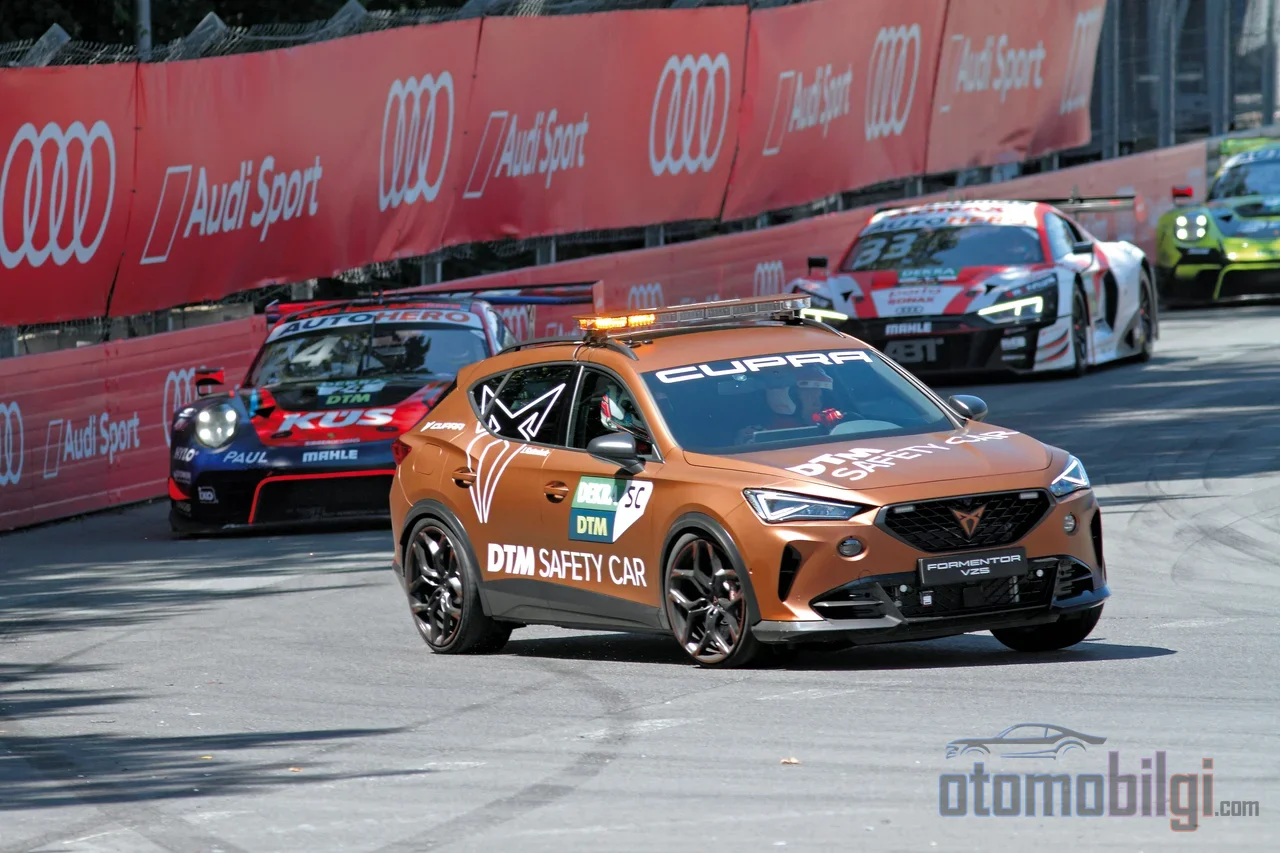
Say there are ten laps left until the end of the race and you are running third. Your tires are fresh, your strategy is set, everything is going according to plan. Then two cars make contact in a corner and debris is scattered along the edge of the track: safety car deployed. A few minutes later you find yourself in twelfth place, trying to understand what happened. In DTM history this scenario has happened not once but many times - and at times it turned the entire balance of a championship race upside down in a single move. So what actually happens when this yellow-lit car is deployed?
Most articles talk about the pit stop window, tire choice and qualifying strategy. These are truly important. But the moment the safety car is deployed, all those nice calculations are reset in an instant. On this page we will talk about exactly that: how the safety car has shaped race results, team strategies and even protests in DTM.
When the Safety Car Is Deployed, Is It Physics or Bureaucracy That Governs the Track?
First, let's understand the mechanism, because what happens here is not limited to a single car. When the safety car is deployed, the entire field slows down and the race continues on track, in a single pack behind the safety car. The critical point is this: the gaps in seconds between the cars are almost completely erased. You may have battled for dozens of laps in the first half of the race to be two positions ahead; once the safety car comes out, that gap evaporates.
Let's use an analogy from everyday life: You are driving in smooth traffic on the highway, with a hundred-meter gap ahead of you. Then everyone slows down because of an accident, and you end up shoulder to shoulder with the car beside you. The comfortable gap is gone but progress has stopped too - that is exactly what a bunched field is. The gap you earned with skill in the corners turns into a wiped-clean ledger.
In the DTM format this carries extra weight because, since 2015, each event consists of two separate sprint races, and today's race distance is approximately 60 minutes plus one lap. In a short race, a safety car period can swallow a serious slice of the total race time; which means there are usually no laps left to make up for it.
Key Highlights
- A pit stop made under the safety car can save up to 10-12 seconds compared to a stop under the green flag.
- At Lausitzring in 2007, two safety car periods pushed Mattias Ekstrom to the bottom of the order with a penalty for an unsafe stop; the winner was Mika Häkkinen.
- At Hockenheim in 2022, a series of crashes on the lap after the restart led drivers to question restart safety.
- In 2020, the pit stop window returned to the DTM regulations; in 2024, mandatory stops and a top-10 rule restricted the advantage of three-car teams.
The "Free" Pit Stop: Why Is It Called That Under the Safety Car?
In touring car racing, the pit stop is the heart of strategy, and in DTM, since the 2020 season, the regulations include a clearly defined pit stop window. Under normal circumstances, the cost of entering the pit lane is heavy: pit lane speed limit, stopping, tire change, exiting and returning to the track, if the track is too bunched up, mixing into the traffic. Under a green flag, this can mean losing several positions in the running order.
When the safety car is deployed, the picture changes. The entire field has slowed down; even if you enter and exit the pit lane, your rivals on track are still running at the same pace. As a result, the cost of a stop is halved - calculations show that a driver pitting under the safety car can save up to 10 to 12 seconds compared to a green flag stop. Because the field is bunched up, a car that pits can defend its position within the field much more easily. In other words, you effectively get a free tire change that lap.
Of course, there is another side to the coin: a driver who misses this moment by not pitting takes a big risk. The moment the field bunches up is theoretically the most time-saving moment for a pit stop; a driver who misses this train has to make a stop under the green flag again and at full price. For the strategists on the pit wall, the moment the safety car appears is the fastest decision-making moment of the race.
Lausitzring 2007: Two Safety Car Periods and Ensuing Chaos
One of the most hotly debated safety car races in DTM history was run at the Lausitzring on May 20, 2007. The race saw two separate safety car periods, and the second one was deployed to correct the officiating error in the first - yes, you read that right: race control admitted the mistake and sent the safety car out again to fix the situation.
At the center of the error was the pit closure. Mattias Ekstrom was forced by the stewards to make an additional pit stop after it was discovered that his first stop had been made while the pit lane was closed, and he dropped significantly in the running order. He was already starting from fourth place; the penalty pushed him even further down. On the Audi side, the confusion was much greater: Martin Tomczyk finished the race ninth, but explained that after the race he did not know what his actual position was, that he had thought for a moment he was third, and that with some cars being let past the safety car he suddenly dropped to thirteenth place, and that in his view the result was wrong. The team had hoped an appeal would be filed, but in the end the stewards announced that they accepted the decision for the sake of the sport. Mika Hakkinen saved the day: he took his second DTM victory in this race.
The reason this race still matters today is clear: the safety car is not just an interruption, but a stage where both the rules and their application are put to the test. Details such as pit closure rules, restart lineups, and cars being let past the safety car can rewrite the outcome of an entire race.
Restarts: DTM's Most Delicate Moment
If the safety car's deployment is half the race, the restart is the other half. In DTM, restarts are critical transitions where the cars line up behind the safety car and return to racing speed, the leader takes control of the pace, and the rules stipulate that the race leader must complete at least one more lap behind the safety car. The leader at this stage effectively takes on the role of the pace-setting car: it is the one setting the tempo, while the field behind waits, weaving to warm up their tires and brakes.
And right here is where DTM's most talked-about problem erupts: the first lap after the restart. At Hockenheim, in the second-to-last race of the season, frightening crashes happened one after another on the lap following the safety car restart; as the cars accelerated again, small errors in the lineup turned into chain-reaction collisions, and drivers began openly debating whether DTM restarts were safe.
Such moments are not unique to GT prototypes, either. In the safety car restart of the first race run at Portimão on April 30, 2022, Mirko Bortolotti's Lamborghini Huracan GT3 Evo unexpectedly slowed down; as the field behind approached without realizing it, Bortolotti even thought his race was over. In restarts, tempo perception depends on a single driver's reflexes, so the smallest surprise ripples through the entire field.
There are other examples, too: At Brands Hatch in 2018, a collision between two Mercedes after the start complicated the restart and the safety car period; a chain of crashes at the start in the second half of the season at Hockenheimring played out a similar scenario. On the rules side, in 2024 the ADAC introduced changes aimed at preventing the extra pit box advantage of three-car teams, with mandatory stops, the top-10 rule and driving time regulations. In other words, restart and pit stop regulations remain a rule area that is still actively being polished.
The Safety Car Itself Is Also a Brand Showcase
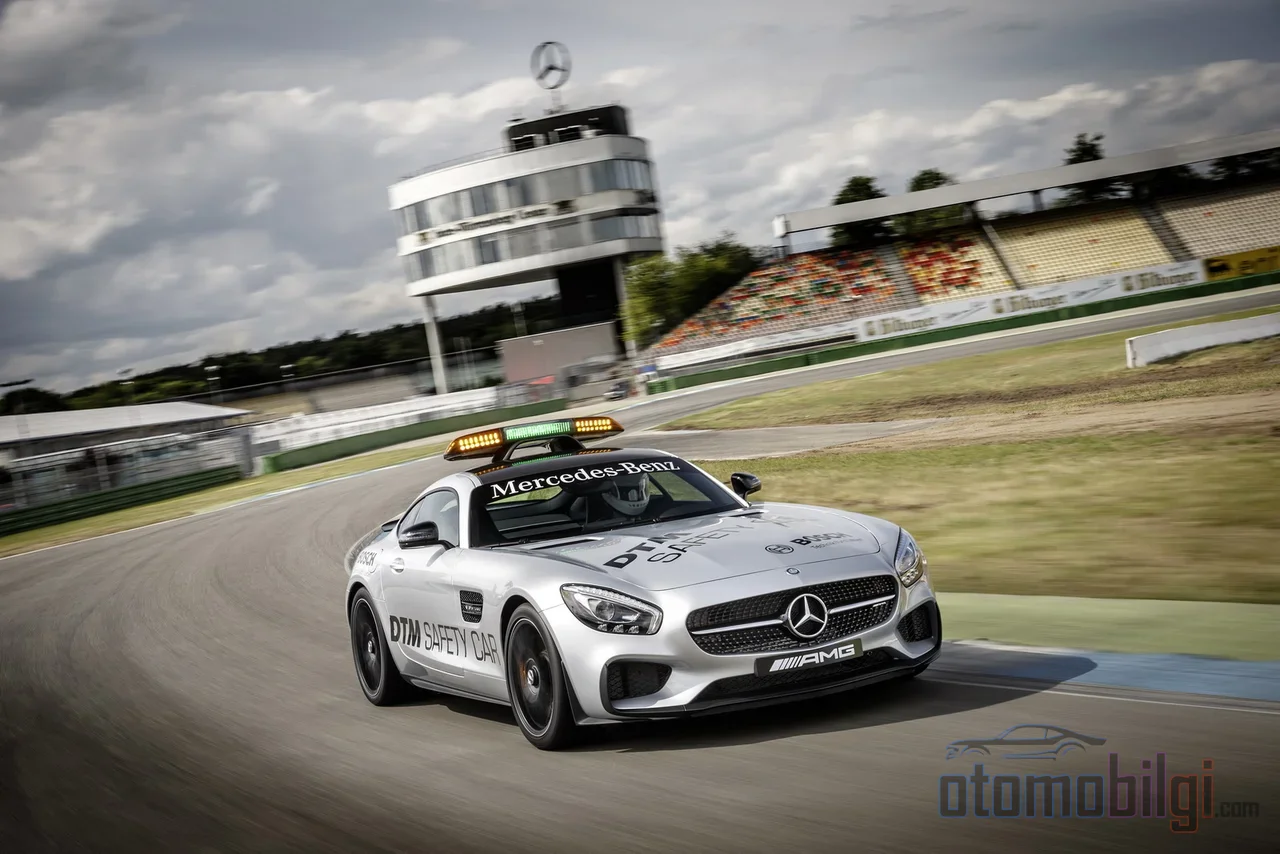
Though it may seem like an edge detail, the identity of the safety car is part of DTM's brand culture. BMW accompanied the series' return in 2012 with a specially prepared M3 safety car; today, the track is toured by DTM's Cupra safety car. The regulations do not leave this job untouched, either: According to the ADAC's sporting rules, the DTM Safety Car must be a vehicle adapted for high-performance driving on race tracks and powerful enough to maintain speed levels. The logic is simple - even while slowing down the field, you need to keep the race cars at a certain tempo so the tires do not cool down and the cars enter the restart ready.
The safety car debate is of course not limited to DTM. In 2026, David Coulthard complained about the slowness of safety car procedures after the British Grand Prix and proposed that incidents in the final laps be automatically concluded with a red flag; arguing that while his team changed tires in 2.2 seconds, knowing the cars' locations via GPS data and speeding up the process would not be difficult. Although the idea targeted F1, the essential question is the same: how fast and fair should the safety neutralization be?
So, Does the Safety Car Really Change the Outcome of a Race?
The short answer: yes, and move by move. When the safety car comes into play, the order bunches up, all gaps are wiped out with a single call, and pit stop and tire strategies are rewritten from scratch. A driver who dives into the pit lane at the right moment holds or improves his position with savings of up to 10-12 seconds; the driver who misses it pays full price. On restarts, it is the order, reflexes, and a bit of luck that come into play - Hockenheim 2022 showed that this transition can sometimes even turn into a safety debate.
Lausitzring 2007, on the other hand, shows the dramatic end of the story: a management error, a pit closure penalty, a controversial result that went unchallenged, and Häkkinen's victory. The safety car is not a vehicle that slows down a race; it is a rule engine that redistributes the tactical balance of the race. The next time you watch a DTM race, don't pause when the safety car comes out - the real race may be starting at that very moment.
Sources
- Audi reluctantly accept race results
- Are DTM restarts not safe? Drivers give their views after Hockenheim mayhem
- Bortolotti "Thought Race Was Over" After Restart Issue
- 2026 Sporting Rules and Regulations (ADAC)
- DTM 2018 Sporting Regulations Overview
- Mandatory stops, top 10 rule and driving time – all changes to DTM rules in 2024
- DTM set to bring back pitstop window for 2020 season
- The DTM: all you need to know
- Coulthard Calls for Safety Car Rule Changes After British GP
- Safety Car Strategy: When to Pit and When to Stay Out