Pit Stop and Tire Strategy in DTM
Share This Page
In DTM, pit stop and tire strategy are the hidden hero that determines the race outcome more than anything else. Because of the mandatory stop rule, every team enters the race as if preparing for a math exam: when to pit, will all four tires be changed, before or after the rival? On this page, I explain how stop timing, the tire temperature window, and penalty rules work in DTM.
Highlights
- Race distance 55 minutes plus one lap, which can be extended by a maximum of two joker laps if the safety car comes out.
- 2022 regulation: pit stops may only be made between the 10th and 40th minutes of the race.
- From 2025 onwards two mandatory pit stops in the Sunday race; the Saturday race continues with a single stop.
- In the mandatory stop, all four tires are changed.
- All cars race on Pirelli P Zero DHG tires.
How exactly does the pit stop rule work in DTM?
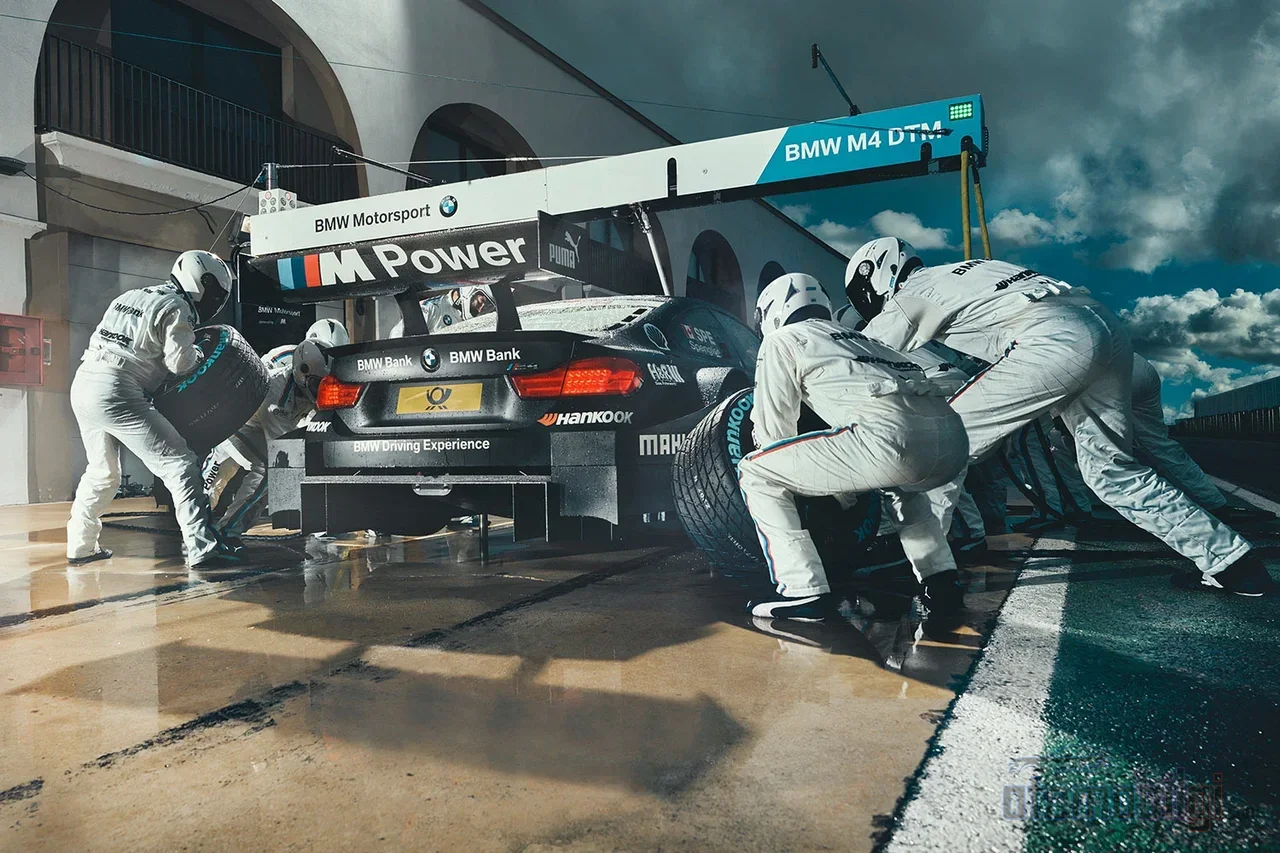
DTM's basic format has been as follows for years: every race has at least one mandatory pit stop, and tires are changed during this stop. In other words, teams have no big choice; they must make a stop. The real game revolves around when the stop will be made. Race distance also comes into play: races last 55 minutes plus one lap, and if the safety car is deployed, the organizers can extend the distance by a maximum of two joker laps. This detail means the maps can be turned upside down in the final laps.
A regulation introduced in 2022 made this timing even stricter: pit stops can only be made between the 10th and 40th minutes of the race. This forces teams to plan their own pit window within this interval. Imagine: the leader has pulled away in the first 9 minutes of the race, but no one can pit; the stop queue is completely waiting for the 10th minute to arrive.
2025 change: two stops in the Sunday race
In April 2025, ADAC changed the rule ahead of the fifth season of the GT3 era: the Sunday race now requires two mandatory pit stops. The Saturday race remained unchanged with its single-stop format. The reasoning is very clear: to differentiate the second race of the weekend more clearly from the first. You can think of it as an analogy: if the Saturday race is a sprint, the Sunday race is a marathon; two stops mean the teams make strategy decisions twice. A team that finds a good plan in the first race may not be able to repeat the same plan in the second.
Are all four tires changed in the mandatory stop?
This question circulates constantly, especially among simulation players, and in the DTM format the answer is yes: all four tires must be changed during the mandatory stop. There is no stop where a car just pulls in and goes out; as the name suggests, the stop is carried out together with a tire change. Although simulation communities also talk about a minimum time that must be spent in the pit lane, such figures are not verifiable from official sources and should not be taken as a definitive rule.
So how long do these stops take? Simulation forums share examples of tire-change pit stops exceeding 40 seconds. Thanks to low fuel loads, DTM stops have historically tended to be fast; in the early 2000s, F1 stops stretched to 8-9 seconds due to refueling, while DTM adapted more quickly to the mandatory stops introduced in 2001. Since refueling is banned in F1 today, stops are regularly completed in under 2 seconds; in DTM, strategy is still shaped mainly by tire management and the race format.
Early or late: why does pit stop timing change everything?
This is where the heart of strategy beats. The general logic is the idea known in motorsport as the undercut: the driver who pits before the car ahead returns to the track on fresher tires and sets fast laps in clean air while the rival pits. This can turn the order in their favor at the pit exit. Since the windows in DTM are fixed, pulling off this move is a matter of calculation; within the 10-40 minute range, you have to both wait for the rival's move and make sure your own tires don't die.
The risk of a late stop is just as real. As the tires age, grip decreases, lap times drop, and the car behind on fresher tires has the trap ready. The beauty of the mandatory stop rule is exactly here: everyone will pit, but who pits first can change the fate of the race depending on track position and tire condition. Since heavy touring cars put extra load on the tires, tire wear is a critical issue in DTM; the driver protecting the tires behind the wheel is as important a part of the strategy as pit stop timing.
Success ballast strategies
In DTM, successful drivers carry success ballast in the next race. This raises an intriguing strategic question: why doesn't the driver carrying ballast deliberately drop back to look for an advantage in the Sunday race? This debate is often discussed in motorsport communities; the answer lies in the nature of the race format. Since every race distributes points, deliberately dropping back means risking the loss of points. Even in the two-stop Sunday format, this risk-reward balance is not easily established.
The tire temperature window: why does grip make a night-and-day difference?
It is explained quite clearly in DTM's own content: as the tire heats up, grip increases, braking becomes more effective, and the car approaches its intended performance. The difference between a cold tire and a hot tire is described as being as pronounced as night and day. You can think of it with a bicycle wheel: a tire that slips on dry ground seems to stick to the road once it heats up and bites.
This window idea applies to motorsport in general: most racing tires have an ideal temperature range for peak performance, and this range is determined by the tire's compound chemistry and carcass structure. In DTM, as of 2025, all cars Pirelli P Zero DHG tire and that tire is also used in national and continental GT2, GT3 and GT4 series. The single-supplier arrangement takes the strategy to an interesting place: teams cannot seek an advantage by choosing a different tire brand; the advantage comes entirely from pit timing, tire care, and the driver's ability to bring the tire into its operating window.
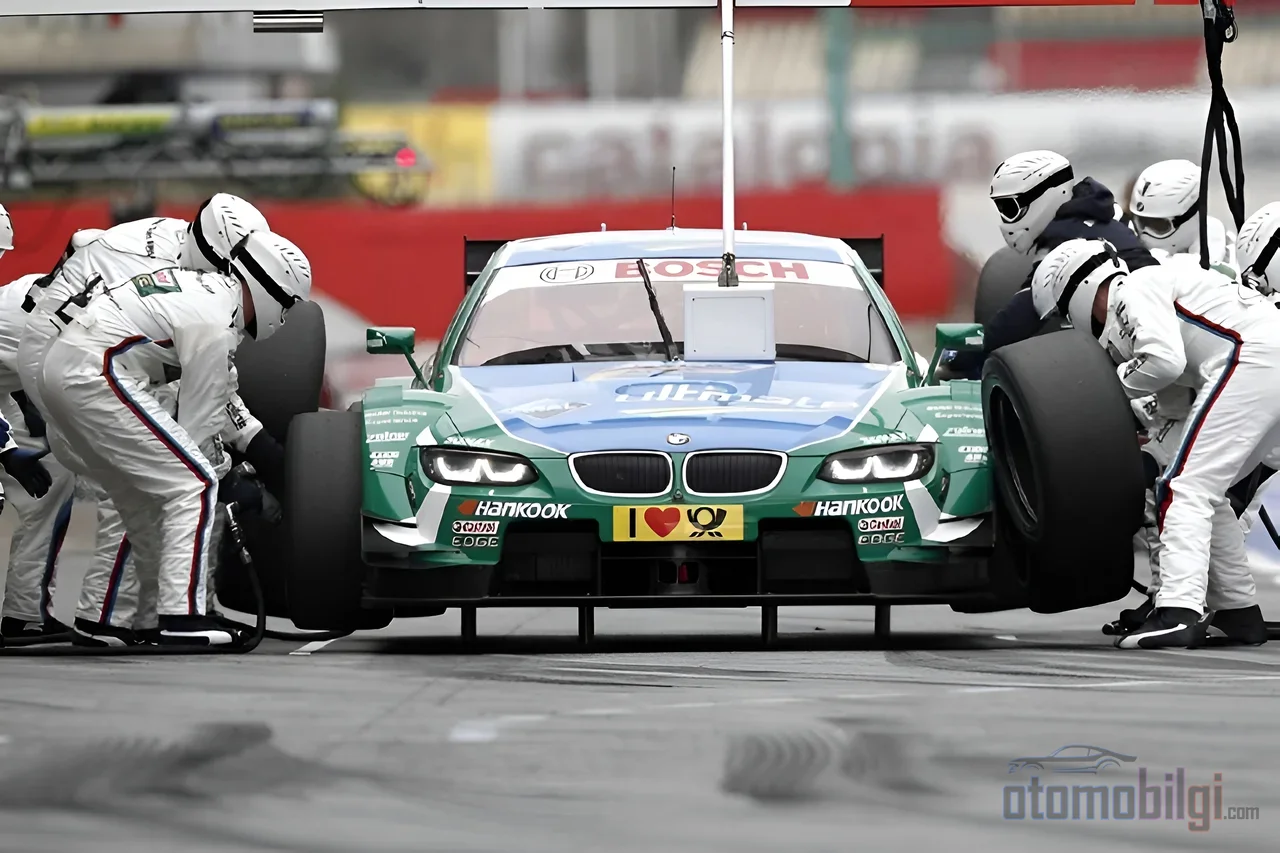
The pit stop itself is a choreography. As seen in the content shared by Land-Motorsport, every movement of the mechanics has to be perfectly synchronized during tire changes. All four wheels are changed simultaneously, and a one-second delay can erase the advantage the strategy has created. In the DTM, pit stops are a major mental and physical burden for the entire team, and with tightly matched starting grids, they can directly decide the race.
Penalty rules: voided overtakes and penalty laps
Strategy is bound by rules not only in the pit but also on the track. A driver who crosses the line during an overtaking maneuver must serve a penalty lap; a dedicated penalty area is marked on the track for this purpose. In other words, a driver who gains an unfair advantage on the track pays for it by losing time during the race. This also directly affects pit stop strategy: a penalty lap can disrupt the calculations of planned pit windows.
A concrete example: at Hockenheim, a driver was given a 15-second penalty for a late-braking move, and this penalty equated to three penalty laps of 5 seconds each. The question discussed in the news was whether the penalty would affect the championship race. As you can see, even a braking mistake can fall onto the strategy board at the end of the season.
The Class 1 era: how did pit strategy work differently?
The pre-GT3 Class 1 era was the DTM's most technically ambitious period, and its pit strategy was different from today's. Under the regulations in which the DTM ran during this era, races were run over a distance of approximately 250 km and included two mandatory pit stops. In other words, the idea of two stops is not actually an innovation invented in 2025; it can also be read as a return to an older format of the championship.
Under Class 1 regulations, DRS could also be activated a maximum of three times per lap, and teams could freely choose the activation points. This detail added an extra dimension to strategy: wherever the DRS point was positioned, the approaches and overtaking attempts after the pit exit would be planned accordingly. In today's format, the tire side is simpler: Pirelli emphasizes that the arrangement - where drivers must make at least one pit stop, each car runs with a single driver, and both races include a mandatory stop - was designed to allow reversed standards, overtakes, and a variety of strategies.
Let's put the two formats side by side
| Feature | Class 1 era | GT3 era (as of 2025) |
|---|---|---|
| Race distance | Approximately 250 km | 55 minutes plus one lap |
| Mandatory pit stop | Two mandatory stops | One stop on Saturday, two on Sunday |
| Tire | Period-specific class tires | Pirelli P Zero DHG on all cars |
| Extra tactical tool | Three uses of DRS per lap | Joker stop (in the case of a safety car, a maximum of two) |
Frequently asked questions
Can you pit outside the pit stop window? According to the 2022 regulations, pit stops can only be made between the 10th and 40th minutes of the race; in other words, a plan to pit during the first nine minutes or after the 40th minute is invalid on paper. All of the teams' calculations revolve around this window.
Why are the Saturday and Sunday races subject to different stop rules? The rationale behind the change ADAC introduced in 2025 is to make the second race of the week clearly more distinct from the first. One-stop Saturday and two-stop Sunday offer the audience two different strategy dramas in the same weekend.
How long does a pit stop take? Reducing this figure to a single number would be misleading. In simulation communities, examples are shared of stops with tire changes exceeding 40 seconds, and it is also discussed that a minimum time is required in the pit lane; however, since such figures come from simulations and forums, they should not be considered verified as official rules. What is certain is this: DTM stops paint a very different picture from F1-style 2-second operations, as they require the changing of all four tires and team synchronization.
Final word: the winners of the race in the pit lane
I know that when watching DTM, your eyes are always on the overtakes on the track. But while watching the next race, follow the pit lane too: who dove in right at the moment the 10th minute hit, who waited until the very end of the 40th minute, who freshened up their tires one lap before their rival? When you find the answers, you will see that the outcome of the race is often decided not at the steering wheel but on the pit wall. In my opinion, this invisible chess side of DTM is the least loved but most exciting aspect of the championship. Which do you think is more enjoyable: catching the car ahead with an undercut, or trying it at the last corner on the track?
Sources
- Mandatory Two-Stop Strategy Introduced for Sunday Races
- The ins and outs of the DTM
- The DTM: all you need to know - Pirelli
- Deutsche Tourenwagen Masters - Wikipedia
- DTM management reviews regulations - AutoHebdo
- Will Engel's 15-second penalty cost him the DTM title? - Yahoo Sports
- How Does a Race Day Work in DTM? Format, Qualifying and Points
- Here's How Pit Stops Differ Depending on the Race Format - BMWBlog
- The real DTM - A look into Class One (Part 1) - DrRacing's Blog
- Mandatory stops, top 10 rule and driving time - Motorsport.com
- Pitstops - KW Studios forum
- Using Tire Temperatures for better grip - Autosport Labs