The Iconic Tracks of DTM and the Magic of Street Circuits
Share This Page
When it comes to DTM's iconic circuits, the concrete grandstands of Norisring, the forest straight of Hockenheim, and the legendary history of Nürburgring come to mind; these three circuits carry the soul of German touring car racing and give the championship its character. A DTM circuit is not just asphalt, but a stage where brand wars, street circuit excitement, and decades of history meet.
Highlights
- 1947 Norisring, which hosted races in front of 60,000 spectators in , is the only street circuit on the DTM calendar.
- The construction of the Nürburgring 1925 began in as an unemployment relief project.
- The spectator capacity of Hockenheimring 120,000 is people and it holds an FIA Grade 1 license.
- DTM's first championship 1984 was won in by a BMW 635 CSI .
- Norisring is only 8 corners, a street circuit approximately 2.1-2.2 km in length.
What Makes a Circuit a 'DTM Circuit'?
It is easy to read the story of DTM through the cars and champions, but what really interests me is the circuits themselves. The championship's roots go back to the Deutsche Rennsport Meisterschaft of the 1970s and early 1980s; the modern touring car DTM started in 1984. Since that day, some circuits have practically become the hosts of the championship, and the concept of the 'DTM circuit' was born.
So what makes a circuit a DTM circuit? In my view, three things: first, technical character. German touring car racing loves high speed, hard braking, and aggressive overtaking; the circuit must support this. Second, history. DTM is a tradition whose roots lie in the DRM, and the circuits have their own stories too. Third, atmosphere. DTM weekends consist of practice, qualifying, and two sprint races; mandatory pit stops deepen the strategy, and the spectators enjoy it right at the trackside.
Whether it is a closed circuit or a city street, the places that combine these three elements have become the heart of the championship. Now let's take a look at the most iconic ones one by one.
Norisring: DTM's Only Street Circuit and the Star of the Season
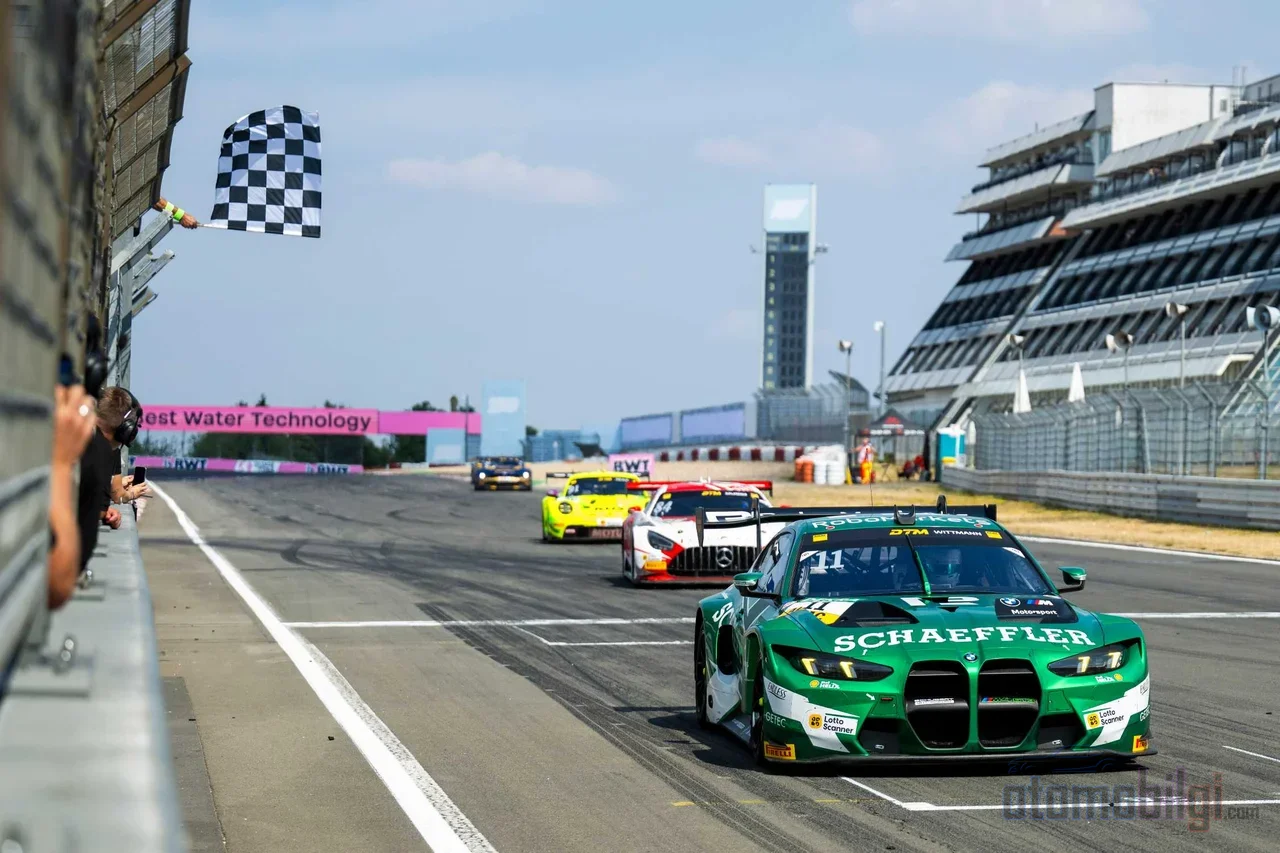
It is hard to describe Norisring in a single sentence, but let me try: an incredibly fast street circuit in the middle of the city, circling around a giant concrete grandstand. Located in Nuremberg, this circuit is famous for its straights passing in front of the historic Steintribune. It is approximately 2.1-2.2 km long and has only 8 corners. That sounds easy, right? But that is exactly where the trick lies: on the wide straights you keep the throttle wide open for hours, then you throw yourself into the narrow, hard hairpins. Think of speeding downhill on a road bike and suddenly entering a corner - every braking is a gamble.
The story of the track is incredible. The first race was held on May 18, 1947, watched by 60,000 spectators; at the time, even the US occupation forces supplied the fuel. Established in 1947 as a center for motorsport athletes, the facility hosted its first car race in 1948. The current track layout has been in use since 1972; the previous section, where Pedro Rodriguez lost his life in 1971, had been modified to reduce speeds. The name 'Noris' comes from the city's old name, dating back to the 17th century, and became established with a race in 1950; the aim was to avoid confusion with the Nürburgring.
Being the only street circuit on the DTM calendar makes the Norisring special, and it is highlighted as the standout event of the season. And it keeps making history: the 2026 race saw record attendance with over 118,000 spectators; Nicki Thiim gave Aston Martin its first victory in DTM history right here. So the magic of the street circuit still holds.
Hockenheimring: The Giant in the Forest
Located in Baden-Württemberg, the Hockenheimring can be described as a recurring center of the DTM; it is practically the home of the championship. The first version of the permanent circuit opened in 1938, and the old layout was known as 'fast and dangerous': long high-speed sections passing through dense forests both fascinated and terrified drivers. Imagine it: you are flying like an arrow among the trees, and the margin for error is nearly zero.
Then the track was redesigned, and things became controversial. The new layout generally offers good racing, with a few solid overtaking spots; but there is also a certain widespread regret over the loss of those long, vast forest straights. This is actually a very typical dilemma in motorsport: safety and modernity increase, while character sometimes takes a back seat. If it were up to you, which would you choose?
Today's Hockenheimring has an almost completely flat track profile, holds an FIA Grade 1 license, and has a capacity of 120,000 spectators. It has also been the stage for significant moments in recent years: the 2026 season finale was held here and delivered a spectacular finish; Thomas Preining also won his second DTM championship at Hockenheim.
Nürburgring: The Story of the Green Hell
The story of the Nürburgring is like a film script in its own right. Construction began in 1925 as an unemployment relief project, and in 1927 the track opened with three separate loops: the 20,810 km Nordschleife, the 7,747 km Südschleife, and the 2,238 km Start/Finish circuit. In other words, the Nordschleife alone is ten times longer than many tracks. Jackie Stewart's 'Green Hell' nickname, coined in the 1970s, is not without reason.
The track's fate changed after the Lauda crash in 1976, and the German GP moved to Hockenheim. But the Nürburgring did not die: the new Grand Prix Strecke opened in 1984, and Ayrton Senna won the opening race in a Mercedes touring car. We are talking about a place where a Formula 1 legend touched the roots of the DTM, which is exciting in itself.
The track's commercial life was also full of ups and downs: it went bankrupt in 2012 and was purchased by Capricorn for 77 million Euros in 2014. This tension between the track's motorsport identity and commercial goals still shapes its present today. In DTM, it stands as a constant with its varying layouts; thanks to its different configurations, it brings a fresh breath to the championship.
Track Comparison: Which Circuit Awaits You?
Seeing the technical identities of the three great tracks side by side clarifies the differences. Other classic stops like Zolder also hold an important place in DTM history, but on this page I want to keep the details at hand limited to three circuits.
| Track | Location | Type | Standout feature |
|---|---|---|---|
| Norisring | Nuremberg, Bavaria | Street circuit | Approximately 2.1-2.2 km, 8 corners, historic Steintribune |
| Hockenheimring | Baden-Württemberg | Permanent circuit | FIA Grade 1, 120,000 spectator capacity |
| Nürburgring | Eifel region | Permanent, multi-layout | Nordschleife 20.810 km, 'Green Hell' |
The Street Circuit Tradition and Spectator Atmosphere
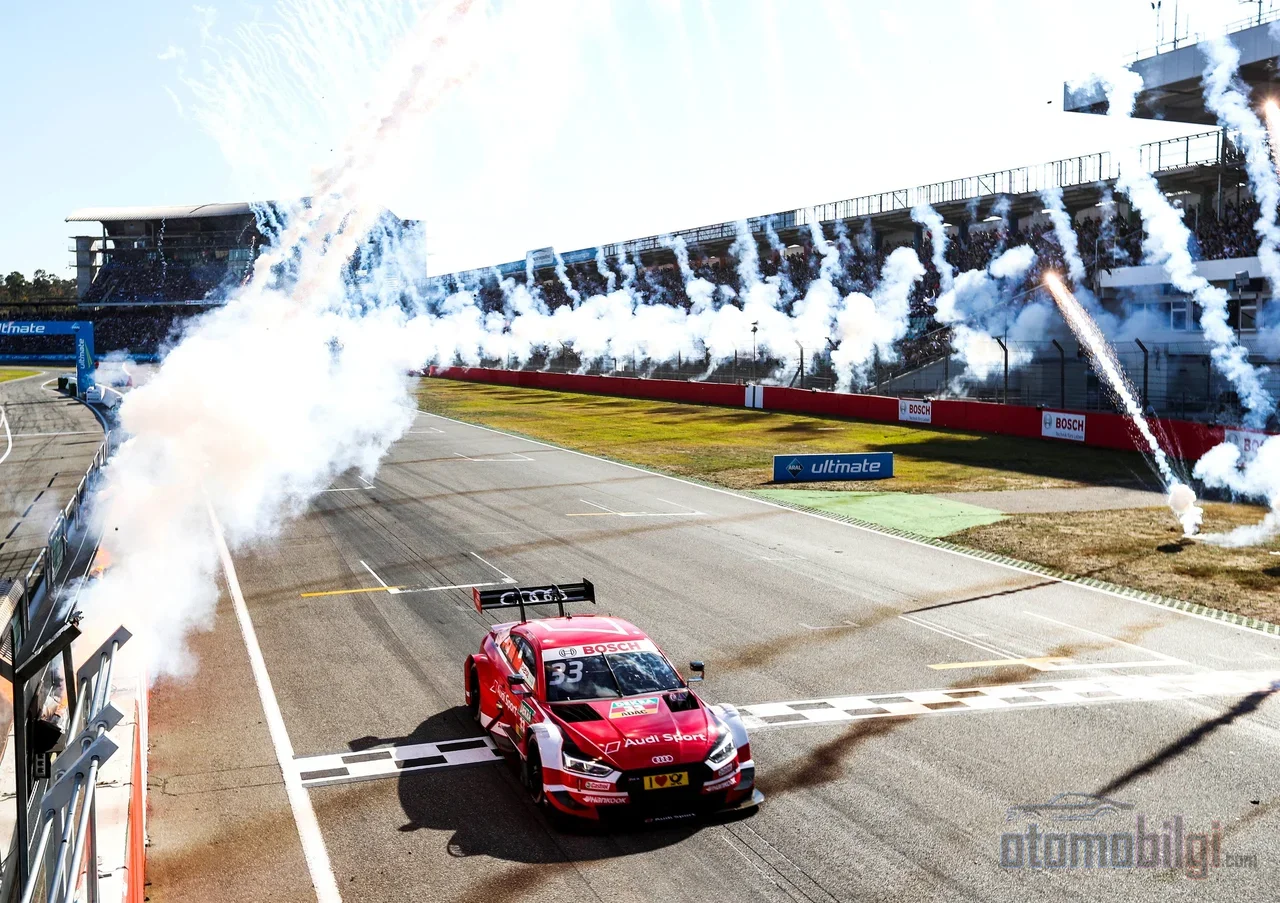
Street circuits hold a very special place in German touring car racing. While there is a distance between the grandstands and the track on closed circuits, on street tracks the concrete wraps around you; the engine sound bounces off buildings, and the braking happens right before your eyes. The Norisring is the pinnacle of this tradition, and the value DTM places on it is proof: as the season's standout event, those concrete grandstands are filled every year.
The atmosphere issue is no exaggeration. A victory written into history in front of a crowd of 118,000, in my opinion, is no less thrilling than any grand prix triumph. The program offered to spectators during a DTM weekend is also intense: on Saturday, two 20-minute qualifying sessions, followed by two sprint races, each approximately 55-60 minutes plus one lap. One pit stop is mandatory per race, which makes the strategy followable even from the balcony.
Without going into the details of the format, let me say this: since 2015, each event has consisted of two separate sprint races, and in the GT3 era the success ballast came into play. In other words, the leading cars carry extra weight, keeping the outcome of the races open until the very last corner. Watching this on a street circuit is pure cinema.
Brand Wars and Class 1: The Real Story on the Tracks
The tracks are the stage, but it's the brands that play the game on stage. In the period after 2000, Audi, Mercedes-Benz, and Opel defined the series' visual identity for years; then BMW joined, and the competition among the three major brands became tighter than ever in the 2013 Audi RS5 DTM era. Those who remember the Mercedes-Benz versus BMW M3 battle in the 1992 season footage at the Nürburgring know how old a tradition the brand wars are. Mercedes-Benz left DTM in 2018; even Audi responded to this farewell with an emotional farewell video, meaning the relationships were something beyond mere competition.
The Class 1 era (2019-2020) was the age of the most extreme machines on these circuits. These cars were front-engined, rear-wheel drive, and had silhouettes reminiscent of manufacturers' road cars; the 2020 BMW combined Formula 1-inspired technology with a closed-roof silhouette. Audi switched to 2.0-liter four-cylinder turbo engines from 2019 onwards, and the last two Class 1 seasons were shaped by these turbo engines. Presented as the most powerful DTM car, the BMW M4 DTM also raced in this era. It is known that managing the reliability of the Class 1 engine was no easy task, with the power unit making extraordinary demands; pushing these machines to the limit in Hockenheim's hard braking zones or along Norisring's relentlessly grueling straights was never easy.
In 2021, DTM switched to GT3 cars with Balance of Performance. This transition expanded the brand range: Porsche, Ferrari, and Lamborghini joined Audi, BMW, and Mercedes-AMG. The competition got closer, but whether the old touring car and Class 1 formula was the 'real DTM' is still debated. In my opinion, both sides have a point; even though the circuits remain the same, completely different games are being played on stage.
Final Word: Though the Circuits Change, the Magic Continues
DTM underwent fundamental changes in German motorsport when it came under new management in December 2022; the 2025 calendar focused on the German market with eight rounds across three countries, and a milestone was also announced on the environmental front with two million fewer bottles used. Tickets for the 2027 season have already gone on sale from 49 Euros. So Norisring's concrete, Hockenheim's straights, and the legend of the Nürburgring will continue to witness races in the years to come. Personally, I am most curious about Norisring; I would feel a pang of regret if I missed a final corner battle on that narrow street circuit. Which one is your favorite circuit?